Luxury Yacht Guide News | 21 November 2026
A new lighting option follows the original SPORT Mini
British marine lighting specialist OceanLED has announced SPORT Mini Colors, a full-colour RGBW version of its compact surface-mounted underwater light. The manufacturer introduced the variant ahead of METSTRADE 2026 and says orders are expected to open from 26 January 2027. Its published specification lists 1,200 fixture lumens produced by eight LEDs, a 12- or 24-volt electrical connection and control options ranging from a momentary switch to DMX integration. The product is a new addition to an existing SPORT Mini family, not the first appearance of an underwater light bearing that name. That distinction is relevant because owners familiar with the earlier single-colour unit may be particularly interested in whether they can change colours and coordinate lighting effects without substantially altering an established installation. For owners of luxury motor cruisers and larger tenders, underwater lighting is both a decorative feature and a piece of electrical equipment that needs careful selection.
A compact design for smaller hull spaces
Underwater lights are often mounted near the stern, where space for equipment and service access may be limited. OceanLED retains a small surface-mounted design intended to avoid the substantial hull modification required by larger through-hull fittings. The company says the SPORT Mini Colors needs a cable-entry hole of approximately 12.5 millimetres and uses a single-wire connection arrangement based on the existing family. Those details can be useful during a retrofit because owners generally want to limit new openings below or near the waterline. Nevertheless, even a relatively small penetration deserves careful assessment. Its position, sealing, compatibility with the hull material and relationship to nearby fittings must be considered by an experienced installer. A smaller hole does not remove the consequences of poor installation, and the vessel's electrical protection needs to match the intended environment.
What RGBW brings beyond a single colour
RGBW refers to separate red, green, blue and white light sources that can be combined to generate a range of appearances. A dedicated white component is valuable because a mixture of the three coloured LEDs does not always produce the same character or efficiency as a purpose-designed white output. On a yacht, colour flexibility can support different atmospheres at anchor, from a restrained white glow during a quiet evening to a more expressive display when guests are aboard. But decorative options also need to be balanced against the visual and ecological setting. Excessive underwater lighting can attract attention or disturb wildlife, and some marinas may impose restrictions. Owners should use the capability thoughtfully rather than assume that every colour effect is appropriate in every anchorage. The manufacturer's achievement is offering choice within a compact fitting; how that choice is used remains the responsibility of the operator.
The specified output and optical design
OceanLED lists 1,200 fixture lumens for the new eight-LED model and says its optical design draws on technology developed for larger superyacht installations. The company argues that the resulting beam makes the unit particularly competitive within its compact category. Such performance claims should be understood as manufacturer statements until compared in consistent conditions. Lumens describe light output, but the perceived result in water also depends on lens geometry, colour, turbidity, mounting angle and the hull's surroundings. A fixture that looks impressive in clear shallow water may produce a different appearance in a silty harbour. Owners should examine installation photographs and, where possible, a live demonstration that resembles their intended operating conditions. The visual reach of an underwater beam is not a fixed figure independent of water quality.
DMX integration opens a wider system
The announced colour-control options include DMX, an established protocol used to coordinate lighting equipment. The company describes compatibility with its OceanBridge controller as well as simpler switch-based operation. This matters because owners may want underwater lights to become part of a broader vessel lighting scheme rather than operate as isolated accessories. A coordinated system can manage several fittings together, while a simpler installation might only need to select a static colour. However, a complete DMX setup introduces wiring, addressing and programming considerations that a straightforward single-colour installation may not require. The technical installer must verify compatibility among power supplies, controllers and fixtures and ensure that the system can be operated without a complicated sequence of steps. Ease of use should remain a priority even when the underlying technology is sophisticated.
Electrical compatibility with existing boats
OceanLED says the SPORT Mini Colors is designed for 12- and 24-volt systems, a useful feature because luxury motor yachts and sailing yachts in the 12-to-24-metre range commonly have different DC electrical architectures. That does not mean every installation can be connected directly to any available circuit. Cable size, fuse protection, voltage drop and the rating of the switching system still require assessment. Where a boat already has underwater lighting, the owner should also investigate whether the existing cable route, controller and mounting holes can be reused safely. A new light's nominal voltage compatibility does not establish complete retrofit compatibility with an older product. Professional installation is especially prudent for underwater equipment because a fault can be difficult to address once a yacht has left the yard.
Materials, sealing and service life
A submerged fitting operates in a demanding environment. Saltwater, cleaning chemicals, marine growth and repeated temperature changes can affect exposed surfaces and seals. The manufacturer describes the SPORT Mini as a compact marine-grade product, but buyers should request detailed information on housing material, ingress protection, warranty and recommended maintenance. Underwater lighting can be visually rewarding, yet fouling on a lens may reduce performance and change the colour that appears in the water. Owners should learn how to clean the fitting safely and whether maintenance can be performed while the vessel is afloat. Any servicing that involves removing a hull penetration needs special precautions. A well-installed light should remain unobtrusive during ordinary use, and its longevity may matter more than elaborate effects that are only used occasionally.
Launch timing and the published price
The company has indicated an opening date for orders of 26 January 2027 and a manufacturer's suggested price of $249.99 per fixture in the market covered by its announcement. Those figures should be confirmed through an authorised dealer because regional taxes, distribution costs and availability can differ. The timing is particularly relevant to owners planning winter maintenance or an early-season refit. A product being exhibited in November 2026 is not necessarily available for immediate delivery during the same month. Buyers should also consider the cost of installation, wiring and additional control equipment, which may exceed the fixture's listed price when several lights are fitted. A realistic budget should include the complete working system, not just the nominal cost of one housing.
The place of underwater lighting on a luxury yacht
The visual effect of underwater lighting is most apparent at anchor or in a marina after dark. On a yacht with a substantial swim platform, a well-designed lighting arrangement can frame the stern and highlight the water immediately behind the vessel. It may also help occupants appreciate the surrounding environment, though underwater lighting is not a navigation or safety substitute. A 15-metre motor cruiser with a compact transom may require only a few carefully positioned units, while a larger vessel may use a coordinated system across several sections of the hull. The correct choice depends on the hull shape, available electrical infrastructure and the owner's preference for either restrained illumination or more expressive colour. The smallest and brightest possible fitting is not automatically the best solution.
What METSTRADE adds to the story
OceanLED's presentation of the SPORT Mini Colors at METSTRADE 2026 puts a specific new product in front of professional installers, boatbuilders and distributors before its planned commercial availability. The company has established an existing SPORT Mini design and is extending it with colour control, rather than introducing a completely unrelated fixture. That makes the comparison with current hardware particularly useful for owners contemplating an upgrade. The most important questions are practical: does the product fit the intended mounting area, can the chosen control method be integrated cleanly and will the light remain dependable over years of saltwater exposure? If those conditions are satisfied, the RGBW option provides an additional way to personalise the atmosphere of a luxury yacht without major changes to the overall vessel design.
Sources and image credits
Reporting based on OceanLED official 11 November 2026 SPORT Mini Colors RGBW launch announcement.
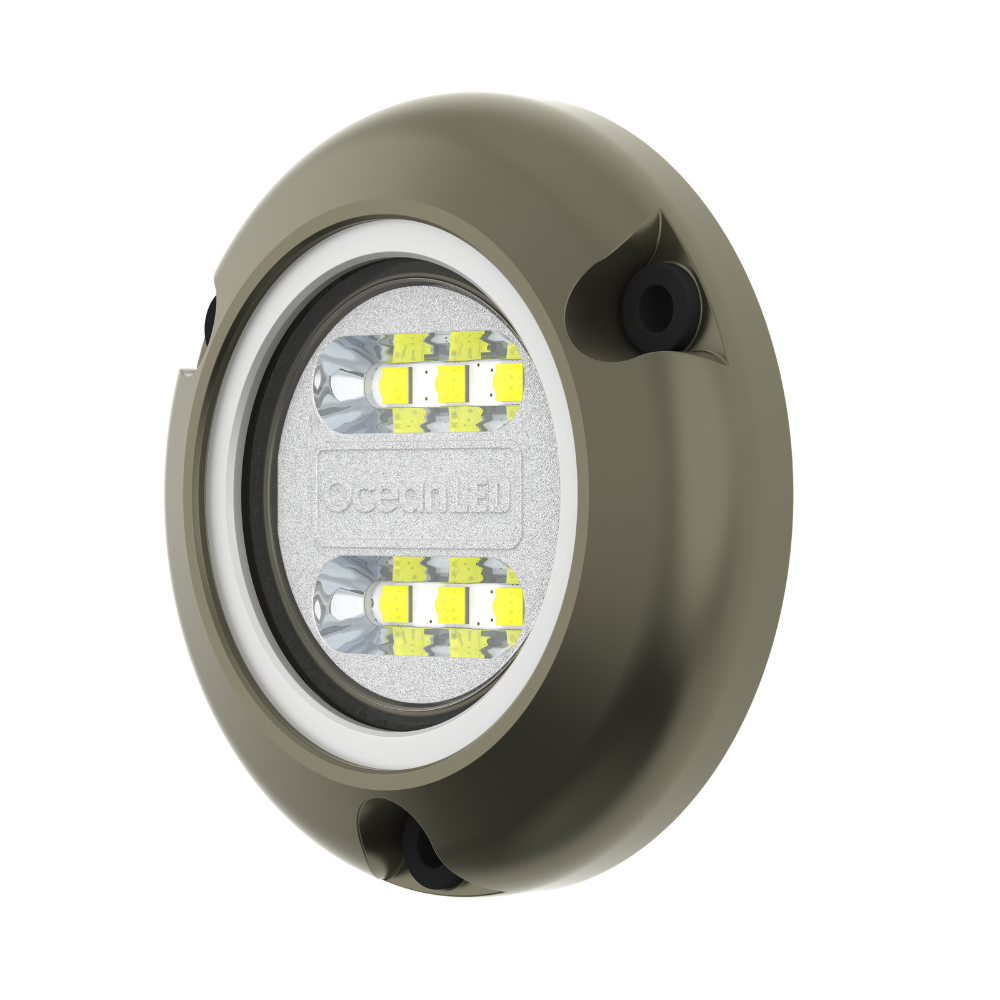
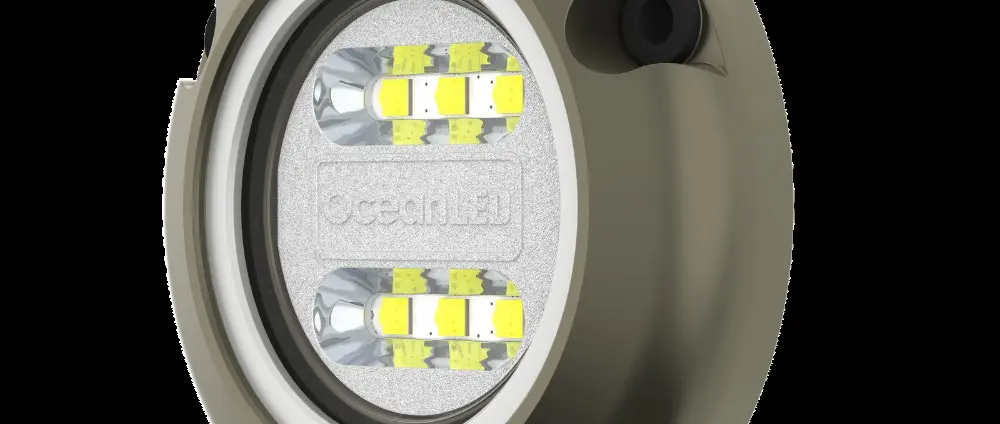
Lead photograph: SPORT Mini underwater lighting fixture family - official OceanLED manufacturer illustrative product image. OceanLED, official SPORT Mini family product photograph (illustrative of product family, not specifically the RGBW colour output). Original official image source.