Lloyd’s Register adds independent certification
The approval confirms that NAVIDURIN has been assessed against Lloyd’s Register requirements for marine applications. VETUS says the certification provides an external validation of a material it developed specifically for products exposed to the heat, pressure and mechanical demands found around yacht engines and associated systems.
For builders and installers, independent type approval can simplify product selection because it provides a recognised reference beyond the manufacturer’s own test data. That is especially relevant where components are installed in machinery spaces with demanding temperature and durability requirements.
The composite is designed for heat and pressure resistance
VETUS describes NAVIDURIN as a specially blended polymer containing additives selected to improve durability, resistance to extreme heat and pressure, and tensile and flexural strength. Those characteristics allow the material to be used in applications where conventional plastics may be less suitable.
Marine machinery spaces combine vibration, temperature changes, moisture and prolonged operating cycles. Materials used in exhaust, cooling and other engine-related systems therefore need to retain their structural properties throughout repeated heating and cooling as well as normal mechanical loads.
Several VETUS products already use the material
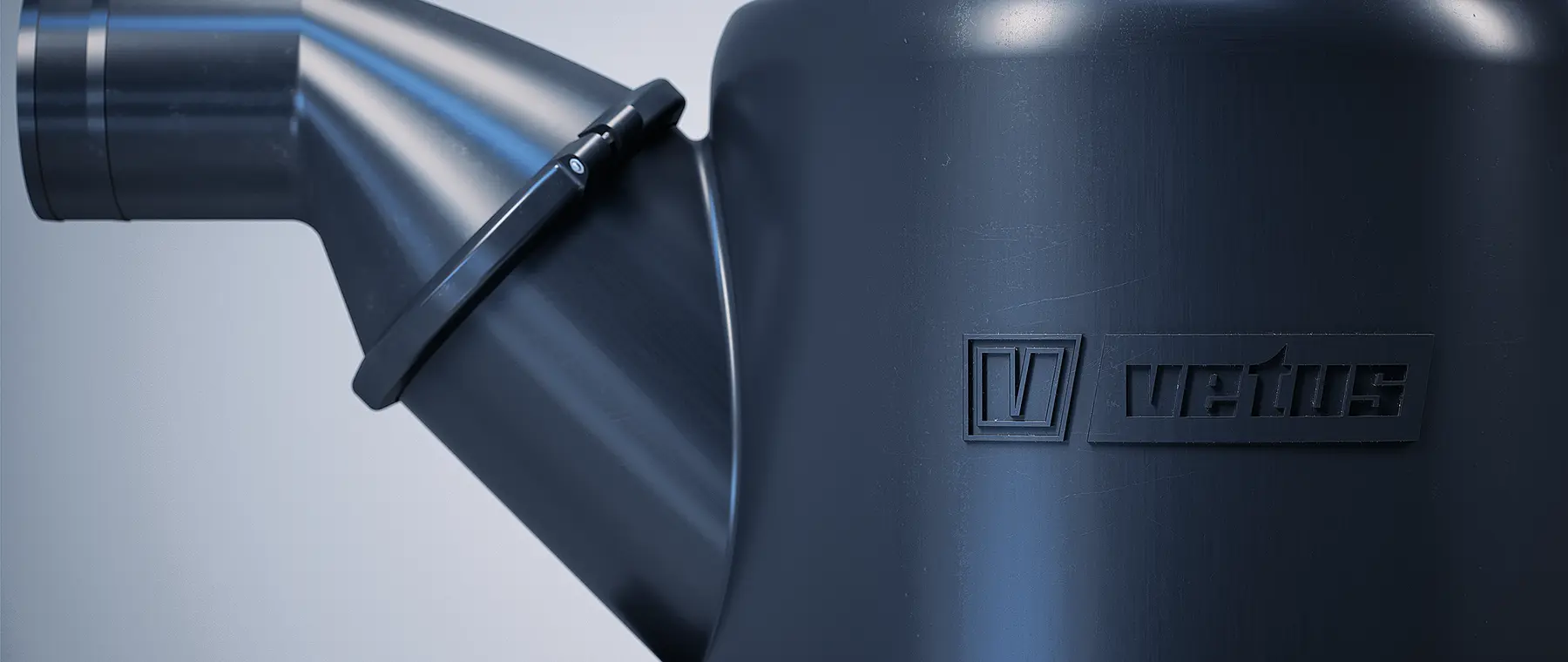
NAVIDURIN is incorporated into multiple VETUS products used around marine engines. The company positions the blend as a way of combining lower weight and corrosion resistance with the mechanical properties required for reliable onboard service.
For yacht owners, material choice is rarely visible after installation, but it can influence service life and maintenance. Components that resist corrosion and deformation can reduce the likelihood of failures in systems that are difficult to access once a yacht is fully commissioned.
Certification supports wider use in recreational yachts
VETUS serves recreational, commercial and military marine markets, so Lloyd’s Register approval gives the material a recognised status across several operating environments. The company says the certification is significant for customers and partners specifying components for future projects.
In the LYG sector, the approval is relevant to both production builders and owners planning refits. Certified materials can help equipment suppliers demonstrate that newer composite components meet established marine standards while offering practical alternatives to traditional materials.
Official sources: vetus.com.