A maintenance-focused return to Amsterdam
Veneziani Yachting is taking a hull-protection programme to Metstrade 2026 in Amsterdam, with a renewed epoxy primer and a self-polishing antifouling among the products it intends to discuss. The company's 5 November announcement, distributed under the Boero name, places its Protect Your Passion theme at the centre of the 17–19 November exhibition at RAI Amsterdam. The important news for owners of 12-to-23.99-metre yachts is not the slogan but the emphasis on the coating system beneath it. The Italian brand is describing how surface preparation, anticorrosion protection and antifouling selection fit together in a maintenance programme. That matters particularly for owners who commission a winter haul-out or plan a significant refit, because paint performance depends as much on preparation and compatibility as on the name printed on a tin.
What the company is showing
The source statement identifies two products by name. Adherpox Pro is described as an updated multifunctional two-component epoxy primer, and Raffaello Pro as a hydrophilic self-polishing antifouling for sailing boats and medium-speed craft. Veneziani says its display will be in Hall 7 at stand 07.100. The event has not yet taken place, so the correct description is a planned presentation rather than a post-show product test. The release does not supply independent comparative trial data showing how these coatings perform on a named yacht against competing systems. Owners looking for a credible reason to consider them should begin with the technical data sheets, authorized application guidance and the compatibility of each product with their hull. A show demonstration may explain the range; the actual refit will still depend on material, environment and workmanship.
Adherpox Pro and its proposed role
According to the manufacturer's information, Adherpox Pro has an updated formulation intended to offer greater versatility during application in differing environmental conditions. Veneziani describes it as adhering to various substrates, including light alloys, and as usable above and below the waterline. It can also form part of a corrosion barrier when applied in multiple coats and serve as an intermediate layer ahead of the company's antifouling finishes. These claims define possible applications, not a universal instruction to put it over any existing coating. The choice of substrate treatment, surface profile, film thickness, recoat interval and environmental limits is fundamental to the finished system. On aluminium yachts, for example, compatible treatment and careful attention to galvanic and coating interfaces are essential considerations. Owners should ask the contractor to follow the current technical sheet and document the preparation and inspection stages.
Why a primer is not a minor detail
A yacht's underwater finish is often judged by its appearance after relaunch, when a smooth coat can suggest a job well done. That impression is incomplete. The base layers protect the hull from the environment and determine whether subsequent paint can adhere properly. Contamination, moisture, inadequate sanding or the wrong intermediate product can undermine an otherwise premium topcoat. The wider importance of a multifunctional epoxy primer is therefore the possibility of fitting several stages into a specified system, provided the substrate and previous coatings are suitable. But a product name alone cannot confirm that compatibility. A coating survey should identify what is already on the hull and whether the new schedule calls for spot repair, a complete strip-back or a more targeted treatment. False economies at this stage can become expensive if the boat needs to be hauled again.
Raffaello Pro for particular cruising profiles
Veneziani describes Raffaello Pro as a hydrophilic self-polishing antifouling using copper compounds and pure carbon particles. The release targets sailing yachts and medium-speed boats, and states that the formulation is designed for warm, temperate and mixed waters. Its intended behavior is a gradual consumption of the coating during service, limiting long-term accumulation of film thickness. Those descriptions are manufacturer statements. They do not establish a guaranteed season length or the same result for a boat that spends months stationary as for one that cruises frequently. Water temperature, salinity, fouling pressure, time at berth and vessel speed can all influence the choice of underwater coating. It is essential to check the legal and technical suitability of biocidal products in the places where they will be applied and used; permission and label rules differ by jurisdiction.
A 12-to-24-metre yacht's operating reality
The maintenance challenge changes as a yacht grows beyond the size of a dayboat. Haul-out availability, lifting capacity, access to the hull, propeller and appendage treatments, and the cost of time out of service become more consequential. An owner with a 16-metre cruiser may plan one main annual maintenance period; another running a similar length boat over longer distances may have a very different service cycle. The new Veneziani offering is relevant to both, but the publication supplies no yacht-length-specific coverage table or recommended interval. Estimates should be built from actual underwater area, number of specified coats, surface condition and the contractor's working method. A low quoted material price is not necessarily a lower complete job cost, especially if preparation or unplanned repairs take longer than expected.
Environmental claims need precision
Modern marine-coating marketing frequently uses words such as efficiency, protection and sustainability. The distinction between the coating's intended purpose and a measured environmental outcome should be kept clear. A smoother, clean hull can reduce drag compared with a heavily fouled one, but this release does not quantify fuel savings attributable to Raffaello Pro on a particular vessel. Nor does it publish a comparative life-cycle assessment for the new primer. Copper-based antifouling also raises compliance and disposal questions that must be addressed rather than ignored under a general message about environmental care. Wash water, removed paint, sanding dust and used containers need to be managed under the yard's authorized procedures. Owners can ask for product safety data, application approvals and the yard's waste-handling method before the work begins.
The PoliMi Sailing Team connection
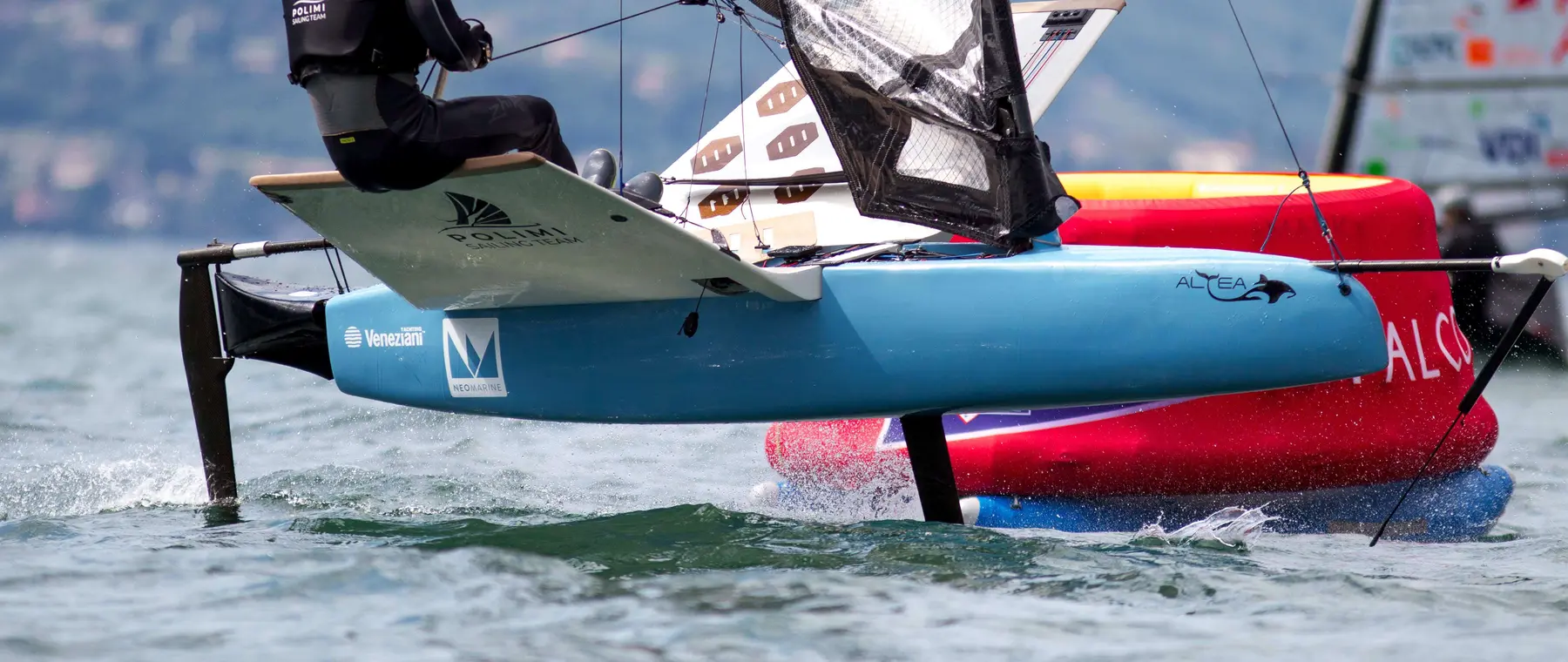
Part of Veneziani's presentation concerns its support for the PoliMi Sailing Team, a student engineering project linked to Politecnico di Milano. The company says it supplied products and expertise for Altea 2.0 and that the boat won the SuMoth Challenge 2026 on Lake Garda. That is a specific example of an educational partnership, not evidence that an antifouling system has been independently certified as superior for cruising yachts. Such collaborations can still be valuable. Students working on ambitious sailing designs confront material, weight and manufacturing decisions in a setting where engineering and testing matter. Equipment suppliers may learn from those discussions and help young designers gain practical familiarity with industrial processes. The useful editorial angle is the exchange between training and marine manufacturing, separate from any claims about ordinary yacht maintenance.
Questions for the refit specification
An owner considering a change of coating system should ask the yard for a written specification before booking a lift. It should identify existing coating condition, required stripping or repair, primer type, number of coats, target film build, antifouling selection, drying conditions and final inspections. The planned work should also cover keel, running gear, rudders, trim tabs or other underwater appendages where treatments differ from the main hull. Warranty responsibilities need to be clear if the yard, paint supplier and independent applicator are separate companies. A reference to a manufacturer being present at Metstrade is not proof that a local contractor is trained or that a particular application will be warranted. Completion photographs and batch records may be worthwhile evidence for an owner who later sells the yacht.
The relevance of waterline and topside work
Adherpox Pro's advertised above-and-below-waterline applicability may be of interest when a repair crosses the boundary between underwater protection and exposed topside coatings. Even so, cosmetic finishing and corrosion protection are different technical tasks. A system used as an underwater barrier must be checked for compatibility with any primer, filler or finish above it. Working conditions also matter; temperature, humidity and timing can affect how well each layer cures. The brand's announcement says the new formula aims for wider application versatility, but owners should not interpret that as permission to disregard specified limits. An experienced applicator should be able to explain the reason for each layer and the surface tests performed. The most reassuring finish is one with a documented process behind it, not merely an attractive appearance at handover.
What Metstrade can and cannot establish
Metstrade is a trade exhibition, so its main practical value is bringing manufacturers, distributors, contractors and boatbuilders into the same place. For Veneziani, the Amsterdam stand offers a chance to discuss detailed usage questions and to explain the new products to people who specify marine coatings. A product presentation there can clarify documentation, but the show floor is not a controlled substitute for long-term performance monitoring at sea. Prospective buyers should distinguish technical sheets, testing standards, warranty conditions and independent case histories. Where a coating is being introduced in a revised formulation, past experience with an older material is informative but not necessarily equivalent to data for the latest product. Questions about compatibility with other manufacturers' finishes also deserve explicit written answers.
The next maintenance decision
The confirmed announcement is that Veneziani Yachting will showcase Adherpox Pro, Raffaello Pro and its student-team collaboration in Amsterdam from 17 to 19 November. The practical follow-up is to obtain current data sheets and assess any proposed system against the boat's construction, usage and service location. Luxury Yacht Guide is not presenting laboratory claims or fuel-consumption improvements that the manufacturer has not demonstrated in the material reviewed. For owners preparing a winter yard period, the useful message is straightforward: choose a coating programme through specification and evidence, with careful surface preparation and responsible waste handling. A well-maintained hull protects the vessel's long-term condition, but the quality of that work is determined in the yard as much as at the exhibition stand.
Source: Boero Group / Veneziani Yachting press statement, 5 November 2026, published by PressMare. The performance and product characteristics cited are manufacturer claims and have not been independently tested by Luxury Yacht Guide.
Photograph and image credit: Official Boero Group / Veneziani Yachting image issued with the Metstrade 2026 press announcement; supplied to the trade press for editorial reporting. Photo identifies the brand's presentation, not an independent coating performance trial.