LGM prepares new addressable fire-detection system for Amsterdam
British specialist LGM Products has announced that it will show an expanded marine fire-detection portfolio at Metstrade 2026, including an early preview of a new addressable system whose detailed specification has not yet been disclosed. The company's announcement is dated 21 October and identifies stand 08.174 in the Superyacht Pavilion at RAI Amsterdam for the 17–19 November exhibition. Its existing systems include WES3 wireless fire detection intended for construction and refit environments, and the Esento Marine conventional range for smaller and medium-sized vessels. For Luxury Yacht Guide's 12–23.99-metre yacht audience, the important news is the prospect of more choice in alert-system architecture, with technical verification required before any installation decision.
Why fire detection is an integrated yacht system
A marine fire-detection arrangement is not simply a smoke detector fixed to a ceiling. Depending on the vessel, it may comprise sensors, manual call points, control panels, sounders, visual alarms, power supplies, wiring and interfaces with other equipment. Its role is to provide warning early enough for crew or occupants to respond through the vessel's established emergency plan. The arrangement must be appropriate to the spaces it protects and the standards that apply to the yacht. A beautifully finished luxury cruiser can contain engines, generators, batteries, galley equipment and electrical installations in spaces with different environmental conditions. Sensor selection and alarm logic must therefore be designed as a system, not purchased as unrelated items.
What LGM has actually announced
LGM says the Metstrade stand will demonstrate WES3 wireless solutions, Esento Marine conventional equipment and an as-yet unnamed new addressable marine fire-detection system. The forthcoming panel is described in general terms as offering flexibility, functionality and a simplified operator experience. There is no publicly stated model reference, device limit, power budget, panel size, network topology, price or commissioning date in the 21 October release. The company is expressly keeping further details for later disclosure. A prospective buyer can reasonably register interest and prepare technical questions, but cannot responsibly claim the system already meets a particular yacht's requirements without the specifications and evidence.
Conventional fire alarms have a defined place
The Esento Marine range offers a practical contrast to an addressable concept. LGM's published product catalogue includes Haes Esento Marine conventional control panels in 2/4-zone and 8/12-zone configurations, along with repeater-panel options. Those are catalogue descriptions of existing products, not specifications for the new addressable platform. In a conventional arrangement, an alarm zone may help a crew identify a general area that needs attention, whereas an addressable network can potentially distinguish individual devices if the chosen system supports that function. Owners should never assume that the word 'addressable' alone guarantees a certain level of fault reporting, redundancy or compliance. The actual panel and detectors must be assessed together.
The size of the yacht matters, but so does its layout
Two boats of similar overall length can have remarkably different detection needs. A 14-metre day cruiser may have one accommodation level and a compact machinery space; a 22-metre long-range motor yacht can have multiple cabins, separate crew accommodation, several machinery areas and more complex ventilation. The number and distribution of alarm zones should follow an approved fire-risk and systems design, not a rule of thumb based solely on metres. LGM positions its Esento conventional equipment towards small and medium vessels, but this announcement does not declare that a particular panel is universally suitable for every boat in the Luxury Yacht Guide range. The installer must confirm the vessel's exact design requirements.
Wireless technology belongs to several different tasks
LGM also highlights WES3 wireless marine fire detection. Its current product listings include wireless smoke and heat detectors, call points, signal-extending links, interfaces and base or control units. Many of those listings explicitly mention shipyards, new builds and vessel refits. That context matters. A temporary detection network used during construction, welding or a major refit may have a different design brief from a permanent system installed aboard a finished yacht. It would be a mistake to describe every WES3 component as an approved permanent shipboard replacement without checking the product's intended installation and certification. Wireless can remove some cable-routing burdens, but signal propagation, battery management, supervision and operating environment remain vital considerations.
A shipyard's fire risks differ from the owner's
Construction and refit activity can introduce temporary fire hazards when hot work, solvents, electrical tools and unfinished systems are present. Permanent yacht alarms may be incomplete, disconnected or not yet commissioned during these stages. A temporary wireless arrangement can be evaluated for those project conditions, but its effectiveness depends on planning, supervision and site procedures. In the completed vessel, a permanently installed detection system must be integrated with the rest of the yacht's safety equipment. A supplier's ability to provide both product classes can be helpful to a yard, yet the two operational roles must not be conflated. LGM's announcement supports discussion of different use cases, not a claim that one configuration suits all phases.
Questions for the new addressable panel
The proposed new panel raises several useful questions for designers. How many devices or loops can it supervise? What fault conditions are reported? Does it provide clear location information and event history? What power sources and battery-backed arrangements are supported? Which detectors and interface modules are approved, and under what marine certifications? Can it be connected to other onboard monitoring or alarm equipment without affecting required safety functions? No answer should be invented from the phrase 'new generation'. The company's scheduled preview is an opportunity to request documentation, see the user interface and determine when full specifications and any independent approval certificates will become available.
Approvals must be checked item by item
LGM's online catalogue shows filters for approvals associated with certain existing components, including marine and safety-system marks. A catalogue filter is not a substitute for the actual certificate covering the exact device and application under consideration. Yacht owners, builders and surveyors should obtain the relevant documentation from the manufacturer or supplier, verify its current status and confirm which installation conditions apply. Different vessel registration, classification and commercial-use arrangements may impose different requirements. The company has not yet published the new addressable panel's certification details in the launch note. Until those are available, assertions that the product is approved for a particular class of yacht would go beyond the evidence.
The human interface can be as important as the sensor
An alarm is effective only when its meaning is understood and the crew can act. If a panel identifies an incident too vaguely, occupants may lose time looking in the wrong area. If it is difficult to read in a dark wheelhouse or provides confusing multiple indications, its theoretical features may not translate into practical safety. Conversely, a complicated display is not automatically superior to a simple, reliable one. A proper evaluation should include how alarms are acknowledged, how faults are distinguished from fire warnings and what happens after a power interruption. Training, written emergency procedures and accessible operating instructions need to form part of the installation project.
Engine spaces pose special considerations
Machinery compartments can involve heat, vibration, oil mist, exhaust systems and electrical equipment. Those conditions influence detector selection, positioning, maintenance and potential false-alarm risks. A device suitable for a relatively clean accommodation cabin may not be right for a hot engine room. The announcement does not include a recommended detector map or placement rules for any particular yacht, so such guidance should come from the approved design and device manuals. Integrating detection with any fire-suppression arrangement requires particularly careful engineering and should not be improvised on the basis of general product claims. The responsibility for appropriate system design lies with the qualified specialists engaged for the vessel.
Refit challenges on a finished luxury interior
Routing new cabling through a completed yacht can be intrusive, especially when cabins use high-value joinery, fabric-lined panels and complex service voids. That may make a supplier's wireless or networked options interesting, but the visual convenience of an installation cannot justify an unverified safety compromise. A refit team should survey the existing alarm system, test power and communications routes, record which devices remain serviceable and agree a commissioning plan. During changeover, the yacht's safety arrangements must remain managed. LGM's new system may eventually offer another option, but without compatibility tables and installation drawings it is too early to promise that it will retrofit a given yacht with minimal disruption.
Metstrade can clarify the product roadmap
The company is using the Amsterdam exhibition to meet boatbuilders, refit yards, marina operators and systems integrators. LGM's strategic-development director Nic Mogford-Revess describes the event as a chance to discuss emerging detection challenges and future innovations. The location is stand 08.174, with the exhibition running from 17 to 19 November 2026. Visitors should regard the addressable product as a preview until the full engineering release is made. A trade-show demonstration can help establish the panel's intended use and level of maturity, but it does not replace a sea trial, certification review or the commissioning process for an actual marine installation.
Questions about ownership cost and service
For an owner, the total cost of a fire-detection upgrade includes design, hardware, cabling or wireless infrastructure, installation access, programming, commissioning, training, routine inspection and future component replacement. No pricing has been released for the new addressable system. It would therefore be misleading to give a per-cabin price, claim a quantified saving against a conventional panel or promise a particular installation schedule. Prospective clients can ask LGM about regional service coverage, spare-part availability, service training, documentation, warranty and how existing products may be supported over time. Reliable maintenance can matter more over a yacht's life than a small difference in initial purchase cost.
Relevance beyond the Superyacht Pavilion label
Although LGM is exhibiting within Metstrade's Superyacht Pavilion, its Esento range is explicitly described for small and medium vessels. The pavilion is a business location, not proof that every product is intended solely for yachts over 24 metres. That distinction is essential for Luxury Yacht Guide's editorial remit. Our interest is in the technical options that may be appropriate for cruising yachts from 12 to just under 24 metres, subject to verified certification and project-specific design. We make no claim that a particular size class must adopt the forthcoming equipment, nor that it can replace existing approved installations without professional assessment.
The verified development is an advance preview
The company has established a real Metstrade appearance and named a new addressable fire-detection concept alongside existing conventional and wireless portfolios. Detailed performance, certification, availability and pricing remain unannounced. That is enough to make the preview worth tracking, provided its limits are stated. Builders and owners should enter the discussion with precise questions and avoid treating exhibition language as an installation recommendation. If the new panel is to become relevant to luxury yachts, the decisive evidence will be its published technical documentation, suitable approvals, integration possibilities and service support after the show.
Primary sources: LGM Products, 21 October 2026; and the manufacturer's Esento Marine and WES3 catalogue listings. The unreleased addressable product has not been assigned invented specifications.
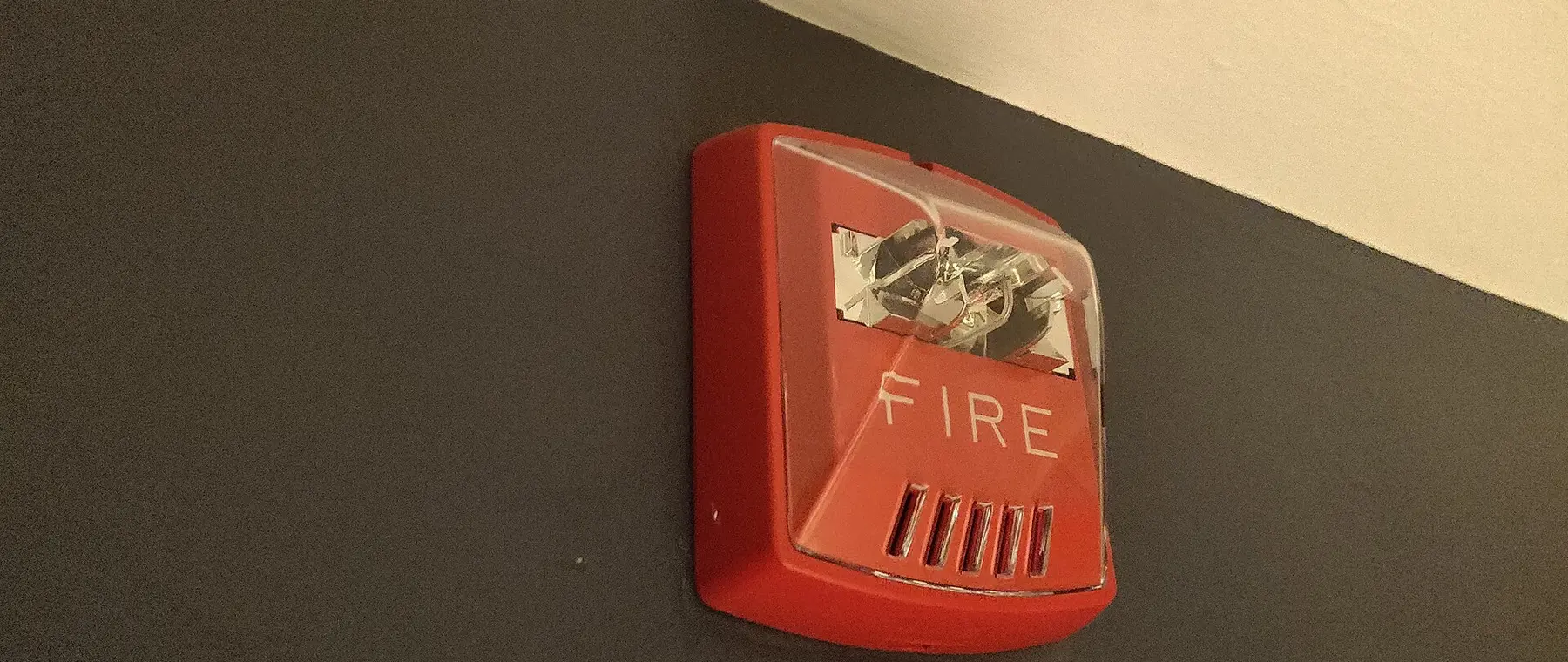
Photograph and rights: An illustrative fire detector and alarm photographed by Kurtkaiser on Wikimedia Commons, CC0 public-domain dedication; resized for web. The photograph is not LGM equipment and does not document a marine installation or the unreleased addressable panel.