A bridge between older sensors and new yacht electronics
Veethree Technologies is presenting its VR2CAN dual sender interface as part of its equipment portfolio at METSTRADE 2026. The company described the product in an exhibitor announcement published on 1 October, explaining how existing analogue sender signals can be converted into information transmitted over a digital vessel network. The Amsterdam exhibition, running from 17 to 19 November, provides an opportunity for builders and refit specialists to discuss that approach.
The interface is distinct from Veethree's range of configurable displays. Its purpose is to acquire measurements from existing equipment and make those measurements available in a standardised communications format, rather than to act as the screen on which they are viewed. According to the supplier, the device has two isolated analogue inputs and can be configured for resistance or voltage signals.
For luxury yachts in the 12 to 23.99 metre sector, its relevance is particularly apparent when a new helm is being planned around existing machinery. The owner's objective may be to see additional information on new instruments without replacing every tank sender or modifying the vessel's mechanical systems. Whether that is possible depends on the characteristics of the existing equipment, the available connections and the configuration of the proposed network.
Understanding the source of a tank reading
Fuel and freshwater tanks may be equipped with senders that measure the position of a float or another quantity related to the level of liquid in the tank. The electrical output of an analogue sender is interpreted by the instrument to which it is connected. Some arrangements vary resistance, while others provide a voltage signal. The interpretation of that signal depends on the characteristics of the sender and its installation.
Replacing the gauge with a network-connected display does not necessarily mean that the original sender is unusable. A converter may be able to handle the analogue signal and produce a message representing the relevant measured quantity. Veethree identifies slowly changing signals, such as those from fluid-level or position senders, as intended uses of VR2CAN.
Before proceeding with a conversion, the installer should identify the sender and establish its measurement range and electrical requirements. In some cases existing records may be incomplete, particularly when equipment has been altered during the yacht's service life. The published description of a converter cannot establish that an unidentified sender is compatible with it.
The distinction between acquiring an electrical signal and obtaining a reliable measurement is essential. A conversion device does not repair a damaged sender, remove a mechanical obstruction or establish what the measured position means in terms of the liquid remaining in the tank. Those issues must be evaluated separately when the new instruments are commissioned.
Irregular tank shapes and non-linear calibration
One of the features highlighted in Veethree's October announcement is the ability to configure a calibration table for a fuel tank whose cross-sectional area varies with height. On a vessel, tank geometry may be influenced by the shape of the hull, available structural spaces and the need to accommodate other machinery. As a result, changing the liquid level by a given amount does not necessarily represent the same change in volume throughout the entire tank.
A simple interpretation based on a linear relationship between level and volume could therefore produce misleading indications. The supplier describes provisions for mapping sender readings to values through a custom table, allowing an installer to account for a non-linear relationship where adequate calibration information is available.
The quality of that mapping is dependent on the information used to establish it. The ability to enter a series of values does not mean that the correct values are already known for a particular tank. A builder with reliable tank geometry and sender documentation may have a different starting point from a yard working on an undocumented installation.
Even with appropriate calibration there may be differences between a stationary vessel and one moving at sea, especially when the liquid surface moves in relation to the sender. The usable quantity may also differ from the total volume indicated, depending on the pickup arrangement and other factors. The interface is thus a means of improving the representation of available measurements, not a guarantee of remaining voyage endurance.
Two marine communications options
Veethree describes the device as offering conversion to either J1939 or NMEA 2000 data. Both are associated with controller area network communications, but the information and requirements of the relevant application protocols must still be considered. An installer should establish which protocol the receiving equipment supports and what specific measurements it is capable of presenting.
The manufacturer's announcement identifies configurable look-up tables for other measurements, including temperature, pressure and trim. It also states that the analogue inputs have protection against voltages of up to plus or minus 50 volts, including while the interface is unpowered. That supplier specification should not be interpreted as a general permissible operating supply voltage or as evidence that the device can be connected to any arbitrary electrical circuit.
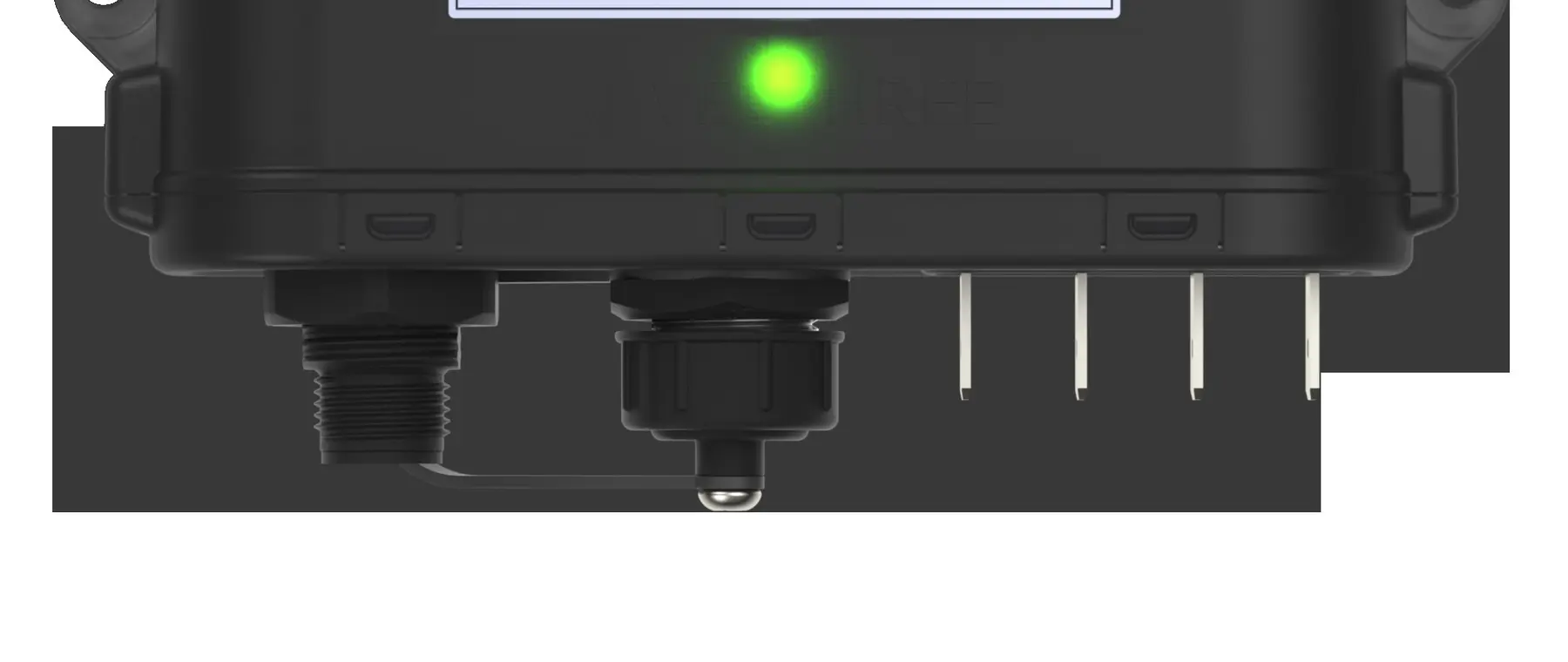
According to the exhibitor documentation, configuration can be carried out through the supplier's PC application or over the CAN bus, and the desktop application can also be used to update firmware. A visible indicator provides information concerning device status. The precise methods and dependencies should be confirmed in the current documentation for the delivered version.
These capabilities provide options for an electronics integrator, rather than establishing that any receiving display can automatically recognise every configured measurement. An appropriate commissioning exercise should verify the identity, type and units of the information presented to the user.
Refit records and the usefulness of a consistent display
For yacht owners planning an electronics upgrade, a clear record of the existing installation can reduce the uncertainty associated with introducing new displays and networks. It should be possible to identify which components provide each important measurement and which equipment depends on the information. A change intended primarily to improve the appearance of a helm may otherwise have unintended consequences for the availability of vessel information.
An existing conventional gauge could be serving a system that remains important when another instrument is unavailable. Replacing or rearranging that equipment should be considered in relation to the complete installation. The introduction of a network converter may provide additional display options, but it can also create a new dependency on the converter, its power supply and the communications network.
The available manufacturer material does not establish the correct redundancy arrangement for a particular yacht. Nor does it specify that the original gauge may always remain connected in parallel with a newly installed interface. Those questions should be investigated with the responsible electrical and electronics specialists.
Following commissioning, useful service documentation would identify the equipment connected to each input, the relevant configuration and the intended interpretation of the display. In the case of a calibrated tank, retaining the original calibration information may be particularly helpful when subsequent work changes a sender, network component or display. The yacht's technical records should allow future service personnel to understand how a reported value was obtained.
The commercial context of the presentation
A specialist converter occupies a different place in the marine equipment supply chain from a complete navigation or machinery system. Its value is often determined by how effectively it can connect two generations of equipment. Builders may be interested in using existing components in a revised vessel architecture, while refit yards may see an opportunity to preserve suitable hardware that would otherwise have to be replaced.
Veethree's exhibitor catalogue describes VR2CAN as a product preview. Its October release identifies the technical concept and intended functions but does not specify pricing for a completed yacht conversion or give an independently verified comparison of accuracy for individual tanks. The company does not announce a new yacht installation with the system in the statement.
This makes the discussion at METSTRADE particularly relevant to equipment suppliers and system integrators evaluating future projects. They can examine the product documentation, establish the availability of the configuration tools and determine the conditions under which the interface would fit a proposed installation.
For the luxury yacht market, the development demonstrates that progress in vessel monitoring need not always begin with replacement of the component making the physical measurement. It may instead involve a better means of acquiring, interpreting and distributing information from a suitable existing sensor. The practical benefit of that approach depends on verified compatibility, accurate calibration and a properly documented integration process, rather than the mere presence of a digital message on the yacht's network.
Sources and lead image
Source documentation: https://www.metstrade.com/exhibitors/veethree-technologies/news/vr2can-dual-sender-interface, https://www.metstrade.com/exhibitors/veethree-technologies/products/vr2can-dual-sender-interface. Lead image: Official Veethree VR2CAN interface product image showing the front and connector edge — Veethree Technologies, official METSTRADE exhibitor product image; not a photograph of a commissioned yacht installation.. Issuer-supplied media asset published with the relevant official exhibitor release or product catalogue made available through the official virtual press room for coverage of the announcement; copyright remains with the rights holder.