Industry recognition for a familiar marine material
Sunbrella Plus Recycled has received a Special Mention at the 2026 DAME Design Awards, bringing renewed attention to the way protective yacht textiles are manufactured. The result is particularly relevant to the manufacturing and support products sector because the development concerns the material from which a cover is made, rather than a new powered mechanism or a feature intended to be conspicuous aboard the finished vessel. Sunbrella identifies the recognition in its official METSTRADE exhibitor product listing, and the textile is being presented during this week's industry exhibition at RAI Amsterdam.
The product is not an entirely new launch dated 18 November. The catalogue identifies an earlier release, in November 2025, and the November 2026 award recognition is the current development. The distinction matters to buyers seeking to understand whether they are assessing an established specification or a proposed technology that has yet to be made available.
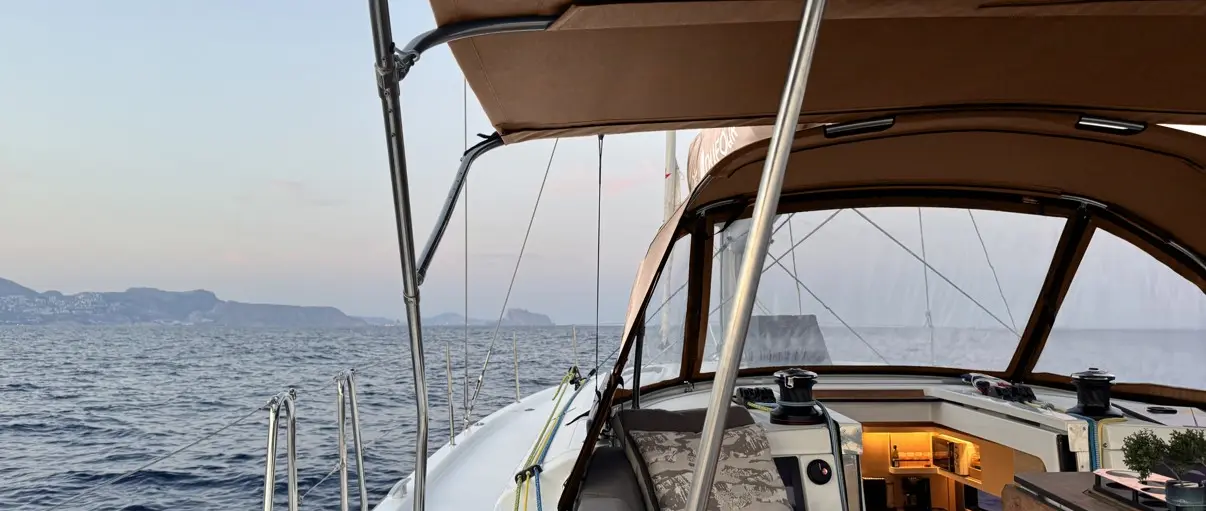
For a yacht in the 12 to 23.99 metre segment, protective canvas can form a substantial part of the equipment used in ordinary operation. It may be employed to shelter the cockpit, protect an area of deck or cover equipment when the vessel is not in use. Such textiles must combine properties desired by the yacht's owner with characteristics that allow the fabricator to make a cover suited to the dimensions and arrangement of the individual boat.
Recovered material within a defined yarn construction
The manufacturer identifies an overall recycled-material content of 33 per cent for Sunbrella Plus Recycled. Its exhibitor documentation describes a fabric manufactured in France using acrylic material recovered from its own production waste, rather than claiming that the entire textile is made from recovered fibres. The distinction between the proportion of recycled material in a finished fabric and the composition of a particular yarn is important in evaluating the product.
The technical brochure describes a manufacturing sequence in which fabric waste is collected and sorted into colour groups. It is processed into recycled fibres, combined with virgin fibres and spun into a yarn used in the weaving process. The brochure identifies a 50 per cent recycled yarn content in the warp, with high-tenacity yarn in the weft. Warp and weft are the longitudinal and transverse yarn systems that together form the woven textile. A percentage given for one system must not be mistaken for the percentage in the complete fabric.
This construction reflects two different objectives: recovering some material from an industrial process and maintaining characteristics needed in the finished textile. The company's decision to use high-tenacity yarn in one direction illustrates the importance of preserving a defined material specification rather than considering recycled content in isolation.
A yacht builder or canvas maker evaluating the material should establish the precise specification and colour reference being offered by the supplier. The characteristics of another item carrying a similar brand name or a different recycled-content claim cannot automatically be transferred to this fabric.
What dimensional stability means on a yacht
A protective cover on a yacht may remain under tension for significant periods, while experiencing changes in temperature, exposure to sunlight and weather, and repeated installation or removal. The shape of the finished item often matters to its ability to perform the intended task. If a textile changes dimensions substantially in service, the arrangement of the cover and its relationship to the supporting frame may change.
Sunbrella's technical brochure compares the elongation of its high-tenacity yarn with standard acrylic yarn under a stated laboratory procedure. The company reports approximately 4.7 per cent elongation for the high-tenacity yarn, compared with 13.4 per cent for the standard yarn in that comparison. These are reported laboratory figures for the yarn comparison, not measurements of how much an individual completed cockpit canopy will stretch over the course of a season.
The result of a finished marine canvas project depends on more than the woven material. The geometry of the supporting structure, orientation of the individual fabric panels, seams and method of attachment are among the factors relevant to its behaviour. The textile's properties should therefore be considered within the overall design of the cover.
A large, unsupported panel might present a different challenge from a smaller section supported by a closely spaced frame. The installation should also account for the intended conditions of use and any limitations identified by the responsible fabricator. The manufacturer's yarn comparison is useful evidence concerning the design approach, but does not independently establish the performance of every possible finished item.
Fabric selection for a luxury-yacht refit
A yacht undergoing an exterior refit may have an established canvas arrangement that the owner wishes to retain. The appearance of the material is important, but a project can also involve decisions about the condition of the existing frame and fittings, ease of removal, accessibility of equipment and compatibility with the surfaces that the textile will cover.
A technically suitable fabric is one element of that project. The canvas maker must determine the panel geometry and construction needed for the intended service, and should verify the relevant manufacturer's instructions for cleaning and maintenance. The resulting cover should be assessed in relation to the actual dimensions of the yacht, rather than merely reproducing the specification of a superficially similar project.
The range's use of recovered production materials may also be relevant to owners seeking to make purchasing decisions with environmental considerations in mind. Its stated recycled content provides a specific characteristic that can be discussed with the supplier. It does not on its own establish the total environmental impact of the finished cover or quantify a saving for the individual yacht.
The origin of the recovered material is worth noting. The company's description concerns offcuts and waste from textile manufacturing, not discarded yacht covers collected after use. Recovering material within the production process may help make use of material that would otherwise be lost, but that is distinct from establishing a collection and recycling arrangement for the finished marine cover when it reaches the end of its service life.
The relationship between durability and material use
Protective textiles are exposed to conditions that can differ substantially between vessels and cruising areas. A yacht based in the Mediterranean may have a different pattern of ultraviolet exposure and cover use from one maintained in a cooler climate. A charter vessel may see the cover handled by many different people during a single season. A private yacht kept ashore during part of the year can have its own storage requirements.
The amount of material used over time is influenced by the frequency with which items need to be replaced. A durable cover that remains suitable for its intended purpose may therefore present different resource considerations from one that requires more frequent replacement. This does not mean that a single manufacturer's dimensional-stability comparison establishes a complete life-cycle result.
A buyer seeking to compare products on environmental grounds should request comparable technical and environmental information wherever available. The scope of the analysis, material composition, intended use and assumptions about service life need to be understood before drawing numerical conclusions. A percentage reported for production waste or recycled content is not interchangeable with a percentage reduction in emissions.
For the yacht owner, a useful purchasing discussion can bring these aspects together with the ordinary practical requirements of the project. A fabric that cannot be used effectively for the proposed cover would not become suitable merely because it contains recovered material. Conversely, environmental attributes can be a meaningful point of differentiation when the practical requirements of competing materials have been established.
A recognition of design rather than a universal approval
The 2026 Special Mention provides industry recognition for Sunbrella's combination of recycled material and textile construction. It is not a DAME category win, nor does it amount to a certification of the performance of every cover made from the cloth. The company's brochure and exhibitor documentation provide the starting point for evaluating the product, and the award announcement gives yards and suppliers a reason to examine it again during METSTRADE.
The award is also relevant to the commercial relationship between textile suppliers and the businesses responsible for turning fabric into yacht equipment. It is the finished installation that an owner will handle and use. Its quality depends on the selection and construction of the fabric, the work of the fabricator and the suitability of the supporting arrangement.
Availability of the required textile reference, lead times for fabrication and the ability to maintain a consistent appearance across replacement items are useful questions to discuss before a refit is commissioned. The November recognition does not provide a price for a specific cover, identify a newly completed luxury yacht using the product or establish the service life of an individual installation.
For the luxury yacht sector, the significance of the development lies in the attempt to combine a defined source of recovered material with the mechanical characteristics expected of marine protective canvas. The award provides an opportunity to examine that technical and material proposition in detail rather than relying on environmental marketing alone. Its value to a particular project remains dependent on a correctly specified textile and a well-designed, properly maintained cover.
Sources and lead image
Source documentation: https://www.metstrade.com/exhibitors/sunbrella/products/sunbrella-plus-recycled, https://stpsprodwe.blob.core.windows.net/media-blobs/b63228077d1560dbdd5b57e973f4ef48.pdf. Lead image: Sunbrella official exhibitor photograph illustrating a sailing yacht cockpit and protective canvas — SUNBRELLA, official METSTRADE product catalogue image illustrating a marine canvas application; the individual yacht and fabric specification are not identified.. Issuer-supplied media asset published with the relevant official exhibitor release or product catalogue made available through the official virtual press room for coverage of the announcement; copyright remains with the rights holder.