Four screen formats, one development approach
At METSTRADE in Amsterdam this week, Veethree Technologies is showing the completed RT-Series family of configurable displays. The company described the expanded range in an exhibitor announcement dated 30 September 2026, building on the C4.3RT device introduced at the previous year's exhibition. It now identifies four formats, including seven-inch and five-inch touchscreens, a compact 4.3-inch unit equipped with tactile buttons and a small circular display. The equipment is being presented at stand 12.621.
The development is of particular interest to builders and systems integrators rather than solely to purchasers of standalone navigation equipment. Each display forms part of a family designed around common development architecture. A designer could therefore consider different physical interfaces for different positions on a vessel without automatically starting a completely separate engineering project each time. The company does not claim that an owner can transfer any existing display application unchanged.
A luxury yacht in the 12 to 23.99 metre segment may have an enclosed wheelhouse, a flybridge and a secondary station where space is especially restricted. The functions needed at each position will differ, as will the physical environment and the person using the equipment. The four-format approach offers a wider set of choices in that design process.
Different controls for different working positions
The largest T7RT model uses a capacitive touchscreen with a seven-inch colour panel, and the smaller T5RT offers a five-inch touchscreen format. Veethree describes the C4.3RT as a unit with physical buttons illuminated by RGB lighting. The round R3RT completes the series at approximately three inches in diameter. This is a portfolio decision rather than an argument that one form of control is inherently preferable in all marine applications.
A touchscreen can provide a flexible arrangement of information and functions because the graphical layout can be changed without altering individual mechanical buttons. A tactile control may be more appropriate for some operations when the user wants to find a particular input without looking closely at the interface. Gloves, water on the surface, vessel motion and the nature of the required action can all influence the decision. Designers should examine the suitability of each device for its location and intended role rather than generalise from the nominal screen size.
A small circular instrument may be useful in a console where a large rectangular opening would conflict with other equipment. Conversely, information that must be interpreted quickly or displayed alongside multiple parameters may benefit from the available surface area of the larger screens. The manufacturer's range provides alternatives, but it does not establish what must be displayed for navigation or determine the correct layout of a yacht's helm.
Communications and the difference between hardware and integration
According to the exhibitor documentation, the family supports two CAN connections, including CAN FD capability, as well as Ethernet, RS-485 and USB connectivity. Configurable analogue and digital inputs and outputs and a frequency input are also described. The T7RT product description specifies an isolated CAN channel alongside a CAN FD-capable channel. These are useful characteristics when assessing possible connections to vessel systems.
Having a physical communications interface does not mean that two items of equipment can interpret each other's information. CAN is a means of exchanging messages, and the definition of those messages may depend on a particular protocol or application. An existing engine installation may use equipment and network conventions different from those of a new panel. A system integrator needs to establish how the data are encoded, which messages can be read or transmitted and what configuration is needed before a replacement screen can be made useful.
Likewise, Ethernet connectivity alone is not evidence that a screen can substitute for a chartplotter, display any available video stream or control a particular manufacturer’s equipment. The announcement concerns the capabilities of configurable displays. Implementation of a specific function is a separate development task, and the supplier's documentation should be consulted for the relevant software, hardware and integration arrangements.
Security features are a design starting point
Veethree highlights secure-boot support in describing the RT-Series and says its architecture has been developed with contemporary cybersecurity requirements in mind, including the European Cyber Resilience Act. Secure boot is generally intended to establish that software being loaded at startup meets a defined trust policy. It is one possible component of an equipment security design, rather than proof that a connected vessel is protected against every form of interference.
An important distinction is the one between a feature supplied in the equipment and the way it has been configured in the complete vessel. A yacht may contain a service network, communications equipment and several systems which have different requirements for access. The security of a component cannot establish the security of all those connections. The responsibilities of the builder, equipment manufacturer and software developer need to be clear if changes or updates are expected over the life of the boat.
The September announcement says the devices are designed to support regulatory requirements. It is not an independent certification report or a definitive statement about a specific installation's legal obligations. A commercial purchasing specification should request the applicable documentation, the supported update method and the expected software maintenance arrangements, rather than relying on the description of the family alone.
Consequences for yacht production and refit work
Standardising aspects of a display family can have practical implications for a boatbuilder making several models or versions of a yacht. Some elements of the user interface and the software development process may be reusable across different products, provided the applications and hardware are compatible. That can help a company manage the number of distinct platforms it must support, particularly if it supplies both enclosed and open versions of a helm.
For a refit yard, the relevant considerations are often different. The existing panel cut-outs, wiring, availability of power and network layout may impose limits that a newbuilding designer does not face. The yard also has to establish whether the present instrument arrangement provides functions that cannot be removed or relocated without consequences. An ostensibly small change in display equipment can therefore become part of a much larger electrical or systems integration project.
The manufacturer's figures and communications specifications are a basis for further investigation. The necessary next step is to review the precise equipment and intended application, including operating environment, mounting, display visibility and available connections. The September release does not provide a price for a complete installation or a schedule for supplying customised software to an individual owner. Those would require separate discussion.
A useful comparison at the trade exhibition
The Amsterdam show allows yacht builders and systems specialists to compare the physical formats and discuss how software can be developed for them. Veethree says each device uses common platform elements, and emphasises the possibility of reducing engineering effort when moving between projects. Its announcement also identifies a real-time clock with a replaceable battery, illustrating that long-term equipment maintenance can involve minor components as well as major software decisions.
For the luxury-yacht market, the most useful question is how an individual display can serve the overall architecture of the vessel. A suitable instrument must present the required information intelligibly, work with the installed systems and remain maintainable throughout the yacht's service life. A wider choice of display formats gives the designer additional flexibility, but does not remove the need for documented commissioning and testing.
The completed RT-Series is consequently best understood as an expansion of a building block available to the marine industry. The exhibition is an opportunity to assess its suitability for upcoming new builds and winter refits. The final design, functional capabilities and performance of any yacht using the equipment would depend on its specific engineering and installation, not simply on the manufacturer's announcement.
Sources and lead image
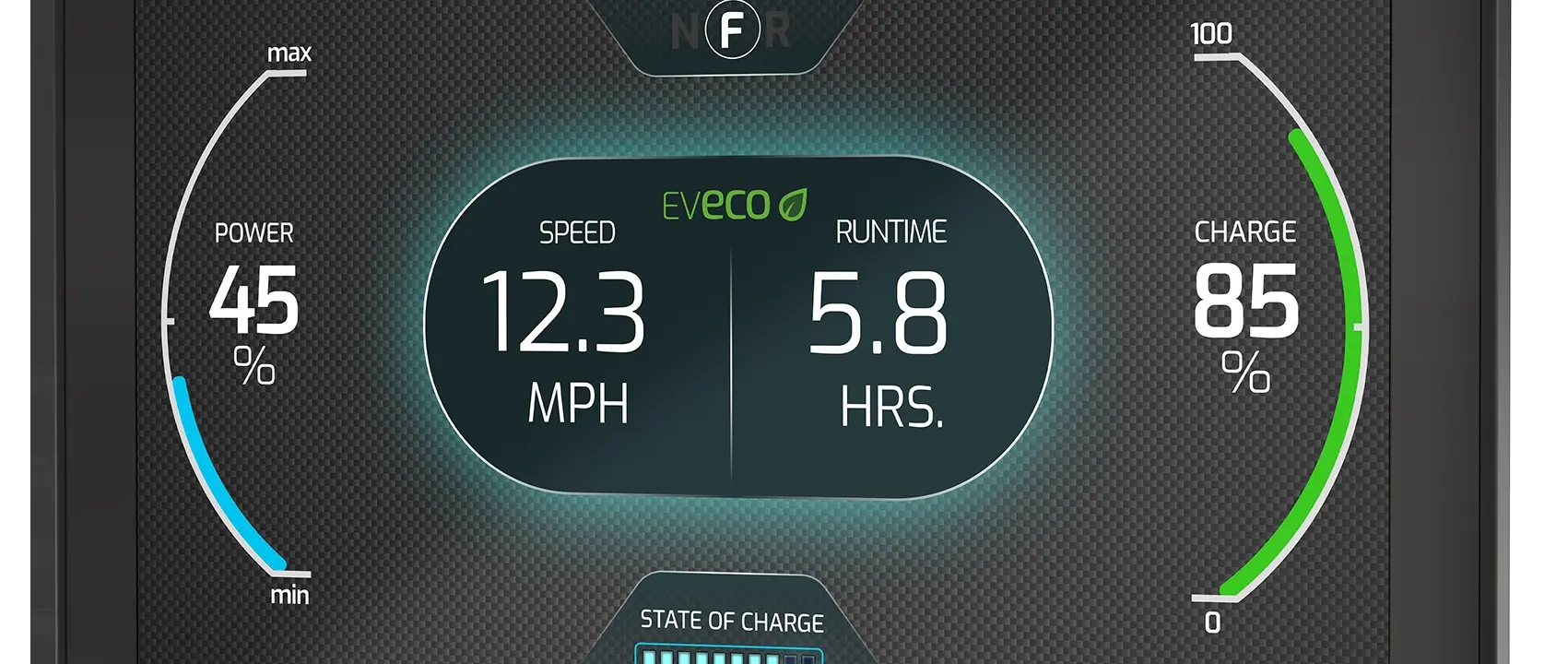
Source documentation: https://www.metstrade.com/exhibitors/veethree-technologies/news/rt-series-our-new-cyber-secure-display-range, https://www.metstrade.com/exhibitors/veethree-technologies/products/t7rt-7-ips-tft-can-bus-display. Lead image: Official Veethree T7RT product illustration with example display interface — Veethree Technologies, official exhibitor product illustration; example screen is illustrative rather than a measurement from a specific yacht.. Issuer-supplied media asset published with the relevant official exhibitor release or product catalogue made available through the official virtual press room for coverage of the announcement; copyright remains with the rights holder.