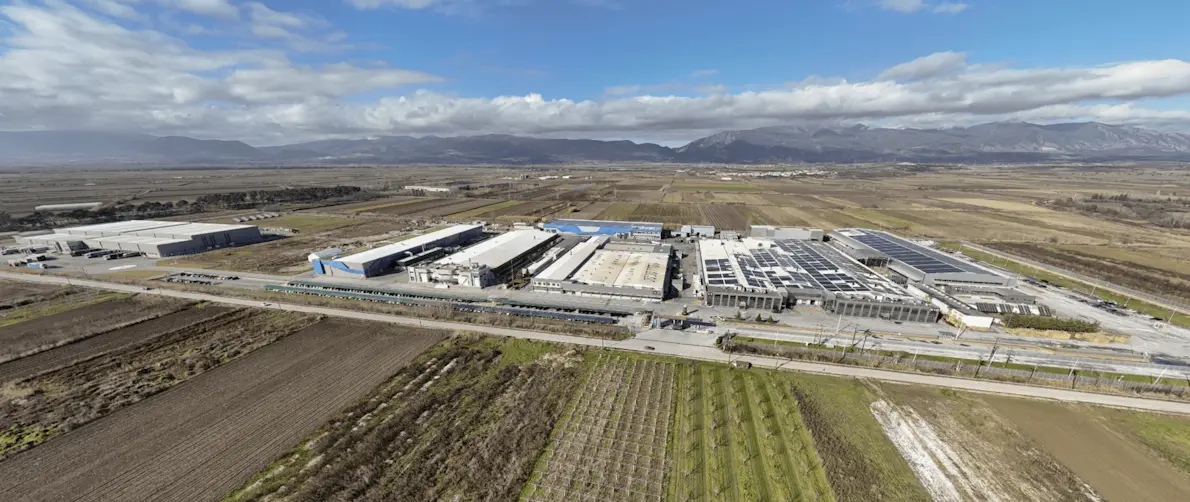
Sunlight Group has opened a dedicated automated production and assembly line in Xanthi, Greece, for battery systems from its subsidiary Lehmann Marine. The line is fully operational and is designed for annual output of up to 300 MWh, giving the group substantially greater capacity for marine energy-storage projects.
The first 82 CUBE battery units have already passed assembly and quality-control stages. Sunlight says final Factory Acceptance Testing remains at Lehmann Marine's Hamburg facility, allowing production scale in Greece to be combined with specialist marine commissioning in Germany.
Marine battery production moves into industrial scale
Battery systems for yachts have often been built in relatively small batches compared with automotive or stationary-energy products. A dedicated 300 MWh line shows how marine electrification is moving toward a more industrial manufacturing model as electric and hybrid propulsion become more common.
Higher production capacity can improve availability and manufacturing consistency, although yacht installations still require vessel-specific engineering. Battery chemistry, cooling, protection and high-voltage architecture must all be matched to the yacht's operating profile.
Lehmann keeps marine engineering in Hamburg
Automated assembly and product preparation take place in Xanthi, while Lehmann Marine retains final acceptance testing in Hamburg. That split lets Sunlight use its large-scale manufacturing expertise without removing the specialist marine knowledge required for final delivery.
For yards and system integrators, the arrangement creates a clearer European supply chain from production through testing and service. It also gives the group room to add further production lines if demand rises.
Battery demand extends beyond full-electric yachts
Large lithium battery banks are not limited to fully electric propulsion. Hybrid yachts, high-capacity hotel systems and vessels designed for silent overnight operation can all require substantial stored energy even when diesel engines remain aboard.
That makes battery manufacturing relevant to a much broader section of the 12-to-23.99-metre market. Owners may encounter the technology through generator-free hotel periods, peak-load management or hybrid assistance before considering fully electric cruising.
Manufacturing capacity is only one part of the equation
More battery supply can support wider adoption, but safety, certification, installation quality and lifecycle support remain critical. Marine battery rooms and high-voltage systems need careful integration because thermal management and fault containment are especially important on a vessel.
Sunlight's new line therefore matters because it expands industrial capability while keeping final marine testing within Lehmann's specialist operation. For yacht builders, that combination could make larger energy-storage packages easier to source as electrification programmes move from prototypes into repeat production.