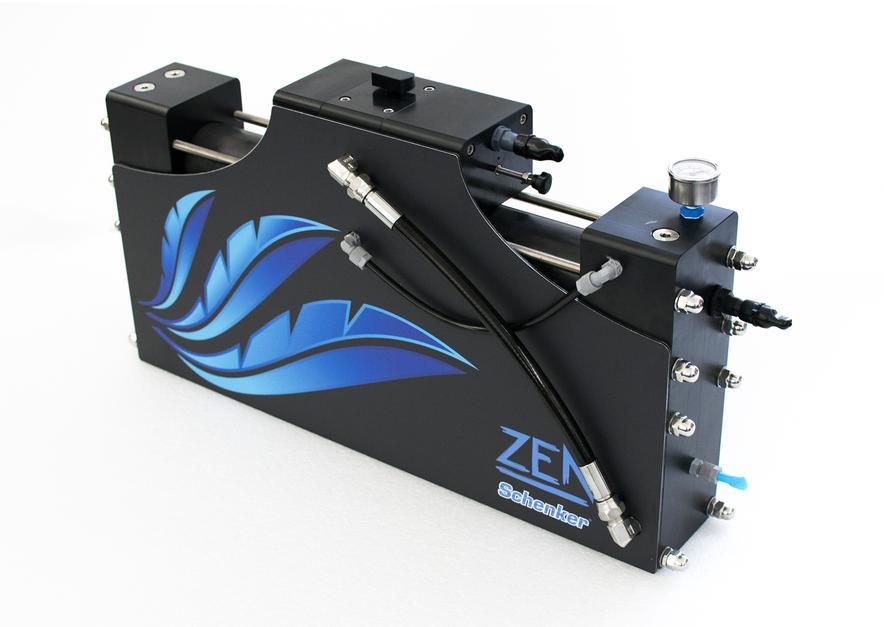
Schenker Italia is presenting its compact ZEN50 marine watermaker through the 2026 METSTRADE equipment catalogue, putting electrical efficiency and onboard water autonomy into focus for owners of smaller cruising boats. The manufacturer specifies a nominal freshwater production capacity of 50 litres per hour, electrical consumption of 240 watts and operation from a 12- or 24-volt DC supply. Schenker identifies boats such as 35-to-45-foot sailing yachts and smaller motor yachts or catamarans as typical applications, with the requirements of four to six people in mind. For the lower end of the 12-to-23.99-metre luxury-yacht market, these figures are useful because watermaking equipment must share available space and electrical power with navigation, refrigeration and other systems. The listing describes a current catalogue product; it should not be misrepresented as a newly invented technology first launched in November 2026.
Water independence as a cruising consideration
A yacht that can produce its own freshwater may reduce the frequency with which it must visit facilities to refill its tanks. That can be valuable in remote anchorages or on a passage where clean shore water is inconvenient. However, a watermaker is not a guarantee of unlimited supply. It depends on seawater quality, electricity, serviceable filters and functioning machinery. The amount of water the crew consumes also matters. A boat carrying a substantial quantity of drinking water may still require careful conservation if guests use showers and washing equipment frequently. The sensible approach is to consider watermaking as part of an overall provision plan.
A nominal output of 50 litres per hour
The ZEN50 is specified at 50 litres per hour, equivalent to approximately 13.2 US gallons per hour. This is a manufacturer's nominal capacity, not a promise that every installation will produce that amount under all conditions. Seawater temperature, salinity, feed pressure, membrane condition and maintenance can influence output. Owners should compare expected performance with the actual water demands of the people aboard. If a crew requires 150 litres in one day, the nominal figure suggests around three hours of operation at the advertised rate. Actual production time may be longer, and the quality of the product water must still be confirmed.
Why 240 watts matters
Schenker lists electrical consumption as 240 watts, a modest figure compared with many other onboard loads. At the specified rating, one hour of operation would consume approximately 0.24 kilowatt-hours, not including other equipment or power-conversion losses outside the stated value. A four-hour period would therefore represent about 0.96 kilowatt-hours at the nominal power level. Such calculations help owners plan battery use and charging, but they should not be confused with measured daily results on a particular boat. Correct electrical design considers start-up behaviour, protection, wiring and the complete installed system.
An integrated approach to energy recovery
The manufacturer describes its watermaker range as using an Energy Recovery System intended to reduce electricity demand. Reverse osmosis requires seawater to be treated under pressure, and energy-recovery equipment can make the process more efficient by reducing losses in the pressure circuit. The exact efficiency depends on the system design and operating conditions. Schenker's general description does not supply an independently audited percentage saving for every comparison model. Buyers should seek engineering documentation rather than relying on a broad statement that a watermaker is efficient. The ZEN50's published output and nominal power provide a useful starting point for a more specific discussion.
Twelve- and twenty-four-volt installations
The availability of 12- and 24-volt DC configurations is relevant because smaller cruising yachts may not have the electrical architecture of a large superyacht. A directly powered DC watermaker can be considered alongside battery capacity and charging sources without assuming that a diesel generator must operate constantly. Nevertheless, 12- and 24-volt versions are not interchangeable. Cable sizing, overcurrent protection, grounding and installation location need to match the exact equipment. A qualified marine electrician should assess these requirements, particularly on vessels with a mixture of DC and AC systems.
Where the ZEN50 fits within the market
Schenker refers to 35-to-45-foot sailboats and smaller motorboats or catamarans as typical installations. The upper part of that sailing range overlaps with Luxury Yacht Guide's 12-to-23.99-metre focus. A larger 20-metre yacht carrying more guests and appliances may have water needs beyond the ZEN50's comfortable capacity, and buyers should not assume that one unit suits every vessel in the segment. The model is best evaluated for smaller crews and moderate daily demand. The manufacturer's size suggestions are a guide to potential applications, not an engineering approval for every boat of a given length.
Crew numbers do not tell the whole story
The catalogue refers to a crew or travelling group of four to six people. Water demand can vary far more than that number alone suggests. A group that uses freshwater sparingly may require much less than one that takes frequent showers and uses a washing machine. Visitors coming aboard for a day can also alter consumption. An owner should build a realistic water budget from the planned activities rather than multiplying a generic figure by the number of berths. Tank capacity and an appropriate reserve remain important even when a watermaker is fitted.
Reverse osmosis and water quality
A marine reverse-osmosis system uses a membrane to separate freshwater from dissolved salts and other substances in seawater. The resulting water may be suitable for onboard use when the system is functioning correctly and the vessel has appropriate treatment and storage practices. However, freshwater quality should not be assumed solely from the presence of a membrane. The owner must follow the manufacturer's guidance for flushing, preservation, hygiene and water testing. Seawater in a contaminated harbour may be unsuitable as a feed source. The ability to operate offshore does not mean the equipment should be used indiscriminately in every coastal location.
Feed water conditions affect operation
A watermaker takes seawater from outside the hull, where sediment, suspended material and contamination can vary widely. A good installation must account for the intake, prefiltration, service access and the discharge of concentrated brine. Using the system in a silty marina or shallow anchorage may create additional filter problems. The catalogue summary does not specify the detailed intake design for the ZEN50, so a yard must consult the complete manufacturer instructions. Owners should also understand whether the unit can be used safely while underway and what happens if the feed is interrupted.
Maintenance should be part of the buying decision
An appealing production figure is only one part of the ownership cost. Filters need replacement, seals and pumps must be inspected, and membranes may require cleaning or preservation depending on use and storage conditions. A yacht that sits unused for long periods presents different maintenance challenges from one that produces freshwater every day. Owners should request the recommended service intervals and understand which procedures can be carried out aboard. Spare parts availability in the intended cruising grounds may be as important as the initial purchase price.
Space and access can determine suitability
A compact watermaker still needs a safe and accessible installation location. Equipment may have to fit near existing plumbing, electrical distribution and water tanks without making other machinery difficult to service. A tightly packed installation can complicate routine filter changes and encourage deferred maintenance. The manufacturer's product presentation does not provide the exact dimensions of every optional arrangement in the source used here, so those details should be verified before planning the locker or technical compartment. A realistic installation drawing is more useful than assuming a promotional photograph establishes the clearance required.
Storage tanks remain essential
A watermaker can supplement tank capacity but should not eliminate a sensible freshwater reserve. Equipment failure, poor source-water quality or electrical problems can interrupt production at an inconvenient time. An owner planning a longer passage should consider how much water must be available without the watermaker, including drinking and essential sanitation. Tank hygiene and secure plumbing are also important. The appropriate reserve depends on crew size, climate, voyage duration and available alternatives. This is a seamanship calculation, not a marketing feature.
Combining watermaking with solar generation
The nominal 240-watt electrical demand may appeal to owners considering solar panels and battery storage. In suitable conditions, renewable generation could contribute to the load, but the relationship is not as simple as matching a panel's advertised peak wattage to the watermaker rating. Actual output changes with weather, shading, season and the state of the batteries. Other onboard consumers also need power. A comprehensive energy budget should account for these competing uses and the ability to operate when sunlight is limited. Solar compatibility is a design possibility rather than an assurance of continuous water production.
Noise and guest comfort
Watermakers include moving components and fluid movement that can generate sound and vibration. The manufacturer presents its range as designed for low noise, but the acoustic experience aboard depends on mounting and installation. A pump located near a sleeping cabin may be more intrusive than the same equipment installed in a properly isolated machinery space. Owners should ask for installation guidance and, where possible, listen to a comparable unit operating. Marketing claims about quietness should be checked against the conditions of the particular yacht rather than treated as a universal property.
Environmental considerations beyond electricity
Reducing electrical consumption can be useful, but a watermaker's environmental impact depends on more than its efficiency. Filter waste, maintenance chemicals and the discharge of concentrated brine require appropriate handling and an understanding of the local operating environment. Producing water aboard may reduce some shore visits, yet it does not automatically make a voyage environmentally neutral. Operators should follow applicable requirements and the manufacturer's instructions concerning the intake and discharge. Broader sustainability claims require lifecycle data that the short product catalogue does not provide.
Comparing alternatives responsibly
A buyer considering the ZEN50 should compare the full installed cost, service requirements, nominal water production, electrical demand and the level of support available. A unit with a higher output may be appropriate for a larger crew, while a smaller model could be easier to accommodate aboard a compact sailing yacht. There is no universally best capacity. It depends on the anticipated itinerary and operating pattern. Technical decisions should be supported by the full specification sheet and advice from a qualified installer, rather than by a ranking based on one manufacturer's promotional information.
What the official catalogue confirms
Schenker Italia's original 2026 METSTRADE product listing confirms the ZEN50 name, nominal 50-litre-per-hour output, 240-watt consumption, 12/24-volt DC options and the approximate boat and crew sizes for which it is marketed. Its manufacturer profile describes energy recovery as part of the wider product approach. The source does not publish a third-party sea trial, an independent noise test or a universal delivered price. This article reports the documented specifications and explains their practical significance without inventing a launch date, real-world performance or safety certification.
A useful specification that still requires planning
The ZEN50 illustrates the engineering trade-offs involved in freshwater autonomy aboard smaller luxury yachts. A published output of 50 litres per hour combined with a 240-watt nominal load is meaningful information, but it becomes useful only when related to crew demand, battery capacity and service access. For owners in the lower end of the 12-to-23.99-metre segment, a compact watermaker may contribute to more flexible cruising. The right choice depends on a realistic water-and-energy plan and a reliable installation. The value of the Schenker catalogue entry is that it provides concrete figures with which an owner can begin that assessment.
Sources and image credits
Reporting based on Schenker Italia original ZEN50 50-litre-per-hour energy-recovery watermaker METSTRADE 2026 product catalogue.
Lead photograph: Schenker ZEN50 compact marine watermaker — first-party manufacturer METSTRADE 2026 catalogue image. © Schenker Italia S.r.l. Original official image source.