A timely nomination for a 14-metre adventure cruiser
The Saxdor 460 GTC is one of the boats shortlisted for Best for Adventure at the Best of Boats Award 2026, whose winners are scheduled to be announced at OutVenture Berlin on 26 November. The event makes this a timely moment to assess the 460 GTC's practical proposition rather than revisit the excitement of its earlier launch. Saxdor describes a boat that can shift between a protected wheelhouse and a more open connection with the sea, a combination intended to broaden the conditions and occasions in which owners can use it. At 14.38 metres according to the builder's brochure, the 460 GTC sits squarely inside the Luxury Yacht Guide range. It is large enough for substantial coastal journeys and social weekends but still asks a comparatively small crew or owner-operator to manage a complex deck. Its finalist status is confirmed; a category winner had not been announced at the time of reporting. The question for buyers is whether the convertible concept brings real flexibility over a full season.
What the convertible layout is trying to solve
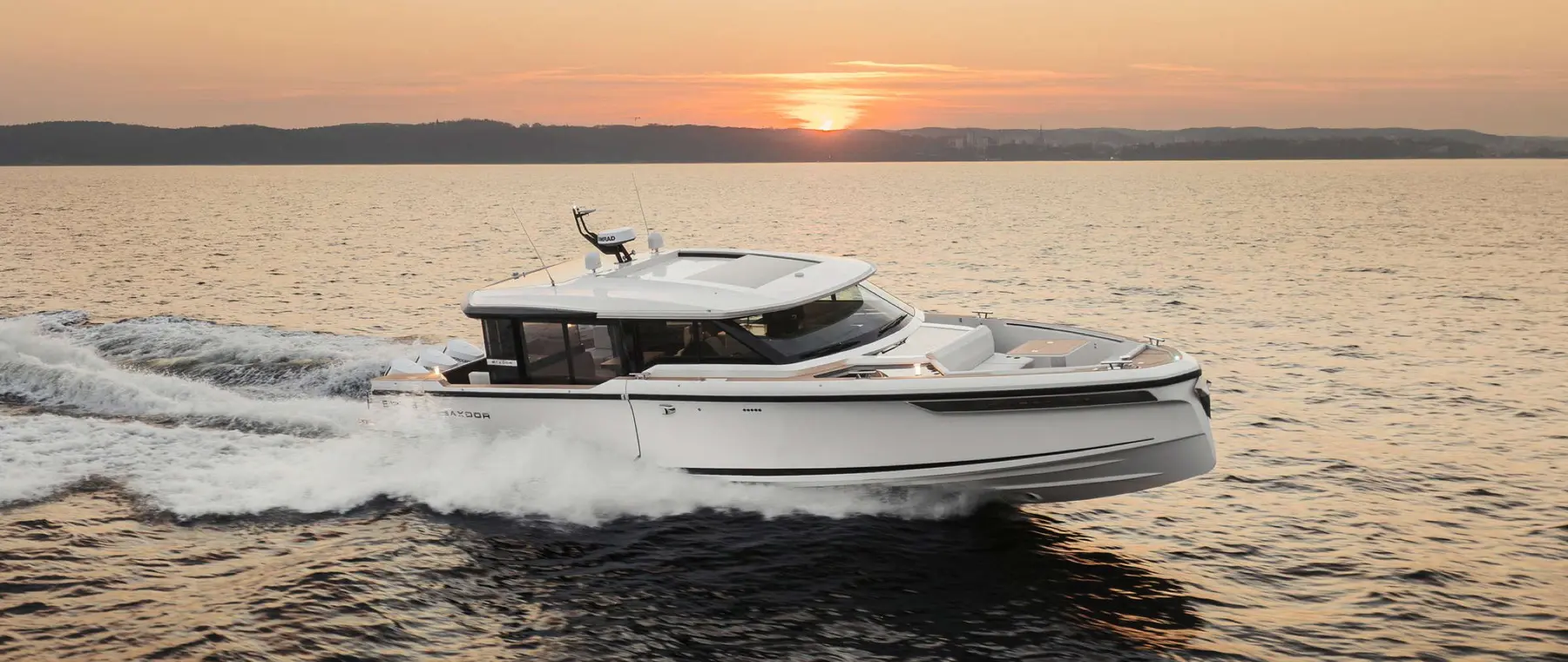
The 460 GTC's design combines large glazed sections, a moving roof and fold-down side terraces. The advertised effect is to let the main deck change character, from enclosed protection to open-air living, without forcing owners to choose a permanently open or permanently closed format at the point of purchase. That is attractive in locations where weather changes during a single passage or where the same yacht is expected to serve different social occasions. Yet convertibility creates its own set of engineering and maintenance questions. The glass, roof and terrace mechanisms must seal reliably, tolerate repeated exposure and be usable by ordinary owners, not just the builder's demonstration crew. Their operation should be evaluated under safe conditions while the boat is secured, with attention to clearances, drainage and the procedures for an equipment fault. Buyers should ask what can be operated when electrical or hydraulic power is interrupted. An ingenious deck feature is genuinely useful only if the boat remains comfortable and secure when that feature is closed for the passage home.
The size and power of the platform
Saxdor's 460 GTC brochure states a length of approximately 14.38 metres and a maximum published engine-power figure of 1,275 horsepower. The exact engine combination and performance of a particular yacht must be checked against its build specification. Numbers on a brochure describe options and design envelopes, not necessarily the equipment carried by every delivered hull. A boat at this size can be capable of covering coastal distances quickly in suitable conditions, but its usefulness depends as much on fuel capacity, load, weather and passenger comfort as on installed power. A sea trial should therefore include normal cruising speeds with a realistic complement of people and gear. Examine visibility from the seated helm, the route between wheelhouse and open deck, and whether passengers have secure places to hold on during a change of course. High performance should be understood as one component of a balanced cruising system, not the sole definition of an adventure boat.
Adventure is about the operating envelope
The Best for Adventure category encompasses several ways to use a powerboat, including day voyages in exposed coastal waters and journeys where protected accommodation matters. It is tempting to read the category as a contest for the highest speed or the most rugged styling. That would miss much of the point. A successful adventure boat should have clear working arrangements for anchoring, secure circulation along the deck, effective drainage, practical stowage and visibility in poor weather. The skipper should also be able to manage routine operations without leaving an inexperienced guest in an unsafe position. For the 460 GTC, one of the most important tests is how the convertible wheelhouse behaves as a protected command station. Does it provide easy access to electronics, charts and controls? Can crew move aft quickly? Are there avoidable blind spots when the boat is loaded? The finalist listing is a reason to investigate those characteristics carefully, not a declaration that any particular answer has already been established.
Why fold-down terraces need practical scrutiny
Expanding a boat's usable deck area at anchor can transform a family lunch or swimming stop. Terraces can open the connection between the cockpit and the water and reduce the feeling of separation that conventional topsides sometimes create. But opening sides also affect procedures. Guests need clear instructions about safe use, especially when children are on board. The crew must know whether the terraces are secured against movement, how they drain, and which positions are permissible during departure and manoeuvring. Fenders and berthing lines need to be handled without damaging moving panels. The ability to clean hinges, seals and recesses deserves close inspection because a yacht used in sandy or salty locations may face accelerated wear. None of this undermines the attraction of the concept; it places that attraction within the real tasks of ownership. Luxury Yacht Guide buyers should insist on seeing every moving arrangement operated several times, not only in a polished boat-show presentation.
A protected wheelhouse expands the season
One of the most persuasive reasons to select a 460 GTC over a completely open sports boat is weather flexibility. A glazed wheelhouse can shelter passengers from spray, cool wind and passing rain, extending the range of days when an otherwise suitable coastal trip remains comfortable. The design challenge is to avoid turning the same space into a greenhouse in warm climates. Buyers should assess glazing treatments, roof ventilation, shading and air-conditioning demands, as well as heating where the boat will operate in northern waters. Condensation control is especially important if passengers remain aboard overnight. Sound insulation matters too: the apparent quiet of a showroom has little relationship to engine noise, hull noise and wind at cruising speed. A serious test includes the boat with the movable roof and glass in different permitted positions. Owners should consider how quickly they can make the wheelhouse secure if weather deteriorates while they are underway.
How the shortlist frames the comparison
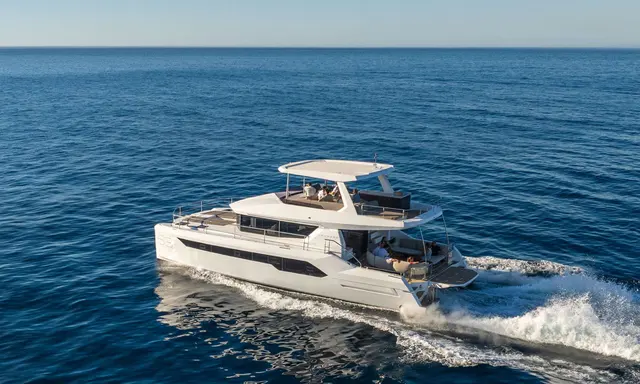
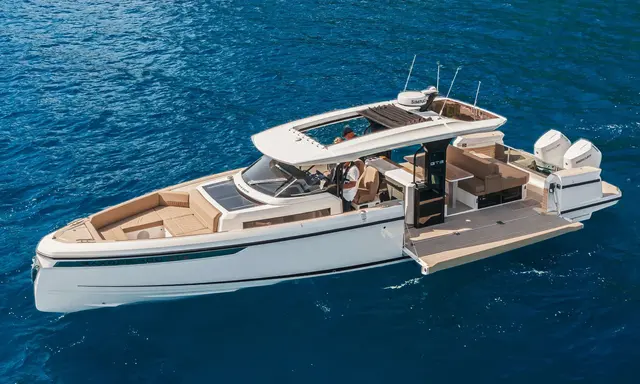
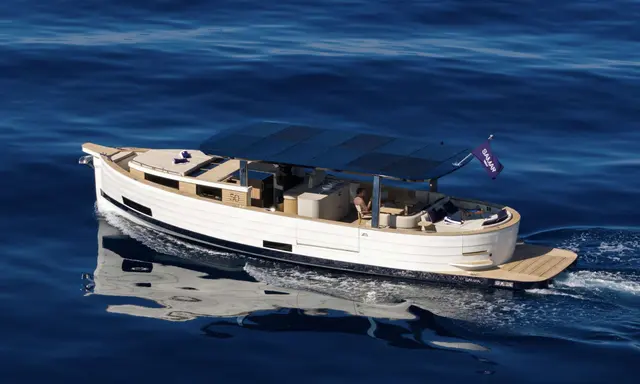
The organiser's Best for Adventure list includes the Saxdor 460 GTC alongside the Axopar 38 Cross Cabin, De Antonio D36 Cabin and Yamarin Aura Cabin. They approach adventurous powerboating from different lengths and layouts, which helps explain why the jury uses the intended user experience rather than simply comparing vessel dimensions. A purchaser of a 14-metre model is not necessarily choosing against a smaller dayboat on price alone. They may need genuine overnight comfort, protected storage and a larger social area, all while retaining responsive handling. Conversely, an owner who values a very compact footprint for short outings might prefer a smaller finalist. The shortlist should be read as a set of competing solutions to actual cruising tasks. It is not evidence that all finalists have identical capabilities or that the larger boat will always be preferable. Comparing them intelligently starts by specifying the routes, passengers and number of nights the boat is expected to support.
The question of guest circulation
On a multi-purpose cruiser, where people stand and how they move can determine whether a pleasant day stays pleasant. A single-level connection between cockpit and saloon can make serving meals and watching children easier, but transitions still need non-slip surfaces, grab points and sensible thresholds. The 460 GTC's fold-down sides and broad glass areas naturally draw attention; buyers should also examine the quieter parts of the plan. How easily can someone move to the foredeck for anchoring? Can a passenger reach a washroom without obstructing the helm? Is there somewhere for wet jackets and shoes when the weather turns? Are doors and panels easy to secure without fingers approaching pinch points? Such details are unlikely to dominate award publicity but can determine everyday owner satisfaction. The best exercise is to imagine a normal return from a wet afternoon, with guests carrying bags, towels and provisions, and then test whether the actual layout accommodates that situation without awkward compromises.
Serviceability and equipment support
The moving components that make the 460 GTC distinctive deserve a planned maintenance programme. Glazing seals, roof mechanisms, terraces, pumps and electrical controls should be included in regular inspections. The builder's service manuals and warranty obligations should identify what owners can check and what requires trained technicians. Machinery access is equally important. Ask how the installed propulsion package is serviced, how many components must be removed for routine work, and whether qualified support is available at the yacht's home berth. Standard checks of fuel systems, battery health, safety equipment and steering should not become more difficult simply because the main deck is flexible. Owners also need a clear plan for storing loose furniture and toys when the boat is closed for a passage. Technical reliability in the adventure category includes getting home comfortably after an equipment failure, not just enjoying the best conditions on the outward journey.
The ownership budget should reflect real use
A powerful 14-metre yacht can be an appealing step up from smaller dayboats, but the annual budget changes with the operating programme. A buyer should account for fuel over realistic routes, marina charges by measured length and beam, routine engine maintenance, winter storage, cleaning of glazing and moving seals, insurance, safety renewals and unexpected repair work. If the boat is operated often by family or friends, upholstery care and replacement of frequently used deck fittings also become relevant. A yacht that is comfortable in varied weather may be used more frequently than an open boat, which is good for owners but increases engine hours and wear. Service intervals should therefore be calculated from planned usage, not the number of weekends shown on a calendar. This is a reason to seek detailed equipment quotations and local service estimates before committing, even if a finalist badge makes the model particularly attractive.
A nomination is a useful starting point
The Saxdor 460 GTC's appearance in the Best for Adventure final is a credible reason for owners to examine a distinctive 14.38-metre concept. The convertible wheelhouse and expanding terraces offer a compelling proposition on paper, especially for those who want a boat that feels open at anchor without surrendering protection underway. Yet the jury's eventual decision cannot replace a sea trial, a survey or the buyer's evaluation of the boat's particular machinery and accommodation. A well-informed decision will weigh the strengths of the design against operational details, including the time required to prepare the deck, the handling of moving structures, the quality of nearby service support and the total cost of ownership. Until the scheduled Berlin announcement, the correct status is finalist. After it, whatever the result, the most important verdict will still be whether the model supports the voyages an owner genuinely intends to undertake.
Official reporting and photo source
The nomination and event date are established by the Best of Boats 2026 shortlist and OutVenture Berlin's published finalist listing. The 460 GTC's concept, dimensions and published power envelope are described by Saxdor Yachts and its official model press release. The lead image is a shipyard photograph distributed in the Best of Boats finalist media archive, under the organiser's free editorial-use permission. Photo credit: Saxdor Yachts / Best of Boats Award 2026 press material. Promotional reuse is prohibited, and no award win is claimed.