A South African power catamaran reaches Berlin
The Leopard 53 Powercat is among the five vessels nominated in the Best Big Boats category for the Best of Boats Award 2026, with winners scheduled to be announced in Berlin on Thursday 26 November. The nomination gives the South African-built power catamaran a place beside the BENETEAU Gran Turismo 50, Astondoa 577 Coupé, De Antonio D60 and Sirena 60. These boats share a broad premium motor-yachting market but differ markedly in propulsion, hull geometry and intended cruising style. For prospective owners of 12–24-metre yachts, the Leopard offers an opportunity to consider whether two hulls provide a more suitable layout than a conventional monohull. The public shortlist confirms the finalist status, not a result. As this article was prepared before the ceremony, no award win is claimed. Leopard's manufacturer materials describe a design intended to provide generous usable space and practical cruising accommodation, while the long-running range's awards record supplies historical context. The current Berlin decision is a separate event and should be interpreted on its own merits.
The distinctive dimensions of a power catamaran
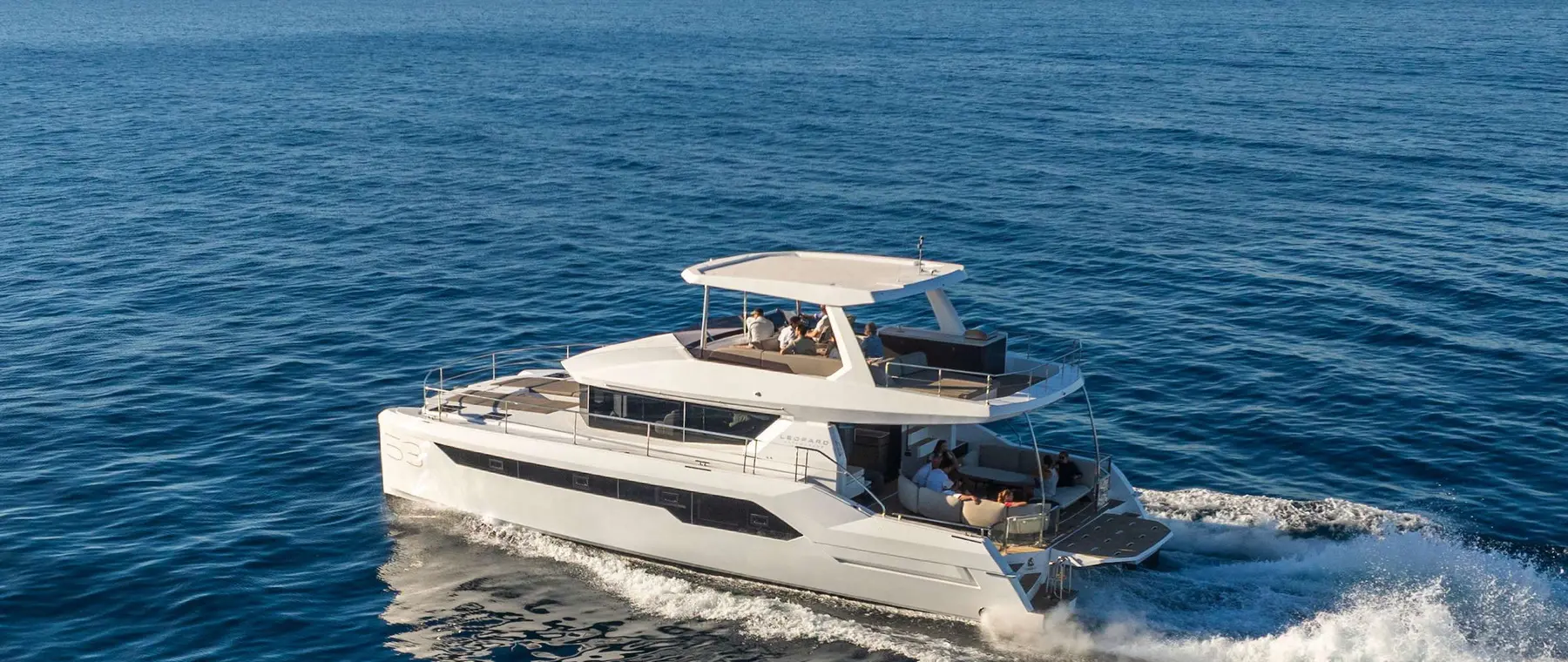
The Leopard 53 Powercat belongs to the approximately sixteen-metre class, but length by itself gives only a partial idea of what the boat is like to berth and operate. Power catamarans distribute buoyancy across two separate hulls, joined by a broad central living platform. This arrangement can create substantial saloon and outdoor seating space relative to overall length, yet it also produces a beam that may exceed that of a monohull with a similar length. That extra width has direct operational consequences: some marina slips will be unsuitable, and others may charge different rates for a catamaran. An owner considering the 53 should request exact overall length, beam, draft and air-draft figures for the configuration under consideration. The shape of a catamaran does not automatically guarantee a comfortable ride in every sea state, and different hull designs behave differently depending on speed and wave direction. A meaningful comparison therefore requires both measured specifications and a sea trial in representative conditions.
The appeal of two separate hulls
One reason owners explore power catamarans is the opportunity to separate accommodations and machinery. The two hulls allow the designer to distribute sleeping cabins and service areas away from the central social deck, potentially improving privacy for families or groups of friends. That can be attractive when guests have different schedules or when one person wants to rest while another prepares a meal. However, the arrangement may place some cabin access in narrow hull corridors and require more steps between spaces than a buyer expects. The interior volume and feeling of openness should be evaluated by walking through the actual yacht, not by assuming that a wide beam translates into uniformly spacious cabins. Owners should check headroom, ventilation, storage, privacy around washrooms and access to machinery. The Leopard 53's nomination invites inspection of these strengths and limitations as a coherent layout. It does not mean a twin-hull format is universally preferable to the express cruisers and long-range monohulls elsewhere on the shortlist.
What matters in an offshore passage
A large power catamaran may appeal to owners who want to travel between islands or along extended coastlines, but its suitability depends on the specific route and operating conditions. The skipper must understand the vessel's turning behaviour, windage and response to quartering or head seas. Visibility from the helm, instrument placement, secure routes to the deck and passenger seating positions matter on longer passages. Fuel capacity and consumption at various cruising speeds should be measured with realistic loading, including water, provisions, passengers and tenders or other equipment. A catamaran's two propulsion installations can offer manoeuvring flexibility in some circumstances, but two engines also mean two sets of routine service tasks. The practical advantage depends on how the boat is fitted and how well a crew understands the controls. Buyers should avoid treating a published range or speed estimate as a guarantee without knowing the test conditions. Documented sea-trial data and experienced instruction are far more valuable than a broad generalisation about the superiority of either hull type.
An owner's everyday life on the main deck
The most persuasive feature of many power catamarans is the broad main-deck environment. A full-beam saloon and adjacent cockpit can allow several people to eat, read or enjoy a view without crowding one another. On a yacht likely to spend many afternoons at anchor, this may be more useful than an increase in maximum speed. Buyers should examine how the interior and cockpit connect, whether the working galley can support family meals, and how easily people move between indoor and outdoor seating when the weather changes. Large glass surfaces bring light but also require management of glare, condensation and heat. Storage for loose items matters because a spacious deck can become untidy when guests carry bags, towels and sports equipment aboard. The skipper should be able to maintain clear access to line-handling stations, anchors and equipment without moving furniture. A boat that appears exceptionally comfortable at a show still needs to work when occupied by the family and prepared for a passage.
Twin-hull handling at the marina
The Leopard's broad footprint changes the way a skipper should think about berthing. The combination of two propulsion units, considerable beam and windage can provide useful control but also introduces distinctive responses to wind and current. A purchaser who has operated only a monohull should arrange qualified familiarisation before assuming the same manoeuvring habits will work. Check sight lines to both stern quarters, deck access from the helm and the positions where crew can secure springs and breast lines. Boarding arrangements may be excellent at one marina and awkward at another because pontoon heights vary. A wide beam can limit which slips are available even when overall length is unproblematic. It is sensible to obtain written confirmations of berth dimensions and charges at the intended home port before committing. These considerations do not reduce the appeal of the Leopard 53; they simply place its generous guest space within the practical constraints of real cruising and marina infrastructure.
Comparing its Berlin rivals intelligently
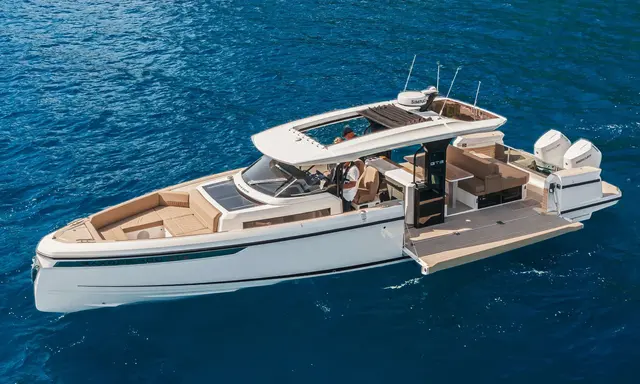
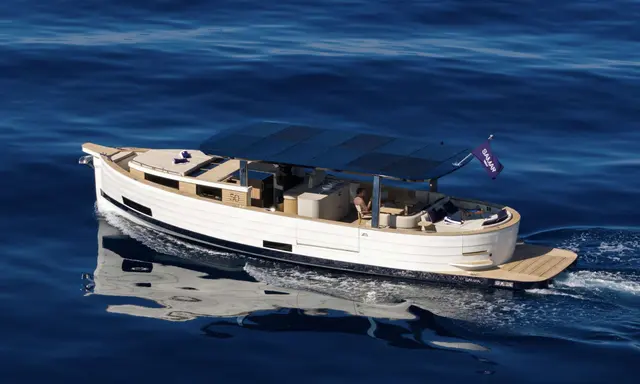
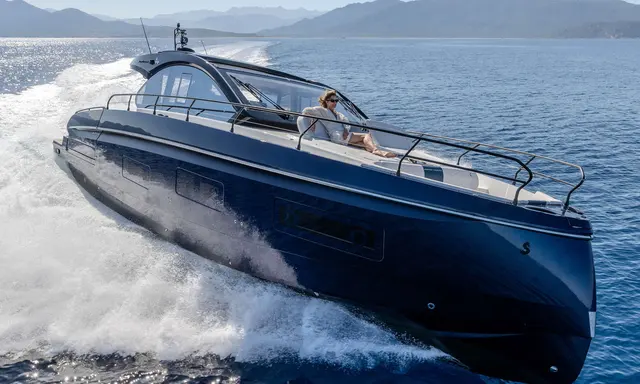
The Best Big Boats shortlist creates an unusually varied comparison. The De Antonio D60 is associated with a four-outboard design and expansive open spaces. BENETEAU's new Gran Turismo 50 approaches premium cruising through a Sport-Luxe express-yacht philosophy, while the Sirena 60 places a different emphasis on long-range comfort and accommodation. Astondoa's 577 Coupé adds another monohull interpretation. The Leopard 53 Powercat is the multihull among these finalists, so it offers a genuine alternative rather than a closely comparable variant of the same basic arrangement. A buyer should draw up a list of intended tasks before deciding which is strongest: spending long afternoons at anchor, completing offshore passages, carrying guests overnight, finding berths in busy marinas and organising a maintenance schedule. A catamaran may excel in one pattern of use while a conventional motor yacht suits another. The award shortlist is useful because it brings those choices into focus, not because all the vessels can be ranked by a single dimension or engine number.
Maintenance and service access
The Leopard 53's operating cost should be examined as the combined result of its installed machinery, domestic systems and ownership programme. Two engines can provide benefits in manoeuvring and redundancy under some circumstances, but they also require routine inspection, filters, fluids and potential repair work. A buyer should ask how each engine compartment is accessed and whether major service components can be reached without disrupting accommodation. The same care applies to electrical systems, watermakers where fitted, air conditioning, steering, pumps and navigation equipment. An established manufacturer and dealer network may provide useful support, but spare-part availability should be checked for the actual cruising area. Owners intending extended voyages should arrange maintenance and contingency plans before departure. When evaluating a used yacht, maintenance records and evidence of proper servicing may be more valuable than optional decorative features. No finalist designation can substitute for an independent technical survey of the particular hull offered for sale.
What a family should check during inspection
A wide layout can appeal to a family, but the best way to assess it is to test normal activities. Can people sleep without being disturbed by socialising on the main deck? Is there somewhere secure for provisions and wet clothing? Can a child or older passenger use the passageways safely when the boat is moving? How easy is it to reach the bathing platform from the cockpit, and are the steps secure? A useful inspection also includes ventilation and cooling in the cabins, noise at normal cruising speed and the location of emergency exits. Cooking facilities and refrigeration capacity need to suit the likely number of passengers, not merely the number of berths advertised. A family planning several weeks aboard will have different priorities from an owner using the yacht for occasional day outings. The Leopard 53's nomination should encourage buyers to consider those practical points together with layout and comfort, instead of allowing the excitement of the award to settle a complex purchase decision.
Budgeting for the whole programme
Running costs are location-specific and cannot be responsibly estimated simply by multiplying a yacht's market value by a universal percentage. A Leopard 53 owner should obtain quotations for catamaran-compatible berthing, haul-out, hull work, propulsion service, electrical maintenance, insurance and fuel over the anticipated itinerary. The breadth of the vessel can influence dock and lifting arrangements, while the amount of use at anchor affects domestic electricity and cleaning requirements. If the yacht is to be chartered commercially, licensing, crew qualifications, safety equipment and tax treatment need specialist review. A privately used vessel faces a different financial and regulatory programme. The reserve for unplanned repairs should also be considered, since a component failure can interrupt a carefully organised holiday. Comparing the Leopard with a monohull should therefore use the same number of expected sea days, passengers and cruising region. That creates a sensible basis for assessing whether the additional space is worth its associated operating commitments.
Why recognition needs context
The Leopard brand's awards history spans several models and years, including earlier recognition for the 53 Powercat and other sailing and power catamarans. That history demonstrates continuing industry visibility, but it should not be conflated with the 2026 Best Big Boats result. The current shortlist contains an evaluation of a contemporary field by an international specialist jury. The manufacturer may cite older accolades in its marketing, yet each award relates to its own criteria, competitors and model generation. Owners should ask whether promotional claims apply to the precise vessel they are evaluating and whether technical characteristics have changed during production. Similarly, an award nomination is not proof of residual value or future running costs. The strongest purchase case is made through a demonstrable match between the yacht and its owner's intended use, backed by a competent survey and reliable after-sales service. Recognition can identify an interesting model; it cannot perform that due diligence.
The decision still belongs to the buyer
The Best of Boats winners are scheduled to be announced at OutVenture Berlin at 18:00 on 26 November 2026. Until the organiser releases an official result, the Leopard 53 Powercat is a Best Big Boats finalist, not a confirmed winner. Its nomination highlights the place of multihulls in the premium motor-yacht market, where owners increasingly compare flexible living space, passage comfort and everyday costs rather than merely speed. The Leopard's two-hull configuration offers a distinctive response to those needs, but it should be judged against the specific destinations, passengers and maintenance arrangements contemplated by its purchaser. A well-planned inspection, a representative sea trial and accurate cost estimates remain essential. Whatever happens on the Berlin stage, the more important question is whether the owner will enjoy using the boat frequently and confidently over several seasons. That outcome is established on the water, not by a badge.
Official sources and permitted press photograph
The nomination, category and scheduled ceremony are documented by the Best of Boats Award 2026 organiser and the OutVenture Berlin finalist announcement. The yacht's design context and prior awards history are documented by the official Leopard 53 Powercat model page and Leopard Catamarans' awards record. The lead photograph is a Leopard Catamarans shipyard image supplied in the official Best of Boats 2026 finalist media archive. The organiser permits those images free of charge for editorial publication and forbids promotional reuse. Photo credit: Leopard Catamarans / Best of Boats Award 2026. No award result is implied.