An unusually quiet finalist reaches awards day
The SAMAR 50 is shortlisted for Best Electric at the Best of Boats Award 2026, with the winners due to be announced at OutVenture Berlin on 26 November. The nomination puts a Mallorcan solar-electric yacht in direct comparison with the Jeanneau Sea Loft 480 and the Frauscher x Porsche 790 Spectre, even though the three boats pursue quite different missions. SAMAR's idea is not simply to replace a diesel engine with an electric motor; its design places quiet, lower-speed movement and substantial time on the water at the centre of the guest experience. The model made its public debut at the Palma International Boat Show in April 2026, giving the builder a current, operating platform rather than an unrealised concept alone. For Luxury Yacht Guide readers, the interesting questions are how a roughly sixteen-metre electric yacht fits into a normal cruising day, what owners must do to support its energy needs, and whether its quieter operating profile offers a meaningful advantage over a conventional charter or private motorboat. Finalist status is verified; the jury's winner had not yet been announced when this article was written.
Designed around electric propulsion from the outset
The SAMAR 50's technical philosophy is distinctive because the builder describes it as conceived for solar-electric operation from the beginning. This differs from a conversion in which new propulsion equipment must fit into spaces originally designed around diesel engines and their associated ventilation, exhaust and fuel storage. Starting with the energy system as part of the brief can influence weight distribution, deck arrangement and the way the yacht is used. The manufacturer focuses on calm movement and a broad open deck, rather than demanding that owners use high speed to define luxury. Technical press reporting places the hull at approximately 15.8 to 15.9 metres; the exact overall measurement should be confirmed from the specific vessel's registration and specification records. As with every new type of yacht, claims about sustainable operation must be read alongside the embedded manufacturing footprint, future battery replacement, shore infrastructure and the actual electricity supplied during use. A thoughtfully designed electric craft is not automatically without environmental impacts.
The solar canopy changes the energy conversation
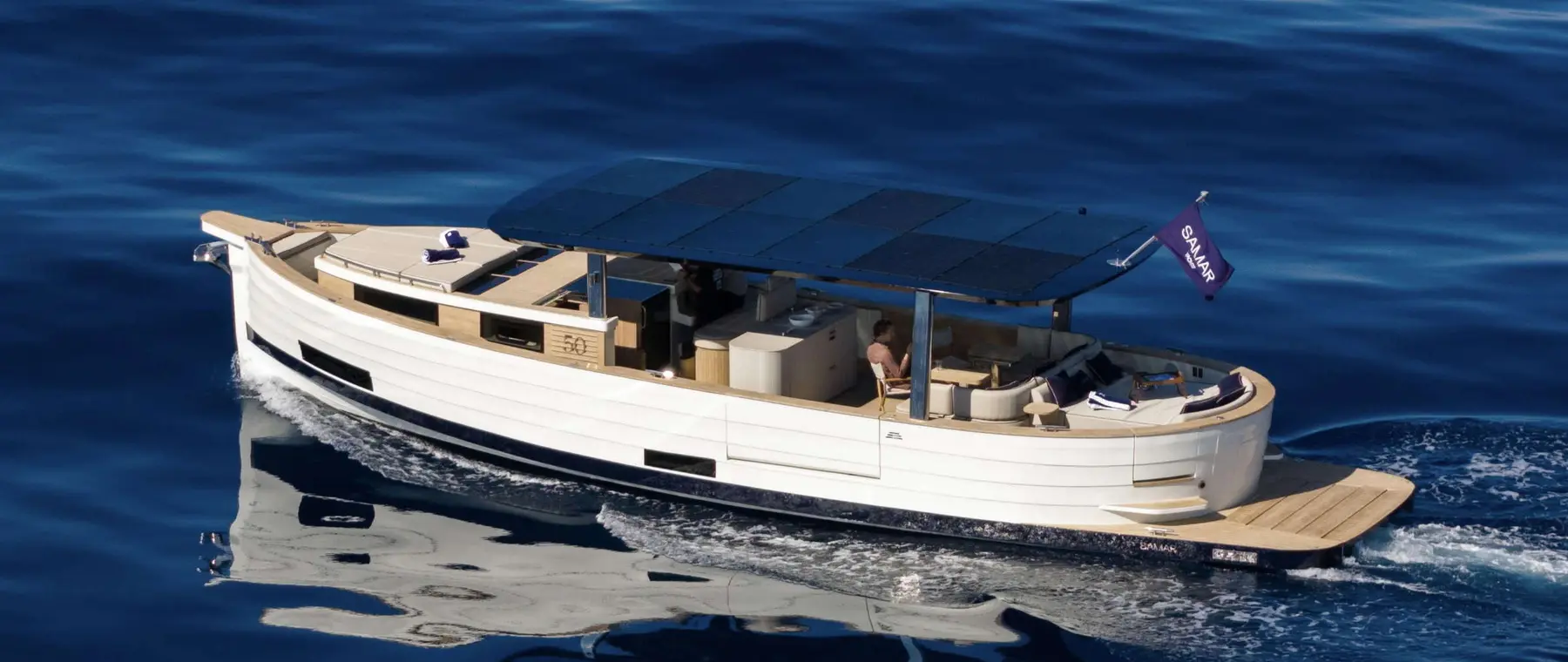
Solar panels can help support a yacht's day-to-day electrical demand, especially when a vessel spends long periods at anchor or moves slowly in sunny conditions. The SAMAR 50 has a substantial roof-mounted solar installation integrated into its design. Independent boating reports have discussed a panel area of about 32 square metres and battery storage of roughly 139 kilowatt-hours, figures that should be verified against the precise installed equipment. A figure for solar generation under ideal sunlight is not the same as a guarantee of constant output. Cloud, panel temperature, partial shading and the latitude or season of operation all change energy yield. Equally, an owner's real electrical needs depend on refrigeration, cooking, air circulation, navigation equipment and any additional hotel loads. The sensible way to evaluate the concept is to request a documented energy budget for a full day's use, separating propulsion from domestic consumption and noting what happens during several consecutive overcast days. This provides a more realistic picture than a promotional statement about operating on sunshine.
What quiet coastal cruising is actually worth
The experience of moving between sheltered anchorages without loud machinery can be a powerful selling point in a premium leisure setting. At modest speeds, guests may notice conversation becoming easier and the surrounding soundscape taking a larger role in the voyage. Those benefits can also matter to people who choose a day charter as a restorative experience rather than an exercise in covering distance. But silence should not be treated as absolute: water, wind, pumps and onboard equipment still produce sound, and any auxiliary machinery will change the result. Buyers should therefore ask to hear the yacht under its various permissible operating conditions rather than assume every journey will be silent. A trial that includes departure, cruising, manoeuvring and time at anchor can reveal when the intended atmosphere is achieved. Electric propulsion can be especially persuasive when the normal itinerary involves short trips and long rests, but the same operating logic may be less suitable for a user who regularly needs to complete a fast inter-island passage against a schedule.
Range must be measured in real conditions
A solar-electric yacht's practical range is the product of several interacting variables. Motor power and battery capacity are the starting point, but hull condition, passenger load, sea state, wind and current all affect consumption. The most meaningful test should record speed over ground and through water, electrical draw, state of charge at the beginning and end of a trip and the time needed to restore the battery afterward. If the yacht includes supplementary charging or generator equipment, the owner should understand precisely when it operates and how it affects emissions and noise. Owners must also plan a reserve that accommodates an unexpected detour or poor weather. A vessel intended for slow Mediterranean coastal outings may have an excellent operating envelope for that role without being suitable for every offshore itinerary. It is important not to convert a figure demonstrated under favourable circumstances into a universal promise. Navigation and safety decisions must always be based on the energy available on the day and the conditions actually encountered.
The relationship with a marina is changing
For a conventional small motor yacht, the usual refuelling plan is straightforward: locate a suitable fuel dock and schedule time alongside. Electric and hybrid craft introduce different questions about supply voltage, available shore-power capacity, charging duration and installation compatibility. A marina can offer shore electricity without providing the rate of energy transfer a particular battery system needs. The SAMAR owner must therefore examine not only the home berth but the complete network of intended stopping places. Where the programme consists mainly of local day trips, a reliable home-base charging arrangement may be adequate. Where the yacht moves between islands or marinas, the operator should identify backup locations and confirm electrical arrangements before departure. The builder's documentation should explain safe connection, battery management and the procedure for responding to faults. The availability of trained technicians becomes particularly important when electronic controls or energy storage require specialist diagnosis. A beautiful solar canopy has limited operational value if supporting infrastructure makes the yacht unexpectedly difficult to use.
How an electric yacht fits the charter market
SAMAR has discussed its model in the context of enjoyable day cruising and hospitality, and contemporary reports describe the first SAMAR 50 working in a day-charter setting around Mallorca. That makes the model relevant to operators who want to offer a differentiated experience in busy cruising areas. Commercial use brings obligations that cannot be inferred from private-yacht specifications. Passenger capacity, skipper and crew requirements, flag-state rules, local cruising permits, safety inspections and insurance cover all need independent confirmation. A business plan should calculate revenue against the hours available for trips, expected weather cancellations, battery replenishment, turnaround time, maintenance and depreciation. Quiet operation and a comfortable social deck may justify a premium for some guests, but an operator must test that proposition against demand rather than assume it. Charter schedules also need enough flexibility to avoid pushing a vessel beyond its sensible energy reserve. The most successful use of the platform may depend on designing the service around the boat's genuine strengths.
A shortlist of different solutions
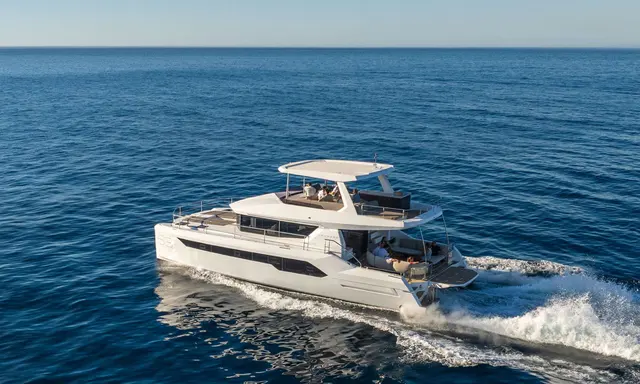
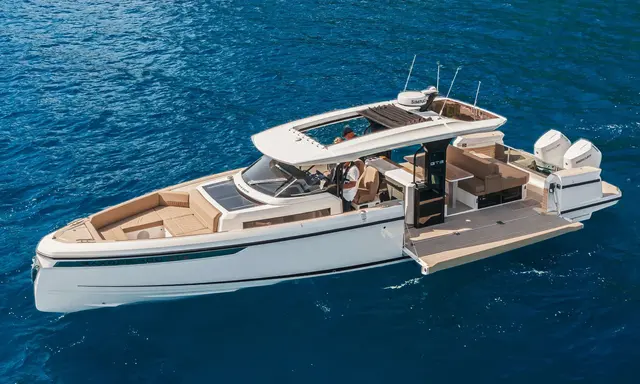
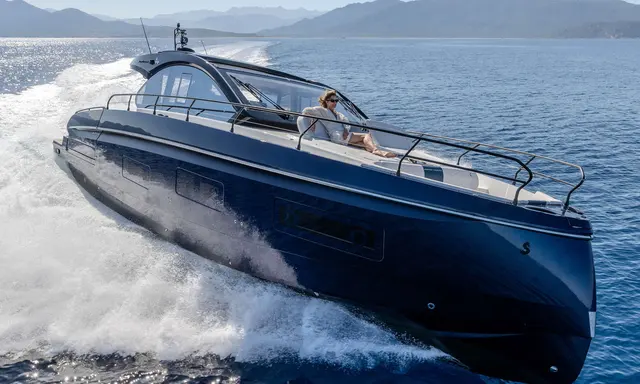
The Best Electric category brings together SAMAR 50, Jeanneau Sea Loft 480 and the smaller Frauscher x Porsche 790 Spectre. It is not a homogeneous collection of displacement cruisers. The Frauscher concept is associated with a different kind of high-performance electric boating, while Jeanneau's Sea Loft foregrounds hospitality-style living space. SAMAR's distinguishing proposition is the relationship between solar generation, electric propulsion and a spacious day-cruising platform. The jury's eventual verdict will recognise one entry, but it cannot decide which design fits an individual owner's needs. To compare these vessels fairly, buyers must define a mission profile: intended distance, time at anchor, number of guests, expected sea conditions and required charging options. A compact, sporty electric craft and a slow, social yacht may both be well designed and still be unsuitable alternatives to each other. The nomination shows that the category is becoming more diverse, which may be more significant for the industry than any one prize.
Service, batteries and the longer ownership horizon
Electric propulsion reduces or changes some conventional maintenance demands, but it does not make a yacht maintenance-free. Owners still need to inspect hull, steering, controls, wiring, cooling arrangements, deck fittings, domestic pumps and safety equipment. Battery packs, management systems and charging equipment require clear warranty terms and a credible service network. A purchaser should ask what manufacturer-supported diagnostic tools exist, how equipment is isolated safely for maintenance and what the expected replacement pathway looks like over the yacht's life. Battery warranties often depend on usage conditions and correct operating procedures, so written explanations matter. A yacht used repeatedly for charter may accumulate different wear from one privately used a few weekends per season. Technical documentation should distinguish a routine inspection from work that requires specialist authorisation. SAMAR's award nomination offers a useful reason to ask the builder these questions, but the achievement of the design must still be measured against serviceability and support over several seasons.
Budgeting for an unconventional vessel
There is no responsible way to predict the SAMAR 50's total annual running cost solely from its length or the presence of solar panels. Berthing fees, insurance, lifting, antifouling, cleaning, replacement of domestic equipment, battery servicing and shore electricity all matter. A slow cruising programme may reduce one category of fuel expense but still demand significant investment in electrical infrastructure and specialist maintenance. The financial calculation also depends on whether the boat is used privately or commercially. A charter operator must account for staff, cleaning between guests, marketing, taxes, downtime and certification. A private owner may be more sensitive to depreciation, convenience and the pleasure gained from quieter days afloat. An independent survey and an as-built energy audit are valuable before purchase. Comparison with conventional boats should use the same route, passenger load and season, not a headline hourly-cost figure taken from a different operating scenario. That disciplined approach makes the environmental and experiential benefits easier to assess honestly.
The award is a signal, not an operating certificate
The 2026 Best of Boats winners are due to be announced in Berlin at 18:00 on Thursday 26 November. Until the official result is released, SAMAR 50 should be described as a Best Electric finalist rather than a winner. Its place in the final is noteworthy because it points to the growing variety of electric boating concepts, including yachts whose primary goal is a quiet, comfortable day on the sea. For the Luxury Yacht Guide audience, the lasting question is whether this approach is a better fit for actual use than a traditional motorboat. A prospective buyer should see the yacht underway, review energy records and confirm berth arrangements, service support and the lawful operating programme. The right answer will be different for a Mallorca day-charter operator and a family planning long coastal passages. Award recognition is useful context, but reliable performance and owner satisfaction must be established outside the ceremony.
Official source and permitted finalist photograph
The nomination is confirmed on the manufacturer's SAMAR Yachts news and awards page and the Best of Boats 2026 organiser's shortlist. Background on the model comes from SAMAR Yachts' official model information and the official company background. The lead photo is a shipyard-supplied SAMAR 50 finalist photograph from the Best of Boats Award editorial press archive. The organiser permits publication of those photographs without charge for editorial purposes and prohibits promotional reuse. Photo credit: SAMAR Yachts / Best of Boats Award 2026. This is independent reporting, not a claim about an award result.