A different kind of finalist on 26 November
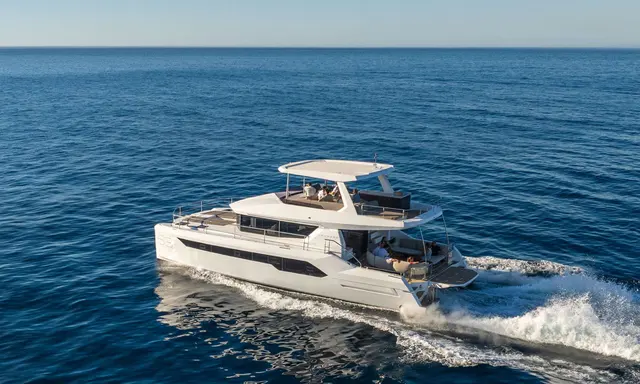
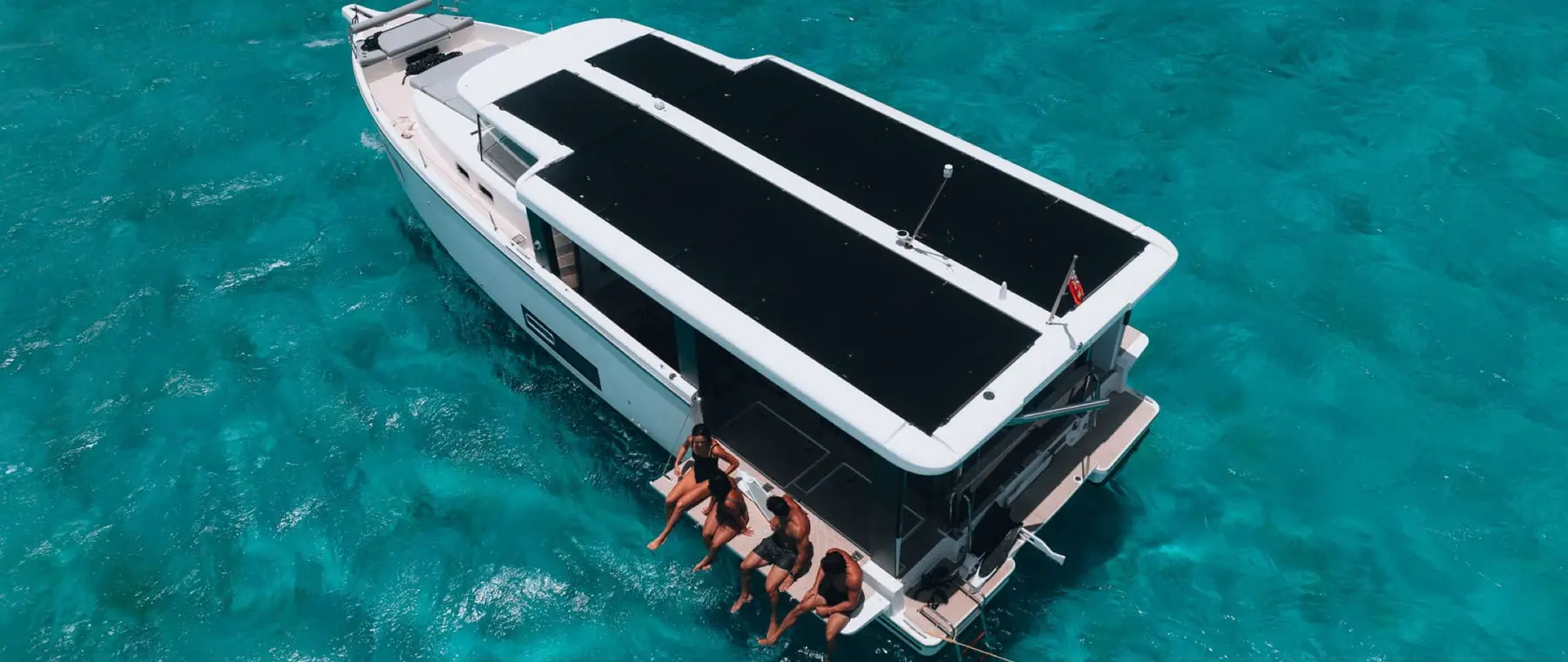
The Jeanneau Sea Loft 480 is a finalist in the Best Electric category of the Best of Boats Award 2026, with the presentation of the year's winners scheduled for Thursday evening in Berlin. Its appearance on the shortlist is significant for the 12–24-metre yachting market because it challenges assumptions about what a motor yacht of roughly fourteen metres should do. Rather than beginning with high cruising speed and building the accommodation around that objective, Jeanneau places relaxation, time at anchor and a resort-like connection to the water at the centre of the concept. The manufacturer lists the Sea Loft 480 at 14.10 metres in overall length and describes hybrid propulsion among its options. It is important to distinguish a nomination in the Electric category from a claim that every example of the model has identical electric capability. Configuration, generator operation, onboard energy storage and intended journeys all matter. As of this report, the organiser has named finalists but not yet announced the category winner.
Why hotel-style thinking is reaching yachting
The Sea Loft concept sits at an interesting boundary between conventional private ownership and the hospitality experience. Jeanneau has discussed the model as a platform suitable for bringing hotel and resort experiences onto the water, not only as another powered cruiser. That affects the design brief. Guests may value quiet anchoring, generous circulation, a relaxed lounge and easy water access more than the ability to cover long coastal distances quickly. For private owners, such a craft might become an alternative to a fast day yacht, especially where the goal is to spend hours in one protected bay rather than move repeatedly between ports. For hospitality operators, it creates a different set of questions about boarding, staffing, safety protocols and guest turnover. The fact that a Sea Loft 480 appears in the Best Electric final suggests that the award field is considering alternative ways of using electrical systems at sea, although the nomination alone does not disclose how the judges assessed specific technical characteristics.
A 14.10-metre design needs a clear mission
Length is useful shorthand, but it does not explain a vessel's practical purpose. The Sea Loft 480's official dimensions place it within the small luxury-yacht market, yet its priorities differ from those of a narrow, fast express cruiser. For owners, that means comparing usable spaces, boarding points, protected storage and the relationship between internal living areas and the water. A design that excels as a day retreat may have different strengths from one optimised for extended passage-making. Before choosing an unusual format, owners should write a realistic itinerary: how far the boat will move on a typical day, how many people will stay aboard, where it will recharge or refuel, and whether guest privacy is important. A marina also needs to confirm available berth sizes and access routes. Naming a yacht after a hotel-inspired experience does not remove the demands of navigation, registration, insurance or maintenance. These practical constraints have to be part of the purchase conversation.
Hybrid propulsion is more than a label
Jeanneau describes the Sea Loft concept as offering hybrid propulsion and optimised electric operation. A hybrid architecture combines more than one source of energy or propulsion, but the exact installation can vary by market and selected specification. That makes clear documentation essential. Buyers should request a diagram of the installed system, identify which devices are electrically driven, and establish when a generator or combustion engine is expected to operate. It is particularly important not to confuse a quiet low-speed electric mode with unrestricted zero-emission passage-making. Range under electric power depends on battery capacity, state of charge, speed, wind, current, sea conditions and the number of hotel loads operating. Technical claims should be supported by a trial with independently recorded energy measurements where possible. For some owners, the benefit may be a peaceful relocation within a bay or quiet approach to an anchorage rather than an attempt to cover long open-water distances on batteries alone.
Silence at anchor has practical value
An electric or hybrid system can change the quality of time spent at rest, especially when it reduces the need for continuous generator operation. A quieter vessel can make conversation easier, improve the enjoyment of wildlife and reduce disturbance in sheltered locations. The associated benefits depend on how air-conditioning, cooking, refrigeration and other domestic systems are powered. A yacht can have electric propulsion but still rely on a generator to maintain comfortable temperatures during a hot afternoon. Owners should therefore ask for a hotel-load budget rather than focus exclusively on propulsion. What is the energy draw of the climate-control system? How much capacity remains after an afternoon of domestic use? Which equipment automatically turns off as reserves fall? Can the crew see the power balance clearly from a reliable display? These are not glamorous questions, but they determine whether the much-promoted quiet experience works repeatedly for paying guests or the same family throughout a season.
Design and the hospitality opportunity
A vessel intended to feel like an extension of a resort must make boarding and everyday movement straightforward. Guests arriving by tender or pontoon should have stable access and a clear route to seating, changing facilities and the water. Service storage and equipment for cleaning should be close at hand without taking over guest-facing areas. For a hospitality operator, turnover time matters: cushions, floors, washrooms and catering arrangements should be easy to prepare between visits. Private owners have similar concerns, although less often and with fewer formal procedures. A successful design can feel effortless precisely because the operational chores have been considered in advance. The Sea Loft 480 invites this kind of evaluation because its public narrative places enjoyment in one location ahead of the conventional idea that more horsepower always equals more luxury. The premium experience may be measured in the amount of calm, usable space and the simplicity of sharing it.
Why the Electric award category matters
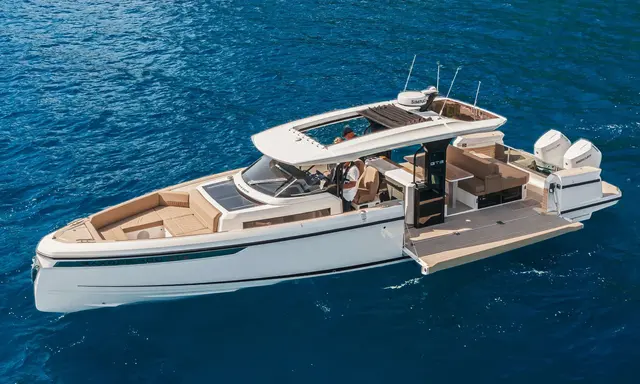
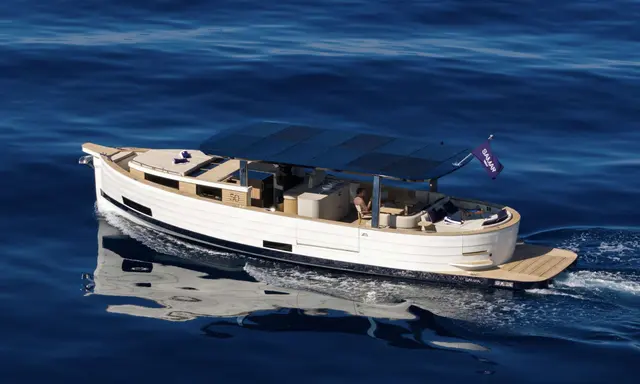
The Best of Boats Award's Electric shortlist groups the Jeanneau Sea Loft 480 with the Samar 50 and the Frauscher x Porsche 790 Spectre. These are notably different craft, spanning contrasting sizes, propulsion aims and guest experiences. Their inclusion illustrates a broad market discussion rather than one universal recipe for electrical boating. A small high-performance electric vessel may prioritise immediate response, while a larger floating retreat may use its electrical architecture to support quiet living and lower-speed movement. A fair comparison needs to consider actual usage and operating envelope. Owners should ask how many trips are possible between charges, the availability of suitable shore power, the effect of climate control on capacity and the emergency arrangements if electrical systems fault. The public shortlist establishes the finalists; it does not provide a common independent test report covering every measure. Results, when announced, should be read alongside the design mission of each model, not treated as a substitute for individual technical assessment.
Shore infrastructure can decide the experience
For a boat with significant electrical propulsion or hotel loads, the surrounding infrastructure becomes part of its practical range. A marina may offer shore power but not necessarily the power level, connector arrangement or charging duration a particular installation requires. Domestic mains service and a system designed for rapid battery replenishment are not interchangeable. Owners should obtain a written electrical specification and discuss it with the home marina before purchase. They also need to understand how battery management protects the installation and what routine inspections the manufacturer recommends. The cruising plan should include alternatives when a berth is unavailable or a shore-power outlet is inoperative. Crew and guests must be trained to recognise warning messages and understand safe procedures. In a hospitality context, uninterrupted operation may have direct commercial consequences; for a private family it can determine whether a weekend is enjoyable. Either way, the energy system deserves the same attention as engines and steering would on a conventional cruiser.
The ownership and charter question
A Sea Loft 480 may interest private owners seeking a floating leisure base, but the hospitality framing also raises questions about commercial operation. Regulations for carrying paying passengers, crewing, equipment, survey standards and insurance can differ substantially from those applicable to a privately used pleasure craft. A concept's marketing suitability for a hotel or resort does not itself establish that a particular hull is certified for every proposed use. Prospective operators should consult the appropriate flag and local authorities and obtain professional advice before modelling income. They should also budget for crew, cleaning, guest safety briefings, maintenance cycles and downtime. Private buyers need to consider fewer commercial obligations, but they should still plan for insurance, servicing, antifouling, berthing and periodic renewal of battery-related systems. It is not prudent to apply a fixed operating-cost percentage to such a distinctive platform. Actual equipment specifications and the expected number of operating days are a stronger starting point.
Questions to settle on a demonstration
A meaningful visit should go beyond walking the lounge. Ask to operate the propulsion system in its permitted modes and document the energy drawn across a short representative itinerary. Test air-conditioning and other domestic systems while the boat is at rest. Inspect the access to batteries, controllers, generator equipment and essential pumps, while observing all safety restrictions. Confirm which controls are available at the helm and what the crew must do when system alarms appear. Evaluate deck access for guests of different ages and mobility levels, including boarding from a tender where safe and appropriate. Check the location of fire-safety and emergency equipment and obtain the exact certification documents for the intended flag and use. A sea trial should also establish how the vessel responds in wind and current at manoeuvring speeds. The goal is to understand whether the real experience is as smooth and restful as the concept promises.
A finalist, not an announced winner
The Berlin ceremony is scheduled for 18:00 on 26 November 2026. Until the organiser releases results, the Jeanneau Sea Loft 480's status remains a Best Electric finalist. The important industry story is the appearance of a fourteen-metre hospitality-oriented craft in a field where electrical technology can serve radically different purposes. For prospective owners, that widens the decision beyond speed, fuel consumption and cabin counts. The more useful comparison asks how the boat will be used, what its energy system can reliably deliver and what service or charging infrastructure supports it. The Sea Loft 480 may prove most attractive to people who value a quiet, spacious day on the water over frequent long-distance movement. Its nomination makes that priority visible in a prominent award programme, but the buying decision should remain grounded in the verified specification of the actual craft and the voyages planned by its owner.
Sources and editorial image permission
The Best of Boats Award 2026 organiser and OutVenture Berlin finalists page confirm the nomination and ceremony date. Jeanneau's official Sea Loft 480 model page and manufacturer's explanation of the Sea Loft concept provide product context. The lead image is the Jeanneau shipyard photograph supplied in the Best of Boats 2026 finalist press archive. The organiser allows its supplied press photographs to be published free of charge for editorial coverage, but prohibits promotional use. Credit: Jeanneau / Best of Boats Award 2026 press material. No award result is asserted.