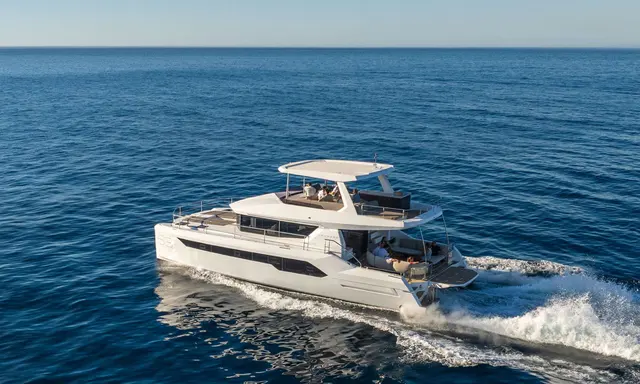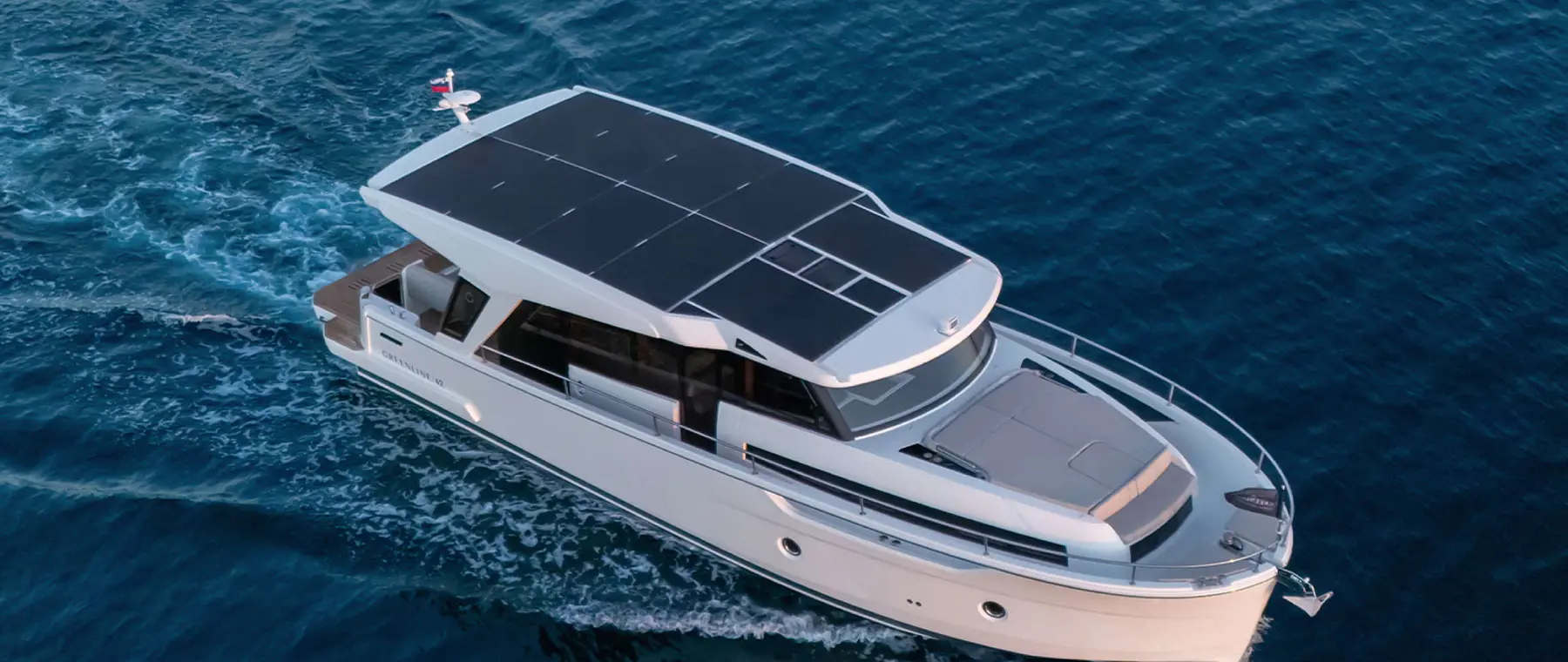
A hybrid-oriented family yacht in the Berlin final
The Greenline 42 has reached the Best for Family final of the Best of Boats Award 2026, with the winners scheduled to be announced at OutVenture Berlin on Thursday 26 November. The Slovenian builder's approximately 13.5-metre cruiser has a particular relevance to owners trying to balance everyday comfort with a more considered approach to energy use. Greenline's range is associated with hybrid propulsion options, solar-assisted onboard systems and practical layouts for extended family time aboard. The 42's place among the finalists is a prompt to examine the whole design, not a declaration that hybrid propulsion automatically makes a vessel superior. The shortlist also includes Marex 390, Viknes S40, Grandezza 34 Outboard and Jeanneau Merry Fisher 1095 Fly Series 2. That varied field is useful to buyers because family boating is defined by how a craft is lived in, handled and serviced rather than by one technical feature. The competition result was still pending when this report was prepared.
What owners should take from the dimensions
The Greenline 42 is promoted as a new-generation compact cruiser in the forty-foot category, with published dealer specifications around 13.5 metres overall and a beam near 4.3 metres. The exact dimensions and equipment of any particular boat must be checked in the latest manufacturer documents. The significance of those proportions is operational. They can provide meaningful interior living space and a social cockpit without reaching the scale at which every move requires professional crew support. Yet a wider hull still influences marina fit, mooring fees and ease of manoeuvring between pontoons. Families planning summer berth-hopping in the Mediterranean should obtain reservations and cost estimates based on the vessel's measured specifications rather than a rounded model designation. Owners who cruise northern waters should also consider access to covered winter storage and service facilities. In this size class, a sensible layout and manageable annual programme can be more valuable than maximum installed power.
Energy management is part of the product story
Greenline has long highlighted alternative propulsion options, integrating diesel, hybrid and electric concepts across its range. The Greenline 42 belongs to that broader philosophy, with hybrid systems presented as a way to use energy more flexibly. However, buyers must distinguish the specific technology installed in the boat they are considering from the full menu of options discussed in promotional material. A hybrid yacht may operate differently under diesel power, electric assistance or lower-speed electric propulsion depending on how the manufacturer configured the system. Questions about range, charging and regeneration require quantified answers from a current technical manual or a monitored trial. Solar panels can contribute to supporting hotel loads, but the energy they produce changes with season, weather, orientation and shading. For a family spending long hours at anchor, reliable refrigeration, ventilation and lighting may matter more than an attractive maximum-power claim. The meaningful advantage is predictable, practical energy availability.
The family cruiser must work at breakfast
A family boat's success can be judged by an ordinary morning as effectively as by an impressive sea trial. Can two people prepare breakfast while another passes through the saloon? Is there a secure place for wet shoes and children's lifejackets? Can a guest reach the washroom without crossing a sleeping area? Do the windows provide light without excessive glare or heat? The Greenline 42's design must ultimately answer these basic questions. A bright interior and open connection to the cockpit can make a thirteen-metre boat feel spacious, but efficient circulation and stowage determine whether that sensation survives a week's cruising equipment. Buyers should sit at the dining table with the family members who will really use it and examine kitchen capacity, refrigerator access and the number of practical berths. If the boat is to be used for extended stays, freshwater storage and waste handling become as important as upholstery choices. Lifestyle quality is built from repeated simple interactions.
Solar capacity is not a substitute for planning
Solar-assisted electrical arrangements are attractive because they can lessen dependence on generators or shore supply for some domestic functions. Their actual contribution should be assessed using the installed panel area, controller specifications and measured daily output, not a generic impression that the roof produces free electricity. On a heavily shaded berth, in winter or during cloudy passages, output can be very different from that achieved in bright summer conditions. At the same time, air-conditioning can represent a major electrical demand, especially with several guests aboard. A family should ask for a realistic energy budget that includes refrigeration, communications, lighting, domestic pumps and any climate control they actually expect to use. When assessing a hybrid propulsion option, separate the energy used to move the boat from the energy needed to run the yacht at rest. This distinction helps buyers compare the Greenline 42 fairly with conventional competitors whose electrical systems may be simpler but whose fuel use and onboard comfort follow a different pattern.
Why comfortable passages matter
A family cruiser is not merely a place to sit once anchored. It must transport passengers in conditions that are sometimes less inviting than those of a demonstration photograph. The layout should support secure movement while underway, sensible handhold placement and protected seating with a clear view of the sea. If the helm is enclosed, ventilation, screen visibility and the ease of moving to the side deck deserve attention. Engine noise and vibration should be experienced at the cruising speeds the owner expects to use most often. A boat can be fuel-efficient at one speed but uncomfortable because of its motion at that same setting. Buyers should therefore compare noise, fuel or energy use and passenger comfort as a group of observations. Anyone buying a thirteen-metre cruiser for family passages should also practise typical harbour manoeuvres with qualified supervision. Controls and visibility may be excellent on one layout and awkward for a particular skipper on another; only testing can resolve the question.
The family shortlist offers useful contrasts
The Best for Family finalists approach similar ownership problems from different directions. The Viknes S40 emphasises a protected Scandinavian cruising character; the Marex 390 represents another practical Nordic approach; the Grandezza 34 Outboard and Jeanneau Merry Fisher 1095 Fly Series 2 give buyers different size and propulsion choices. Greenline contributes a distinctive emphasis on alternative energy and a compact luxury-cruising format. The important point is not that these boats can be placed in an exact numerical ranking without knowing the owner's circumstances. The best family yacht for a household that spends ten weekends a year at anchor may be different from the ideal boat for longer coastal passages. The jury's categories are based on user experience rather than rigid hull dimensions, which makes the shortlist useful as a starting point for a wider comparison. The announcement on 26 November will identify an award winner, but buyers still need to decide which trade-offs suit their own family.
Berthing, service and training should be planned together
For a new owner, the most costly mistakes are often operational rather than visual. A yacht may be purchased before the owner has secured an appropriate long-term berth, identified a local hybrid-system technician or arranged the training necessary to handle the boat calmly. On a Greenline with alternative propulsion systems, familiarity with normal operating modes and fault indications is especially important. Crew and family should know which functions depend on specific battery reserves and how to respond safely to alerts. Maintenance should follow the manufacturer schedule for each installed component, including the conventional engine, any electric drive or control system, electrical distribution, batteries and domestic equipment. Local warranty procedures and parts availability deserve written confirmation. Buyers should also ask whether the boat can be lifted and serviced easily at their preferred marina. A good ownership experience depends on the support network as much as on the specification advertised at the boat show.
Building a realistic cost and usage model
A buyer comparing the Greenline 42 with a conventional diesel yacht should resist assuming that hybrid technology automatically produces the lowest total cost. Acquisition price, options, insurance, berthing, fuel, shore electricity, service requirements, battery life and resale conditions can all affect the result. The useful calculation starts with the owner's normal itinerary and expected annual engine hours. If much of the programme consists of quiet time at anchor, the value of lower generator use and improved comfort may be significant even when it is hard to express as an immediate financial saving. A family operating long distances at steady speed will need a different analysis. Obtain itemised figures for servicing the exact propulsion package and a credible plan for replacing major components when they age. The opportunity to cruise more comfortably or with less noise has value, but it should be evaluated alongside measurable operating commitments rather than turned into an unqualified savings claim.
An inspection checklist for the 42
A structured inspection should begin with the certified specifications, fitted propulsion and onboard energy architecture. Check which operating modes are actually available on the individual hull, how the batteries are monitored, where key equipment is installed and who can service it. Review shore-power connections, fire and safety equipment, pumps, bilges, steering and the condition or accessibility of deck fittings. Test the saloon and cockpit in realistic family use, including storage for provisions and wet gear. Ask to see the vessel with its living systems operating while the propulsion machinery is not running, so that electrical demand and any generator cycle can be understood. A sea trial should include harbour manoeuvres, a steady coastal run and a demonstration of the helm displays. Performance and economy should be recorded under stated conditions. Newness or award recognition never removes the need for inspection, documentation or competent advice when a substantial purchase is being considered.
Why this nomination is worth watching
The Greenline 42's inclusion in the Best for Family final reflects a broader conversation about what owners now want from mid-size motor yachts: accommodation that supports real family life, reliable passage-making, manageable maintenance and energy systems appropriate to modern expectations. The public nomination does not establish an independent finding about the model's fuel economy or electrical range. It does show that a hybrid-oriented cruiser is competing for a category defined around everyday boating rather than technology alone. The award winner is scheduled to be identified in Berlin on 26 November 2026. Until the official announcement the correct description is finalist. For Luxury Yacht Guide readers, the lasting value of this news is a practical buying framework: test the lifestyle first, verify the electrical system second, and then decide whether the combined boat is suited to the journeys, guests and budget that will define the years ahead.
Sources and image-use basis
The nomination and ceremony date are confirmed by the Best of Boats Award 2026 organiser and the OutVenture Berlin published finalists. Product and propulsion context comes from the Greenline 42 official US model page and the Greenline hybrid drive explanation. The lead image is the Greenline shipyard photograph supplied through the Best of Boats 2026 press archive, whose terms expressly permit free editorial publication but not promotional use. Credit: Greenline Yachts / Best of Boats Award 2026 press material. Award outcomes are not represented as known.