Long-standing manufacturing partners become investors
RS Sailing has announced new long-term investment from Swedish marine investor Fredriksborgs Förvaltnings AB and the owners of Rototek Ltd, the Nottinghamshire-based rotational-moulding business that has manufactured RS hulls for more than 25 years. The British sailing brand's press announcement, dated 6 November 2026, describes the transaction as the next stage of its strategic development. The company says its existing team, boats and United Kingdom production arrangements will continue, alongside its established dealer partnerships, warranties and spare-parts support. The announcement does not disclose an investment valuation, a percentage ownership split or guaranteed future sales figures, and none should be inferred from its optimistic description. RS Sailing is principally associated with sailing dinghies and small performance boats rather than the 12–24-metre luxury yachts that form Luxury Yacht Guide's core coverage. The industry relevance is different but real: dinghy sailing, class fleets and accessible training are part of the wider marine skills ecosystem from which many cruising yacht owners and professional sailors develop. A new capital structure at an established specialist manufacturer also offers useful insight into supply-chain relationships and long-term product support.
What is actually confirmed
The primary announcement identifies two investor groups: Fredriksborgs, a Swedish investment company with marine interests, and the owners of Rototek, an existing hull-production partner. It says the companies are joining forces to invest in RS Sailing as part of a strategic growth plan. The manufacturer expects continued investment in boat development, events and the sailing community. These are stated intentions and continuity commitments, not independent proof that production has increased or that any particular new model is already under construction. Owners and clubs should distinguish the news of investment from specific commercial outcomes that can only be verified later. The same applies to warranties and parts. The official statement says those arrangements remain unchanged, but a customer planning a substantial fleet order should still obtain current written terms. A company announcement is a useful starting point for understanding future direction; it cannot substitute for an individual purchase contract or evidence of actual delivery performance.
The importance of the Rototek relationship
One of the most distinctive elements of the deal is the length of the existing manufacturing relationship. Rototek has supplied RS hulls for more than a quarter of a century, according to the companies. That experience may help investors understand production processes, tooling and the needs of customers who maintain boats for many seasons. Rotational moulding is particularly relevant to some training and club dinghies because it can support durable hulls intended for frequent handling, although exact construction techniques and specifications vary by class. A manufacturer and hull supplier that have worked together for decades may be well placed to coordinate production planning. Nevertheless, ownership participation does not remove every possible supply risk. Material costs, workforce availability, specialist tooling and transport continue to affect manufacturing. Dealers and sailing clubs should ask for realistic lead times and spare-component availability rather than assume that increased investment eliminates all delays. The continuity of technical knowledge is an asset, but its practical value depends on how it is managed.
Why Fredriksborgs' marine background matters
The Swedish investor is described in the original release as having a portfolio of established marine businesses. Its involvement signals a financial commitment to sailing, but the terms of the investment have not been made public. Without those details it would be inappropriate to claim that RS Sailing has raised a particular amount or entered a guaranteed expansion period. The most useful question for customers is whether the investment supports a sustainable manufacturer over the longer term. Reliable products need engineering, tooling, parts stocks, dealer training and administrative support. These are often less visible than a new hull at a boat show, yet they influence the ownership experience. A business whose investors understand the marine market may be better able to discuss the demands of seasonality and specialist class communities. That is a potential advantage, not a financial outcome confirmed by the announcement. Interested customers should evaluate actual service performance as the relationship develops.
Dinghies and the route into yacht ownership
Although RS boats are generally smaller than the vessels covered by Luxury Yacht Guide, the classes are relevant to the broader sailing world. Many people first learn to recognise wind shifts, trim sails and handle a boat close to other vessels in small craft. The skills then develop through experience, navigation training and progressively more challenging passages. A sailor moving into a fourteen- or eighteen-metre cruising yacht faces substantially different responsibilities, including auxiliary machinery, electrical systems, accommodation and offshore safety equipment. Dinghy experience cannot be regarded as a complete substitute for those qualifications. Yet practical understanding of wind and boat balance can provide a useful foundation. A manufacturer that maintains active training and racing communities contributes to the wider pool of people interested in sailing. From a yacht-owner perspective, that matters because a healthy marine sector needs not just new customers but competent crews, instructors and service professionals.
What clubs and sailing schools may look for
A sailing school selecting training boats needs to evaluate durability, manageable maintenance and appropriate design for its students. Instructors may have to launch and retrieve craft repeatedly, sometimes with inexperienced participants. Ease of inspection, reliable replacement parts and a clearly documented service schedule are therefore important. The investment announcement says dealer relationships and parts support will continue, which will be reassuring to existing RS users if delivered consistently. Before purchasing more boats, a school should nevertheless confirm current spare-part availability and warranty arrangements in its region. A supplier's financial strategy does not directly tell the customer whether a rudder fitting or mast component can be obtained before next week's course. Practical service evidence remains the stronger measure. Clubs may also benefit from continuity in class rules and events, particularly when members have invested in compatible fleets. The manufacturer has stated a commitment to its community; that commitment will be visible through day-to-day operations.
The value of keeping production in Britain
RS Sailing's statement says United Kingdom production will continue, with the established team and boat range maintained. The location of manufacturing affects logistics, technical expertise and support arrangements, but the benefits differ for customers in different countries. A British sailing club may find it convenient to work with a nearby manufacturer and dealer, while a customer overseas will depend more heavily on international distribution and shipping. Material sourcing and customs administration can also influence component availability, particularly when a supply chain crosses several borders. The announcement does not state that every individual component is manufactured in the United Kingdom or that local production alone guarantees quicker delivery. Buyers should request the origin and availability of critical parts when making purchasing decisions. In the wider yachting industry, stable manufacturing employment and training can help maintain the engineering skills required by builders of far larger craft.
Dealer relationships and after-sales service
The company says its existing dealer partnerships remain in place. Dealers often provide the first line of assistance with equipment selection, warranty queries and replacement items, especially for customers who do not live near a factory. A dealer may also understand regional class activity and be able to advise a buyer about the suitability of a particular boat. That role becomes more valuable when a product is used intensively by a sailing school or club. The investor announcement should not be read as a promise of universal coverage or identical terms in every market. A buyer should identify the actual authorised seller and the responsibilities of the manufacturer and dealer. Warranties are only as useful as the process for making claims and obtaining repairs. Many long-term owners prefer predictable support and accessible information to a succession of dramatic product launches. Clear communication about the investment can help reassure customers, but the important evidence will be reliable service in subsequent seasons.
Class events as part of a product's life
RS Sailing identifies events and its sailing community among the areas it intends to support. Class racing, organised training and regional gatherings provide a setting in which boats are used, maintained and improved over time. Such activities can make ownership more engaging, but they also depend on volunteer effort, venues and local conditions. Investment in the brand may help provide administrative or promotional resources, yet the quality of an event cannot be guaranteed by a capital transaction. Owners should check which competitions or training programmes actually operate in their area rather than assume that a worldwide class schedule offers the same opportunities everywhere. A well-supported class can help members exchange maintenance knowledge and develop sailing skills. These benefits may outlast the initial excitement of buying a boat. For the wider luxury-yacht industry, visible participation in sailing can help cultivate future owners, technicians and designers who understand boats from practical experience.
What a manufacturer must balance
Specialist marine businesses face pressures familiar to larger yachtbuilders, even though their products differ greatly in price and scale. Material costs, production scheduling, inventory and the need for skilled workers all affect financial resilience. A growing manufacturer must decide how much capital to commit to new designs and how much to reserve for supporting the existing fleet. Launching too many products without adequate parts support can frustrate customers, while failing to develop new models may reduce long-term appeal. Rototek's involvement as an established hull supplier highlights the importance of aligning manufacturing capability with product plans. The investors and management will need to balance expansion against the continuity promised in the announcement. Without access to financial statements or detailed transaction documents, outsiders cannot know how that balance will be achieved. The sensible approach is to watch for verifiable delivery milestones and changes in customer support rather than assume an investment automatically means strong growth.
Lessons for buyers of larger yachts
The transaction illustrates supply-chain principles that apply throughout recreational boating. A 20-metre cruiser is assembled from products made by many specialised businesses, some with decades-long relationships with the main shipyard. The stability of those relationships affects lead times, maintenance and the availability of replacement components. An owner considering a new yacht or major refit should ask which suppliers provide critical equipment and how the builder plans to support it after delivery. A supplier with experienced manufacturing partners and a clear investment strategy may offer confidence, but actual service records are still necessary. In the same way, sailing clubs evaluating RS products should distinguish a credible announcement from demonstrated long-term performance. The common theme is that ownership does not end at handover. Manufacturing know-how, parts and responsible after-sales arrangements determine whether the boat remains enjoyable and practical to use through several seasons.
A transaction, not an announced model launch
It would be misleading to frame the November investment as the unveiling of a new twelve-metre cruising yacht or a significant product launch. RS Sailing is a distinct manufacturer with a particular customer base, and the company is discussing its future development rather than a single new vessel. The release identifies Fredriksborgs and Rototek's owners as investors and describes continuity in staff, production and the dealer network. It does not disclose a valuation or specific ownership percentages. This precision is important because investment stories can easily turn into exaggerated claims of scale or guaranteed expansion. The announcement deserves attention on its own terms. A group of marine-industry investors has committed to a specialist sailing business with a long-standing manufacturing partner, and the company says it will use that relationship to support further development. The eventual results need to be established through future announcements and independently verifiable business activity.
Looking ahead to the 2027 sailing season
Sailing schools and clubs planning the next season may use the investment announcement as a reason to check on product availability and support. They should contact the manufacturer or authorised dealer for current information about boats, parts and events, particularly if orders need to be placed well before the first training sessions. Owners of older RS craft may want to confirm compatibility of replacement fittings and any maintenance guidance that has changed over time. Nothing in the original press statement suggests that existing models must be replaced or that customers will lose the support already promised. In fact, the manufacturer stresses continuity. The more relevant questions concern which product improvements, events or distribution developments become public during 2027. An informed owner can monitor those changes without making a purchasing decision solely on the basis of an investor name. Reliable evidence and a clear understanding of the craft's intended use remain the foundation.
What the industry can learn
The RS Sailing investment story is smaller in financial scale than many superyacht announcements, but its importance lies in a familiar set of themes: experienced manufacturing partnerships, dealer continuity, professional skills and confidence in long-term support. These conditions matter to businesses and buyers throughout the leisure marine sector. The announcement's confirmation of a Swedish marine investor and long-established British hull-supplier involvement provides useful context, while the lack of disclosed deal value limits any financial analysis. The wider lesson for yacht owners is to assess the health of the businesses behind the equipment and boats they use, especially where specialist parts and support cannot readily be substituted. A manufacturer may look strong at a boat show, but long-term reliability is demonstrated by the way it maintains its products and relationships year after year. This November development is a reason to watch RS Sailing's next steps, not to assume its strategy has already succeeded.
Original press release and manufacturer-supplied image
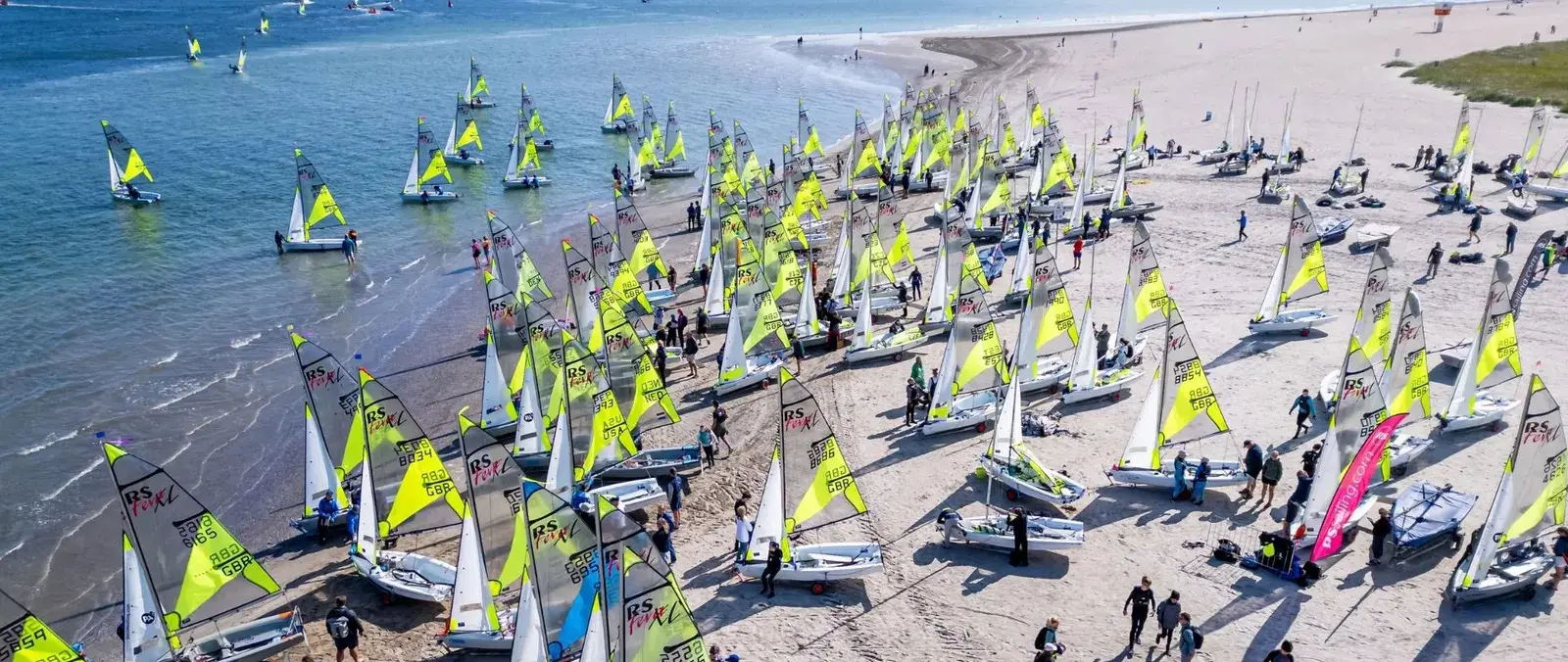
The investor identities, Rototek relationship and stated continuity commitments come from the RS Sailing press release dated 6 November 2026, syndicated as a manufacturer release by TheSeaWire, with company context from RS Sailing's official site. The lead image is the photograph credited by the release to RS Sailing, distributed alongside its original investment news. It is an editorial manufacturer photo and should not be taken as evidence of a particular boat order or financial valuation. Image credit: RS Sailing, official company press photograph; all other rights remain with the originating photographer or company.