New equipment and a major service partnership
Italian yacht-equipment specialist Besenzoni used METSTRADE 2026 in Amsterdam to announce a collaboration with Finnish-based MacGregor and introduce three additions to its UNICA range of marine access and movement systems. The company published the details on 17 November, naming the UNICA Lifting System, BeMotion UNICA and an RPS rotating-fender concept among the new developments. The partnership is focused particularly on technically demanding, customised yacht and superyacht equipment including large side openings, stern doors and hydraulic movement systems. It should not be confused with a merger or acquisition of the two companies. Besenzoni retains its specialist design and manufacturing expertise, while MacGregor brings experience in large-scale marine equipment, installation, commissioning and international technical service. For owners of 12–24-metre yachts, the direct relevance depends on the equipment installed and the scale of the boat. Even where a new system is aimed at larger vessels, the announcement illustrates how important safe access, spare parts and reliable support become as yachts integrate more powered mechanisms.
Why yacht access systems deserve attention
Luxury-yacht design increasingly blurs the division between accommodation and the water. Stern platforms can move, steps can extend and garage doors may open to launch tenders and watersports equipment. These features can improve life aboard, but they require careful integration with the vessel's structure, electrical or hydraulic machinery and onboard safety systems. A platform that appears effortless in a demonstration may be exposed to salt, vibration, variable loading and heavy use during a cruising season. Owners should therefore ask not just what a mechanism can do, but how it is inspected, isolated and repaired if it stops in an inconvenient position. The November Besenzoni announcement places these issues at the centre of a broader supplier strategy. Bringing specialised equipment and experienced commissioning services together could help reduce the gap between a designer's concept and a dependable installation. That is a potential benefit, not a guarantee of reliability for an untested application.
The Besenzoni and MacGregor arrangement
The official release describes a cooperation in which MacGregor contributes engineering and international support capabilities associated with handling systems for commercial ships and large private yachts. Besenzoni brings its knowledge of custom access and movement products. Together, they intend to offer more complete project support to shipyards commissioning complex moving structures. The scope includes side and stern openings and associated systems rather than a single off-the-shelf ladder or gangway. A buyer should not assume the arrangement means all existing Besenzoni products will automatically receive a new warranty or free service from MacGregor. The responsibilities of the supplying companies, installer and shipyard must be specified in the contract for the particular project. For a yacht owner, the practical value of a partnership is the availability of competent technicians, accurate documentation and parts that can be obtained when equipment needs attention outside the original construction yard.
Why the Trieste service hub matters
Besenzoni points to MacGregor's new technical-service hub in Trieste, opened in September 2026, as part of the wider support proposition. Trieste is a strategic location near the northern Adriatic's concentration of shipbuilding, refit and cruising activity. The presence of a specialist service facility can reduce the distance between technicians and the yachts requiring commissioning or repair. But owners should verify whether their specific equipment is supported from the location and what response times are available. A technically complex hydraulic door or tender-handling apparatus may require personnel with the correct training and equipment, not merely a general marine engineer. The cost of travel, lifting or specialist spare parts can be substantial. Owners can protect themselves by obtaining a clear service schedule and direct contact details for the responsible support company. A wider service network is most valuable when it is documented in practical, contractual terms.
The UNICA Lifting System
Among the announced products is the UNICA Lifting System, intended to help launch and retrieve tenders and chase boats using a dedicated sliding arrangement. The Italian press release identifies applicability to tenders or chase boats up to around twelve metres within the stated development context, a substantial category of auxiliary craft that calls for careful engineering and certified lifting arrangements. That should not be interpreted as a simple consumer upgrade for a twelve-metre yacht carrying another twelve-metre boat. The size of the support vessel, available deck space and capacity of the host yacht determine what is feasible. A new lifting mechanism must be selected for the exact load, centre of gravity, reach and geometry of the proposed installation. The system's benefits depend on safe, controlled handling through the complete launch and recovery cycle. Crew should also understand the conditions under which deployment is permitted and the precautions required around other passengers.
A practical assessment of tender handling
Tender launch and recovery can place personnel at risk if the equipment is poorly maintained or operated outside design limits. A lifting system should have clearly marked capacities, suitable controls, appropriate protection against unintended movement and an established maintenance procedure. The owner should ask what happens when electrical or hydraulic power is interrupted during a cycle. The rigging and attachment points of the tender are as important as the lifting unit itself. A heavy auxiliary boat that is slightly off-centre can load equipment differently from a smaller, evenly balanced craft. Before accepting a custom installation, the shipyard should demonstrate representative operations under supervised conditions and provide a record of testing. It is also worth considering how the system affects passenger circulation and access to emergency equipment. A sophisticated launch arrangement may improve convenience, but only when the operating procedures remain straightforward and repeatable for the actual crew.
BeMotion UNICA and powered access
BeMotion UNICA is another new name in Besenzoni's 2026 announcement, representing development in the company's range of powered movement and access solutions. The exact specification and supported configurations should be obtained from the manufacturer before claiming that it can fit any particular yacht. Powered boarding equipment is sensitive to installation geometry. A gangway or movable step may work beautifully at one quay height but become awkward when tides, passenger numbers or vessel trim change. A safe access arrangement needs appropriate handholds, non-slip surfaces and clear operating controls. The crew should know how to recognise an obstruction and what to do if the movement becomes irregular. The ability to control equipment from a convenient position can improve daily operation, but visibility of the moving parts remains essential. Buyers should treat integration with helm or remote controls as a matter for professional engineering rather than a simple wiring accessory.
The RPS rotating-fender approach
The announcement also includes the RPS rotating-fender concept within the UNICA developments. Fendering is a familiar but often underestimated aspect of keeping a yacht safely alongside. Conventional cylindrical fenders can shift position or be compressed unevenly as the yacht moves against a quay. A purpose-designed rotating element may aim to manage contact differently, but its effectiveness must be demonstrated for the specific hull shape, berth geometry and expected loads. Owners should not assume a new fender arrangement eliminates the need for correct line setting, supervision or other protection. Materials must withstand ultraviolet exposure, saltwater, contact stresses and repeated movement without damaging the yacht's finish. Where a system forms part of the yacht itself, it needs a maintenance plan and clear criteria for replacement. The best solution will be the one that protects the hull consistently without making berthing procedures more complicated for the skipper or deck crew.
The influence of bigger yachts on smaller designs
Some Besenzoni and MacGregor projects are aimed at the more complex end of the market, but design developments can influence products for mid-size motor yachts. A fifteen- or twenty-metre cruiser may have an electric boarding ladder, a tender lift or a powered hatch that uses principles refined in larger installations. The engineering scale, however, cannot be transferred blindly. A structure suitable for a large superyacht may be too heavy, costly or demanding for a smaller vessel. Owners should compare the total installed weight, service requirements and space lost to machinery against the benefit the feature provides. In some cases, a simpler manual or fixed arrangement is more reliable for a short-handed crew. In others, a powered mechanism can improve accessibility and reduce physical effort. The useful lesson from METSTRADE is that equipment selection should be matched to the yacht's operating programme rather than driven only by the newest feature shown to the industry.
What a commissioning programme should include
A customised deck mechanism may involve design calculations, manufacturing, shipyard installation, controls and formal commissioning. Each stage needs an accountable party. Owners should request approved drawings and a clear statement of safe working load, service intervals, emergency controls and expected replacement parts. The equipment should be demonstrated with the loads and conditions for which it has been approved. Testing that shows an empty platform moving smoothly is not equivalent to a full operational trial with the intended auxiliary boat or passenger arrangement. The commissioning report should document any sensors, limit switches or interlocks and show that the system behaves safely after a simulated power interruption. Crew training is equally important. A new yacht may change hands after several years, and the next owner should receive sufficient technical records to operate the system without depending on informal advice from the original yard.
Maintenance as part of the ownership budget
Hydraulic and electrically driven yacht equipment can require specialised service. Actuators, hoses, seals, bearings and sensors should be inspected according to the actual operating environment and manufacturer recommendations. Owners often focus on engines and generators when building their annual maintenance budget, overlooking the movement systems that make modern yacht accommodation more convenient. A jammed side door or disabled tender lift can disrupt cruising even when propulsion is healthy. It is sensible to identify critical spare parts and the nearest qualified technician before the yacht leaves its home port. If an equipment partnership provides broader support, ask which components the service network holds and how warranty claims are handled. The costs should be part of a complete ownership plan, with appropriate allowances for periodic testing and service. Reliable access equipment is a safety and operational concern, not merely an interior luxury.
The significance of METSTRADE 2026
METSTRADE, held at RAI Amsterdam from 17 to 19 November 2026, provides an international meeting point for builders, equipment companies and refit professionals. Besenzoni used the event for a product and partnership announcement that illustrates increasing attention to integrated yacht systems. The three UNICA developments are named in the company's release, while the MacGregor arrangement concerns longer-term engineering and service capabilities. It would be inaccurate to present the collaboration as a complete new joint company or to assume that every proposed product has already been fitted to a fleet of delivered yachts. The appropriate conclusion is that Besenzoni is expanding its technology offering and support relationships for increasingly ambitious onboard movement systems. The market response will become clearer through actual installations, performance reports and the experience of customers who maintain the equipment over several years.
What owners should ask a yachtbuilder
A prospective buyer admiring a yacht with several moving exterior features should ask who designed and supplied each system, what happens when power is unavailable and whether the equipment can be maintained without stripping out expensive interior finishes. Obtain the safe load rating and any limitations concerning sea state, vessel movement or passenger use. Where a tender-handling apparatus is installed, confirm exactly which tender model and equipment configuration were included in the original calculations. For a refit, ask whether the shipyard will remain responsible for the complete integration or whether several suppliers provide separate warranties. A new collaboration between major equipment companies may help coordinate those responsibilities, but owners should not rely on an assumption. Good purchase decisions are supported by transparent technical information and an achievable maintenance plan. Appearance and convenience remain important, but they should not obscure the need for safe engineering.
A broader signal for yacht construction
The Besenzoni announcement reflects a persistent trend in premium yacht design: features that once required manual handling are increasingly powered and integrated into larger electrical or hydraulic systems. That evolution offers convenience and creative freedom, but it also increases the importance of documentation, accessible controls and dependable technical support. The MacGregor relationship may strengthen the ability to deliver complex systems, while the UNICA products demonstrate Besenzoni's interest in new solutions for onboard access and handling. For Luxury Yacht Guide's audience, the most relevant implication is practical. Whether a yacht is fifteen metres or substantially larger, the owner should understand the moving equipment fitted aboard and be confident that it can be operated safely and repaired without excessive delay. METSTRADE provides the announcement; long-term customer satisfaction will be determined by the installations that follow.
Manufacturer sources and official press image
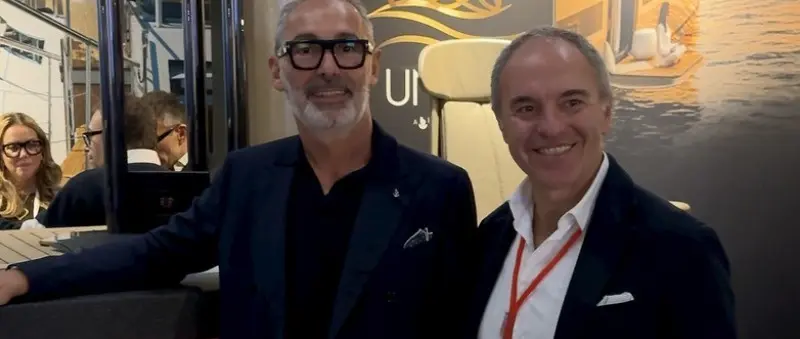
The 17 November announcements, product names, MacGregor collaboration and Trieste service-hub context are taken from Besenzoni's original METSTRADE 2026 release and the manufacturer's yacht equipment information. The lead image is the official Besenzoni–MacGregor METSTRADE announcement photograph supplied on Besenzoni's own news page. It illustrates the partnership and presentation rather than independently establishing any particular lifting capacity or completed yacht installation. Credit: Besenzoni S.p.A., official November 2026 manufacturer press image; all additional rights remain with the originating photographer or company.