A major western Mediterranean marina joins the group
D-Marin has acquired Marina Genova in the Italian port city of Genoa, bringing its international network to 30 marinas in nine countries. The company announced the agreement on 4 November 2026, and the addition is significant for owners planning winter berthing and future cruising in the western Mediterranean. The marina has more than 450 places for craft measuring between eight and 130 metres, including more than 100 berths dedicated to superyachts longer than 24 metres. Luxury Yacht Guide's focus is the smaller luxury-yacht segment of 12 to 24 metres, whose owners can nonetheless find an established, professionally managed Mediterranean destination in the same harbour. The acquisition does not mean that 450 new berths have been built or that every category of slip is available to book. Rather, D-Marin has added an existing, substantial facility to its collection. The immediate editorial question is what this change could mean for people who use Genoa as a home port, service destination or gateway to cruising Italy and France.
Understanding the scale without overstating availability
The official figures are useful starting points. Marina Genova offers more than 450 berths in four basins and accommodates vessels across a wide length range, reaching 130 metres. The statement that over 100 places cater to superyachts above 24 metres should not be read as a promise of 350 spaces specifically suitable for smaller yachts. Berth suitability depends on beam, draft, shore services, dock arrangement and current allocations. Nor does an acquisition provide evidence that individual leases or daily prices will change immediately. Owners should confirm actual availability and the type of mooring offered for their boat through the operator. Genoa can be a popular strategic location, and a berth nominally long enough for a yacht may still be unsuitable if the fairway, shore-power pedestal or protection from prevailing conditions does not meet its requirements. Accurate dimensions and an up-to-date berth plan matter much more than the headline total.
A practical base near Genoa airport
D-Marin describes Marina Genova as being roughly five minutes from Genoa's international airport, an unusual advantage for owners who do not live permanently near their vessels. Travelling guests, professional skippers and specialist engineers may find that straightforward access reduces disruption and makes short visits easier. Yet a close airport does not answer every logistical question. Owners should check practical road routes, parking arrangements, access permissions and the availability of transport during early or late arrivals. Customs and immigration obligations may differ according to vessel flag, passenger nationality and the yacht's itinerary; airport proximity does not exempt anyone from these requirements. Genoa's historic city centre and the surrounding waterfront also offer opportunities to combine work on a boat with a visit to a major Italian destination. A marina that serves both visiting owners and professional crews needs operational coordination, not simply attractive geography. D-Marin will be judged by how well it maintains those services as the integration develops.
Four basins and a mixed yacht fleet
Marina Genova's four basins are designed to accommodate very different boats, from more compact leisure vessels to large private yachts. A mixed fleet brings advantages in the depth of local marine services, but it can also require distinct operating procedures. An arrival by a twenty-metre owner-operated yacht is a different exercise from manoeuvring a superyacht with a professional crew and shore assistance. Fairway traffic, turning space and the allocation of berths deserve careful management. D-Marin says the facility offers twenty-four-hour mooring assistance. Owners should still clarify how that service operates, whether staff assist with lines at their intended berth and what information is expected before arrival. New customers may benefit from receiving a marina plan and navigational instructions in advance. A well-managed check-in should make it clear which frequency to use, where to wait if a berth is not immediately ready and how visiting boats are kept clear of commercial traffic.
The shipyard and refit dimension
The D-Marin announcement describes an established technical area with lifting capability of up to 100 tonnes, workshops and dry-dock facilities. That infrastructure can be valuable for owners who need more than a place to park a yacht. A winter service programme may involve hull inspection, anodes, antifouling, mechanical work, glazing repairs, electrical upgrades or a survey before sale. However, the presence of a large-capacity crane does not mean every boat can be lifted by that particular machine. Hull shape, beam, lifting points, slinging requirements and the yard's work schedule all affect feasibility. Some specialist work may be provided by separate contractors operating near the marina. Owners should ask which entity takes contractual responsibility for each task and whether work must be coordinated through the marina office. A complete quotation should identify lift charges, storage, labour, environmental disposal and any expected work on auxiliary systems. Good documentation is essential when a yacht returns to the water after a major refit.
Fuel and daily infrastructure
The marina's refuelling quay is more than 150 metres long, according to the operator. This suggests infrastructure designed to serve substantial traffic and varying boat lengths, although actual service procedures and fuel types must be checked directly. Owners should ask whether reservations are necessary during busy periods and where a boat should approach if other vessels are taking fuel. Shore power, water, waste handling and communications also contribute to whether a berth is comfortable for an extended stay. The presence of a well-developed marina village does not replace reliable utilities or competent fault response. A vessel with high domestic electricity demand may need a different pedestal rating from a lightly equipped sailing yacht. Before arriving, clarify voltages and available current and avoid improvised shore connectors. An owner planning a seasonal stay will benefit from written details of consumption billing, technical support, fuel procedures and arrangements for emptying holding tanks.
Cruising opportunities from Genoa
Genoa provides access to many of the classic western Mediterranean cruising areas. The company's announcement points to Portofino, Portovenere, Sardinia and the French Riviera as relevant destinations. Those names are inviting, but each requires realistic passage planning. A yacht heading along the Ligurian coast may face crowded anchorages during summer and weather that changes outside the peak season. A crossing to Sardinia involves a different level of preparation from a short coastal trip. Skippers should consider available daylight, forecast sea state, fuel reserve, crew experience and where the boat can divert if necessary. Neither the marina nor the acquisition guarantees berths at the next port. For cruising itineraries that include Corsica or France, administrative requirements and permitted anchoring areas should be checked. The convenience of Genoa as a starting point comes from its geographic position and services, not from eliminating ordinary navigation challenges.
Why D-Marin's wider network could help
With 30 marinas in nine countries, D-Marin has opportunities to develop consistent procedures and digital services across several regions. Owners who cruise regularly may welcome familiar administration, a recognisable service approach and easier access to information about other facilities. Yet membership of a larger group does not automatically make berths transferable or provide free services elsewhere. Customers should check whether any reciprocal arrangements exist and whether they apply to the specific contract being offered. A wider network can also help share professional operating standards, but local conditions remain important. Genoa differs from a Greek island marina or a sheltered Adriatic port in traffic, climate and available technical support. A good operator should adapt global procedures to the real circumstances of each destination. For a luxury-yacht owner, the measure of quality is the reliability of assistance and maintenance, not the simple size of the company portfolio.
Marina life beyond the berth
Marina Genova includes a waterfront village with restaurants, shopping, hotel accommodation and leisure amenities, alongside more than 1,000 parking spaces. These features can be valuable to families arriving for a weekend or professional crews waiting for a refit to finish. An owner who leaves a boat unattended for part of the season may prefer a location where daily needs can be met without complicated transport. But customers should not assume that every business operates at identical hours throughout the year. Restaurants and services may change their schedules, and the marina's own provisions may differ for permanent and transient guests. Owners should establish what their contract includes, such as parking, security procedures or access to communal facilities. Commercial activity around a marina also needs to coexist with a safe and orderly working waterfront. Moving lifting machinery, suppliers and maintenance vehicles should not interfere with visitor safety or emergency access.
What changes during an acquisition
A transfer of marina ownership can involve updates to management arrangements, technology, supplier contracts and customer communications. D-Marin's acquisition announcement signals an intention to build on the existing facility and its professional team rather than establish a marina from scratch. Nevertheless, some practical details may take time to settle. Long-term berth holders should ask whether existing agreements remain in place and whom they should contact about service requests or billing questions. New customers should obtain the currently valid terms rather than rely on old brochures or informal recommendations. The presence of a new corporate owner is not itself proof of changes in tariffs, staff levels or security arrangements. Accurate reporting needs to distinguish confirmed facts from potential integration benefits. D-Marin has clearly confirmed the addition to its portfolio; future operational improvements should be evaluated as and when the operator documents them.
The 12–24-metre owner's checklist
A buyer or skipper considering the marina should send the operator the yacht's overall length including fixed appendages, beam, draft and anticipated arrival date. State whether the vessel is privately operated, commercially coded or arriving for technical work. Ask about minimum under-keel clearance, the location of shore connections, the procedures for arrival outside normal office hours and how mooring lines are handled. For a winter berth, request information about storm exposure, insurance requirements and whether inspections are offered during periods when the owner is absent. If the yacht is due for lifting, obtain a written scope and confirm who will arrange any specialist suppliers. A visitor who expects to cruise to France, Corsica or Sardinia should also establish where to obtain up-to-date navigation and port guidance. These details turn the headline acquisition into an informed, practical decision about the suitability of an individual yacht.
Economic significance without inventing performance
D-Marin's continued expansion indicates an appetite for managing premium Mediterranean marine infrastructure. But this acquisition, on its own, does not establish a rise in yacht values, a surge in the number of visiting vessels or a particular investment return for the operator. The press release states the number of marinas in the network and the existing berthing and service capabilities at Marina Genova. It does not provide a complete acquisition price or audited earnings from the facility. Owners should likewise avoid assuming that more corporate involvement automatically means higher fees. Competition, service quality, regional cruising patterns and operating costs will continue to influence choices. For the yachting industry, the acquisition is worth watching because infrastructure and services can be as decisive as new yacht construction in maintaining owner confidence. The practical outcome will be clearer as the new management arrangements mature.
What the November announcement means now
Marina Genova is an established base with four basins, more than 450 berths and a significant technical and hospitality environment. D-Marin's acquisition, announced on 4 November 2026, brings it into a thirty-marina international portfolio. The news is relevant not only to superyacht crews but to owners of smaller luxury vessels seeking a marina with access to Genoa, the Ligurian coast and western Mediterranean cruising routes. No future availability should be inferred from total capacity, and operational changes are not automatically guaranteed by a new owner. The most useful next step for any interested skipper is to contact the marina with accurate boat details and request current terms, service arrangements and confirmation of an appropriate berth. A well-chosen home port can make a yacht easier to maintain and more enjoyable to use. It deserves the same careful evaluation as the boat itself.
Original sources and photograph credit
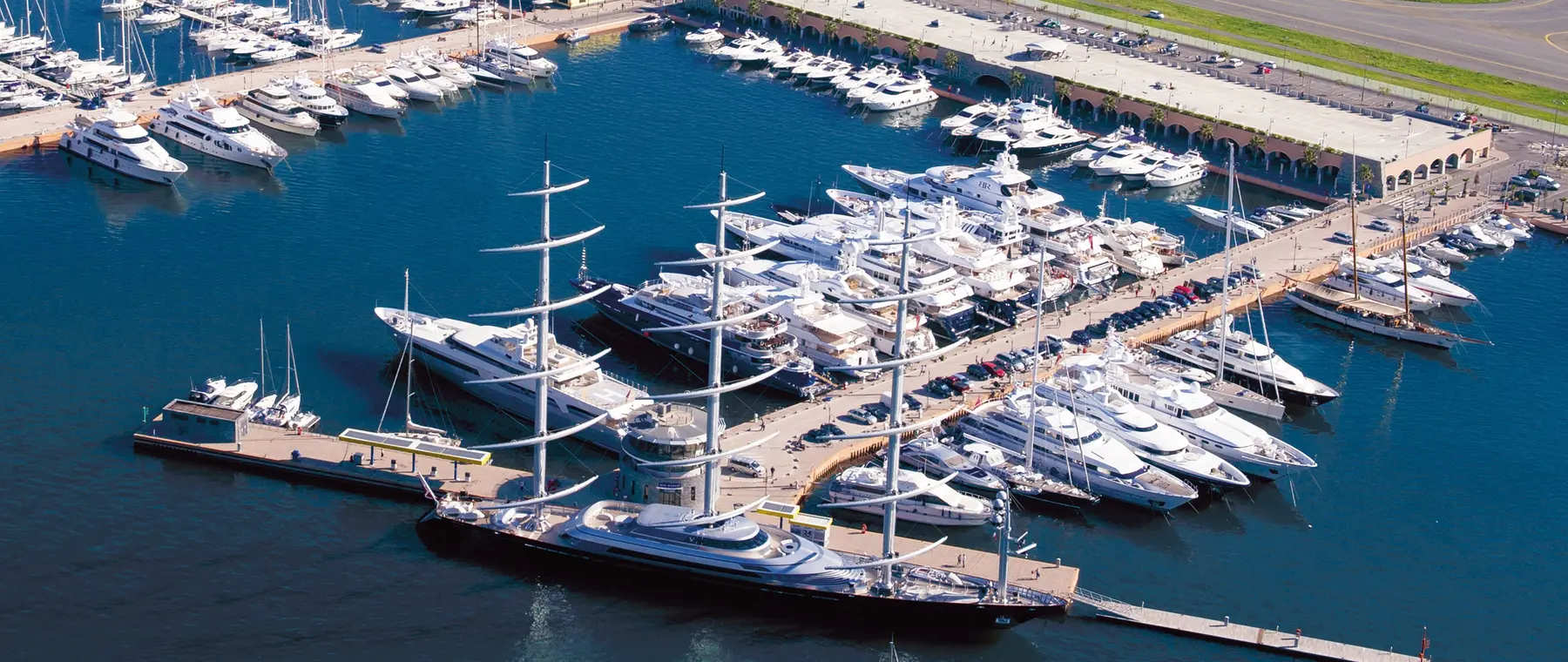
The acquisition date, portfolio total, berth capacity, four basins, airport access and technical facilities are documented in D-Marin's official 4 November 2026 announcement and the operator's Marina Genova information. The lead image is the original Marina Genova photograph supplied by D-Marin with its official acquisition announcement. It is not a representation of newly built berths. Credit: D-Marin / Marina Genova, original operator press image. Copyright and all other rights remain with the originating photographer or company; use is limited to independent editorial reporting of the announced acquisition.