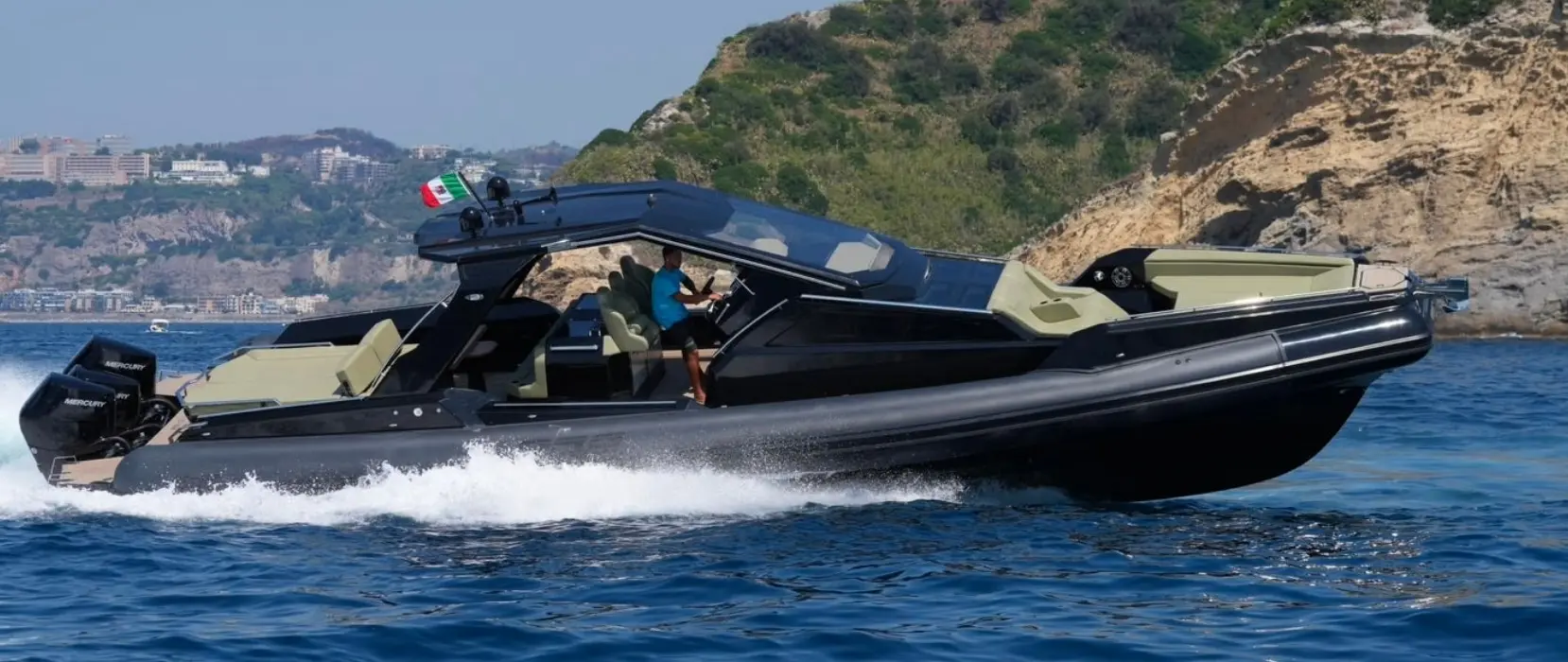
A New Maxi RIB at the Genoa Show
Italian boatbuilder Oromarine used the 2026 Genoa International Boat Show to present its C-52 as the latest luxury member of the company's cabin-oriented inflatable boat range. The show ran from 1 to 6 October, and Oromarine's post-event announcement highlighted the model as a significant step in the yard's design development. The boat is intended to combine the open-deck attractions of a large RIB with accommodation and amenities more familiar on a compact cruising motor yacht.
The C-52 appeared among four Oromarine models at the event. The company also displayed the Gravel 27, C-36 and Gravel 31, demonstrating that its product range covers different approaches to sport, day boating and cabin comfort. The C-52 is the conspicuous move toward the larger end of that spectrum. Prospective buyers should approach it as a luxury cruising platform with inflatable-tube construction, not simply a fast tender scaled up.
Why the C-52 Matters to Oromarine
The manufacturer's own Genoa report describes a comprehensively revised layout, spacious sunbathing zones forward and aft, and separate accommodation for an owner and guests. Those details indicate a design brief that extends beyond short transfers between a yacht and a beach. When a RIB reaches this scale, owners increasingly expect an attractive lounge setting, practical onboard systems and somewhere private to retreat, whether the craft is used independently or in support of a larger yacht.
Oromarine's Italian identity is also part of the proposition. The yard positions the C-52 as a combination of contemporary styling, strong performance and refined finish, a familiar formula in the Mediterranean luxury dayboat market. Such statements are the builder's promotional assessment rather than independent sea-trial findings. The more objective basis for comparison is the arrangement of cabins, deck facilities, fuel and water capacities, and the particular engines installed on the vessel being considered.
A Specification Discrepancy Buyers Should Note
The Genoa press announcement describes the C-52 as 13.99 metres long, with possible propulsion configurations quoted up to 1,800 kilowatts. Its separate online product page, however, currently describes the boat as more than fifteen metres long and lists a homologation length of 15.50 metres. The same product specification gives a maximum engine arrangement of four 400-horsepower units, a different power figure from the show announcement.
Those figures should not be blended into a single definitive specification without clarification from the yard. They may refer to distinct measurement conventions or different development and engine configurations, but Oromarine does not explain the discrepancy in the material reviewed. A buyer, broker or yacht manager should request an up-to-date signed specification for the exact hull. Length is particularly important because berthing charges, operating rules and equipment decisions may hinge on which dimension applies.
A Two-Cabin Interior
The official model page describes two separate sleeping spaces, one forward and one aft. The forward cabin includes a seating arrangement convertible into a double berth, while the aft compartment is listed with two beds that can form another double. The page also specifies a bathroom with a marine toilet, shower fittings and contemporary finishing materials. Together, these elements make the C-52 more than a pure open-air dayboat.
Cabin arrangements deserve close inspection in person, particularly on a vessel with significant exterior entertaining areas and inflatable tubes occupying part of the beam. Buyers should look at headroom, ease of entry, natural ventilation and the ability to store luggage without compromising passageways. The builder's description gives an indication of intended comfort, but photographs and a general layout cannot establish how well a particular crew or family will fit during an extended stay.
Exterior Living and Social Spaces
Oromarine's material puts a strong emphasis on the forward and aft sunpads, together with a cockpit designed for relaxed daytime use. The model page lists a convertible central sunbed, a double chaise longue arrangement and two independent electrically adjustable aft tables. These features offer flexibility between lounging and dining without turning every part of the deck into permanent fixed seating. The exact arrangement should still be checked against the final specification.
The craft also uses retractable mooring cleats, a panoramic windscreen and boarding equipment described in the factory list. Those are practical details in a style of boat where the deck is intended to be used extensively at anchor. Clear movement paths, accessible handholds and a sensible approach to wet decks remain important regardless of upholstery quality. An attractive layout works best when guests can move between swimming, seating and the helm safely.
Fuel, Fresh Water and Onboard Systems
The product page lists a 1,450-litre fuel tank, a 200-litre fresh-water arrangement with a 40-litre hot-water boiler, and a 120-litre holding tank for black water. It also describes electric systems prepared for several batteries, bilge pumps and electro-hydraulic steering. These figures provide a starting point for assessing the C-52 as a cruising platform, but they do not establish range or autonomy without measured consumption and a final equipment inventory.
For an owner planning more than occasional day trips, everyday systems will shape the experience. Water use, refrigeration capacity, ventilation and the need to run electrical appliances all influence time spent away from shore. Optional equipment can materially alter both the power balance and maintenance requirements. A serious specification discussion should therefore consider the boat's intended cruising pattern rather than treating tank capacities as sufficient proof of endurance.
Potential Propulsion and Performance
Oromarine's Genoa release stresses performance, reflecting the expectation that a maxi RIB should retain energetic handling despite its accommodations. The published figures nonetheless need clarification, because the show report and online model page state different maximum-power possibilities. No verified speed or range trial for the exact configuration is provided in those materials. It would be premature to infer a top speed from the theoretical power allowance alone.
Propulsion decisions also affect the way the boat will be used. An owner primarily visiting neighbouring bays may have a different priority from one undertaking long coastal passages or carrying large guest parties. Engine weight, fuel consumption, noise and service support can be as important as peak horsepower. A sea trial of the actual specified engine package, with a normal operating load, remains the best way to evaluate the builder's performance claims.
Options That Change the Experience
The yard lists a broad optional-equipment menu, including air-conditioning, cooking equipment, upgraded audio, a hydraulic platform, a carbon passerelle and additional helm technology. The list also refers to customization of the hard top and dashboard. These are examples of features buyers may choose, not confirmation that every C-52 leaves the factory with them. Distinguishing standard equipment from options is essential when comparing quotations or photographs of different boats.
The options can alter the character of the vessel. A larger emphasis on cooking and interior climate control would support longer stays aboard, while a hydraulic platform and upgraded outdoor facilities might appeal to an owner who prioritises time at anchor. Any addition brings its own power demand, space requirement and maintenance obligations. The most useful build specification is therefore one organised around how the boat will be operated, not simply the greatest number of accessories.
A Maxi RIB in the Luxury Yacht Ecosystem
Large rigid inflatables occupy an interesting position between recreational powerboats and the world of superyacht support craft. They can function as independent fast cruisers for owners who value open decks, or as chase boats when a mothership cannot easily accommodate them within a tender garage. Oromarine has not stated that every C-52 is intended for superyacht chase duty, and the boat's actual suitability would depend on its dimensions, deployment plan and intended cruising range.
For yacht managers, a potential chase boat introduces questions about separate berthing, crewing, insurance, transport and communication with the primary yacht. For a private owner, the same hull may be evaluated on the pleasure of an afternoon passage and the comfort of the cabins. The C-52's mix of generous outdoor areas and two interior sleeping compartments gives both groups a reason to look closely, while the conflicting published figures increase the importance of an exact technical review.
After Genoa: What to Verify
The Genoa appearance confirms Oromarine is presenting the C-52 as an active part of its contemporary range, supported by a dedicated online model page and published specification material. The company reported strong visitor interest during the six-day event, but did not release independently verified sales totals in the announcement. Those distinctions matter: public presentation and a factory specification are useful evidence of a product, whereas performance, delivery schedules and market demand require additional confirmation.
Anyone considering the C-52 should start by resolving the length and maximum-power differences between the October press release and the current online model sheet. The next steps are to identify which features are standard, obtain a firm delivered quotation and inspect a boat configured for the intended use. The model's attraction lies in its combination of Italian-style outdoor living and genuine cabin facilities, but the final decision should rest on detailed, consistent information from the builder.
Source: Oromarine – post-Genoa 2026 manufacturer announcement and C-52 product details.