A safety conversation before the boat is built
Ocean Safety is taking a two-stand approach to Metstrade 2026, using the Amsterdam trade exhibition to discuss how lifesaving equipment is selected, positioned and maintained aboard yachts. The company has announced an equipment presentation on the Alliance Marine stand and a second space for more vessel-specific conversations in the show's Superyacht Zone. The emphasis on early planning is significant for owners and builders of 12-to-24-metre luxury yachts, even though the specialist zone also serves considerably larger vessels. A compact cruiser has less spare space for bulky safety equipment than a very large yacht, yet the equipment must remain accessible when something goes wrong. The immediate news is the planned exhibition format and the products Ocean Safety says it will discuss, not the introduction of a new compulsory standard or proof that any particular system is superior.
Two stands, two different questions
The supplier's statement on the Metstrade website gives precise locations for its 17–19 November programme at RAI Amsterdam. Hall 5 stand 05.141, shared with Alliance Marine, will focus on the broader lifesaving range. Hall 7 stand 07.504 is intended for detailed discussions about equipment choices for individual yachts. That separation is useful. One conversation helps a buyer understand which products exist; the other asks where a life raft, recovery aid or tender-related safety item can realistically be fitted. For a yacht's owner or technical manager, those questions should be connected rather than treated as independent purchases. The most expensive device in a catalogue is not automatically the best solution when its stowage arrangement prevents a small crew from reaching it quickly or servicing it efficiently.
The equipment named by Ocean Safety
The company identifies its Ocean ISO liferaft range, lifejackets described as carrying ISO, SOLAS and MER approvals, the Jon Buoy EVAC and the Jon Buoy Mk 6 Smart Release among the subjects available for discussion. The Smart Release is described by the company as allowing remote deployment of the Mk 6 Recovery Module. Those are manufacturer descriptions of equipment, not findings from a comparative independent test performed for this article. Nor should a list of approvals be read as suggesting every version is suitable for every vessel and flag. Liferaft capacity, pack type, service interval, lifejacket size, fitting location and regulatory category all need checking against the actual boat and its use. A private Mediterranean cruiser, a commercially coded charter yacht and a long-range ocean vessel may face different equipment and documentation requirements.
Stowage is an operating decision
On a modern 18-metre motor yacht, deck and locker space is carefully designed to improve comfort. The temptation is to hide safety equipment where it does not interrupt the visual lines. That can produce an attractive arrangement, but rescue equipment is unusual: its value depends on being available under difficult circumstances rather than looking discreet in normal conditions. Owners and designers should think about who would open a locker, how heavy the package is, whether a person could reach it on a heeled or damaged boat and whether a service technician can remove it without dismantling furniture. The supplier's emphasis on early layout discussions is therefore sensible. It is far easier to provide a suitable dedicated location during design or a planned refit than to discover during a safety drill that the only available space is operationally awkward.
Crew size changes the calculation
Luxury yachts below 24 metres often cruise with a much smaller permanent crew than a superyacht. Some are owner-operated, some use a skipper occasionally and others carry a captain with only limited additional staff. An emergency system that assumes numerous trained hands can be a poor match for a boat whose guest list is larger than its operating team. A practical equipment review should therefore begin with the realistic number and capability of people who may have to act. Can one person initiate the recovery procedure? Is a second operator needed? Can guests locate appropriate lifejackets and understand their instructions? These are operational questions, not reasons to make unverified promises about a named product. The yacht's flag, operating category and individual risk assessment should determine the formal equipment requirements, while exercises test whether those arrangements work in practice.
Remote deployment is not a complete rescue plan
Remote release technology attracts attention because it can make an action possible without a crew member standing beside the device. Ocean Safety is highlighting the Jon Buoy Mk 6 Smart Release as an example of a remotely deployed recovery module. The feature could be relevant to discussions about man-overboard response, but the manufacturer has not established in its brief exhibition announcement that it solves every recovery scenario. A yacht still needs appropriate detection, alerting, manoeuvring, crew coordination and recovery procedures. Weather, vessel motion and the location of the casualty can determine what is feasible. A remote control is only one link in a much longer chain. Visitors should use the show to ask about compatibility, test arrangements, servicing and failure modes rather than assuming that adding a new device completes their safety plan.
Refit planning offers a second chance
Not every owner is ordering a new yacht. Many vessels in the 12-to-24-metre sector are maintained and improved through annual work periods, when lockers, deck arrangements and electrical systems can be reconsidered. A refit provides an opportunity to check whether safety equipment still suits the yacht's operating pattern. Has the guest complement changed? Have additional tenders or water toys altered available storage? Has the boat moved from private use to commercial charter? Have service facilities changed along its cruising route? Those questions can expose problems that routine replacement of an expired item would miss. Ocean Safety specifically invites discussions about ongoing servicing as well as product selection. That focus is valuable because an apparently well-equipped boat can still have a weak system if components are overdue for inspection or difficult to service.
Tender operations deserve separate attention
Tenders present a different set of hazards from the mother yacht. A family may use a tender for short restaurant transfers, while a crew may operate it repeatedly in busy marina waters or in a swell away from the main vessel. The correct equipment and procedures depend on the tender's use, capacity and applicable rules. A large yacht's life-saving arrangements do not necessarily cover what happens when passengers are away from it. The company's Hall 7 programme explicitly includes tender equipment in its vessel-specific discussions. For a luxury-yacht owner, that is a reminder to consider guest embarkation, communications, lighting, personal flotation and a credible return plan. None of those considerations should be reduced to a single shopping list copied from a differently sized boat. Tender safety is an operational system with its own human factors.
Standards should be checked, not merely repeated
The presence of ISO, SOLAS and MER in product descriptions can sound reassuring, but owners should ask a more precise question: which particular item, configuration and certification is relevant to this boat? Different regulations and standards may apply depending on length, flag, voyage type and commercial status. Equipment may be offered in multiple versions with different ratings. Manufacturer statements are a useful starting point, but the yacht's surveyor, professional skipper or flag administration may need to confirm the correct arrangement. Care is especially important when a privately owned boat enters charter service or changes operating area. This article does not offer a universal compliance checklist, because no such checklist could honestly cover every yacht in the category. It encourages owners to make approval and suitability part of a documented, vessel-specific discussion rather than relying on branding.
Questions worth taking to Amsterdam
A productive trade-show meeting begins with a brief of the actual yacht. Bring the vessel length and beam, general arrangement, operating profile, regular crew and guest complement, existing safety inventory and any known service issues. Ask how a proposed raft is deployed from its intended position; which fittings and clearances are necessary; what a man-overboard recovery sequence would look like; which maintenance tasks are required; and where servicing is available around the yacht's usual cruising area. A supplier can then discuss realistic options, while the owner can obtain independent advice where required. This is essentially the conversation Ocean Safety says it wants to host in Hall 7. It is more useful than collecting a product brochure and making a purchasing decision from dimensions alone. Good questions reduce the risk of expensive equipment sitting unused or inaccessible.
An exhibition preview, not a performance endorsement
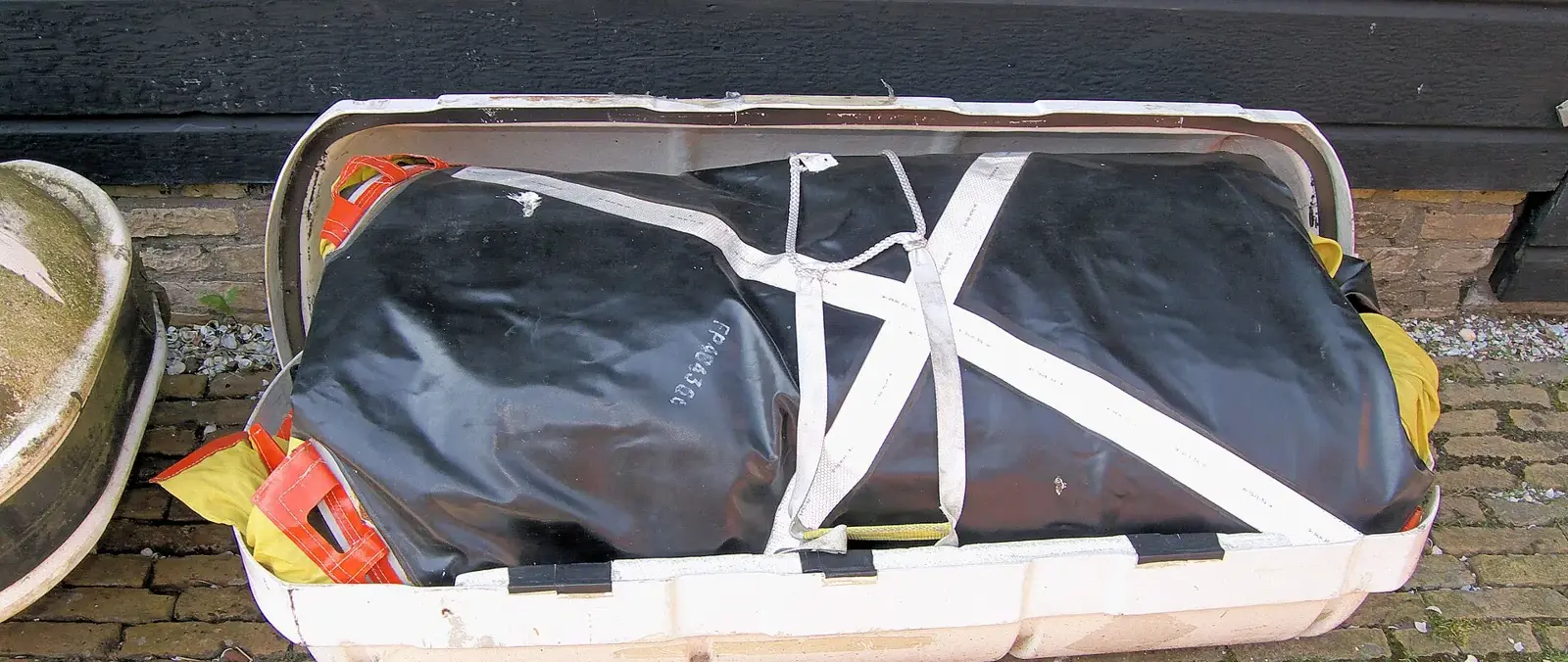
Metstrade itself is scheduled from 17 to 19 November 2026, and the company's two-stand programme is an announcement made before the show. The named products may be demonstrated and discussed there, but this article has not tested them, verified individual certification documents or compared prices. The archive photograph of a liferaft accompanying this report is illustrative and does not depict Ocean Safety's proprietary equipment or its forthcoming Amsterdam display. These distinctions matter to readers making decisions about lifesaving systems. A commercial announcement can be newsworthy because it shows how a supplier intends to engage with owners, builders and managers, while still leaving product suitability open for proper examination. The responsible approach is to use the event as the beginning of a technical conversation, not the end of one.
The lesson for the smaller luxury yacht
The strongest point in Ocean Safety's Metstrade preview is that equipment selection and its practical location belong in the same decision. On yachts that combine comfortable interiors, small crews and demanding navigation systems, a safety arrangement should be easy to reach, straightforward to maintain and genuinely usable by the people aboard. Those qualities cannot be established simply by naming a device or displaying an approval logo. They require discussion, inspection, training and occasional re-evaluation as the yacht's use changes. The Amsterdam event gives operators a chance to have some of those discussions with a supplier. Whether or not an owner attends, the underlying lesson is timely: think about the escape and recovery plan while there is still freedom to design it well. Safety is an essential part of luxury when the sea is no longer benign.
Photograph: Open liferaft, by Rasbak (22 May 2009), Wikimedia Commons, CC BY-SA 3.0; resized and converted to WebP. Illustrative archival photograph, not Ocean Safety equipment or its Metstrade display.