Amsterdam puts the marine workforce on the agenda
The Women in the Marine Industry International Breakfast is scheduled to return to Metstrade in Amsterdam on 18 November 2026, with a programme focused on the future of the marine workplace. The organisers have announced a panel drawn from equipment manufacturing, boatbuilding, marine retail and leadership development, sectors whose decisions reach owners of modest-sized luxury yachts as directly as the makers of very large vessels. The event takes place at the Metstrade Stage in Hall 13 from 08:30 to 10:30 Central European Time, according to the show's official programme. Its stated theme concerns developing the next generation of leaders, attracting and retaining talent and creating stronger workplaces. These are practical business questions for yards, yacht dealerships, charter operators and service providers. The session has not yet taken place, and its discussions or outcomes should therefore not be reported as completed.
Four different perspectives at one table
The speaker line-up names Fiona Richardson, Vice President of Global Human Resources at Brunswick Corporation's Navico Group; Paulee Day, President and Chief Executive Officer of West Marine; Victoria Low, Chief Executive Officer of The Magenta Project; and Erna Rusi, Chief Revenue Officer at Saxdor Yachts. The panel is to be guided by Michele Goldsmith, Vice President and General Manager of Soundings Trade Only Group. Those roles are worth spelling out accurately. They span workforce policy, marine retail, representation in the industry and the commercial growth of a modern boatbuilder. The diversity of responsibilities is more useful than a generic discussion about visibility. A business that builds or services a 16-metre luxury cruiser depends on effective technical teams, customer communication and leadership just as much as a large yard. No comments from the forthcoming session are available yet.
Why this matters to owners, not only employers
A yacht buyer usually encounters the marine workforce through a broker, a sales specialist, a handover team, a service technician or a marina manager. Their knowledge and continuity shape the owner's experience long after the photographs of a new model have disappeared from a launch announcement. When staffing is unstable or poorly developed, appointments, parts availability, maintenance explanations and aftersales confidence can suffer. Conversely, a skilled team that understands the vessel and its owner can make a complicated handover feel straightforward. The panel's focus on attracting and nurturing talent is therefore not an internal human-resources issue detached from boating. It is one of the foundations of dependable product support. The luxury-yacht sector between 12 and 24 metres often combines highly capable machinery with relatively small operating teams, making each individual's competence particularly important.
Saxdor gives the conversation a builder's perspective
Erna Rusi's participation brings a boatbuilder's commercial view into a discussion that could otherwise remain at the level of workplace policy. Saxdor operates in a market where buyers care about design, performance, usable deck spaces and the quality of the ownership journey. This article does not infer that any particular Saxdor model or product will be announced at the breakfast; no such launch is described in the event programme. The relevance is broader. A boatbuilder must recruit and develop staff while managing dealer relationships, customer expectations and a product line that evolves quickly. New leaders need commercial fluency and enough understanding of production, service and on-water use to connect internal decisions with owner satisfaction. It is a valuable perspective for readers following how the leisure-yacht supply chain supports small professional crews and private owner-operators.
Equipment and retail bring other pressures
Navico Group and West Marine represent different points on the path between marine technology and the end user. One perspective concerns the people who develop and support equipment; the other concerns the businesses through which boaters encounter products, advice and customer service. A 19-metre motor yacht can have sophisticated navigation, communications and domestic systems, but these are only useful when someone can specify, install, explain and maintain them correctly. Retail teams, distributors and service partners translate catalogues into workable installations and support. The panel's announced interest in future skills is relevant to this translation. As systems become more connected and expectations of digital support grow, it becomes harder to rely on isolated expertise. Training across departments and clear career progression may matter to the purchaser even if those programmes are invisible from the helm.
Representation as a route to a larger talent pool
The Magenta Project's involvement brings attention to widening opportunities across the marine industry. The official programme describes the session as an opportunity to explore inclusive workplaces, diverse perspectives and leadership development. These are the organisers' aims, not independently established outcomes of a single breakfast. The commercial case is worth examining on its merits: an industry that draws future engineers, skippers, designers, surveyors and executives from a wider range of backgrounds is likely to have more potential recruits. But access alone is not a complete solution. Businesses also need good instruction, mentoring, fair evaluation and roles that people can sustain. The most useful discussion in Amsterdam would connect ambition with tangible actions that firms of different sizes can adopt. Small charter operators and marine-services companies may not have large training departments, yet their need for dependable people is substantial.
The 2026 theme is specifically forward-looking
Metstrade frames this year's theme as the future of the marine workplace and the building of the next generation of leaders. Its published discussion prompts include retaining talent, equipping emerging professionals with skills and making diverse perspectives useful to business performance. The wording deliberately looks beyond one employer or one country. That matters because the marine sector is international: a yacht might be designed in one state, built in another, sold through a third and serviced while cruising elsewhere. The people supporting that vessel need to communicate across professional cultures and technical systems. None of the panel's published objectives establishes a formal training programme or compulsory industry standard. Readers should distinguish the conference agenda from implemented policy. Still, a clear agenda creates an opportunity for yards and service businesses to compare practical approaches, particularly before another busy European boat-show season.
A breakfast within a larger trade exhibition
Metstrade 2026 runs at RAI Amsterdam from 17 to 19 November. The Women in Marine session occupies the second morning and is listed as free to registered exhibitors and attendees, with separate event registration providing access to the breakfast. The meeting is not a general public yacht show where a visitor can expect to board new models, and its audience is principally industry professionals. That distinction is important for LYG readers who work in yacht ownership, management, sales or service. A charter manager or boatbuilder representative may find professional value in the event; an owner seeking a leisure day out should not confuse it with a retail boat-show experience. The organisers also identify Room to Read, a charity focused on education, as an organisation the event supports. Charity involvement is an associated feature, not the core subject of the technical and business discussion.
What a smaller marine business might take away
Consider a brokerage, marina or refit business with a relatively small team. The loss of a single experienced technician can delay work on several visiting yachts; an under-supported junior employee may struggle to answer owners' questions; a supervisor without leadership training can turn a manageable scheduling issue into a client dispute. None of those problems is new, but the demands of contemporary yachts amplify their effect. An owner of a 22-metre cruiser expects reliable arrangements even when the yard or supplier operates on a far smaller scale than the yacht's purchase price suggests. The practical agenda could include structured handovers, skills records, mentoring, communication training and clear responsibility during customer escalations. These are examples of possible business responses, not claims about decisions that the Amsterdam panel has made. The value of the event will be measured by what attendees choose to apply after it.
Leadership does not begin at the top
In yacht services, leadership can appear in many roles. A dockmaster coordinating a difficult arrival, a technician explaining a repair truthfully, a charter manager handling a change of plans and a sales specialist declining an unsuitable specification are all making decisions that influence trust. Developing those capabilities early reduces dependence on a few senior people. It also helps the industry retain professionals who might otherwise see no path from an entry-level position to broader responsibility. These observations are editorial implications of the event's subject, not statistics attributed to the organisers. The connection to 12-to-24-metre yachts is especially clear: many owners cruise without large permanent crews and therefore rely heavily on the skill and judgement of shore-based businesses. A better-supported workforce can make independence afloat safer and more enjoyable.
An event to follow for substance
The announced programme brings recognisable marine leaders together, but the important questions will be what they say and whether the discussion produces useful commitments or examples. After 18 November, it will be possible to assess the panel's actual messages instead of projecting conclusions onto an event that has not happened. For now, the verified facts are its date, location, theme, registration conditions and the published speaker roles. Luxury Yacht Guide will be better served by that distinction than by treating every conference announcement as a completed industry transformation. The session nonetheless addresses a real part of luxury-yacht ownership: the often unseen chain of skilled people who make boating enjoyable. When that chain is strong, owners gain confidence not only in their boats, but also in the businesses they must depend on.
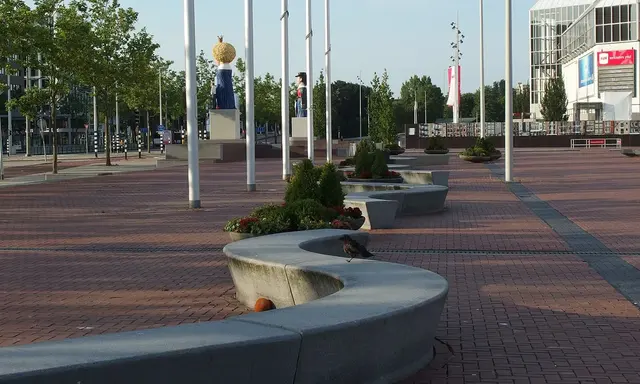
Photograph: RAI in Amsterdam, the venue of Metstrade, by Guilhem Vellut (1 August 2015), Wikimedia Commons, CC BY 2.0; resized and converted to WebP. Archival view of the venue, not a 2026 event photograph.