Startups move into the centre of the Amsterdam marine show
Metstrade 2026 is preparing two dedicated startup areas for its 17–19 November event at RAI Amsterdam. The organiser says the larger leisure-marine showcase will be in Hall 5, while a separate Superyacht Startups Area will be located in Hall 8. The first exhibitor group was announced in September, and the current event page now lists a detailed set of companies and stand references. For owners and operators of 12-to-24-metre yachts, the wider leisure-marine area is the immediately relevant place to look for suppliers developing new approaches to equipment, services and business processes. The headline is an exhibition programme, not proof that every participating company has released a finished or certified product. Startups are often at very different stages of technical development, so buyers should approach the event with curiosity and disciplined questions in equal measure.
The latest Hall 5 lineup
The show's current startup page lists AirLens, Cadentia Technologies, Fetch Energy, HATAG MSF, ITN Marina Management, Kaiman Marine, Mirai, Northern Light, NzeroWax, Primum, SensiBlue, SWAY, TONJO, Works on Water and Yachtpass in the leisure-marine section. These names represent the organiser's exhibitor roster as observed ahead of the show. The list is broader than a narrowly defined yacht-hardware collection, which is one reason the area may interest boatbuilders, brokers, service companies and marina operators as well as owners. A company name alone should not be used to assign a precise technical capability or make a performance claim. The sensible visitor first identifies firms whose published product descriptions meet an actual need and then asks what is available now, what is undergoing trials and what remains a development proposal. A promising show stand is the beginning of due diligence.
A separate area for larger-vessel services
Hall 8 contains a distinct group described by the organiser as the Superyacht Startups Area. The current lineup includes Ambright, Leak Stop Gun, MAIT Systems, Massive Marine, Sea It, The Galley Table and ZeaFarer. That section principally addresses a different end of the yacht market, but some subjects discussed by larger-yacht suppliers may also interest the owner of a well-equipped 20-metre boat. Applicability must be judged individually, however. A system designed for a 60-metre vessel may need different integration, cost structure and operating staff from one used on a 17-metre owner-operated cruiser. The separation of the zones is valuable precisely because it gives visitors a clearer starting point. LYG readers should not assume that products labelled for superyachts are automatically appropriate for their boats, or that a smaller system cannot be technologically sophisticated.
The announced sponsorship
Metstrade's September announcement also confirmed Fort Insurance as official sponsor of both startup areas. The organiser connects that support with Yachting Ventures, the programme partner bringing emerging companies to the exhibition. This is a sponsorship relationship associated with the show, not an endorsement by the insurer of every product or service on the stands. It nonetheless illustrates how startups seek more than customers at a trade fair. They may need distribution partnerships, insurance advice, market knowledge, investment contacts or access to builders willing to test new equipment. Visitors sometimes focus only on a product demonstration, but the network around an early-stage company can determine whether it is able to provide reliable support later. For a yacht owner, long-term serviceability and financial continuity are just as relevant as an attractive idea presented during a thirty-minute conversation.
A product question is also a support question
Consider an owner evaluating a new onboard monitoring tool, coatings system or marina-management service at the show. The claims on a screen may be compelling, but the ownership questions are more prosaic. Who installs the system on a vessel of this size? Can it work with existing instruments? What happens without an internet connection? How are software changes delivered, and who supports the owner when the yacht is in a remote cruising area? Where equipment has a physical service life, spare parts and maintenance routines deserve equal attention. None of these questions is an allegation about the named Metstrade exhibitors. They are a framework for buying technology from any young company. A reliable answer may justify a trial; an uncertain answer suggests keeping the conversation exploratory until the product and its support arrangements mature.
Why small yachts are an important test market
In the 12-to-24-metre sector, boatbuilders and owners are often receptive to equipment that makes a limited crew more effective or improves comfort without requiring excessive space. Yet the constraints are severe: batteries, electrical loads, access panels, weight distribution and integration with established systems leave little room for vague promises. A startup working with a builder may be able to design around those constraints, while an aftermarket product has to fit a yacht that was not created for it. It is therefore useful to ask whether a proposed solution is intended for new construction, refit or everyday owner installation. A prototype that works beautifully in a trade-show demonstration may require important adaptation before it is appropriate at sea. Sensible innovation includes an honest description of where the product is ready to operate and where further engineering is required.
The difference between a startup exhibit and a launch
An announced exhibitor roster is not the same as a confirmed world premiere. The September Metstrade release identifies companies participating in the startup programme, and the current website provides the updated roster. Without a separate product announcement, it would be inaccurate to declare that an individual startup will unveil a named device, reach commercial certification or accept orders on a specific date. This article deliberately makes no such claim. What is verified is the event context, the Hall 5 and Hall 8 arrangement, the listed firms and the partnership supporting the programme. The difference may appear cautious, but it protects readers from conflating business development with available equipment. If an owner or yard is considering a substantial integration project, a timeline backed by documentation is a much better basis for a decision than excitement generated by a conference listing.
Builders can use the show differently from owners
A production yacht builder may visit a startup area looking for a component that can be integrated across future model years. It will need repeated production supply, technical documents, warranty arrangements and compatibility testing. A private owner may instead be searching for an improvement to a specific boat and might value straightforward installation and service access over theoretical future scalability. Marina managers and charter operators have another set of concerns, including staff training, availability and the ability to handle multiple users. These different perspectives explain why the organiser positions the startup programme within a broader business-to-business exhibition. Visitors obtain more value by carrying a clear problem statement than by browsing every stand without priorities. The most fruitful conversations start with a real operational need and then examine how much of the proposed solution has been demonstrated.
Stand numbers help build an efficient visit
According to the official startup listing, the leisure-marine companies are clustered in Hall 5 with individual stand references under the 05.231 series, while the larger-vessel companies are listed in Hall 8 around the 08.263 series. Attendees should recheck the floor plan and any updates before travel, as exhibitor lineups can evolve. A practical visit might begin with two or three relevant Hall 5 companies, include an independent technical conversation elsewhere in the exhibition and reserve Hall 8 for systems with a plausible application to the owner's boat. Owners who cannot attend can still use the exhibitor roster to identify companies for later research. The purpose of the show is to make introductions, not to compress a complex safety, electrical or equipment decision into a few minutes on the exhibition floor.
Questions about demonstrations and evidence
The strongest technical enquiry asks what has been tested, by whom and under which conditions. A supplier may have internal test data, third-party assessments, pilot installations or customer feedback. Those are different forms of evidence and should be described honestly. For an onboard device, owners should also seek information about environmental exposure, power use, electromagnetic compatibility and service procedures where relevant. For a digital service, privacy, data ownership, cybersecurity and recovery from outages may matter more. Again, no specific startup on the Metstrade list is being accused of failing these checks. The questions are normal preparation for responsible procurement. Luxury-yacht owners benefit when they separate a company's inspiring long-term vision from the proven capabilities of the current product. That distinction is particularly important for safety-related systems and anything that controls equipment aboard.
What will count as news after the show
The current Metstrade announcement gives journalists a starting list rather than a set of completed product evaluations. During the 17–19 November event, the important follow-up will be whether companies release verifiable specifications, report completed trials, announce confirmed supply agreements or offer genuinely new services. Such developments can then be assessed for relevance to yacht length and use. Merely repeating the exhibitor roster under a new headline would add little. The startup areas are still newsworthy because they show where organisers expect new marine businesses to meet established industry participants. For owners and managers of smaller luxury yachts, the opportunity is to discover technologies early while keeping normal standards of scrutiny. A thoughtful buyer may leave Amsterdam with fewer brochures and better questions, which can be a far more valuable result.
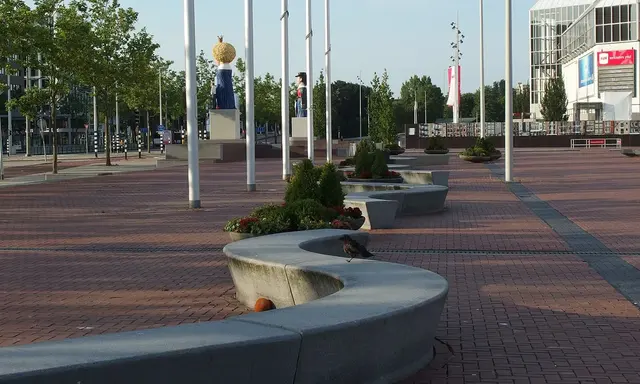
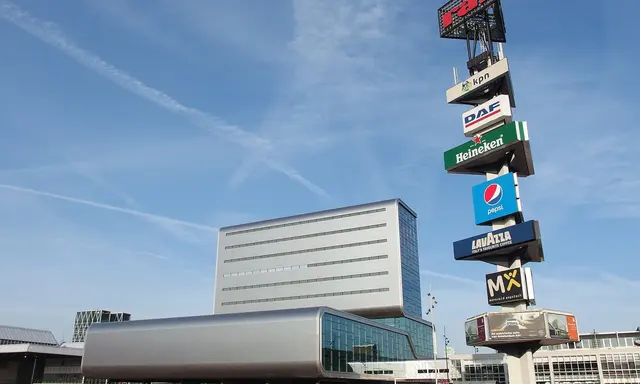
Photograph: Marine equipment displayed at METS in RAI Amsterdam on 15 November 2011, by S.J. de Waard, Wikimedia Commons, CC BY-SA 3.0; resized and converted to WebP. Archival exhibition image, not a photograph of the 2026 startup areas or their exhibitors.