A Finnish display enters the 2026 DAME conversation
Finland’s Nextfour Solutions has a specific piece of helm technology in the 2026 METSTRADE design-award conversation: the Q Display Float Series. The product has already been introduced to the market, and its official product information is dated March 2026. The current development is its presence among the DAME Design Awards nominated products, highlighted in the Finnish industry’s 11 November preview of its Amsterdam exhibitors. This is a nomination, not an award win. The organisers say the 2026 DAME competition shortlisted 74 products from 153 entries across 30 countries; winners will be revealed when METSTRADE opens on 17 November. For an owner considering a 12–23.99-metre yacht, the useful question is not whether a product wins a trophy, but what the design permits in a real wheelhouse. The Q system separates the screen from the main electronics, aiming to free up dashboard space without separating the functions a skipper uses every day.
What has actually changed at the helm
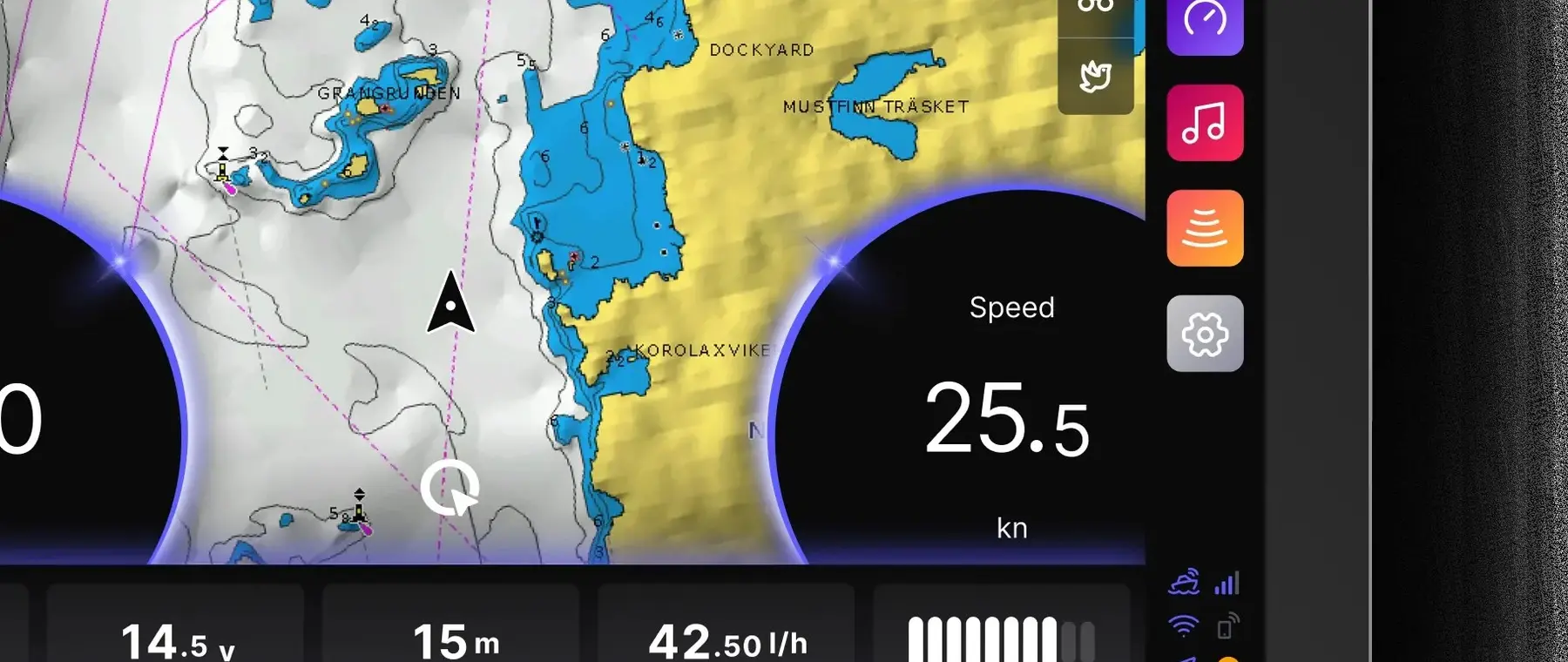
Many chartplotter installations put the screen and much of the processing hardware in a single enclosure. That is straightforward in a generous console but can become restrictive when a builder is trying to create a slim helm with good visibility and room for other controls. Nextfour’s Q Display Float takes a different approach. It places the touchscreen on a relatively small mounting bracket and moves the central Q Core unit elsewhere in the boat. The two units are linked by one Q CoreLink cable. The manufacturer promotes this as a way to fit a display where a deeper all-in-one unit may not be convenient. The design can also help a yard keep electronics away from a visually exposed dashboard. That does not mean installation is universally simple. Cable routing, vibration resistance, water ingress protection, service access and the need for a reliable power supply still demand a proper integration plan. The advantage is additional flexibility, not an exemption from marine electrical engineering.
Three displays sharing a compact footprint
The Float family includes a 10-inch display, a 12-inch wide version and a 15-inch wide version. According to the official specifications, the screens use a common mounting footprint of approximately 180 by 70 millimetres. That makes the family relevant when a builder wants related models or different trim levels to share a consistent helm structure. The 10-inch unit is comparatively conventional in proportions, while the wide versions offer a different arrangement for chart, engine and other information. Screen size alone does not determine usability, however. A helm should be evaluated at the normal eye position, in direct sunlight, at night and while the vessel is moving. A small bracket is only helpful if the mounting structure remains rigid and the screen does not obstruct visibility or access to other equipment. Prospective buyers should see the actual display operating aboard the yacht rather than judge its ergonomics from a product photograph.
The Q Core and the meaning of connectivity
Nextfour lists 4G/LTE connectivity with eSIM, wireless networking, NMEA 2000 connectivity, USB ports and additional digital input-output capacity among the system’s features. Navigation, engine information, entertainment and selected boat controls are presented within the Q Experience environment. For a luxury-yacht owner, an integrated interface can reduce the number of unrelated menus and panels that must be learned before leaving the berth. It can also introduce dependency on configuration, compatible equipment and network reliability. Owners should ask the installer to document which functions are local and which need a subscription or data coverage. The manufacturer notes that some connected features require its Q Connected package. A useful installation should continue to present critical navigation and vessel data when internet connectivity is absent. It is important to distinguish the ability to display information from authority to control a safety-critical system. Not every connected device should be controllable through the same permission level.
Remote monitoring should be specified, not assumed
The Q Experience’s Guard features are intended to help an owner monitor a boat when it is unattended. The manufacturer describes position, battery and other status information through the connected display and mobile app. That can be valuable for a privately owned yacht spending weeks at different marinas, particularly when the owner is not aboard continuously. But remote monitoring does not replace a crew, shoreside security, alarms or routine inspection. The success of an alert depends on sensors being installed and tested, the communication path remaining active and someone being able to act on the information. Owners should identify the exact triggers configured, who receives them and which local authority or service provider could respond. The most effective system is the one integrated into a practical incident plan. It is misleading to imply that a connectivity feature makes a berth safer in every location or that a phone notification alone can prevent a loss.
How the cockpit layout changes for builders
An important part of the DAME evaluation is design for use, not just visual novelty. For a builder producing yachts across several lengths, the Float system may allow the same overall helm language to be carried between models while changing display size. A vessel with a compact raised pilothouse, for instance, may benefit from fewer bulky enclosures crowding the top of its console. Yet moving electronics into a separate core introduces a second location that must be protected, ventilated and accessible for service. Installation plans should show the mounting structure, cable run and all penetrations. If a manufacturer intends multiple displays, it must also verify the supported configuration rather than assume that every combination is possible. The owner should ask for a diagram of what is connected and the service documentation that will be handed over. Those details matter more over ten years of ownership than a dramatic show presentation.
A nomination is a design signal, not a full sea trial
METSTRADE says the 2026 DAME jury considered 153 entries and selected 74 nominees. Products are assessed through an expert design process, and the shortlisted equipment is due to be displayed during the show. A nomination indicates that a product has attracted the jury’s attention; it does not independently establish reliability, marine safety certification for every application, comparative accuracy or total cost of ownership. For electronics, those questions need laboratory specifications, installer records and real-world trials. Nextfour’s published dimensions and connectivity lists are useful source data, but they should be read as manufacturer specifications. A captain comparing navigation systems should examine chart support, alarms, interface clarity, sunlight performance, failure behaviour and integration with the actual vessel. No owner should select a navigation installation solely from a nomination announcement or because a display looks elegant in a photograph.
What to ask about compatibility and servicing
The Q Display Float offers NMEA 2000 compatibility and the ability to integrate engine and vessel information. That is helpful for yachts with a mixture of systems, but NMEA 2000 is not a promise that every sensor, engine module and control function will work without an adapter or software configuration. A retrofit needs a compatibility list and a plan for preserving essential independent controls. Builders and installers should establish who takes responsibility for software updates, warranty work, troubleshooting and future component availability. It is also sensible to document power demand and behaviour in standby modes, particularly on a yacht that spends time at anchor. A short demonstration should include an intentional loss of external connectivity and a clear explanation of what remains available. The most valuable integration is one a second technician can understand years later with an accurate wiring diagram and device inventory.
What the public price and stock status mean
The manufacturer’s public shop has listed the Q Display Float from €2,150, with the product shown as sold out on the page reviewed for this report. That should not be mistaken for a current installed quotation for a yacht. The amount is a starting product price, and the shop separately explains that tax is calculated by country. A complete installation can involve cables, mounting, core equipment, commissioning, network setup and any additional interface hardware required by the boat. A sold-out status at an online shop is also not evidence that stock cannot be supplied through every dealer or shipyard. Buyers should ask Nextfour or an authorised installer for a dated, configuration-specific proposal, including the desired screen size and service arrangements. Pricing is a useful comparison only when the equipment lists and responsibilities are the same.
The wider Finnish presence at METSTRADE
The Finnish Marine Industries Federation Finnboat says its 2026 national pavilion brings together twelve companies at the Amsterdam show, continuing a long history of Finland’s participation. The group includes businesses working in marine electronics, electric propulsion, surface finishing and other specialised equipment. The variety matters because an integrated helm is one part of a much broader vessel-design process, where electrical architecture, interior finishes, power management and maintainability influence the owner’s experience. The show itself runs from 17 to 19 November at RAI Amsterdam. Equipment shown there can be evaluated by boatbuilders and installers, but the availability of a finished system aboard a specific yacht depends on engineering decisions after the exhibition. The meaningful outcome for owners will be whether a builder can turn the promising product into a reliable, supported and easy-to-use installation.
Why a 12–24m yacht owner should care
The middle of the luxury-yacht market is where a relatively small crew may handle an increasingly sophisticated range of systems. A consistent helm interface can make information easier to access and reduce the burden of dealing with multiple separate displays. However, it can also concentrate attention on one screen, making sound alert design, sensible backup arrangements and crew familiarity essential. The best equipment decisions begin with the yacht’s use. A family motor yacht making coastal passages has different priorities from an ocean-going sailing catamaran or a yacht used heavily for charter. The way controls are positioned, the level of automation offered and the ability to service the installation all deserve examination. The Q Display Float’s separated architecture is a credible design development to study; whether it is the right choice for a particular owner remains a technical decision supported by testing and transparent documentation.
Original sources and official image
The METSTRADE 26 October DAME nominations announcement provides the dates and entry totals. The organiser’s Q Display Float product listing confirms the product family and installation design. The Nextfour Q Experience manufacturer specifications describe the three screens, connectivity and interfaces, while the official product page gives published retail information and stock status. The hero image is the actual Q Display Float product photographed or rendered by Nextfour Solutions for its product materials and is credited to the manufacturer. No representation is made that the 2026 DAME awards have already been decided.