Luxury Yacht Guide News | 21 November 2026
A new harbour project takes shape on the northern Adriatic
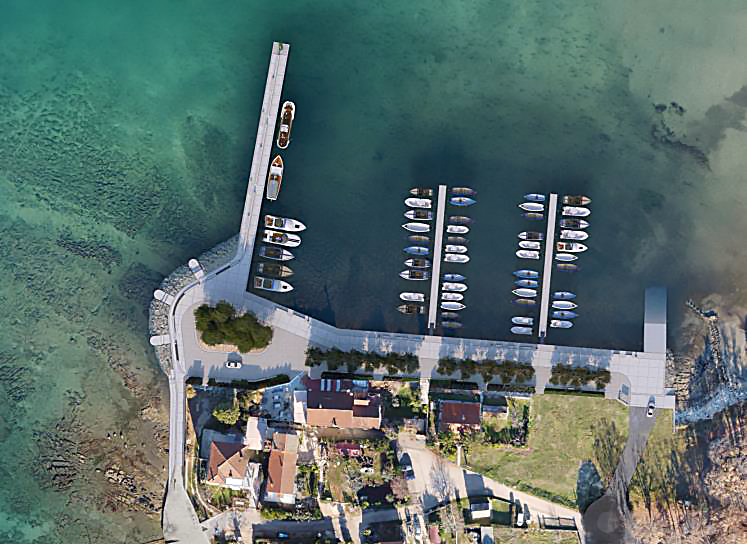
Marinetek has signed an agreement to supply floating infrastructure for the Dajla–Belveder harbour development on Croatia's northern Adriatic coast, creating a concrete equipment contract within a wider port investment. The company's announcement dated 16 November 2026 identifies six All Concrete M2415AC pontoons to be manufactured, delivered and installed under a contract with construction company Adriaing. The project is being developed by the Umag–Novigrad County Port Authority and has a stated overall investment value of €7.55 million, supported in part by European Union regional development funding. The new floating sections will form two piers of approximately 45 metres each. For owners cruising the Istrian coast in luxury motor yachts and sailing yachts, the news is relevant to the gradual improvement of regional harbour infrastructure, although the completed facility's berth dimensions and eligibility need to be confirmed before it can be assumed suitable for a particular vessel.
Six elements to form two piers
The announced floating structures are Marinetek All Concrete M2415AC pontoons, each approximately 2.20 metres wide and 14.92 metres long. A total of six modules is intended to form two floating piers, each around 45 metres, together with their access and mooring systems. These dimensions describe the modules themselves rather than the yacht sizes that will be permitted to use the finished berths. The distinction matters because pontoon length is only one part of a harbour's capacity. Water depth, turning space, the arrangement of finger pontoons or stern moorings and the position of anchors all determine what types of boat can be accommodated. The press announcement establishes the product and approximate layout, but prospective visitors should not infer that the longest luxury yacht capable of lying alongside a 45-metre structure will automatically be accepted.
Concrete construction and a long service life
Concrete floating pontoons offer a different construction approach from lightweight modular docks or timber walkways. Their greater mass and structural characteristics can be attractive where a harbour needs robust infrastructure exposed to repeated use, wind and changing water levels. Yet the term concrete should not be treated as a blanket guarantee of maintenance-free performance. Reinforcement, flotation components, joints, anchoring and connections all require appropriate engineering and inspection. A floating pontoon is part of a complete mooring system, and loads from vessels are transmitted through its structure into the anchoring arrangement. Marinetek's published module size is a useful starting point for understanding the project, but the final design must account for the site's local wave climate and operational requirements. An owner should judge the completed facility by its actual protection, safe access and service standards.
Access systems form part of the order
The company's scope also includes access gangways, anchoring equipment and mooring arrangements. These components are essential rather than ancillary. A stable pier is of limited use if guests cannot board safely as the water level and pontoon position change. The gangway gradient, surface grip, lighting and protection from unexpected movement all affect daily use. Similarly, the design of the anchoring or mooring system must consider the range of forces created by wind and wave action on vessels of different displacement. An equipment supplier may provide nominal capacities for individual products, but the port authority and its engineers are responsible for ensuring that the installation works as a system. For luxury yacht owners, well-planned access and dependable mooring points can make the difference between an enjoyable overnight visit and a difficult arrival.
The wider harbour works
The floating-pontoon contract sits within a broader programme that includes a breakwater, quay wall, dredging of the harbour basin, a slipway and improvements to the surrounding waterfront. These elements serve different purposes and may be delivered on different construction schedules. A breakwater can provide protection from certain sea conditions; dredging can maintain the usable depth of a basin; and shore-side works can improve circulation and the experience of residents and visitors. The €7.55 million figure refers to the overall development, not necessarily the value of Marinetek's pontoon contract. That financial distinction is important when reporting infrastructure investment. A supplier's equipment order should not be inflated into a claim that it has been awarded responsibility for all associated civil engineering works.
The planned 63 communal berths
The port authority's programme is intended to provide 63 communal berths once complete. Communal facilities can serve local boat owners and residents differently from a privately operated marina aimed primarily at visiting yachts. The new capacity therefore should not be described as a 63-berth superyacht marina without further evidence. Some berths may be allocated under local rules, and the maximum accepted length, beam and draught will depend on the final design and authority policy. Even so, improvements to smaller ports can influence the wider cruising environment. A coast with more reliable local harbours offers additional places for short visits, provisioning and shelter, provided the facilities are accessible to transient vessels. The correct information for visiting owners will come from the operating authority when the works are finished and berth policies are published.
European co-financing and local development
Marinetek says the harbour project is co-financed through the European Regional Development Fund under Croatia's Competitiveness and Cohesion Programme for 2021–2027. The presence of public funding gives the development a wider purpose than the interests of recreational yacht owners alone. Regional port projects may support local transport, safety, waterfront activity and access for community users. Those objectives can complement leisure cruising without being identical to the commercial priorities of a luxury marina. It is therefore sensible to evaluate the improvement in its local context rather than judge it solely by the number of visiting yachts expected. The publicly stated investment provides an indication of the project's scale, but detailed funding conditions, timelines and final accounting would need to be established from official port authority documentation.
The importance of the Umag–Novigrad coastline
The northern Adriatic offers a dense network of coastal towns, harbours and cruising routes between Croatia, Slovenia and northeastern Italy. For an owner of a yacht around twelve to twenty metres, the ability to select appropriate stopping points can shape an entire itinerary. A small harbour may be attractive for its proximity to local communities, while a larger marina may offer a wider range of technical services and security. The Dajla–Belveder development is one piece of this broader maritime network. It is not possible from the equipment contract alone to predict how many transient luxury yachts will use the site or what services will be available ashore. Nevertheless, additional protected mooring infrastructure can be an important step in a region where demand for safe berths must be balanced against the needs of local residents.
Questions for yacht owners before visiting
When the project approaches completion, prospective users should verify the opening date, harbour-master contact details, permitted vessel length and draught, mooring format, availability of electricity and water, and whether reservations or local permits are required. A photograph of completed pontoons will not confirm any of those operating conditions. Owners should also consult current navigational notices during construction, when dredging, cranes and temporary restrictions may affect the harbour entrance. The press announcement establishes a signed supply contract, not a completed and commissioned marina. That distinction should govern voyage planning. A responsible cruising guide can add practical visitor information only when the port authority has published it or when verified operating details are available.
What the contract demonstrates
Marinetek's Dajla–Belveder agreement illustrates the role specialist pontoon manufacturers play in modern coastal infrastructure. Its six concrete modules are a small but important physical component of an investment that also involves engineering, access, dredging and public waterfront improvements. The news should be understood as a commitment to build and install equipment, with the full benefits dependent on successful completion and operation of the harbour. For Luxury Yacht Guide readers, the significance is the continued development of a region that is already a major destination for European yachting. Good cruising depends on more than the design of the yacht itself; it also depends on safe, accessible and appropriately managed places to arrive.
Sources and image credits
Reporting based on Marinetek primary supplier official Dajla–Belveder pontoon contract release, 16 November 2026.
Lead rendering: Dajla–Belveder harbour pontoon project official Marinetek supplier illustration. Marinetek, official Dajla–Belveder harbour contract illustration in November 2026 supplier press release. Original official image source.