Luxury Yacht Guide News | 21 November 2026
A defence contract draws attention to personal safety equipment
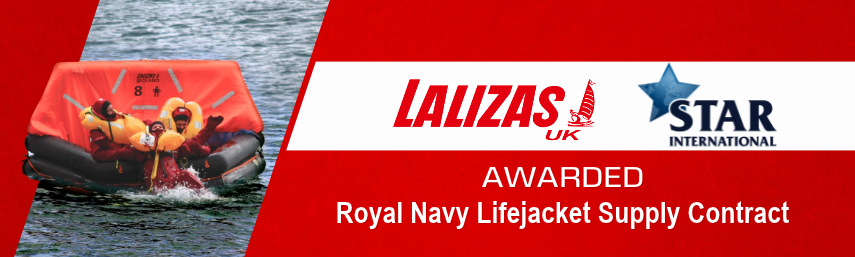
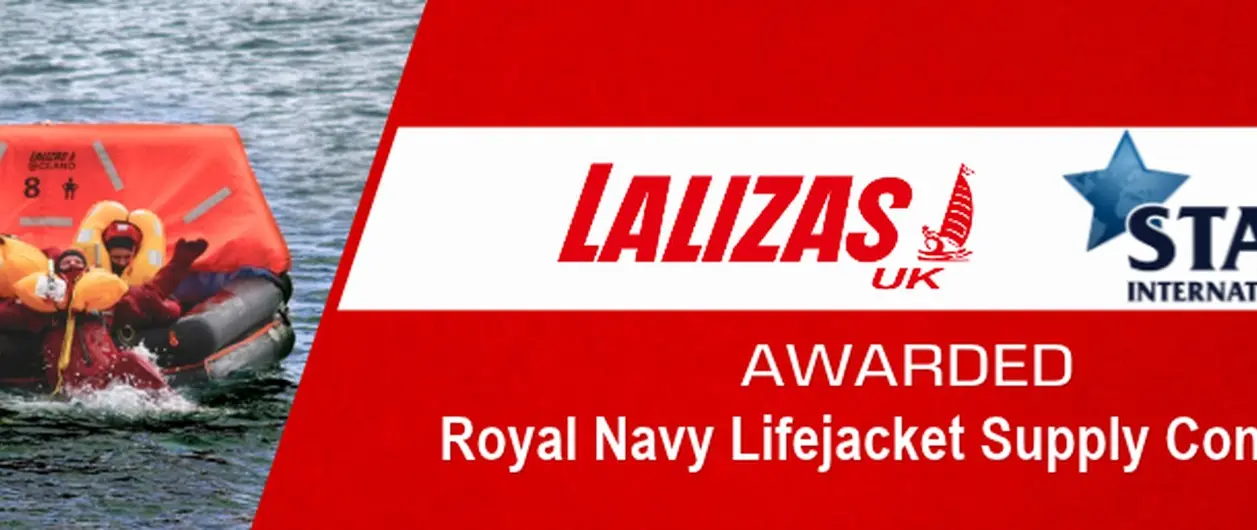
LALIZAS UK and Star International have been selected to provide lifejackets for the Royal Navy following a procurement and evaluation process lasting approximately two and a half years. The companies announced the agreement on 13 November 2026, describing a programme managed through prime supplier BAE Systems that includes commercially available safety products for training and water-activity centres as well as specialist models for personnel aboard naval vessels. The contract is not a direct order for luxury-yacht equipment, but it is relevant to the wider marine safety industry because demanding institutional buyers can influence how products are tested, documented and supported. For owners of substantial private yachts, the story is a reminder that a lifejacket's real value lies in reliable operation, appropriate fitting and crew familiarity rather than the prominence of its brand or the appearance of its outer cover.
What the announced award covers
The LALIZAS communication identifies two broad kinds of lifejacket provision. One consists of established commercial models suited to activities at training establishments, while the other involves bespoke equipment intended for Royal Navy personnel working aboard operational vessels. Those are significantly different use cases, and the announcement does not establish that the same model will be used in every setting. A lifejacket worn during a controlled training activity may have different requirements from equipment intended for personnel carrying specialist protective clothing or tools. The contract's scope is therefore more nuanced than a single large order of identical flotation devices. Readers should also distinguish an awarded supply agreement from a confirmed statement that every item has been delivered or accepted into service; the release identifies the contract, not a final tally of completed deliveries.
The role of BAE Systems in procurement
The companies describe BAE Systems as the prime supplier overseeing the selection and testing process. In complex marine procurement, a prime contractor can coordinate technical requirements, assessments and logistics involving several specialist manufacturers. This arrangement allows the customer to acquire equipment through a structure intended to manage quality and support across different types of vessels or facilities. It does not remove the manufacturer's responsibility for its own product design and documentation. For an owner managing a fleet of private yachts, a similar principle may apply on a smaller scale: safety equipment should be selected through an organised process that considers actual operating conditions, approved standards, maintenance and the availability of replacements. The name of a prominent contractor is useful context, but the underlying specification remains central.
Two and a half years of testing
The announced procurement and evaluation period lasted approximately two and a half years. LALIZAS and Star International say the products underwent extensive testing and that familiarisation and training were provided for users. This time frame illustrates the seriousness with which institutional buyers may treat equipment intended to protect lives. It does not provide the detailed test protocols, failure rates or approval certificates for each lifejacket model, so those cannot be inferred from the general announcement. The lesson for the leisure and luxury-yacht sectors is nonetheless clear: safety equipment deserves a more demanding evaluation than ordinary accessories. Owners should ask what standards a lifejacket meets, how it performs with clothing likely to be worn aboard and whether replacement parts or servicing can be obtained when the boat is away from its home port.
The importance of fit and buoyancy
Lifejackets are not interchangeable simply because two products display the same headline buoyancy category. Fit, adjustment, automatic inflation mechanism, harness provision, sprayhood design and compatibility with other personal equipment can all influence suitability. A jacket that works comfortably during a calm tender transfer may be less appropriate for offshore deck work in heavy weather. The Royal Navy contract involves equipment for multiple uses, highlighting the need to match design to task. On a luxury yacht, the captain should ensure that crew and guests have access to suitable equipment in the appropriate sizes and that anyone expected to work on deck understands how it is worn. The owner should not assume that a single generic design will be ideal for adults, children, professional crew and guests with very different levels of experience.
Training is more than a box to tick
The supplier announcement specifically mentions product familiarisation and training, a detail worth emphasising. A lifejacket's inflation method, manual backup, whistle, light and harness arrangement may differ from the equipment a user previously encountered. Crew who are unfamiliar with a product can waste time during an emergency or fail to recognise a maintenance problem. A sensible training programme includes putting the jacket on, adjusting it, understanding its operating mechanisms and knowing how to inspect it. Some training should also take place in conditions that reflect the vessel's actual activities, within appropriate safety procedures. Commercial charter yachts and privately operated vessels can benefit from making safety-equipment familiarisation a regular part of induction rather than something that happens only when an annual inspection is due.
Maintenance and record keeping
Inflatable lifejackets contain components that require inspection and, in many cases, periodic replacement or authorised servicing. Gas cylinders, activation cartridges, straps and inflation bladders should be checked according to the manufacturer's instructions. A well-equipped luxury yacht may carry many jackets distributed among cabins, lockers and tenders. Without a clear inventory and maintenance register, one item can be overlooked or an expired component can remain aboard unnoticed. The contract's emphasis on professional evaluation offers an occasion to review the practical value of such systems. Owners should have a procedure for recording serial numbers, service intervals and the identity of the person responsible for each inspection. The existence of a reputable product supplier does not replace the vessel's duty to maintain the equipment properly.
Bespoke products for specialist tasks
The naval part of the agreement includes bespoke solutions for personnel aboard vessels. Bespoke in this context refers to adaptation for operational requirements rather than decorative personalisation. A professional user may need a jacket that accommodates protective clothing, communications equipment or a particular working position. The same principle may be relevant on a private yacht where crew perform tasks around tenders, towing equipment, mooring lines or exterior maintenance. A standard guest lifejacket may not provide the best combination of fit and features for those jobs. An owner commissioning specialist safety equipment should engage a knowledgeable supplier and verify the intended rating and compliance requirements. No procurement announcement can determine the correct product for an individual yacht without consideration of its equipment, operations and crew.
The partnership between LALIZAS and Star
LALIZAS UK and Star International describe the contract as a joint achievement, bringing together product capability and the commercial support required to meet a demanding customer's needs. LALIZAS is an established name in marine safety products, while Star International operates in specialist maritime equipment and supply. For yacht owners and managers, the significance of such partnerships lies partly in the service network behind the product. Life-saving equipment can spend years aboard in difficult conditions, and the availability of correct parts, testing and documentation can be more important than the convenience of the original purchase. A marine safety programme should therefore include a clear understanding of who provides after-sales support and where service centres are located along the yacht's likely routes.
What private-yacht owners can learn
Although the contract concerns the Royal Navy, it offers practical lessons for luxury-yacht operators. Safety equipment should be selected through a risk-based process, tested for the intended task, fitted to individual users and supported by training. A yacht of sixteen or twenty metres may carry a much smaller inventory than a naval vessel, but an emergency leaves no room for complacency about the condition of personal flotation equipment. Owners should ask a qualified safety specialist whether their current lifejackets match the operations undertaken aboard and the categories required by local law, flag rules or commercial certification. It would be inappropriate to assume that equipment selected for a military customer automatically carries the exact approvals needed on a private or charter yacht.
A contract that reinforces professional standards
The November agreement is an industry supply story rather than a new recreational boat launch. Its factual significance lies in the selection of LALIZAS UK and Star International after a lengthy programme involving BAE Systems, with products intended for distinct training and operational roles. For the luxury-yacht market, the wider relevance is the importance of sound equipment selection, maintenance and user competence. Good safety systems are often taken for granted because their benefits are most visible when something goes wrong. The suppliers' announcement provides a timely reason to examine those quiet but essential practices and to recognise that dependable marine equipment is built around both technical performance and the people trained to use it.
Sources and image credits
Reporting based on LALIZAS original first-party 13 November 2026 Royal Navy lifejacket contract press release.
Lead photograph: LALIZAS official original company photograph illustrating Royal Navy lifejacket supply contract. LALIZAS, original Royal Navy safety equipment contract press photograph, 13 November 2026. Original official image source.