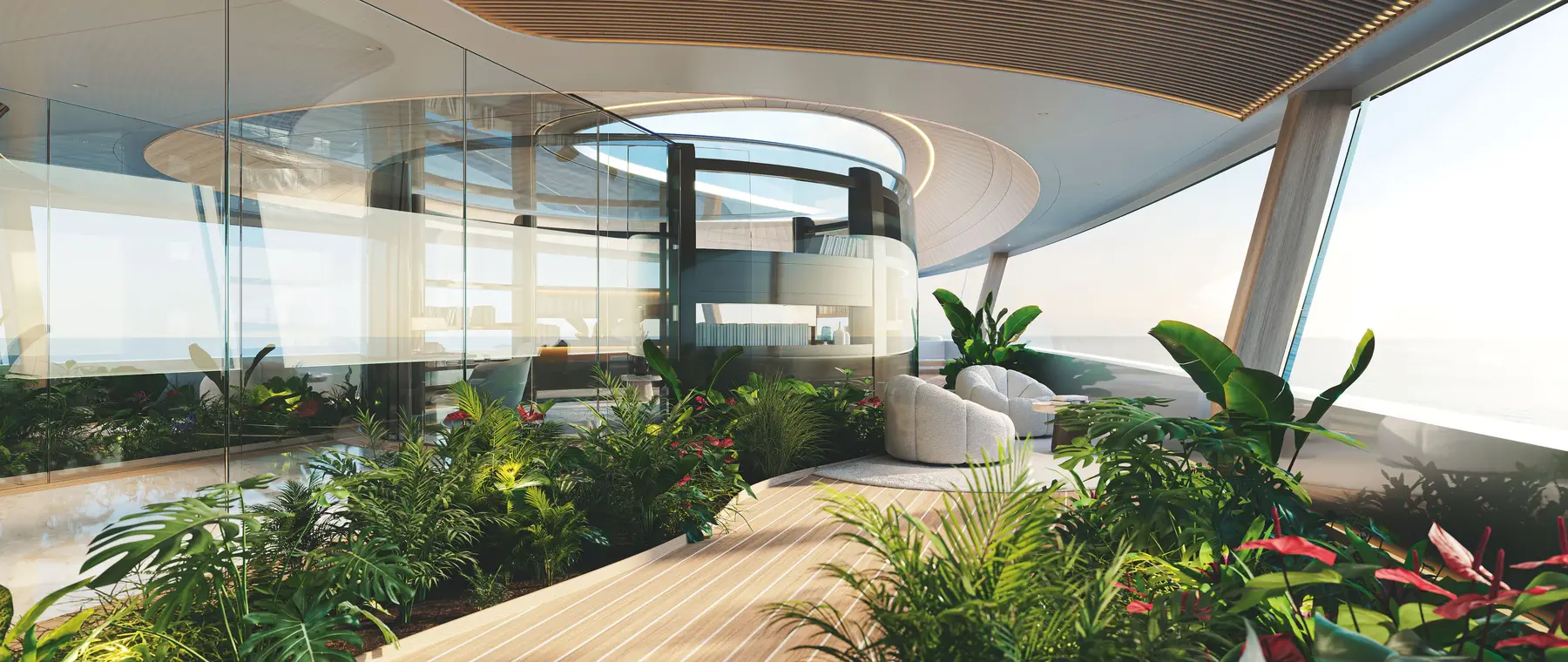
A 115-metre proposal rather than a yacht launch
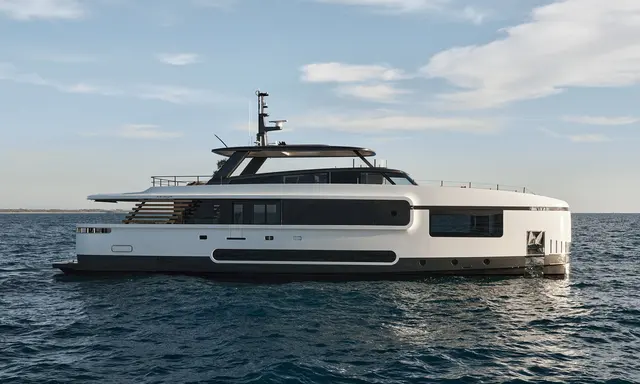
Feadship presented HIVE during the Monaco Yacht Show in September 2026 as its largest concept design to date. At 115 metres, the project explores how guest experiences might determine the arrangement of a major private yacht before designers settle on conventional room hierarchies. The builder describes work by Studio De Voogt, led by Jan Schaffers, with naval architects and engineers involved from the outset. HIVE is a conceptual study, not a completed yacht available for immediate charter or delivery.
The proposed vessel is therefore most useful as a window into high-end yacht design. Large guest populations and many public spaces can make a vessel feel more like a hotel than a home. HIVE attempts to ask which encounters, quiet areas and shared moments should shape circulation, rather than simply enlarging familiar layouts. That ambition is relevant to future owners considering how a large private vessel should support changing groups and different kinds of gathering.
Renderings of gardens and social spaces illustrate the intended experience, but they are not evidence that those systems have been built and tested at sea. Concept design must later contend with actual structural weight, maintenance, evacuation and regulatory requirements. Its value lies in bringing design and technical specialists into the discussion early enough for unconventional ideas to be evaluated honestly.
The unusual energy-system proposal
Feadship sets out an electrical architecture featuring a five-megawatt-hour battery bank and three variable-speed generators rated at nine hundred kilowatts each. The generators are described as using hydrotreated vegetable oil. The concept also considers fuel cells for zero-emission electrical operation, with alternative configurations using solid-oxide or proton-exchange-membrane technology. These options are engineering proposals, and a completed design would need to select and verify the final system.
The company describes one possibility using seven seventy-five-kilowatt solid-oxide fuel cells, or another involving nine two-hundred-and-fifty-kilowatt PEM fuel cells with methanol reforming. These are different technical solutions and should not be added together as though they form a single confirmed installation. Fuel storage, ventilation, reformer support systems and classification approvals are substantial considerations at this scale. Claims about emissions also depend on how energy carriers are produced.
A five-megawatt-hour battery can help smooth electrical demand and support quiet operation, but capacity alone does not reveal how long the yacht could operate without generators. Hotel load, air conditioning, propulsion and guest activities would determine endurance. Feadship compares the concept with the one-megawatt-hour installation used aboard Savannah, illustrating an ambition to store substantially more energy in a similar room footprint. Such comparisons are valuable design targets, not commissioning results.
Propulsion, manoeuvring and quiet operation
The HIVE study proposes Voith Schneider propulsion units, which direct thrust without conventional rudders. These devices have established uses on ferries and specialist vessels, where precise manoeuvrability is valued. Adapting them to a large private-yacht concept requires assessment of efficiency, underwater noise and maintenance arrangements in the yacht’s specific hull. Their inclusion highlights a willingness to consider machinery architectures beyond the usual propeller-and-rudder arrangement.
Manoeuvrability can affect the guest experience by reducing the drama of close-quarters handling and helping the crew manage sensitive approaches. Noise and vibration also matter when guest areas occupy decks close to technical spaces. The engineering choices advertised for HIVE suggest that the builder sees quietness as a design criterion rather than an optional refinement. Nevertheless, numerical acoustic and operating results would only be meaningful after a detailed design and trials.
An unusually complex energy system needs strong redundancy, access for maintenance and safe procedures for fuel and electrical operations. These requirements consume space that might otherwise be assigned to leisure amenities. A concept that claims to unite large public rooms with alternative propulsion must prove both aspects can coexist under class and flag rules. That is precisely why technical feasibility is a central theme of Feadship’s presentation.
What buyers can learn from a concept
A prospective owner need not commission a 115-metre vessel to learn from HIVE. The idea of designing around daily experiences can inform smaller yachts, particularly when families want adaptable spaces rather than a rigid programme of formal rooms. Its energy strategy also raises useful questions about battery safety, load management, emissions and the relationship between technical installations and accommodation. Those questions can be brought into any serious new-build briefing.
The commercial route from concept to construction remains unknown. Feadship’s ability to develop a technical proposal does not itself establish an order, build slot, launch date or final price. A buyer interested in adopting individual ideas would need to commission bespoke naval architecture and feasibility studies. Some technologies may change before a yacht is ready to build, while others may prove unsuitable once weight and operational demands are calculated.
HIVE is notable because it keeps the human use of a large yacht alongside the detail of its machinery. The 115-metre scale draws attention, but the more durable story is the exploration of guest flow and alternative energy architecture together. For the luxury-yacht sector, it is a thoughtful set of possibilities with clearly identified engineering ambitions, provided readers remember that a concept rendering is not an announcement of a sea-ready vessel.
Primary source: Feadship. For specifications and availability, consult the original official announcement and current publisher information.