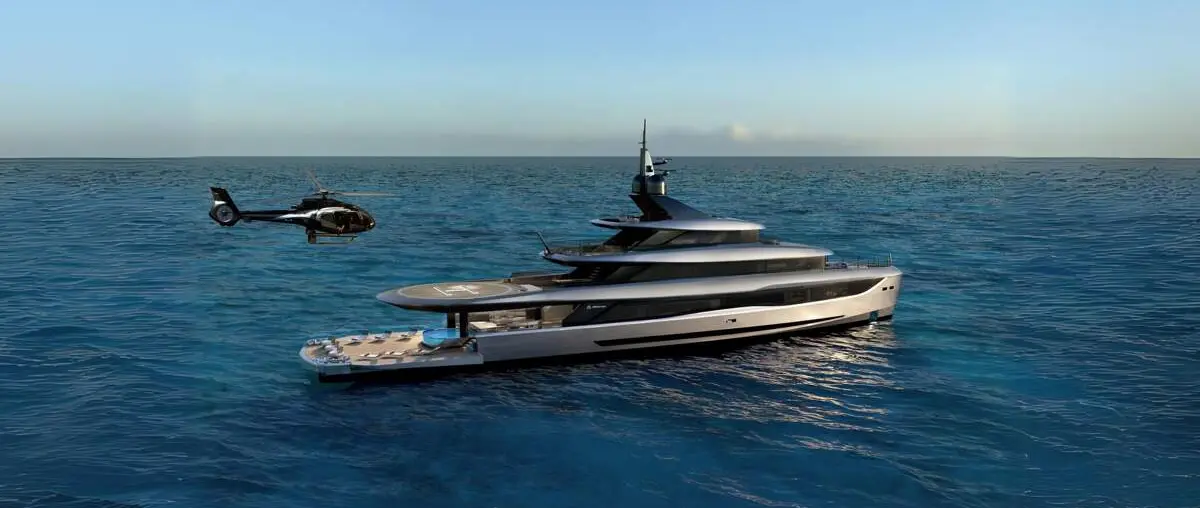
An explorer-yacht opportunity before delivery
Fraser has placed a 53-metre Mengi Yay VIRTUS XP53 explorer project on the sales market while construction continues at the Turkish yard. The announcement identifies the vessel as the third hull in the VIRTUS range and gives August 2027 as the intended delivery period. That is an important distinction from a brokerage listing for a completed, operating yacht: a purchaser here would be assessing a building programme as well as the eventual finished vessel.
The XP53 proposition is aimed at owners who want exploration capability alongside substantial guest comfort. Explorer styling can signal generous storage, a robust appearance and more versatile cruising ambitions, but the term by itself does not establish ice classification, actual operating range or a particular long-distance itinerary. Any such capabilities need confirmation from the approved specification and the eventual trial programme.
Fraser’s listing gives prospective purchasers a channel to discuss the remaining construction timetable and the project’s configuration with the builder and seller. Because the yacht is not yet delivered, even attractive renderings should be interpreted as a design representation. Buyers must understand what work remains open, which equipment and finishes have already been ordered and how changes would affect price and timing.
The unusual diligence of a yacht in build
A sale during construction raises contractual questions beyond those encountered in an ordinary second-hand purchase. The buyer needs to establish who holds title to the unfinished hull and major equipment, what payments have been made and how completion obligations are secured. It is also essential to know whether the shipyard contract can be assigned, amended or replaced, and on what terms. A specialist maritime lawyer should review the actual documents.
The stated August 2027 delivery date is a target, not evidence that the remaining work or commissioning will proceed without change. A proper technical review should examine build milestones, the schedule for equipment installation, factory acceptance testing, classification surveys and final sea trials. Any delay provisions or substitution rights matter particularly where the yacht contains long-lead machinery or custom components.
Prospective owners may be attracted by a possibility to personalise an interior while work is under way. That option should not be assumed. A project at this stage can have fixed structural layouts, piping runs and ordered materials, so changes may be expensive or impractical. Establish the actual variation window and get written quotations before treating an unfinished yacht as a blank canvas.
Why 53 metres changes the operating discussion
At fifty-three metres, the vessel sits in a category where crew workflow, technical space and tender handling play central roles in the guest experience. An explorer proposal must demonstrate not only attractive exterior decks but also the ability to carry stores, maintain equipment and support passengers for the intended cruising period. Drawings should be reviewed for tender arrangements, service routes, waste storage and the relationship between guest and operational spaces.
A yacht intended for remote coastlines needs a dependable support strategy. The owner should ask about generators, water-making, communications, redundancy and access to replacement parts when far from major repair hubs. Hull form and propulsion arrangements affect speed, fuel use and seakeeping, while classification and flag rules affect the programme. These matters should be evaluated from verified technical schedules rather than imagined from exterior styling.
The likely charter or private-use configuration also warrants early clarity. A vessel designed around family ownership may use accommodation differently from a yacht intended for commercial operation, with consequences for crew numbers, safety systems and passenger limits. No brochure promise can substitute for the certificate and approved plans that ultimately govern the boat. Buying at this stage gives a chance to ask these questions before they become costly surprises.
An informed purchase begins with the build dossier
Fraser describes the XP53 as an example of Mengi Yay’s craftsmanship and a way to acquire an explorer yacht without starting an entirely new design commission. That can be a compelling commercial argument when a buyer wishes to avoid a long project inception period. It depends, however, on the actual condition of the build and the contractual arrangements governing completion, warranties and acceptance.
A suitable diligence package would include general arrangement drawings, the technical specification, progress photographs, independent surveyor reports and a realistic commissioning timetable. The buyer’s appointed captain and engineer should be able to inspect critical installations before they are concealed. A contract should also define precisely how defects will be resolved and which party carries responsibility until physical delivery and formal acceptance.
The latest offering adds a large Turkish-built explorer to the international market with a specific future delivery objective. It is a project to evaluate on evidence, not merely a collection of aspirational expedition images. For an owner whose cruising ambitions suit its final approved capabilities, the opportunity could be attractive; the decisive step is to verify what is already built and what still has to be completed.
Primary source: Fraser Yachts. For specifications and availability, consult the original official announcement and current publisher information.