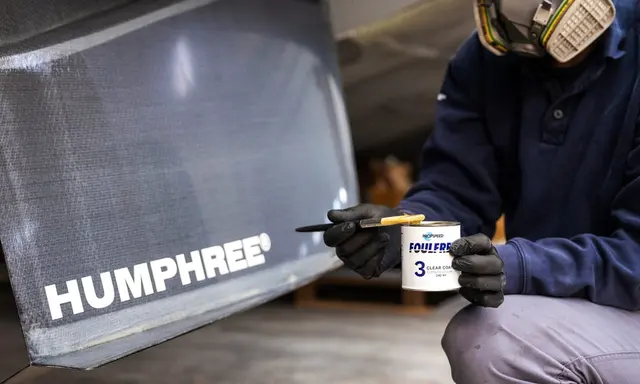
Humphree has introduced a three-component stabilization architecture that integrates a gyro with the company’s existing fins and interceptors. The system is intended to coordinate motion control from zero speed through faster cruising.
Announced on 7 September 2026, the package aims to reduce the compromises owners normally face when separate stabilization technologies are installed and tuned independently. Humphree presents the launch as one control architecture rather than three isolated devices.
Three technologies work as one
The gyro is intended to contribute strongly at low speed and anchor, while fins and interceptors add control as the yacht moves through displacement, semi-planing and faster operating points. The control system decides how much work each device should contribute.
That approach should reduce the need for the skipper to switch manually between separate modes as speed and sea state change. The benefit has to be judged on a sea trial because hull form, loading and installation quality still influence the result.
Comfort is the central target
A yacht can move from harbour speed to cruise without losing stabilization simply because one device has moved outside its strongest operating range. The aim is more consistent motion control over a wider part of the operating envelope.
That matters on family and owner-operated yachts where fatigue, seasickness and passenger confidence can influence how often the boat is used. Better stabilization can also make slower passages and time at anchor more comfortable.
Integration changes commissioning
Treating the package as one architecture can make commissioning more coherent because sensors, software and actuators are designed to work together. The system can be tuned around the actual hull rather than three unrelated control strategies.
Retrofit feasibility will still depend on machinery space, hull structure, electrical capacity and the sizes of the gyro and fins selected. A compact yacht may not have the same installation freedom as a larger new build.
Motion control is becoming more connected
The launch reflects a wider shift toward integrated trim, pitch and roll management rather than isolated hardware. Humphree’s addition of a gyro pushes that idea further by covering zero-speed operation inside the same ecosystem.
Buyers comparing packages should look beyond the hardware list to power demand, service access, noise and transition quality between operating modes. Those practical points will determine whether the integrated system improves day-to-day ownership.