A battery-first idea on the exhibition floor
New Zealand marine power company HikoTerra is listed among the exhibitors at METSTRADE 2026 in Amsterdam, with its H4 Hybrid Power System positioned as an integrated approach to onboard electricity. The system brings inverter, battery, charger and control elements into an architecture developed as a group. That emphasis differs from the conventional refit path in which an owner or installer assembles components from different suppliers and then works to make them communicate reliably. For yachts of 12 to 23.99 metres, it raises practical questions about electrical simplicity, serviceability and what 'hybrid' means in day-to-day use.
METSTRADE's exhibitor description says the product takes a battery-first approach intended to reduce integration complexity and generator reliance. The manufacturer makes broader claims about efficiency and convenience on its website. Those should be understood as company assertions, not independent trial results. The exhibition runs from 17 to 19 November, so a current visitor should expect a discussion of a product already described publicly rather than assume a first-ever launch or unseen technical breakthrough. The significance is in how a coherent energy system is packaged for real boats.
Four elements designed together
HikoTerra describes the H4 architecture as four main elements: a bidirectional inverter, lithium iron phosphate battery modules, an intelligent battery charger and a mounting rack. The manufacturer's public material says that the rack accommodates modular components and simplifies connections that can otherwise occupy considerable space behind a switchboard or beneath a berth. In a yacht, space is often at a premium and equipment access matters as much as rated output. A consolidated arrangement could be attractive to designers trying to protect storage or improve access for future servicing.
But the compact appearance of a system should not hide its engineering obligations. Batteries require suitable ventilation or thermal arrangements as specified by the maker, correct protective devices, strong mechanical support and safe cable routing. Every boat differs in its electrical architecture, whether it has twin engines, shore connections, solar panels, a generator or a mixture of sources. HikoTerra's design is therefore a starting point for integration rather than a universal plug-in replacement. A competent marine electrical installer should assess the vessel before an owner chooses a configuration.
What the published capacity range means
The company's technical information and FAQs describe a modular rack with up to sixteen slots, inverter configurations broadly ranging from 5kW to 30kW and battery capacity up to 96kWh. Those figures establish the scope of the family; they do not imply that every rack, vessel or installation can safely deliver the highest values. A 12-metre cruiser with modest hotel loads will have a different profile from a 23-metre yacht running climate control, water heating and multiple galley appliances. The correct size must be based on a realistic energy budget rather than simply choosing the largest specification.
Owners should begin with an inventory of critical and discretionary loads. Refrigeration, navigation, pumps and communications are essential, while entertainment, cooking and air-conditioning can produce large peaks. Inverter output limits and battery capacity describe different things: one controls how much power can be supplied at a moment; the other helps determine how long it can be delivered. Charging capacity introduces another constraint. A balanced installation must take all three into account, including losses and reserve capacity. That is the information a manufacturer demonstration should help an installer translate into a system design.
Shore power in a battery-first design
HikoTerra's FAQ presents an unusual feature: it says shore power is routed through the battery charger rather than directly to the boat's alternating-current appliances. The company argues that this enables a stable supply even when shore voltage is irregular. The principle deserves examination because marina supplies vary greatly, particularly on smaller guest pontoons where the available connection can be much less than the total peak demand of a modern luxury yacht. An energy buffer can help, but its charging limits and fail-safe behaviour still need to be understood.
Questions to ask include what happens when battery state of charge falls, how a shore-power limit is set, whether a charger fault affects essential circuits and how the system handles a simultaneous large galley and climate-control load. The manufacturer should supply detailed electrical diagrams and a clear explanation of fault modes. It is also worth asking about compatibility with shore-earth arrangements and applicable standards. A neat control interface cannot replace engineering clarity. The objective is dependable power, not merely an attractive dashboard showing how much energy remains.
Quiet nights and realistic generator use
One attraction of modern yacht battery systems is the possibility of running ordinary overnight loads without a generator operating continuously. HikoTerra's exhibitor pitch includes reduced reliance on generators among the intended benefits. That is plausible in principle, but the actual result depends on the yacht's loads, the size and condition of its batteries and the available recharge sources. A boat with substantial air-conditioning requirements may use energy very differently from one that relies mainly on refrigeration, lighting and occasional electronics after sunset.
The better question for a cruising owner is not whether a product makes the yacht silent, but how many hours a particular combination can support a defined load under stated conditions. An installer should provide an energy-use estimate and explain the assumptions. Batteries are neither limitless nor free of maintenance considerations, and they must be charged again after discharge. HikoTerra may simplify the architecture, but it does not remove the laws governing energy consumption. A transparent calculation is more valuable than a dramatic headline about generator-free living.
Installation and serviceability under scrutiny
The manufacturer advertises reduced installation and integration effort, including claims of fewer external components in its rack-based configuration. On its product page it goes as far as suggesting that certain installations can reduce design and integration time by as much as half. That percentage is a company estimate and would require comparable project data to verify. The claim is worth discussing with a shipyard, especially if a refit is already scheduled and electrical work will require access to finished joinery or other systems.
Owners should insist on a proper commissioning plan, clear documentation and a realistic support route. How would a battery module be replaced in a remote cruising area? Can a qualified independent marine electrician diagnose a fault, or must every intervention go back to the manufacturer? Does warranty coverage include the whole integrated system or individual components? HikoTerra's published FAQ mentions a two-year warranty for H4 components, including batteries; the complete contractual terms should be read before purchase. Ease of installation is helpful, but years of dependable service matter more.
The safety discussion cannot be skipped
Lithium iron phosphate is a common chemistry in marine energy storage and is often selected for its thermal characteristics, but no battery system should be described as free of risk. Fire protection, monitoring, secure installation and appropriate isolation remain important. HikoTerra's technical literature should be reviewed in the context of the yacht's flag, certification requirements and intended use. Larger yachts may have more extensive class or survey obligations, while smaller private yachts still need careful design and installation to accepted standards.
A battery-first system also makes owners think differently about fault tolerance. If many functions are combined in one physical architecture, the design should provide appropriate protection and contingency for loss of a component. Navigation, communications and essential safety systems must remain dependable. Ask how the equipment isolates a fault, whether loads can be prioritised and what the fallback is if charging is interrupted. These are questions for the engineering team and product maker, not issues that can be resolved by an exhibition brochure.
Why a mid-size yacht owner might visit
At METSTRADE, a useful meeting with HikoTerra would begin with a simple sketch of the yacht's electrical system and a day-in-the-life load profile. Owners considering an upgrade could discuss whether the product's rack dimensions, inverter output and battery capacity match the available space and intended cruising. New-build designers can ask about integrating propulsion assistance or renewable charging, while refit owners should focus on compatibility with installed equipment. The exhibitor's public descriptions provide enough detail to make that discussion specific, even before a professional engineering study.
For LYG's 12–23.99m readership, the value is not the biggest theoretical capacity. It is the possibility of making everyday power quieter, more predictable and easier to understand. The reviewed sources are HikoTerra's own product, FAQ and introduction pages together with the official METSTRADE exhibitor listing. Technical figures and installation-benefit claims are attributed to the manufacturer. Independent onboard performance data and boat-specific approvals would be needed before making comparisons or recommending a particular installation. That distinction keeps a potentially useful technology story grounded in what is actually documented.
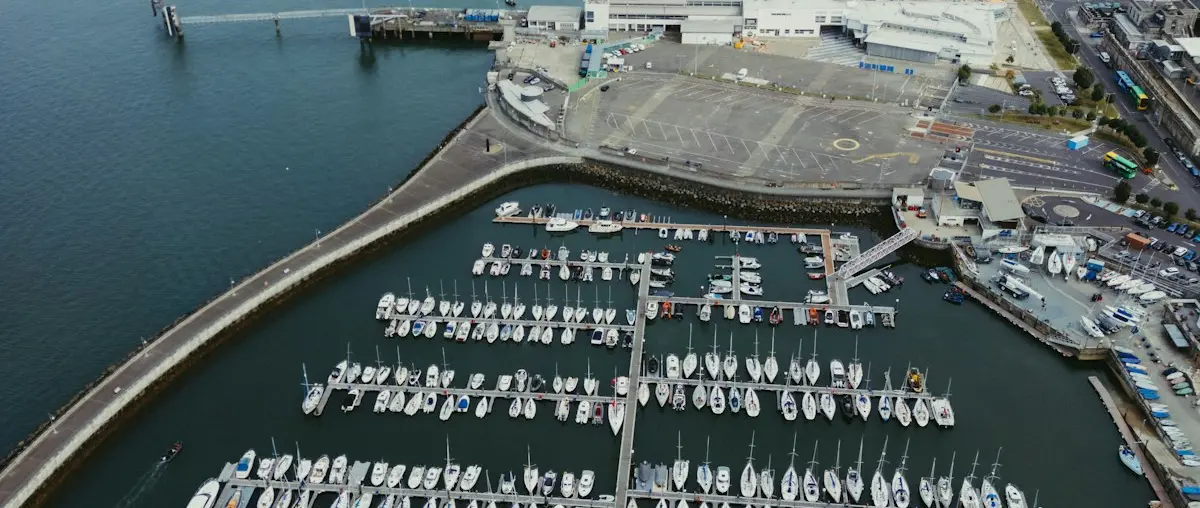
Image credit: Cruising yachts in marina photographed by Jonathan Borba. Original photograph, used under the Unsplash License. The lead photograph is illustrative and does not depict an unverified product or berth.