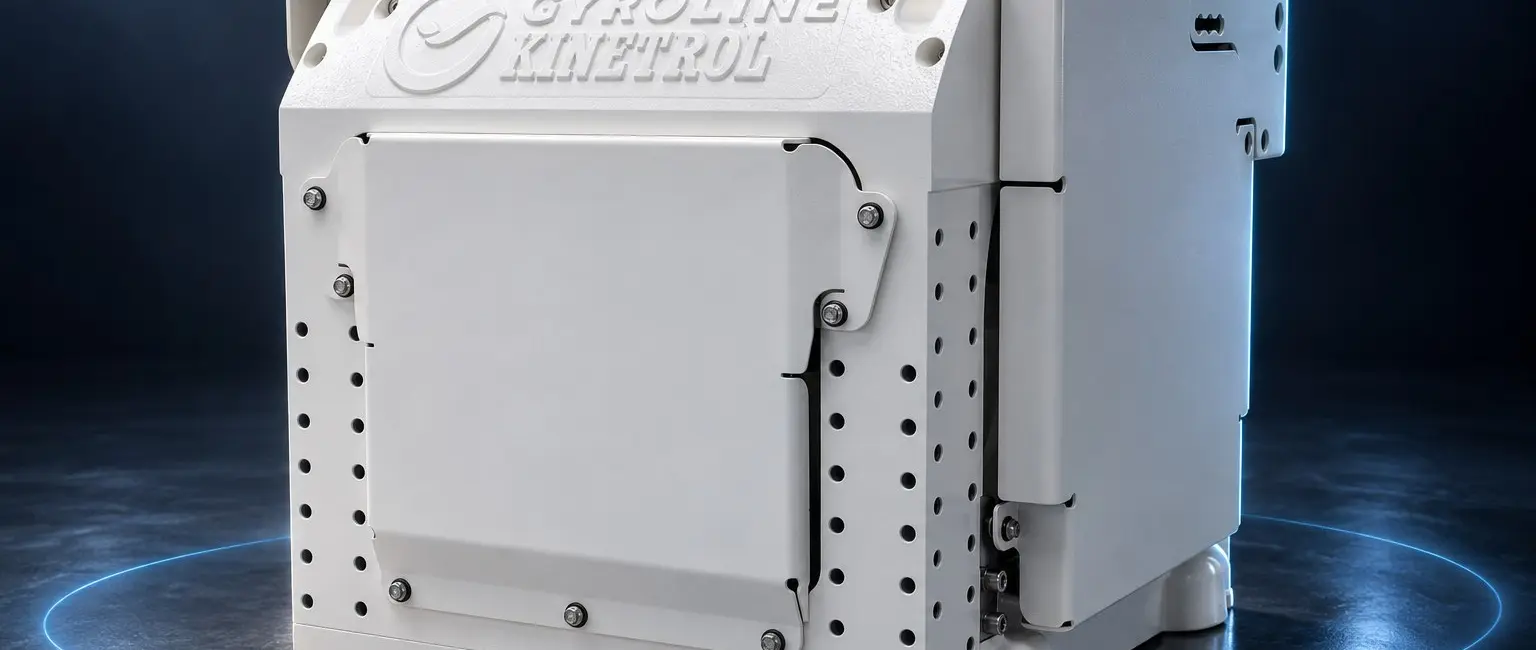
A gyro stabiliser returns to the show floor
Coastal Offshore X-Cellence brought the Gyroline GL5 to IBEX in Tampa from 6 to 8 October 2026, a year after its appearance in the event's Innovation Way display. The Fort Lauderdale company acts as Gyroline's exclusive North American master dealer and used this year's exhibition to discuss installation and servicing details with professional visitors.
The GL5 is a gyroscopic stabilisation product, not a yacht model. For LYG owners, the GL5 is most relevant at the lower end of the 12-to-23.99-metre sector: the official dealer cites a typical vessel range of 10.7 to 14.6 metres. The key question is whether its physical, electrical and dynamic requirements suit the specific hull. Those answers can only follow a vessel-specific study.
The published torque and control approach
The supplier quotes up to 11,700 newton-metres of stabilising torque. It highlights a patented mechanical damping approach working alongside active electronic control intended to adapt response to changing sea conditions. The release also refers to low power demand and quiet running without publishing independent comparative measurements for all operating conditions.
A torque figure cannot be converted into a universal percentage reduction in rolling. Hull geometry, displacement, vertical location, existing machinery and sea state all influence the effect of a gyro. Owners should request a performance prediction based on their yacht rather than equating the largest published figure with guaranteed comfort.
Cooling and practical integration
The GL5 is offered with air- or water-cooling arrangements, allowing builders and retrofit specialists to consider different machinery-space layouts. Installation still requires suitable foundations, structural load paths, service access and power supply. A cooling option that appears convenient on paper may become unsuitable where seawater plumbing, air circulation or access is limited.
Owners should ask how the system behaves during start-up, low-speed manoeuvring, time at anchor and prolonged passages. Maintenance procedures and local technical support are equally important, particularly for yachts that cruise between regions. Gyro equipment occupies valuable volume that may otherwise be allocated to storage or other machinery.
Assessing comfort rather than one headline figure
Stabilisation can make meals at anchor and travel in uncomfortable quartering conditions less tiring, but the purpose should be matched to a yacht's actual cruising pattern. A craft used mainly for coastal lunch stops has different requirements from a family cruiser undertaking longer passages. In both cases, other safety considerations remain independent of roll reduction.
Coastal Offshore X-Cellence invited IBEX visitors to its stand to discuss vessel-specific plans. The October announcement adds a timely product-comparison subject for owners and yards, while the central purchasing decision remains engineering suitability and dependable service over the life of the installation. The release specifies that the manufacturer’s mechanical damping and active control operate together. Buyers should ask how that approach responds to rapid changes in sea conditions and how the system is handled after electrical or cooling faults.