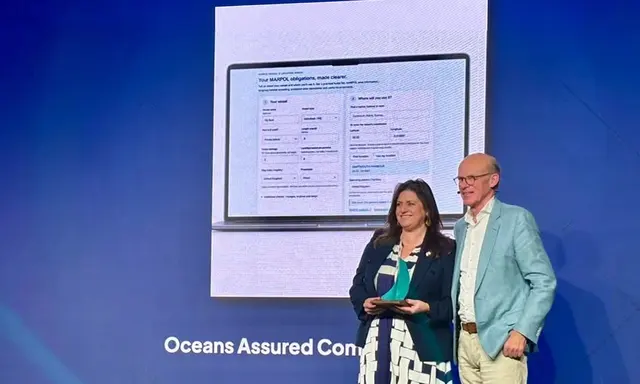
Garmin's Signal VHF & Remote system emerged from the 2026 DAME Design Awards at METSTRADE in Amsterdam as one of three joint Overall Winners, adding a design accolade to a year in which marine electronics increasingly moved beyond a collection of separate helm instruments. Garmin confirmed the result on 19 November, after the award presentation at the exhibition's opening on 17 November. The distinction matters particularly to owners of 12- to 23.99-metre yachts, where equipment must be accessible from compact wheelhouses, flybridges and exposed steering positions without complicating the crew's routine.
An unusual result from a crowded marine-equipment competition
For the first time in the DAME awards' 35-year history, the judges could not separate three overall contenders. Garmin shared the top award with Scanstrut's Wireless Powered Navigation Pole Light and the Teignbridge T-CPP controllable-pitch propeller. There were 153 entries and 74 nominees, according to METSTRADE. Garmin also collected recognition in Navigation & Communication, a category it shared with Scanstrut. This is a design decision by a specialist jury, not a certification of operational reliability or a comparative safety test. Nevertheless, having a radio nominated alongside innovations in lighting and propulsion illustrates how even established equipment categories can be reconsidered through their installation, serviceability and interface.
The Signal family and its precise capabilities
Garmin describes the Signal range as an integrated marine radio and remote-station system. The 3.5-inch colour touchscreen is central to its layout, while the Signal VHF 400 version includes a Class B AIS transponder. The distinction between models matters: a buyer should not assume that every product bearing the Signal name has identical AIS functions. Garmin says the wider system can bring VHF voice, digital selective calling and AIS operations together through a single VHF antenna. It also offers multi-location control using the Signal RM 100 station. The combination aims to reduce the amount of disconnected equipment or duplicated controls at a secondary helm. Exact installation arrangements, antenna compatibility and applicable regulations should still be checked against the chosen model and flag-state requirements.
Why the secondary helm matters on a luxury yacht
A 16-metre flybridge motor yacht illustrates the practical issue. The operator may steer from the enclosed lower helm during an early departure, then move above for the coastal passage, while a crew member remains below. Communication equipment must remain useable in both positions, but a second complete set of electronics may create complexity and maintenance obligations. Garmin's remote concept is intended to reproduce the primary radio's essential controls in a second location over a network connection. Owners planning refits should ask an installer where the radio core, remote and antennas will be mounted, how the system behaves if the network link fails, and whether voice audio remains intelligible over wind and machinery noise. Those considerations are at least as important as a clean touchscreen appearance.
An interface designed around a safety-critical task
Unlike entertainment or lighting controls, VHF equipment is part of a vessel's safety communications. Its interface must be understood quickly when a watchkeeper is distracted, tired or reacting to a sudden change in conditions. Touchscreens can consolidate functions and aid navigation, but they also introduce questions about wet fingers, sunlight, gloves and emergency operation. Garmin says its system offers advanced channel monitoring and the ability to replay the last three minutes of a received transmission. That replay facility is a meaningful concept in busy channels where a berth instruction or vessel name may be missed. It should not, however, be described as a substitute for a disciplined listening watch, the correct radio procedure or independent navigation awareness.
AIS integration without confusing the two safety roles
Automatic Identification System information can improve situational awareness by presenting the identity and movement of equipped vessels. Garmin says the Signal VHF 400 incorporates Class B transmission and reception alongside the communications functions. The important distinction is that AIS is neither radar nor a guarantee that every nearby craft will appear. Smaller boats, some tenders, unpowered objects and installations with failed or switched-off transmitters can remain absent from the picture. A navigator still needs visual lookout, radar where fitted, an appropriate speed and assessment of collision risk. When assessing the product, owners should ask how received AIS targets are displayed on the radio and linked Garmin displays, and what warnings and acknowledgement steps the installation supports.
One antenna does not eliminate installation engineering
A single-antenna architecture can simplify an already crowded yacht mast or radar arch. It does not make signal planning trivial. VHF antenna height, cable losses, separation from other transmitters, grounding, connector quality and the ability to service equipment offshore still determine results. A 20-metre yacht with radar, satellite communications, GNSS sensors, wireless internet and deck lighting has competing space requirements even before any new radio is specified. A competent marine-electronics installer should confirm which components form an approved complete system, whether an external splitter is unnecessary for the selected package, and how to protect cabling through wet or high-vibration spaces. An integrated solution is attractive when installed correctly; shortcuts in RF or electrical work could compromise its value.
Refits create an opportunity to simplify rather than accumulate
Many yachts in the luxury cruising fleet have gained technology in successive layers. An old VHF remains beside a separate AIS control, a chartplotter, an audio remote and perhaps a handheld unit in a charging cradle. Upgrading only one component can leave duplicated screens and confusing control paths. Garmin's award gives owners a useful prompt to review the complete helm rather than merely replace a radio with a newer radio. Such a review should catalogue the existing NMEA network, power supply, antenna runs, backup communication provisions and service documentation. Equipment removed from the helm should be safely decommissioned, not merely hidden behind panelling where it can later create an electrical or maintenance problem.
Design recognition and procurement are different decisions
The DAME judges described a radio that goes beyond expected functions and provides a mirrored remote station. Their comments explain the award, but an owner choosing a system requires more specific evidence. Useful questions include the supported number of stations, availability of service in the cruising region, interface compatibility, firmware support, waterproofing ratings, whether radios can be operated with gloves, and the cost of the finished installed package. Trialling a display in bright conditions and asking the skipper to perform familiar tasks are sensible steps. Those checks do not contradict the award. They translate a successful design concept into the operational reality of a particular yacht, its crew and its cruising programme.
The competitive field was unusually strong in 2026
METSTRADE reported a record number of DAME entries under the current charitable-entry framework. Its overall award was split across three products representing separate branches of the marine equipment industry. Garmin's achievement is therefore noteworthy without diminishing the Scanstrut or Teignbridge entries. Scanstrut addressed the recurring corrosion and connection problems of removable pole lights; Teignbridge developed a propulsion approach involving movable trailing-edge sections on otherwise fixed blades. The common theme is thoughtful re-engineering rather than simply adding a new electronic feature. For a yacht owner, that is a useful way to read equipment awards: ask which routine limitation has been solved, and under what conditions the proposed solution actually performs better.
What a prospective yacht owner should verify next
Garmin's November announcement establishes the award and describes the technology, but it does not replace a vessel-specific specification. Owners should request a configuration drawing and itemised quotation that distinguish the Signal 400, other Signal variants and RM 100 remote, including any displays, cabling, antenna arrangements and software requirements. The yard or installer should document commissioning, DSC registration, the applicable maritime mobile service identity details and any required AIS programming. A sea trial should include tests from each planned steering position and clear instructions for emergency use. A well-integrated communications system should reduce the effort needed to contact other vessels, not simply make a helm look tidier.
A DAME award with practical implications
The latest honour makes Garmin's 2026 marine-electronics recognition more substantial, but the announcement is more interesting as an indicator of design direction. Owners increasingly expect important controls to follow them around the yacht, while retaining clear information and manageable maintenance. The Signal concept seeks to apply that expectation to a core communications function. Whether it is the appropriate answer for an individual yacht will depend on the helm layout, installation quality, crew preferences and the exact radio model. The DAME result is a credible reason to investigate the system; the final endorsement must come from a successful, well-documented installation at sea.
Sources and image credits
Reporting based on Garmin official 19 November 2026 newsroom award announcement.
Lead photograph: Garmin Signal VHF 2026 DAME award image, official Garmin newsroom photograph. Garmin official media newsroom press photograph issued with the 19 November 2026 DAME press announcement for editorial coverage; original image from manufacturer media release. Original official image source.