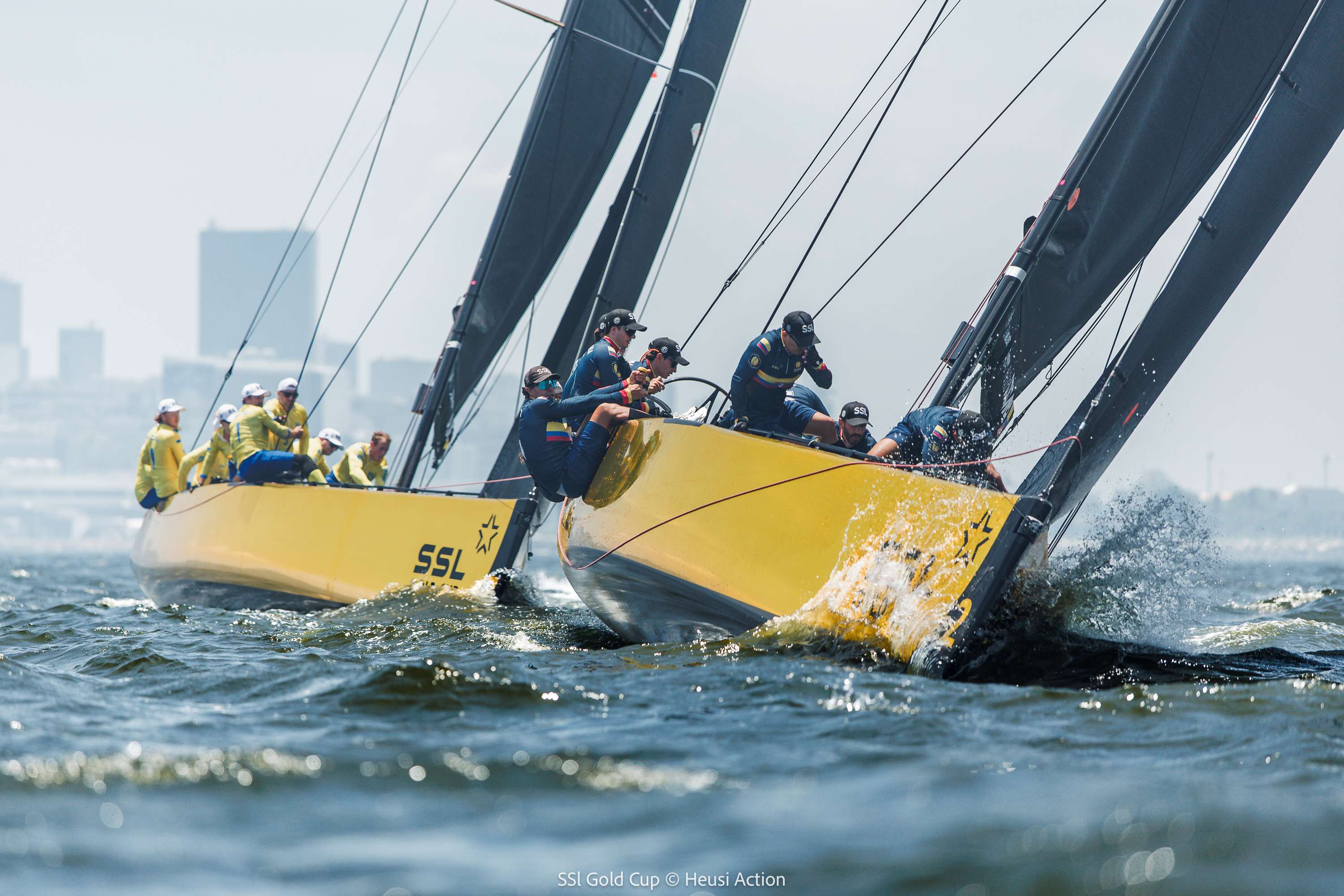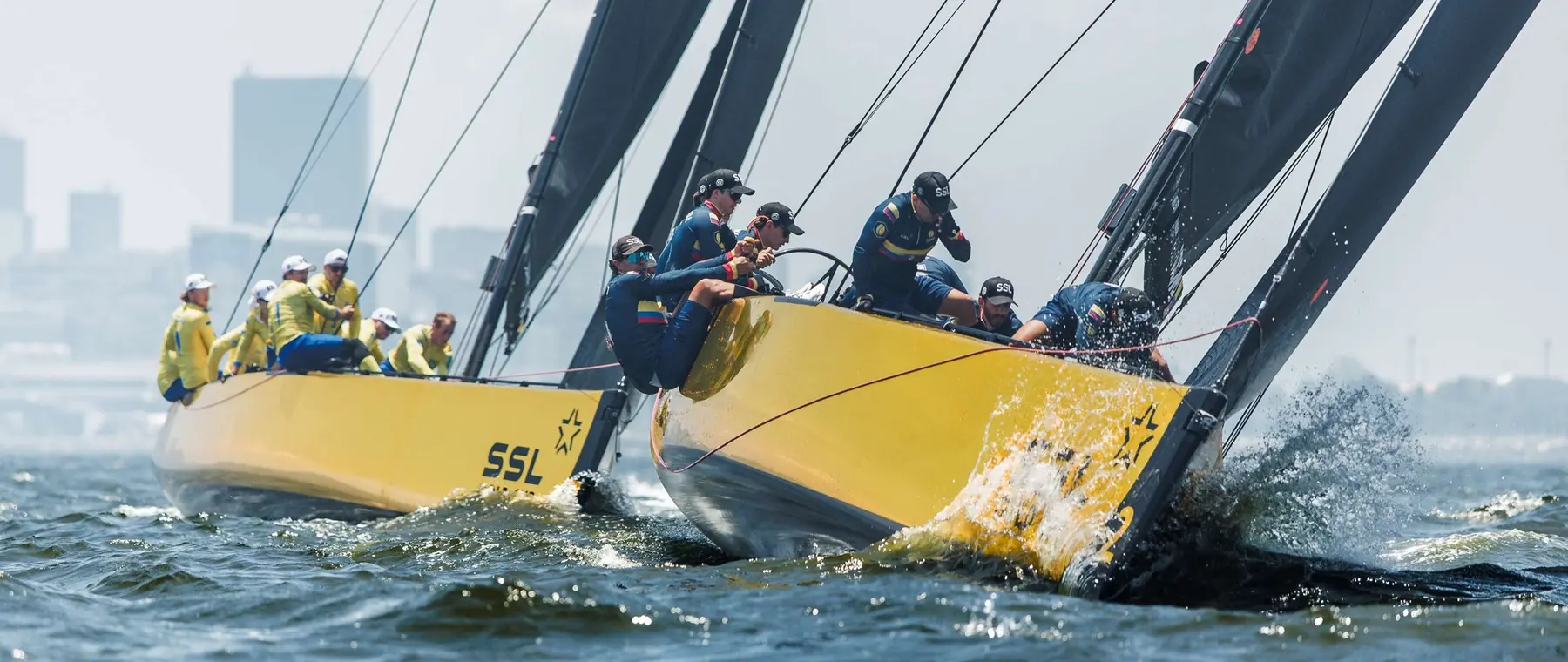
Racing at the 2026 Copa do Mundo da Vela intensified in Rio de Janeiro as the national teams reached the midway point of the event's 1/32 Finals. The Star Sailors League Gold Cup competition uses a one-design SSL47 keelboat fleet in Guanabara Bay, with 16 national teams contesting places in the next round at this stage. In the 21 November report, Oman, Uruguay, Singapore and Myanmar figured in a closely fought Group D race. Oman emerged ahead on the final downwind run, while Uruguay remained level on points at the top of that group's standings after the race. The competition was not yet at its overall championship final, and the report cannot be read as a final tournament result.
Another contest involving Portugal, Ukraine, Colombia and Antigua and Barbuda underlined the importance of clean manoeuvres and boat speed in a tightly matched fleet. Portugal continued its winning sequence in the reported Group A race, with Ukraine chasing across the course and Antigua and Barbuda finishing ahead of Colombia. The boats are approximately 14 metres long, making the technical and seamanship lessons relevant to the 12–23.99 metre sailing market even though the SSL47s are purpose-built racing yachts rather than luxury cruisers. With race-day breeze, shifting positions and close mark roundings, the development is principally a current sporting update rather than a new yacht launch or an announcement of future championship winners.
National Team Dynamics and Regional Representation
The competition has seen a strong regional presence, with teams from South America, Europe, and Asia making their mark. Brazil, as the host nation, has been a dominant force, but other countries such as Oman, Greece, and Estonia have also emerged as key contenders. This regional representation is not just about national pride; it reflects the broader sailing community’s global reach and the competitive spirit that drives the sport. For yacht owners and crews in the 12.00–23.99m range, this diversity underscores the importance of understanding international sailing standards and practices. The SSL Gold Cup serves as a microcosm of the global sailing landscape, where technical expertise and strategic acumen are paramount.
The presence of teams from different regions also highlights the significance of local knowledge in competitive sailing. For instance, Brazil’s familiarity with Guanabara Bay’s wind patterns and currents gives them an edge, much like how yacht owners must understand their local waters to optimize performance. This regional advantage is a reminder that while technology plays a crucial role, the human element—crew coordination, tactical decisions, and adaptability—remains irreplaceable. For those in the luxury yachting industry, this balance between technological innovation and human expertise is essential for maintaining competitive edge in both racing and cruising environments.
Tactical Precision and Wind Management
Wind management has been a defining factor in the SSL Gold Cup’s first half. The varying wind conditions—ranging from light breezes to stronger gusts—have required teams to adjust their strategies on the fly. For example, in Group D, Oman’s victory was largely attributed to their ability to capitalize on favorable wind shifts and execute precise tactical maneuvers. This level of precision is akin to what yacht owners must achieve when navigating through complex maritime environments. The SSL 47’s design allows for rapid adjustments, but the same principles apply to larger yachts: understanding wind patterns, optimizing sail configurations, and maintaining crew coordination are critical.
For yacht owners operating vessels in the 12.00–23.99m range, the lessons from the SSL Gold Cup highlight the importance of adaptive sailing techniques. Whether it’s adjusting sail trim for varying wind conditions or managing the boat’s speed through different sea states, the ability to respond quickly and effectively can make a significant difference in performance. This adaptability is not just about technical skill but also about the crew's ability to work cohesively under pressure. The SSL 47’s success in this event serves as a reminder that even in high-stakes competition, the human element remains central to achieving optimal results.
Engineering Innovations and Hull Design
The SSL 47 is a testament to engineering innovation, with its one-design approach ensuring that all teams compete on equal footing. However, the performance of each team still hinges on how well they can exploit the boat’s design features. For instance, the hull shape, sail plan, and rigging configuration are all critical factors in determining speed and maneuverability. This focus on engineering excellence is mirrored in the luxury yachting industry, where advancements in materials, hydrodynamics, and propulsion systems continue to redefine what is possible.
For yacht owners and crews, the SSL Gold Cup provides a glimpse into the cutting-edge technologies that are shaping modern sailing. The use of lightweight composites, advanced sail materials, and precision engineering in the SSL 47 reflects broader trends in the luxury yachting sector. These innovations not only enhance performance but also contribute to fuel efficiency, sustainability, and overall operational reliability. Understanding these technological advancements is crucial for yacht owners looking to stay ahead in a competitive market.
Crew Coordination and Training
Crew coordination has been a key differentiator in the SSL Gold Cup’s first half. The ability of teams to execute precise maneuvers under pressure is a testament to their training and preparation. For example, in Group A, Portugal’s Navigators team demonstrated exceptional coordination, allowing them to maintain their lead despite challenging conditions. This level of teamwork is essential in both competitive sailing and luxury yachting, where the success of an operation often depends on the synergy between crew members.
For yacht owners operating vessels in the 12.00–23.99m range, the importance of crew coordination cannot be overstated. Whether it’s managing a complex sail plan or navigating through busy maritime traffic, the ability to work seamlessly as a team is crucial. The SSL Gold Cup serves as a reminder that while technology can enhance performance, the human element—communication, trust, and adaptability—remains the cornerstone of success in both racing and cruising environments.
Strategic Decision-Making and Race Tactics
Strategic decision-making has played a pivotal role in the SSL Gold Cup’s progression. Teams have had to make split-second decisions that can determine the outcome of a race. For example, in Group C, Estonia’s ability to maintain their lead despite challenging conditions was largely due to their strategic approach to wind management and sail trim. This level of tactical acumen is equally important in luxury yachting, where the ability to navigate through complex maritime environments requires careful planning and execution.
For yacht owners and crews, the lessons from the SSL Gold Cup highlight the importance of strategic thinking in both competitive and cruising scenarios. Whether it’s optimizing a route for fuel efficiency or managing a race against the clock, the ability to make informed decisions is crucial. The SSL 47’s performance in this event underscores the value of strategic planning, a skill that translates directly to the management of larger yachts in diverse maritime conditions.
Equipment Reliability and Maintenance
Equipment reliability has been a critical factor in the SSL Gold Cup’s first half. With teams competing in varying weather conditions, the ability to maintain equipment integrity is essential. For example, in Group B, Greece’s success was partly due to their reliable rigging and sail systems, which allowed them to maintain consistent performance throughout the race. This emphasis on reliability is mirrored in the luxury yachting industry, where the maintenance of high-performance equipment is a priority.
For yacht owners operating vessels in the 12.00–23.99m range, the importance of equipment reliability cannot be overstated. Whether it’s ensuring that sails are properly maintained or that propulsion systems are regularly serviced, the ability to keep equipment in optimal condition is crucial for both performance and safety. The SSL Gold Cup serves as a reminder that even in high-stakes competition, the reliability of equipment can make or break a team’s chances of success.
Environmental Considerations and Sustainability
Environmental considerations have become increasingly important in modern sailing, and the SSL Gold Cup is no exception. With teams competing in Guanabara Bay, a body of water known for its ecological significance, there has been a growing emphasis on sustainable practices. For example, some teams have adopted eco-friendly sail materials and reduced their carbon footprint through efficient energy management. This focus on sustainability is also evident in the luxury yachting industry, where environmental responsibility is becoming a key factor in both design and operation.
For yacht owners operating vessels in the 12.00–23.99m range, the lessons from the SSL Gold Cup highlight the importance of integrating sustainable practices into their operations. Whether it’s using energy-efficient propulsion systems or adopting eco-friendly materials for sails and hulls, the ability to balance performance with environmental responsibility is essential. The SSL Gold Cup serves as a reminder that sustainability is not just a trend but a necessity in modern sailing.
Owner Implications and Market Trends
The SSL Gold Cup provides valuable insights into market trends that are relevant to yacht owners and crews operating vessels in the 12.00–23.99m range. The competition’s emphasis on engineering innovation, strategic decision-making, and environmental responsibility reflects broader trends in the luxury yachting industry. For example, the increasing demand for sustainable practices is mirrored in the growing popularity of eco-friendly yacht designs and materials.
For yacht owners looking to stay ahead in a competitive market, understanding these trends is crucial. Whether it’s investing in advanced propulsion systems or adopting new materials that enhance performance while reducing environmental impact, the ability to adapt to changing market demands is essential. The SSL Gold Cup serves as a microcosm of these broader industry shifts, offering yacht owners and crews valuable insights into the future of competitive sailing.
Future Outlook and Competitive Landscape
As the SSL Gold Cup progresses toward its final stages, the competition continues to intensify. With teams from different regions vying for supremacy, the race is far from over. The upcoming races will likely see further strategic adjustments and tactical innovations as teams seek to gain an edge. For yacht owners and crews operating vessels in the 12.00–23.99m range, this evolution in competitive sailing offers a glimpse into the future of the industry.
The lessons learned from the SSL Gold Cup highlight the importance of continuous adaptation and innovation. Whether it’s refining sail configurations for optimal performance or integrating new technologies to enhance efficiency, the ability to evolve is key to long-term success. The SSL 47’s performance in this event serves as a reminder that even in high-stakes competition, the pursuit of excellence drives continuous improvement.
Conclusion: Lessons for the Luxury Yachting Industry
The SSL Gold Cup provides valuable insights into the competitive landscape of modern sailing, offering yacht owners and crews operating vessels in the 12.00–23.99m range a wealth of information on engineering, strategy, and sustainability. The competition’s emphasis on precision, adaptability, and innovation reflects broader trends in the luxury yachting industry, where these factors are equally critical for success.
For yacht owners looking to remain competitive, understanding these lessons is essential. Whether it’s investing in advanced technologies, adopting sustainable practices, or refining strategic approaches to sailing, the ability to adapt and innovate will determine long-term success. The SSL Gold Cup serves as a reminder that even in high-stakes competition, the pursuit of excellence drives continuous improvement, shaping the future of both competitive sailing and luxury yachting.
Sources and image credits
Reporting based on Star Sailors / PressMare official competition update, 21 November 2026.
Lead photograph: The SSL Gold Cup Copa do Mundo da Vela in Rio de Janeiro, official event racing photograph.. Official Star Sailors event media photograph published with the 21 November 2026 race report by PressMare. Original official image source.