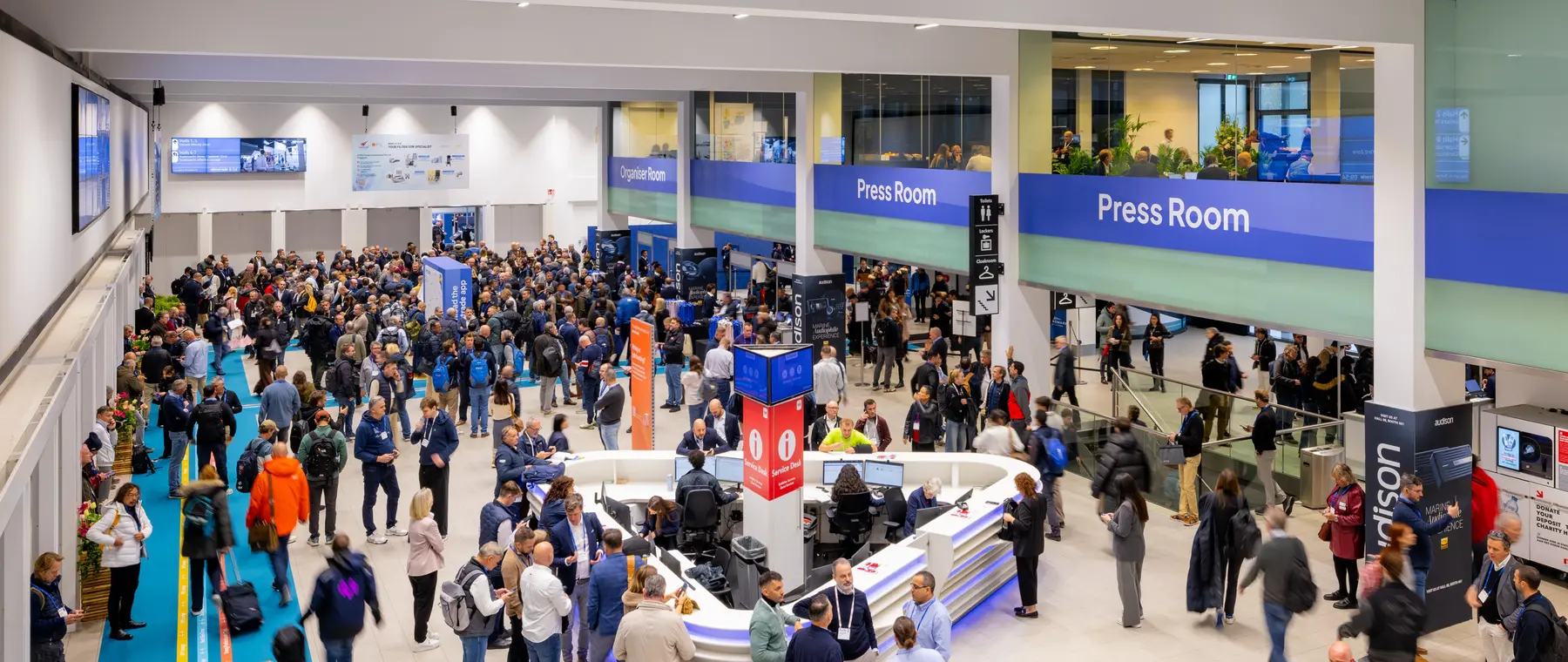
METSTRADE concluded its 2026 edition at RAI Amsterdam on 19 November following three days in which equipment manufacturers, yachtbuilders, distributors and technical specialists presented a broad picture of the leisure-marine supply chain. A closing report by industry publication PressMare placed the exhibitor count at 1,763, roughly one hundred more than in 2025, following an expanded exhibition layout across 12 halls. The number helps explain why a visitor examining equipment for a 12- to 23.99-metre luxury yacht might have found this year's show particularly demanding: propulsion, communications, deck equipment, materials and onboard comfort are increasingly interconnected purchases rather than isolated items.
The closing figure and its proper context
The 1,763 count is attributed to PressMare's 19 November report, drawing on its closing conversation with METSTRADE's management. The organiser's own public pre-show material had described more than 1,700 exhibitors and an enlarged exhibition, which is consistent with the reported final figure. It is useful to distinguish exhibitors from visitors, boats sold or purchase orders signed. A higher exhibitor total shows supplier participation and available display space; it does not automatically prove that every part of the marine economy is expanding at the same rate. The three-day event offers a snapshot of companies prepared to meet customers and the trade face to face. It cannot, by itself, determine the profitability or long-term demand outlook of the businesses in those halls.
An expanded layout changes the visitor experience
The 2026 exhibition used a larger footprint, according to both organisers' programme material and industry reports. Specialists attending with a list of technical problems could move between suppliers rather than rely on fragmented online catalogues and correspondence. Yet more space introduces a different challenge: an owner or captain can easily spend time collecting brochures without identifying which systems are appropriate for a particular yacht. Visitors benefit from preparing hull dimensions, electrical schematics, existing component details and an installation budget before meetings. A boat's space, weight, service access and power limits usually decide what is possible. The sheer size of METSTRADE makes structured preparation more valuable, not less, especially for small professional crews.
Why component suppliers are a central part of yacht ownership
The yachts that attract attention at boat shows are only the visible result of hundreds of smaller procurement decisions. A dependable 18-metre cruising yacht depends on hardware, wiring, seals, sensors, pumps, insulation, communications, coatings and spare parts from companies an owner may never have heard of. METSTRADE concentrates many such firms in one place. For yards and refit managers, that allows detailed discussion about lead times and compatibility as well as design. For owners, it is a reminder that brand names on major equipment do not describe the entire support network. Evaluating a yacht should include the availability of replacement parts and specialists in the intended cruising area, not merely the appeal of equipment at delivery.
DAME results put innovation in a wider frame
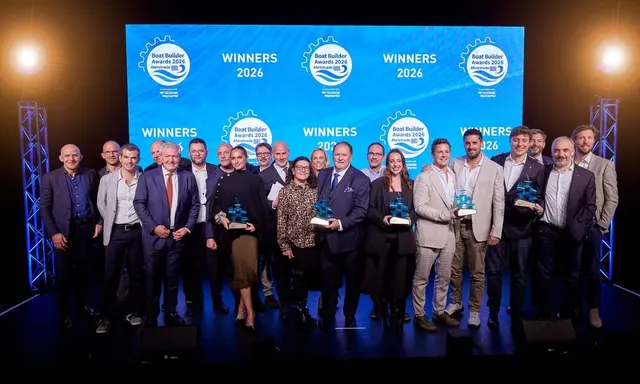
One of the week's most distinctive announcements was the 35th-anniversary DAME Design Awards outcome. For the first time, the judges named three joint overall winners: Garmin's Signal VHF & Remote system, Scanstrut's Wireless Powered Navigation Pole Light and Teignbridge Propellers' T-CPP. Those examples span communications, lighting and propulsion rather than a single trend. The jury assessed 74 nominated products from 153 entries and also recognised category winners, special mentions and an environmental design entry. Each award is a signpost toward an idea worth examining; it is not an independently comparable performance score. The event demonstrated that engineering progress often takes the form of reducing ordinary maintenance problems, improving operational interfaces or making established machinery more efficient.
Electronics are becoming more integrated and more demanding
A visitor comparing communications and navigation products in Amsterdam would encounter increasingly capable networked equipment. Garmin's awarded radio family, for example, aims to combine several communications functions and support a second control location. Integration can save console space, but it can also create failure pathways that are difficult to understand unless an installer documents them carefully. Boat owners should ask which essential functions continue when one network segment or screen fails, whether the electrical installation has appropriate isolation and how the crew will receive software updates. A consolidated helm may look elegant in the showroom; an operationally resilient helm needs clear fallback arrangements. Product demonstrations are the beginning of these conversations rather than proof of integration on an individual vessel.
Propulsion and energy management remain closely linked
Propulsion innovations at METSTRADE included both established mechanical thinking and newer approaches to efficiency. Teignbridge's T-CPP, one of the overall DAME winners, changes blade camber using movable trailing-edge sections rather than rotating whole propeller blades. The concept seeks flexibility with reduced mechanical complexity compared with some conventional alternatives. Separately, builders and suppliers used the show to discuss electric storage, hybrid drives and the practical balance between propulsive and hotel loads. In the 12–23.99-metre market, engineering space and displacement are especially important. The correct choice is rarely determined by a headline percentage or a manufacturer's concept rendering; it depends on the boat's propeller loading, cruising speeds, battery profile, duty cycle and access to service.
Design for the crew, not only for the catalogue
Deck and interior equipment announcements have direct implications for the work of a skipper or small crew. Mechanisms that simplify mooring, lifting a tender, reefing a sail or shading a cockpit can reduce the physical complexity of daily operation. But equipment added to a boat also increases training, inspection and eventual replacement needs. The decision to fit a product should therefore start with a clearly stated task and the conditions in which it must work. Owners planning winter refits can use METSTRADE presentations to assemble alternative solutions and then invite installers to compare them against actual drawings. Technical innovation has the greatest practical impact when it addresses a defined issue, rather than creating a new layer of controls for its own sake.
Sustainability claims benefit from documented boundaries
The week brought attention to environmental information as well as hardware. The DAME Environmental Design Award went to August Race's Oceans Assured Compliance Platform, a tool intended to help users navigate environmental guidance and related product records. Its recognition illustrates the increasing importance of traceability, compliance information and practical decisions by operators. However, labels such as sustainable, low-emissions or recyclable should always be examined in context. Environmental performance depends on product manufacture, operation, disposal and the exact conditions of use. The exhibition is a place to question suppliers about evidence, not to accept an award or a brochure as proof that a particular installation will reduce a vessel's complete environmental footprint.
International participation creates a long supply chain
PressMare's closing account also noted a substantial Italian presence and an extensive network of national pavilions. The scale of international participation reflects the reality that most yachts are assembled from components sourced across many countries. This is useful when comparing designs, but it can introduce complexity for warranties, technical documents and replacement parts after delivery. A captain ordering an urgent component from another country may need precise drawings and serial numbers rather than an approximate product description. Exhibitions can help the people who will later solve those problems establish direct professional relationships. Owners should retain supplier records, current manuals and contact channels, even when a yard or management company normally manages procurement on their behalf.
What the end of the show means for refit planning
With exhibitors returning from Amsterdam, the next practical stage is to turn meetings into specifications. A disciplined refit process begins with a documented requirement, followed by technical review, a comparison of whole-life cost, and a clear installation and commissioning plan. Rushing to place a purchase order because a product is new can create cable, weight, cooling or software incompatibilities that are expensive to repair. A pre-season timetable should include lead times, testing afloat and crew familiarisation. For yachts operating between the Mediterranean and northern Europe, this planning may involve multiple yards and regulatory requirements. METSTRADE can shorten the research phase if owners make sure the final decision rests on vessel-specific facts rather than the excitement of a show stand.
Reading the 2026 outcome with proportion
The reported 1,763 exhibitor total is a notable closing measure for METSTRADE 2026, reinforcing the exhibition's position as a major gathering of marine equipment suppliers. The more enduring value is less easily captured in a single number. It lies in the conversations about which engineering solutions are mature, how they are supported and where they might genuinely improve the safety, comfort and operation of a yacht. The 2026 awards and product presentations provide a starting point, but they do not rank all equipment in a common contest. For the luxury-yacht owner, the most useful conclusion from Amsterdam is to ask better technical questions and bring those answers back to the exact vessel being considered.
Sources and image credits
Reporting based on PressMare original 19 November 2026 closing industry report.
Lead photograph: METSTRADE exhibition entrance, organiser-provided archive photograph illustrating the 2026 closing report. Official METSTRADE event press-room photographic archive, expressly offered for media download by the organiser. Archival exhibition image used for illustration and not claimed to depict a specifically dated 2026 scene. Original official image source.