Amsterdam: the final day of a trade show with practical consequences
Metstrade reaches its final scheduled day at RAI Amsterdam on 19 November 2026 with two important sets of industry awards now announced. The show opened on Tuesday and is scheduled to finish at 17:00 local time today. Its professional audience encompasses the businesses that design, build, equip, maintain and support recreational vessels, from specialist component makers to major boatbuilding groups. For the owner or operator of a luxury yacht between 12 and 24 metres, that supply chain matters as much as the visible styling of the next new model.
The organiser's registration material promoted more than 1,700 exhibitors, over 20,000 industry peers and more than 100 knowledge sessions. These are the organiser's advertised figures, not independently verified final attendance or audited results for this year's exhibition. As the event is still in progress, a final assessment of visitor turnout and commercial performance must await the organiser's closing report.
What has already emerged is a useful picture of the industry's priorities. The DAME Design Awards announcement on 17 November highlighted equipment design across a broad range of disciplines. Today, the organiser published the results of the previous evening's Boat Builder Awards, offering a complementary view of how builders, technology partners and emerging leaders are approaching the future of boat ownership.
Boat Builder Awards: a change in emphasis
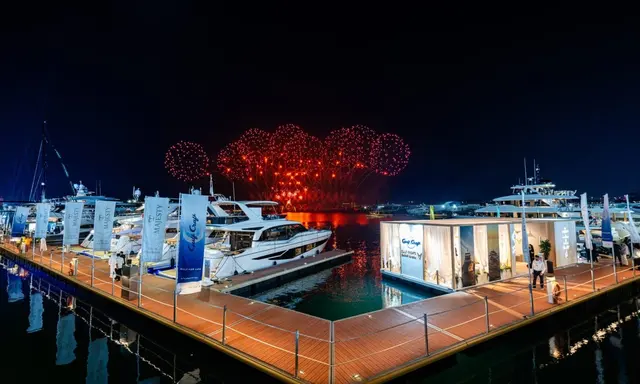
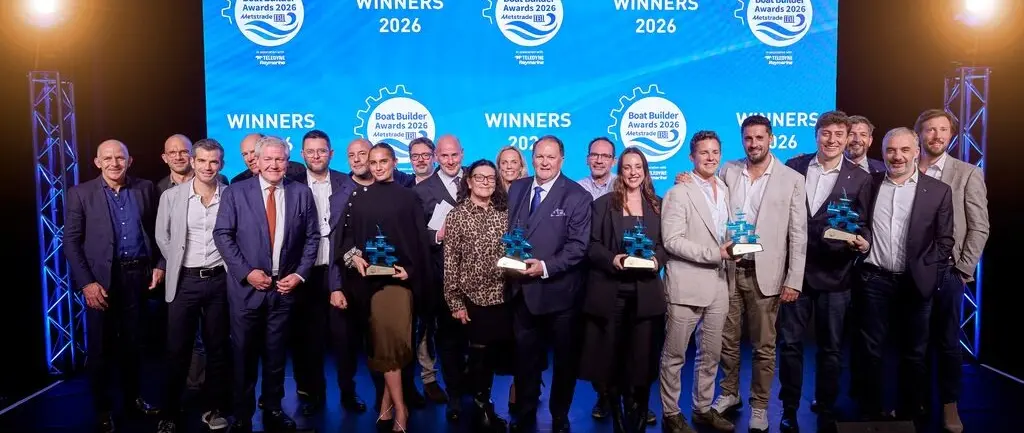
The awards evening at Harbour 8 on Wednesday recognised 27 companies and individuals' achievements across boatbuilding and its supply chain. Riviera Australia chief executive Wes Moxey received the Lifetime Achievement award; Ione Astondoa of ASTONDOA and Kaloyan Radulov of Omaya Yachts were recognised as Rising Stars. Among the category winners were Samar Yachts for its SAMAR 50 and Groupe Beneteau with Groupe Fountaine Pajot for their JOOOL collaboration.
For buyers of premium motor yachts and sailing yachts, those results illustrate two connected themes: differentiation in how a yacht is used and integration in how it is engineered. A yacht in the mid-teens or early twenties of metres must make economical use of almost every available space. The machinery installation, technical access, guest accommodation, storage, crew arrangements and outdoor living areas all compete for volume. Boatbuilders can improve the experience of ownership significantly when they refine those relationships rather than simply adding features to an existing arrangement.
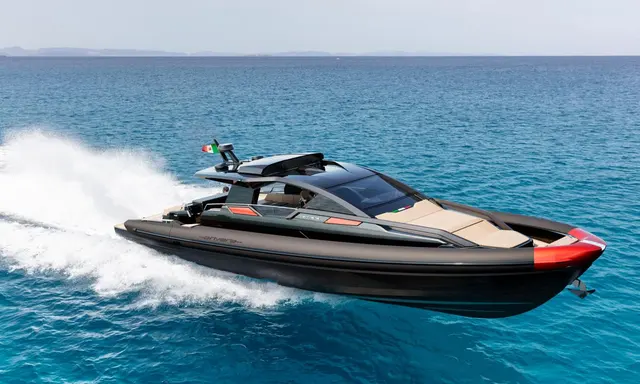
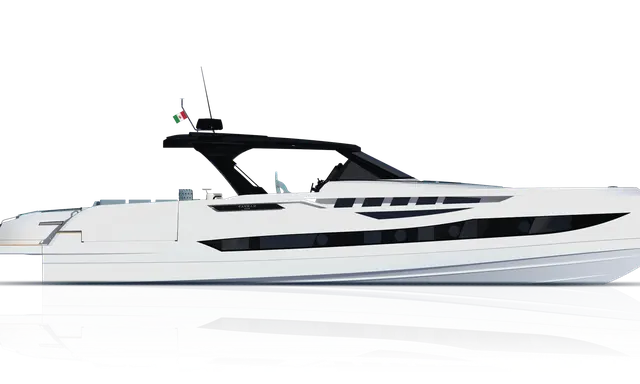
The SAMAR 50 award is therefore worth examining in the context of the Mediterranean day-yacht and cruising market. The jury highlighted the combination of traditional Balearic aesthetics, contemporary facilities and a sociable arrangement. That approach points toward an owner proposition that prioritises connection with the water and congenial time on board over sheer visual scale. It does not by itself establish a particular operating range, fuel saving or resale value. Those questions belong to subsequent technical evaluation and sea trials.
The awards' recognition of leadership is equally pertinent. A luxury yacht purchase creates a lasting relationship with the builder and its service network. Changes in management, succession and the development of technical talent can influence continuity of parts supply, warranty support and the quality of future refits. Buyers evaluating a relatively young brand may therefore wish to look at its training, dealer infrastructure and long-term technical support alongside the quality of the yacht at delivery.
Integrated engineering moves beyond individual components
The JOOOL collaboration received the award for a builder and supply-chain partnership. The organisers describe an integrated approach covering electrical storage, power conversion, distribution and propulsion, developed by two competing boatbuilding groups. Its significance is not limited to the availability of individual components.
On a yacht of this size, the electrical architecture should be considered as a complete system. Energy demand varies widely over the course of the day: air conditioning at anchor, galley use, watermaking, lighting, entertainment systems, refrigeration and navigation loads do not necessarily peak together. An intelligently specified installation can help owners manage these requirements while reducing unnecessary machinery operation.
But selecting a hybrid or electric solution is not merely a matter of fitting a larger battery. Buyers and their advisers should take account of charging arrangements, shore-power compatibility, service access, battery monitoring, installation weight, emergency isolation and operating limitations. The practical value of an integrated platform is that components may have been designed with their interfaces in mind. Its real value aboard a specific yacht depends on the installation, documented performance and the support available throughout the boat's operating life.
There is a further commercial question. When an integrated system relies on proprietary communications, software and components, the owner needs confidence that diagnostics and replacement equipment will remain available. This is particularly important for cruising itineraries that take a yacht away from its initial dealer territory. Integration should simplify the owner's routine without making long-term maintenance unnecessarily dependent on a single location or specialist.
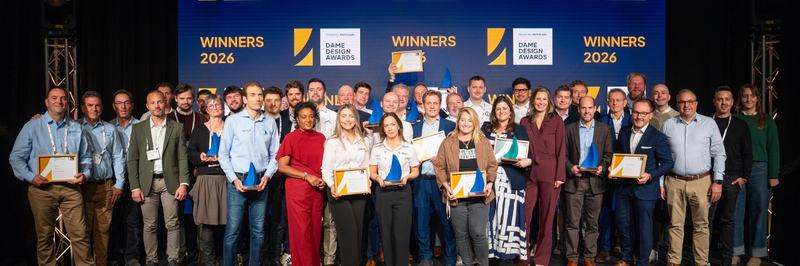
DAME Design Awards 2026 winners — Metstrade / RAI Amsterdam.
DAME: an unusually broad signal from the supply chain
Tuesday's awards brought a first for the DAME competition: three joint overall winners in its 35th anniversary year. Garmin's Signal VHF and Remote, Scanstrut's wireless-powered navigation pole light and Teignbridge's controllable-pitch propeller shared the principal honour. The organisers reported 153 entries and 74 nominations. The awards also raised €25,725 for the Dutch voluntary sea rescue organisation KNRM.
Rather than treat these products as equivalent installations for every size of yacht, it is useful to consider their underlying design priorities. Better communication interfaces can reduce distractions at a helm. Practical lighting and equipment attachment solutions can improve a vessel's usability. Efficient propulsion requires attention to the relationship between machinery and the hull rather than to an isolated component specification.
The relevance of any of these innovations depends on vessel design, intended use and regulatory requirements. An award recognises design merit in a particular competition; it is not a universal technical endorsement, a safety certification for a separate installation or a guarantee of suitability for a particular owner's yacht.
In the luxury sector, however, the most valuable improvements frequently originate in such practical areas. An attractive helm with intuitive controls can benefit an owner who actually operates the yacht. An unobtrusive deck installation may preserve usable space and reduce the inconvenience of everyday tasks. A more thoroughly engineered machinery arrangement can improve comfort or efficiency if testing confirms that it is appropriate for the boat.
What the exhibition means for refit planning
A trade exhibition is also an opportunity to compare solutions beyond the new-build market. A substantial number of luxury yachts remain in service for many years, and equipment manufacturers often have to address an installed base whose specifications differ considerably from those of current production models.
A refit assessment should begin with the yacht's condition and its owner's actual cruising pattern. A yacht undertaking frequent summer passages along the Mediterranean coast may have different requirements from one operating mostly as a weekend base or spending extended periods at anchor. The right priorities might include reliable refrigeration, access to technical spaces, better ventilation, replacement of ageing navigation equipment or a more manageable domestic electrical supply.
Before committing to a new technology, the refit team should document how existing systems function together. It is helpful to agree what success looks like before obtaining quotations: reduced noise at anchor, improved control of domestic loads, easier maintenance, more reliable data at the helm or a defined improvement in passage efficiency. A clearly expressed objective makes it easier to compare suppliers on the basis of outcomes rather than attractive exhibition demonstrations.
It also makes sense to request evidence of equivalent installations. The dimensions and displacement of the yacht, its operating environment and other systems affect the feasibility of a proposed upgrade. A component designed for a different type of craft may not simply transfer to a premium yacht, even if its marketing appeal is strong. Installation and commissioning costs should be part of the comparison.
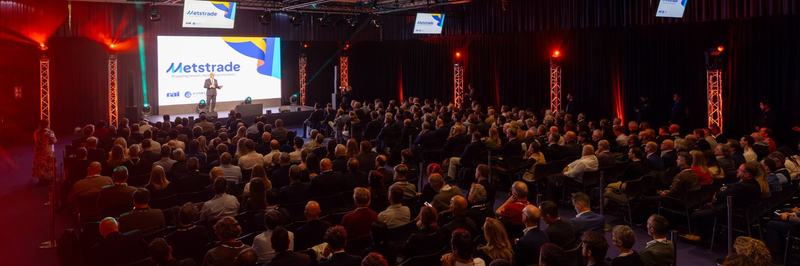
Audience at the 2026 DAME Design Awards — Metstrade / RAI Amsterdam.
Design quality extends to service and ownership
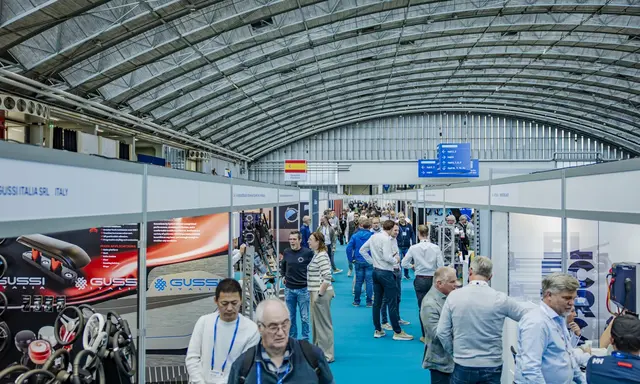
The programme for Tuesday's official opening included Groupe Beneteau chief executive Bruno Thivoyon as keynote speaker. The event is designed for industry participants rather than retail visitors, and much of its value lies in interaction between builders, distributors, component developers and service providers.
For the luxury yacht sector, serviceability deserves particular attention as equipment becomes more sophisticated. Owners expect a high standard of finish, but decorative panels should not turn routine maintenance into a substantial dismantling exercise. A technical system should ideally have a clear operating interface, safe access for qualified technicians and a realistic plan for support in cruising destinations.
The industry also needs to distinguish between genuinely useful innovation and novelty that adds complexity without improving the boating experience. Strong design should simplify appropriate tasks, improve reliability or enable a meaningful improvement in the use of a yacht. Where new systems introduce additional requirements, builders should be clear about these before delivery.
The same applies to environmental claims. Lower emissions, reduced resource consumption or quieter operation are important objectives, but the comparison must specify operating conditions and the boundaries of the assessment. Owners should ask how a proposed system performs across the duty cycle they expect, not simply at the operating point most favourable to a published specification. The awards programme offers an interesting snapshot of the industry working on those questions, but the individual evidence remains essential.
Looking beyond the closing day
The immediate task for yacht businesses after Amsterdam is to translate promising introductions and discussions into completed design decisions, demonstrable installations and effective after-sales support. Exhibitions can help connect the right partners, but the test of a technical or commercial innovation begins when it is specified, installed and used in real operating conditions.
For prospective luxury yacht buyers, the most useful takeaway from this year's awards announcements is not a single winning product or brand. It is the importance of examining the yacht as a coherent whole: its construction quality, onboard systems, usability, technical support and stewardship over the years ahead.
Luxury Yacht Guide will continue to follow industry developments relevant to the 12–23.99-metre sector. This report is based on the organiser's announcements available on the final scheduled day of Metstrade; it is not an account of an on-site visit or a claim that the final attendance figures have already been released.
Official sources and photography
Reporting based on the organiser’s 19 November Boat Builder Awards results, 17 November DAME awards results, official opening programme and registration information. Images supplied in the relevant releases published through the Metstrade virtual press room. Credit: Metstrade / RAI Amsterdam; reproduced for editorial event coverage and resized for web display. Copyright remains with the rights holder.