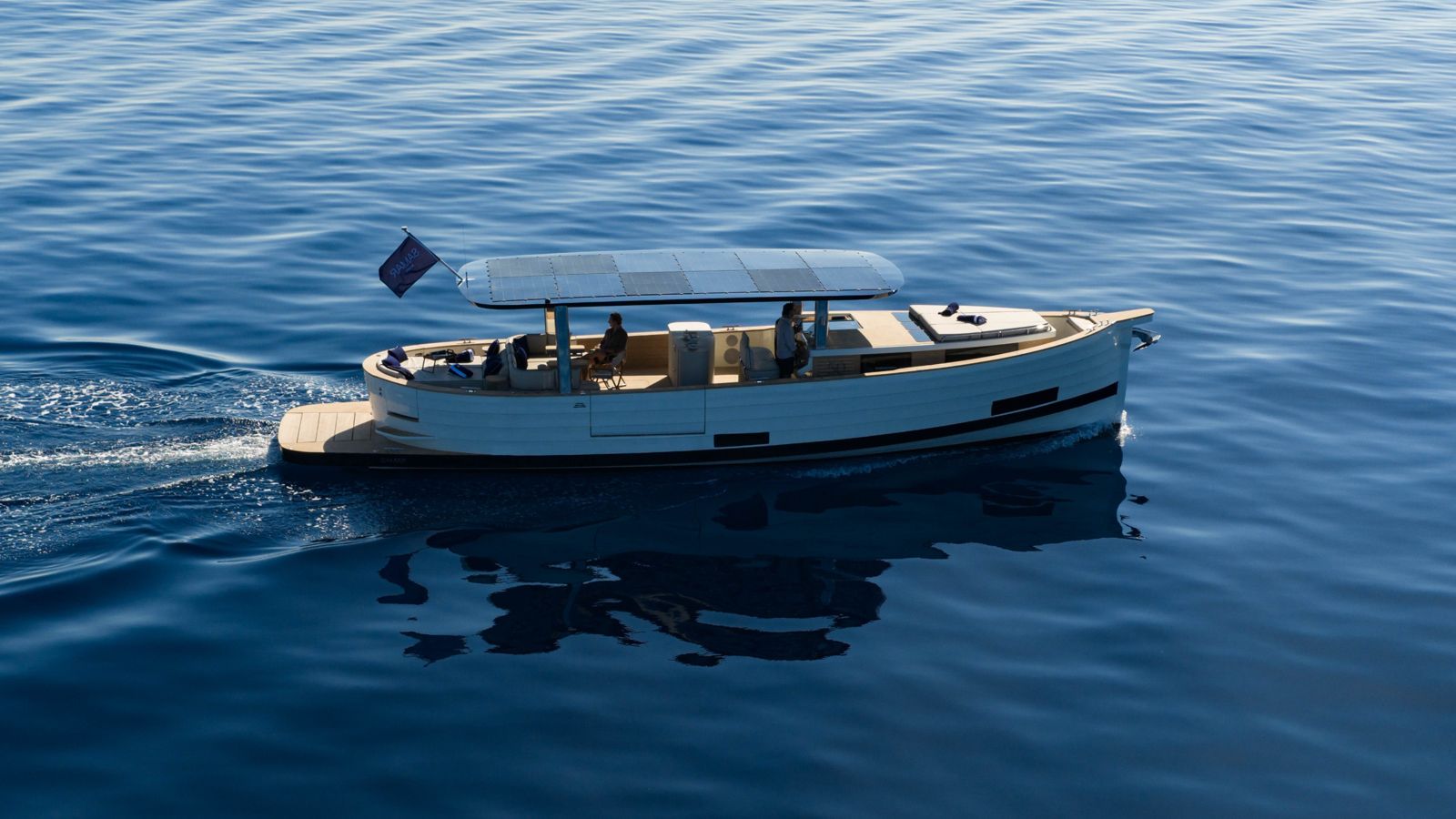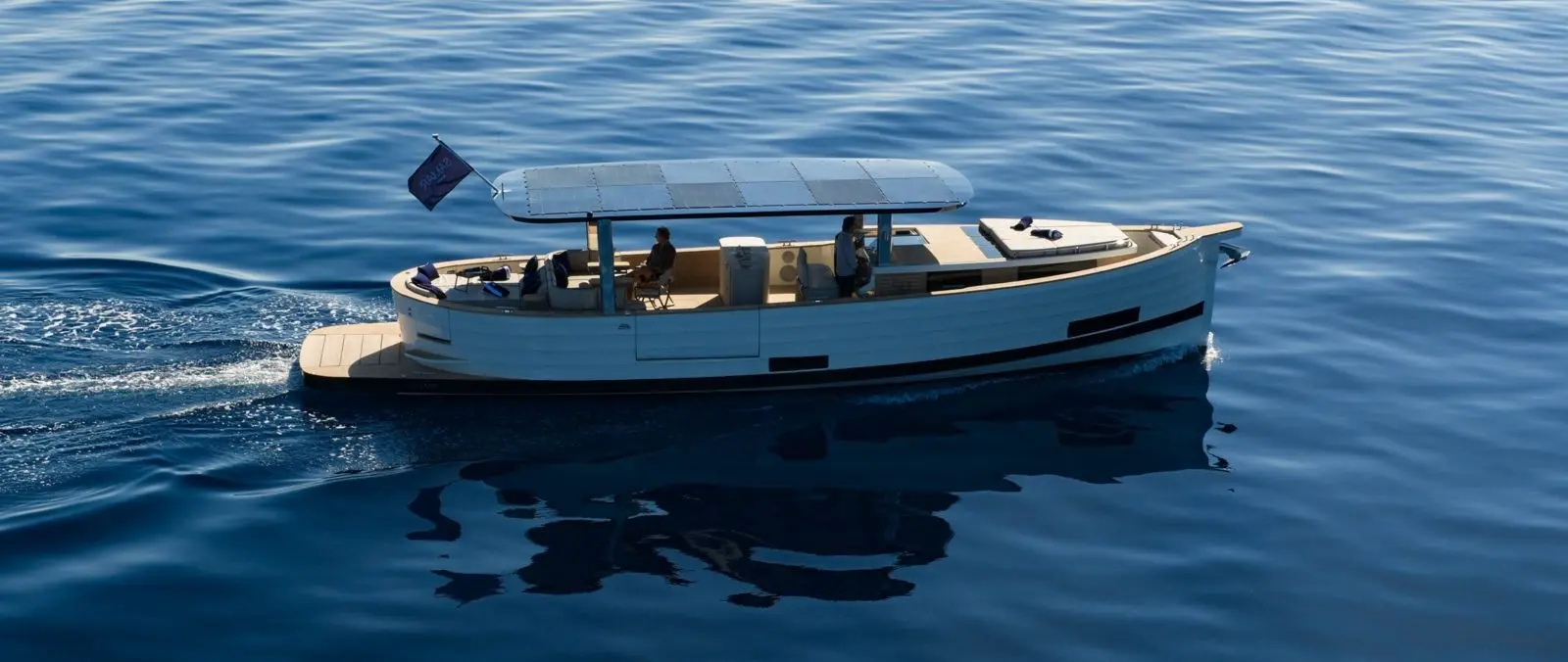
Samar Yachts' 15.8-metre SAMAR 50 has moved from a first season of Mediterranean operation to international recognition after winning Breakthrough Launch of the Year at the 2026 Boat Builder Awards. METSTRADE announced the result in Amsterdam on 19 November, and the Balearic Marine Cluster subsequently highlighted the achievement of its Mallorca-based member. The development puts a specific new yacht in focus rather than another abstract debate about future propulsion. The SAMAR 50 is already presented by its builder as a solar-electric cruising and day-guest yacht, with a broad single-level deck, 139 kWh battery bank and traditional Balearic llaut proportions updated for contemporary use.
A home-grown design enters an international awards conversation
The SAMAR 50 received the Breakthrough Launch of the Year honour at the IBI METSTRADE Boat Builder Awards, which considered a range of new models and boatbuilding developments. Judges described the yacht as an unusually appealing combination of traditional Balearic working-boat character, comfortable modern arrangements and a low-emissions approach to operation. This judgement is particularly relevant in the 12- to 23.99-metre market, where owners may be looking for something easier to enjoy in bays and around islands than a larger, higher-powered motor yacht. It is not a claim that the SAMAR 50 has been independently ranked against every boat in its length class. The award recognises its design proposition and the novelty of the offering.
Dimensions that explain the layout
The builder states a length overall of 15.8 metres, a 13.9-metre waterline length, 4.3-metre beam, 0.9-metre draught and full-load displacement of approximately 14.5 tonnes. These figures define a very different yacht from an aggressively styled express cruiser with high installed power and extensive accommodation below the waterline. Samar's arrangement concentrates much of the guest experience at deck level while retaining two cabins and a bathroom below. The 0.9-metre draught could be useful when selecting sheltered anchorages, but owners must still assess actual depth, tidal variation, hull protection and any restrictions on anchoring. Dimensions matter because a yacht's character is experienced in access to coves, movement around the deck and the practicality of carrying guests, not simply in its nominal model name.
The solar roof is a power contributor, not a magic fuel source
SAMAR's published specification lists a 5.4 kWp solar roof made up of twelve bifacial modules. It also specifies a 139 kWh battery bank working in a 48 V electrical architecture. The appeal is clear: generation can continue at anchor or while the vessel is operating, potentially reducing the hours for which a generator must run. The contribution depends heavily on daylight, cloud cover, panel temperature, shading, energy management and the boat's electrical loads. Peak photovoltaic rating is not the same as continuous available power. Guests using air conditioning, refrigeration, cooking equipment and water systems will draw energy as well as the propulsion motors. The yacht should therefore be assessed through actual daily energy budgets rather than a promise that solar panels alone can meet every operating requirement.
Standard serial hybrid propulsion is specifically described
For the standard serial-hybrid configuration, Samar lists twin 34 kW electric propulsion motors and a 10.9 kW generator that can operate as a range extender. The yard quotes a cruising speed around 8 knots and a top speed of approximately 11 knots for that configuration. Electric propulsion may produce a quieter experience at lower demand, but it remains important to distinguish zero local exhaust during battery-only operation from a passage in which a diesel generator is charging the batteries. A prospective owner should request a documented schedule of propulsion power, generator use, battery reserve and realistic range at the planned speeds. The 139 kWh storage figure is useful but does not alone determine endurance, because hotel loads and required battery reserve reduce the energy available for propulsion.
An alternative drive is available for different priorities
The company also describes an optional parallel-hybrid package with twin 30 kW electric motors and two 80 kW diesel engines, associated with an estimated maximum speed of about 14 to 15 knots. That is a substantially different operating proposition from the standard serial arrangement. An owner who needs to cover larger distances at higher speeds may consider it, but the installed equipment, maintenance tasks, acoustic character and fuel use should be assessed separately. The builder explicitly presents the higher top-speed figure as an estimate. It should not be substituted for witnessed performance in the chosen configuration and loading condition. Comparing the two drivetrains requires more than asking which one is faster: engine-room access, vibration, service support and charging arrangements may influence the eventual quality of ownership.
A deck conceived around people and water
Samar's model presentation emphasises a large open social space with a dining area, kitchen island, lounge and accessible stern platform. It also describes two electrically deployable side balconies that widen the connection with the sea when the yacht is stationary. The exterior galley includes induction cooking equipment, refrigeration and a worktop, allowing guests to remain together rather than divide between an enclosed saloon and an outdoor dining area. These are credible advantages for day excursions around Mallorca and neighbouring islands. They also introduce mechanical and electrical details an owner should examine carefully: seals, actuators, safety interlocks, drainage and the ease of maintaining equipment exposed to saltwater. An attractive drawing becomes a successful yacht when each transformation remains dependable over many seasons.
Below-deck accommodation for more than a day at sea
The builder specifies two cabins and a bathroom beneath the main deck, with a reported 2.05 metres of headroom in the principal cabin. Its passenger specification is twelve guests plus two crew, subject to the actual certified operating category and any commercial regulations. The cabins create possibilities for occasional overnight use, while the primary design emphasis remains on generous communal spaces during the day. A couple who wants extended private cruising should inspect storage, ventilation, air conditioning, freshwater capacity and the ergonomics of the sleeping arrangements. The published tankage is 330 litres of fresh water and 270 litres of fuel; those figures need to be evaluated against the intended itinerary and drivetrain choice. An appealing open main deck cannot replace the practical considerations that matter when the yacht becomes a home for more than one afternoon.
Aluminium construction and Mediterranean character
Samar describes a marine-grade aluminium hull and superstructure inspired by the llaut, a traditional type associated with the Balearic Islands. The yacht design is credited by the builder to Carlos Vidal, with interiors by Adriana Sans. Aluminium can be a robust construction material, but corrosion protection, appropriate electrical bonding, weld quality, coating maintenance and galvanic compatibility must be understood by the owner and surveyor. The aesthetic reference to working boats does not exempt a new yacht from modern technical requirements. Its significance lies in the combination of a familiar regional silhouette with a contemporary guest platform. On a market crowded with striking superstructures and angular hull windows, a recognisable cultural reference provides a different sort of identity.
Early operation provides a useful reality check
The SAMAR 50 is not merely a computer rendering. The company identifies a yacht called SAONA operating from Club de Mar in Palma with charter and sea-trial opportunities, while its published news material records appearances at the 2026 Palma International Boat Show and Cannes Yachting Festival. Those milestones make it possible for prospective buyers to seek first-hand impressions and actual operating evidence. They do not prove that every advertised figure will be achieved with a full guest complement in all conditions. Sea trials should therefore record displacement, weather, state of charge, speeds, battery use and any generator operation. Experienced buyers will also want to learn how charging, cleaning and regular maintenance fit into the vessel's real operating week.
Why awards recognition matters to a small builder
A new yacht company faces a different challenge from a long-established multinational manufacturer. It must demonstrate that its design is attractive while also building confidence in delivery quality, spare-part supply, warranties and aftersales support. Recognition at an international industry awards event can open conversations with distributors and buyers who might otherwise overlook a new model. The Balearic Marine Cluster's attention to Samar's win also underscores the regional value of a yacht designed around the local boating culture. Yet an award should never be treated as a substitute for a production audit. A buyer should investigate the builder's manufacturing partners, documentation, service contacts and arrangements for the life of the yacht, especially when operating outside the Balearics.
Matching the concept to an owner's actual use
The most persuasive use case is one built around unhurried coastal passages and extended time at anchor. In that setting, open social space, a quiet drivetrain and daily solar contribution may be more meaningful than the ability to reach a distant destination quickly. The design will be less suitable for owners who require sustained high-speed passages or a large number of private cabins without compromise. The standard and optional propulsion choices also make specification a central decision, not an afterthought. A good purchase process would compare realistic itinerary plans and energy budgets for each option, then test how guests move through the boat and how easily the crew operates its systems. Every owner's tolerance for speed, range and maintenance is different.
A winner worth evaluating on the water
The 2026 Breakthrough Launch award gives the SAMAR 50 a timely industry endorsement, while the yard's published specifications provide a much firmer basis for evaluation than the award alone. It is a 15.8-metre aluminium yacht with a 5.4 kWp solar roof, 139 kWh of storage, a spacious day-guest layout and a choice of electric-focused hybrid arrangements. Those details make it a distinctive addition to Luxury Yacht Guide's size range. The next meaningful comparison should come from witnessed operating results, owner feedback and careful scrutiny of the build and aftersales package. The underlying idea is straightforward: a luxury yacht can make a persuasive case through the quality of an afternoon on board, not only through its speed or visual scale.
Sources and image credits
Reporting based on SAMAR Yachts 2026 official SAMAR 50 model and vessel specification, SAMAR Yachts technical explanation of solar-electric engineering and drive options.
Lead photograph: Samar 50 under way, official Samar Yachts model photograph; the vessel won the 2026 Boat Builder Awards Breakthrough Launch prize. Official SAMAR Yachts manufacturer photograph of the SAMAR 50, provided on the builder website for its press and model presentation. Original official image source.