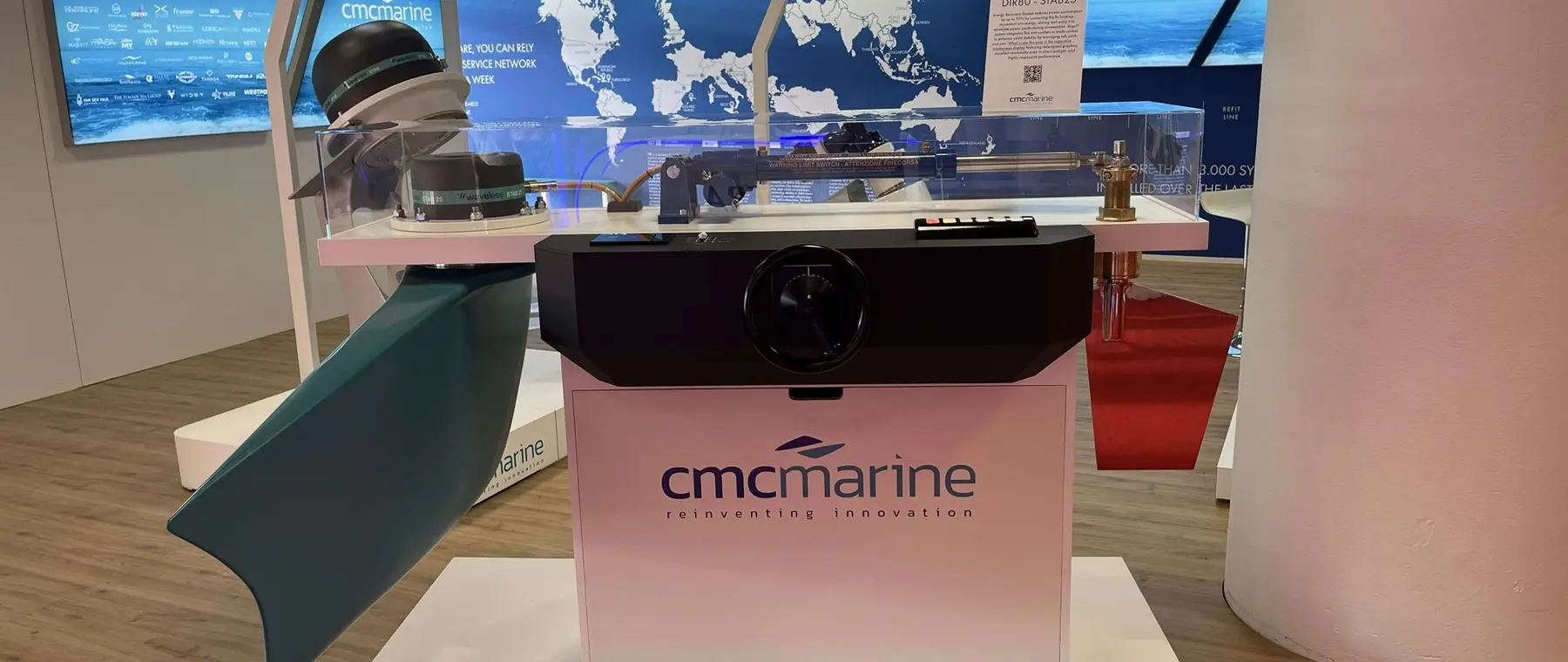
CMC Marine and Dometic presented the results of a joint stabilisation project at METSTRADE in Amsterdam on 17 November 2026. The companies combined CMC Marine STAB 25 fin stabilisers with one or two Dometic DG3 active gyroscopes and assessed the arrangement aboard a Princess 62 Flybridge acquired jointly for demonstration and testing. The partnership is about coordinating two different types of roll-control technology, rather than introducing the fins or the gyro as entirely new individual products. The companies say the combination can address motion at anchor and underway, but the reported trial figures describe a defined configuration and test environment rather than the performance of every possible yacht.
In an announced test at zero speed with waves of approximately 0.5 metres, the suppliers reported an 83 per cent reduction in root-mean-square roll motion using CMC Marine fins and one Dometic DG3. Adding a second DG3 was associated with a reported 94 per cent RMS roll reduction. These are company-reported results in specified moderate conditions, not independent guarantees of a 94 per cent improvement across seas and vessels. The demonstration yacht is around 19 metres, within Luxury Yacht Guide's 12–23.99 metre editorial range. Whether an individual vessel can accommodate a combined installation depends on hull space, power supply, loads, controls and professional engineering assessment.
Engineering Integration and System Synergy
The engineering collaboration between CMC Marine and Dometic has focused on optimising the synergy between fin-based stabilisation systems and active gyroscopes. The integration of these two technologies aims to leverage their individual strengths while mitigating their limitations. Traditional passive gyroscopes, which are commonly used in yacht stabilisation, react to motion rather than actively controlling it. In contrast, active gyroscopes like the Dometic DG3 allow for direct control over precession, enabling more precise and responsive stabilisation. This level of control is particularly beneficial when dealing with short waves or at low speeds, where passive systems may struggle to provide adequate stability.
The STAB25 fins from CMC Marine are designed to be highly effective during underway conditions, offering significant roll reduction in rough seas. When combined with the DG3 gyroscopes, these fins can enhance overall stability by addressing different aspects of motion. The integration of these two systems requires careful engineering to ensure that their control mechanisms work in harmony rather than conflict. This includes synchronising their response times and ensuring that both systems contribute optimally under varying sea conditions. The result is a stabilisation solution that offers improved comfort and performance for yacht owners, particularly those who frequently operate in challenging maritime environments.
Performance Metrics and RMS Roll Reduction
The effectiveness of the combined system was evaluated using Root Mean Square (RMS) values to measure roll reduction. This metric provides an accurate representation of overall motion by considering the entire spectrum of movement rather than just peak or average values. During trials conducted at anchor with waves of 0.5 metres, the combination of CMC Marine’s STAB25 fins and a single Dometic DG3 gyroscope achieved an 83% RMS roll reduction. When two DG3 gyroscopes were used alongside the fins, this figure increased to 94%, demonstrating the significant impact of adding an additional active stabilisation unit.
These results highlight the potential benefits of integrating multiple stabilisation technologies for enhanced performance. The use of two DG3 gyroscopes not only improves roll reduction but also introduces redundancy, which can be crucial in ensuring system reliability. However, it is important to note that these figures are based on specific test conditions and should not be interpreted as general guarantees. The effectiveness of the combined system may vary depending on factors such as wave height, vessel speed, and environmental conditions. Therefore, yacht owners considering this integration should evaluate their specific operational requirements before making a decision.
Installation and Engineering Considerations
The installation of the combined stabilisation system requires careful planning to ensure compatibility with existing yacht infrastructure. Both CMC Marine’s STAB25 fins and Dometic’s DG3 gyroscopes are designed for retrofitting, but their integration may necessitate modifications to the vessel’s electrical and mechanical systems. The DG3 gyroscopes operate on direct current (DC) power and include a dedicated battery for start-up, which recharges during deceleration phases. This feature reduces the need for continuous generator operation, making the system more energy-efficient.
From an engineering perspective, the integration of these two technologies involves synchronising their control systems to ensure optimal performance. The STAB25 fins are typically controlled via a dedicated interface, while the DG3 gyroscopes can be managed through the same or a separate control panel. This flexibility allows yacht owners to customise the system based on their operational needs. However, it is essential to consider the space requirements for both systems, as they may necessitate additional mounting points and wiring. Proper installation planning is crucial to avoid complications during retrofitting.
Operational Tradeoffs and System Redundancy
The integration of fin-based stabilisation with active gyroscopes introduces several operational tradeoffs that yacht owners should consider. While the combined system offers enhanced stability in various conditions, it also increases complexity and maintenance requirements. The presence of two independent stabilisation systems provides redundancy, which can be beneficial in ensuring continued performance even if one component fails. However, this redundancy comes at the cost of increased installation time and potential for system conflicts if not properly synchronised.
For yacht owners operating in environments with frequent changes in sea conditions, the ability to switch between different stabilisation modes is a significant advantage. The integration allows for direct control over both systems, enabling users to select the most appropriate configuration based on current conditions. This flexibility can lead to improved comfort and performance but requires a thorough understanding of how each system contributes to overall stability. Owners should also consider the energy consumption of the combined system, as active gyroscopes may have higher power demands compared to traditional passive stabilisers.
Maintenance and Reliability Concerns
Maintaining the combined stabilisation system involves regular checks for both the STAB25 fins and DG3 gyroscopes to ensure optimal performance. The DG3 gyroscopes, being active systems, require periodic maintenance to keep their control mechanisms functioning correctly. This includes inspecting the battery system, ensuring proper power supply, and verifying that the gyroscope’s precession motion is operating within specified parameters. In contrast, the STAB25 fins are generally more maintenance-intensive due to their mechanical components, which may be subject to wear over time.
Reliability is a key consideration for yacht owners using this integrated system. While both technologies have proven track records individually, their combined use introduces new variables that could affect long-term performance. The redundancy provided by having two stabilisation systems can mitigate some risks, but it also means that any failure in one component may require more extensive troubleshooting. Owners should factor in the potential for increased maintenance costs and downtime when evaluating the feasibility of this system for their vessel.
Market Positioning and Distribution Strategy
The market positioning of the combined stabilisation system is shaped by the strategic distribution agreement between CMC Marine and Dometic. CMC Marine will handle sales and support in EMEA markets, leveraging its existing network of marine systems integrators and yacht builders. This approach allows for targeted outreach to potential customers who may be more receptive to fin-based stabilisation solutions. On the other hand, Dometic’s global distribution strategy ensures that the system reaches a broader audience, including superyacht owners in regions where active gyroscopes are more commonly used.
This division of responsibilities reflects the strengths and market reach of both companies. CMC Marine’s focus on EMEA aligns with its established presence in European yacht markets, while Dometic’s global distribution capabilities enable it to expand the system’s availability worldwide. The partnership also allows for tailored marketing strategies that address the specific needs of different regions. For example, in areas where energy efficiency is a priority, the DC-powered DG3 gyroscopes may be highlighted as a key selling point. This strategic approach ensures that the combined system is effectively positioned to meet the demands of a diverse range of yacht owners.
Future Developments and Integration Potential
Looking ahead, the integration of fin-based stabilisation with active gyroscopes presents several opportunities for further development. One potential area of innovation is the introduction of an automated control system that can dynamically adjust the use of both technologies based on real-time conditions. This would allow for seamless transitions between different stabilisation modes without requiring manual intervention from the owner. Such a system could significantly enhance comfort and performance by optimising the use of each technology in response to changing sea states.
Another area of potential development is the expansion of the combined system to larger yachts. While the current solution is primarily designed for vessels between 50 and 70 feet, there is potential to adapt it for longer hulls by incorporating CMC Marine’s Stabilis fin range alongside Dometic’s evolving gyroscope technology. This could open up new markets for both companies, particularly in the superyacht sector where advanced stabilisation solutions are increasingly in demand. The ability to scale the system to larger vessels would also allow for more comprehensive testing and validation, further solidifying its effectiveness across a wider range of applications.
Owner Considerations and Practical Applications
For yacht owners considering the integration of fin-based stabilisation with active gyroscopes, several practical considerations should be taken into account. One of the primary factors is the vessel’s operational profile. Owners who frequently operate in rough seas or at anchor may benefit most from this combined system, as it offers enhanced stability in a variety of conditions. However, those who primarily sail in calmer waters may find that a single stabilisation system provides sufficient performance without the added complexity and cost.
Another important consideration is the energy consumption of the combined system. While the DG3 gyroscopes are designed to be energy-efficient, their DC power requirements may necessitate additional electrical infrastructure on board. This could include modifications to the yacht’s battery bank or the installation of a dedicated charging system. Owners should also evaluate the potential impact on overall vessel efficiency and consider whether the benefits of enhanced stability justify any increases in energy usage.
Technical Specifications and Configuration Checks
When evaluating the combined stabilisation system, it is essential to review its technical specifications and configuration requirements. The STAB25 fins from CMC Marine are designed for a range of yacht sizes, with specific configurations tailored to different hull lengths and beam widths. Similarly, the DG3 gyroscopes from Dometic are engineered to operate within certain power and space constraints, requiring careful installation planning to ensure compatibility with existing systems.
Configuration checks should also include an assessment of the control interfaces for both technologies. The integration of these systems may require customised software or hardware solutions to synchronise their operation effectively. Owners should work closely with marine engineers and system integrators to ensure that all components are properly configured and tested before installation. This includes verifying that the DG3 gyroscopes’ precession motion is correctly aligned with the fins’ movement patterns to maximise stabilisation efficiency.
Industry Impact and Competitive Landscape
The integration of fin-based stabilisation with active gyroscopes has the potential to influence the broader yacht industry by setting new standards for stability solutions. As more yacht owners seek enhanced comfort and performance, the combined system offers a compelling alternative to traditional stabilisation methods. This could lead to increased adoption of hybrid systems in both new builds and retrofit projects, particularly among high-end yachts that prioritise advanced engineering features.
From a competitive standpoint, the collaboration between CMC Marine and Dometic positions them as key players in the evolving market for marine stabilisation technologies. Their joint efforts may also encourage other manufacturers to explore similar integrations, potentially leading to further innovations in the field. As the industry continues to prioritise energy efficiency and advanced control systems, the combined stabilisation solution could become a standard feature in many modern yachts, reshaping the landscape of yacht design and operation.
Sources and image credits
Reporting based on CMC Marine press announcement distributed by PressMare on 17 November 2026, SuperYacht24 report on Princess 62 Flybridge trial, 18 November 2026.
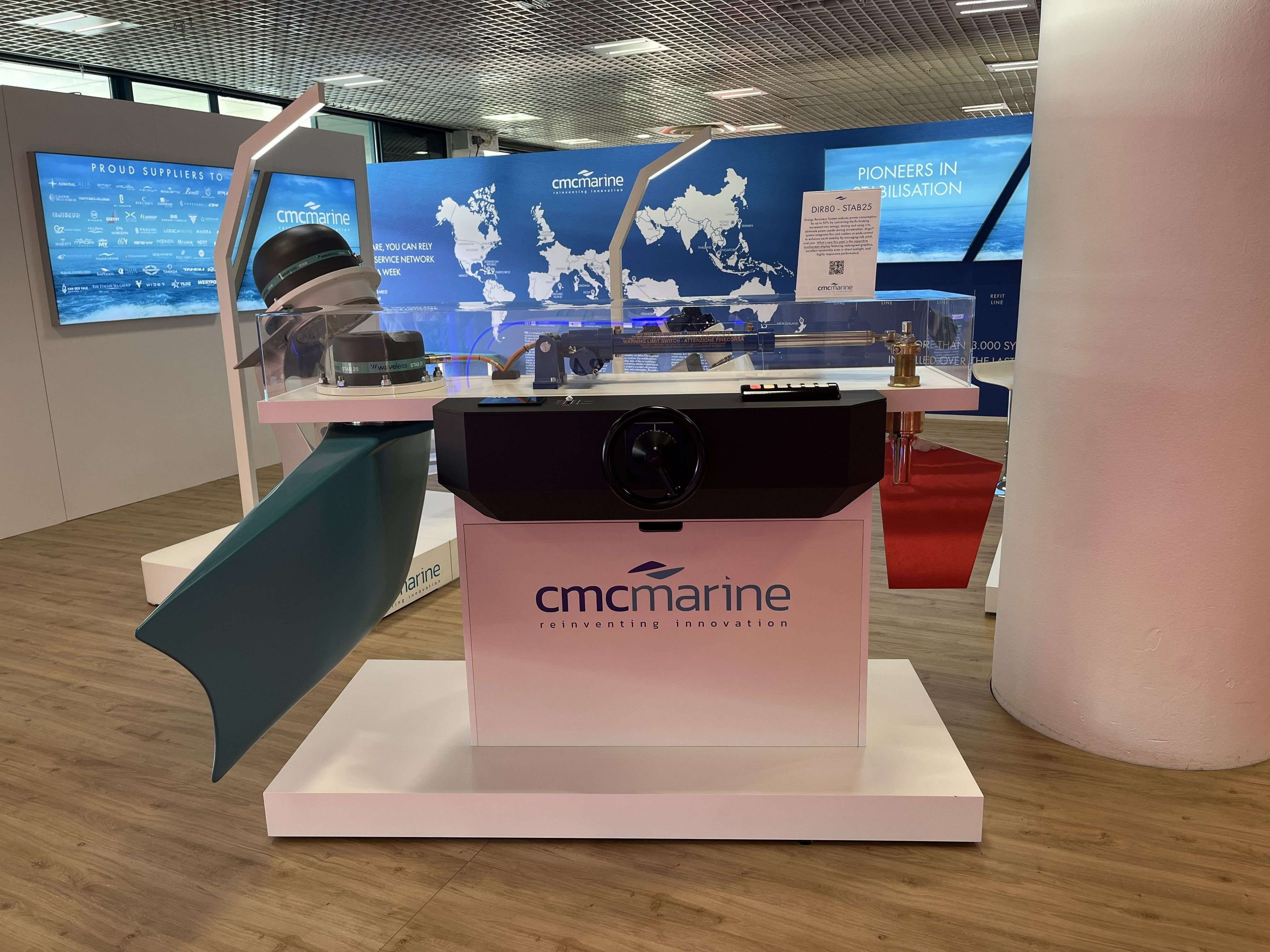
Lead photograph: CMC Marine STAB stabiliser fin technology on display at Fort Lauderdale Boat Show 2026; illustrative manufacturer equipment photograph, not the combined trial.. CMC Marine manufacturer STAB-fin display photographed in official 23 October 2026 Fort Lauderdale Boat Show press coverage by PressMare; illustrative of the fin component, not the joint test. Original official image source.