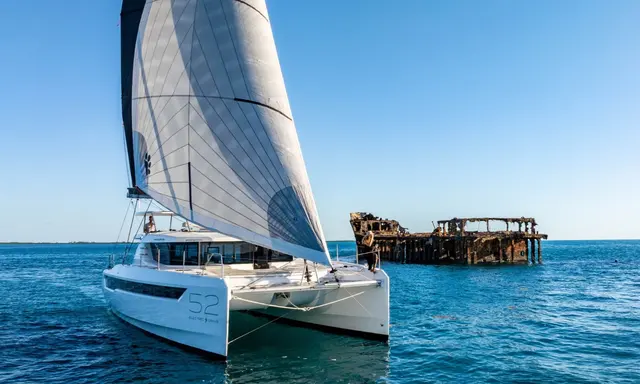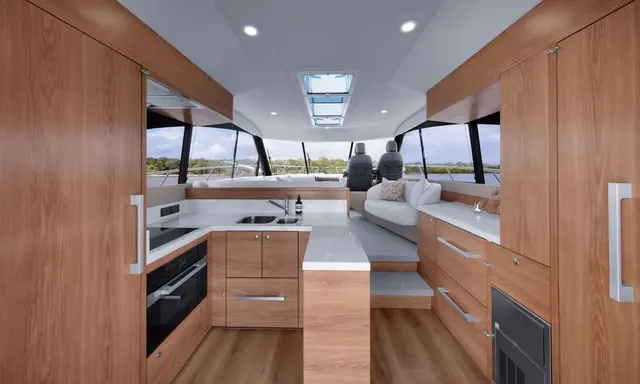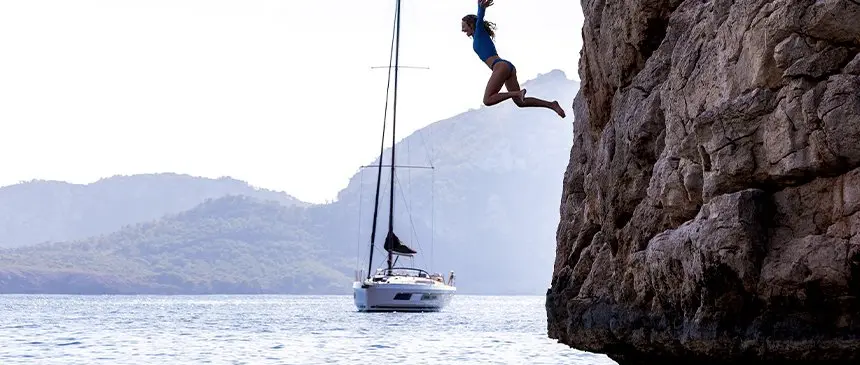
Dufour has published the first official sailing and lifestyle photographs of its new Dufour 39, giving buyers a more complete view of the 12-metre cruising yacht after its world premiere at the autumn boat shows. The manufacturer's announcement, dated 24 November 2026, presents the model under sail, at anchor and in everyday use rather than relying exclusively on studio design images. Dufour says the photography was completed in early October and brings together sailing scenes, onboard accommodation and activities ashore. The release is a meaningful step in the life of a new model because it allows prospective owners to look beyond the launch-day specification and begin assessing whether the yacht's deck plan and living arrangements support their own sailing habits. Dufour also confirms that owners will have an opportunity to examine the model under construction at its La Rochelle Exclusive Days from 16 to 18 December 2026.
Fresh photographs, not a second world premiere
The chronology deserves care. The Dufour 39 had already made its world premiere during the 2026 autumn boat-show season. The news on 24 November is the manufacturer's first official photographic series from a shoot conducted in early October. It does not establish a new launch, new order or major technical change to the underlying yacht. That distinction is important because imagery from new models often circulates before definitive production photographs are available. Dufour says the pictures feature the real boat under sail and at anchor, with experiences ranging from sail handling to time spent in the cockpit. A buyer can use those images to understand visible features and circulation, but should still distinguish photography of one configured hull from a complete specification for every boat in the range. The first published images are evidence of an actual vessel; they are not a substitute for independent inspection.
At 12 metres, the design crosses into yacht ownership
Dufour positions the 39 as a 12-metre sailing yacht, an interesting threshold between compact family sailing boats and the more accommodation-led cruising segment. The published design is attributed to naval architect Umberto Felci and designer Luca Ardizio, continuing the collaboration behind the brand's recent range. Its form includes a hard-chine hull, a broad forward section and a single rudder. Those features reflect design decisions rather than guaranteed performance claims. A wide forward hull can help create interior volume, but handling depends on how the boat is loaded, trimmed and sailed. A single rudder can offer a different feel and maintenance arrangement from a twin-rudder installation, while also demanding appropriate assessment under heel and at low speed. Prospective owners should evaluate the complete combination in conditions that resemble their intended cruising, not choose between designs by one technical feature alone.
The first images show actual life under sail
Dufour's photo announcement specifically describes scenes with the yacht sailing under spinnaker and moving through waters below rocky coastal cliffs. That allows buyers to examine details that can be difficult to judge in renderings: the position of the crew, where hands reach for lines, the relationship between cockpit and mainsheet arrangements, and how the helmsman works with the sail plan. The photographed Performance version uses six winches and more specialised sail-trimming equipment. That configuration should not be assumed to apply to every standard yacht. Owners interested in easier cruising or reduced crew workload may prefer a different arrangement and should ask how lines, clutches and winches change with the selected package. A beautiful spinnaker photograph is not proof that a boat can be managed comfortably by any crew size; the working positions need to be checked in the intended configuration.
Why the cockpit photograph matters
A sailing yacht's cockpit must serve as helm station, sail-handling area, dining space and outdoor refuge. Dufour uses the new images to show that the 39's cockpit can also be equipped with an outdoor galley. That is a feature with direct consequences for how owners spend time at anchor. Its usefulness depends on protection from wind, safe preparation surfaces, access to water and the location of heat-producing equipment or fuel connections. Buyers should inspect where the cockpit table and seating sit relative to the working sail controls. When family members are relaxing, can the sailing crew still move safely toward the helm or winches? Do occupants have secure handholds when the boat heels? The Dufour 39 photography communicates a flexible outdoor space, but the challenge for owners is to choose an equipment configuration that supports both relaxation and safe passages.
Cabin layouts should match the way a family cruises
Dufour's official model information describes a modular approach to the interior, rather than a single rigid accommodation plan. The new photo release draws attention to the possibility of a desk for route planning and an area that can be configured as a separate shower for cleaning and drying equipment. Those are unusually relevant details for an owner planning more than occasional day sailing. A chart desk or dedicated working surface can be valuable when the saloon is occupied; equally, a wet-space arrangement can make it easier to manage swimming gear and coastal activity equipment. The cost is the use of space that might otherwise become storage or accommodation. Prospective buyers should request dimensioned drawings for the exact layout and compare routes between cabins, saloon, heads and cockpit. Modular design is useful only when the selected arrangement fits the people who will live aboard.
A single rudder deserves a proper sea-trial discussion
Dufour emphasises the direct feel of the single rudder and the smooth movement of the hard-chine hull. Buyers should examine how those elements operate in a range of wind angles and sea states. A rudder's effectiveness depends on water flow, heel angle, speed and hull shape; it is not possible to infer full offshore handling from still photographs. During a trial, observe helm feedback as the boat accelerates, turns and encounters waves. Look at manoeuvring under engine in reverse, particularly around a crowded marina. Ask how the rudder bearings and steering system are inspected and maintained, and what protection exists against damage or leakage. A good cruising yacht should be predictable across ordinary conditions, not only exciting in favourable sailing weather. The right design depends on the owner's experience and the passages the boat is expected to make.
The photographic story extends beyond the vessel
The 24 November release does more than show an exterior profile. Dufour describes a couple using the yacht as a base for visiting coastlines, paddleboarding, hiking and cycling after reaching an anchorage. That narrative reflects a broader pattern among owners who regard the boat as a means of accessing places rather than simply a vehicle. The practicality is in the details. How will a paddleboard be carried and launched without obstructing a passage? Where can wet clothing and equipment dry? Is there secure storage for shore bags and bicycles, and does the available payload support them? A good anchorage experience also depends on the boat's access to the water, the reliability of its ground tackle and the comfort of the interior once the day's activities finish. Photographs can inspire an itinerary; the equipment and storage arrangements determine whether it works.
Design options have consequences for operating costs
A twelve-metre cruising yacht can be owner-operated, yet the costs of maintaining it should not be underestimated. Sail replacement, rigging inspections, antifouling, engine servicing, insurance, berthing and winter storage all require budgeting. Different keel, sail-handling and interior options may affect both cost and complexity. A Performance configuration with more winches can be attractive to an active crew but may require more components to inspect and service. Extra galley equipment adds convenience while increasing maintenance and potentially water or electrical demand. When comparing the Dufour 39 with other twelve-metre yachts, prospective owners should seek actual quotations for the intended home port and cruising programme. An attractive purchase specification may still be expensive to operate if critical equipment is difficult to reach or if the yacht requires a specialised berth or lifting arrangement.
The December La Rochelle yard invitation
Dufour's official announcement confirms Exclusive Days at its shipyard in La Rochelle from 16 to 18 December 2026. The programme offers the opportunity to see the Dufour 39 at different stages of construction and to meet the people behind the yacht. The company says visitors can also examine five other models in the range: the Dufour 37, 41, 44, 48 and 54. This is a separate future event, not a claim that those five are included in the November photo shoot. A factory visit is especially valuable when choosing a new design because it can reveal how parts are fitted before interiors and finishes conceal them. Prospective buyers should ask about hull construction, systems access, wiring, plumbing, deck attachments and quality-control procedures. The ability to see a partly assembled yacht can provide insight that a polished show boat cannot.
What to examine during a yard visit
A factory tour is most useful when the buyer arrives with a checklist. Ask where structural bulkheads are located, how deck fittings are reinforced and how the builder controls moisture during laminate work. Inspect the accessibility of tanks, seacocks, electrical panels and steering gear before equipment is enclosed. Clarify which installations are performed by the builder and which are supplied or commissioned by specialist subcontractors. Discuss the consequences of choosing different sail plans or interior arrangements for delivery timing, spare parts and future repairs. It is also worth checking how the yard records construction stages and deals with defects identified during commissioning. A builder's willingness to explain the process and provide supporting documentation can be as important to an owner as the visible quality of timber and upholstery.
The new photography is an opportunity to compare
Buyers have access to brochures and computer renderings for most modern yachts, but actual photographs from a completed yacht can improve the quality of comparison. Dufour's series gives glimpses of exterior proportions, sail handling, the cockpit and real onboard activities. Those observations should be checked against official technical plans and, ideally, a sea trial. One of the central questions is whether the model's promise of adaptable living space compromises the working efficiency of a sailing yacht. Another is how the Performance equipment photographed in the new release differs from an easier-handling cruising configuration. Asking those questions is more useful than assuming that the appealing look of a particular shot confirms a comfortable passage at sea. The strongest decisions combine imagery, physical inspection and verifiable performance data.
What the November release changes
The first official Dufour 39 sailing photographs mark the point at which buyers can examine the design as a real boat in a wider range of settings. They do not alter the model's original world-premiere history or establish a performance result that the builder has not published. Their immediate value lies in showing how the yacht's deck arrangements, outdoor living and interior flexibility might suit a family or couple planning varied cruising. With the additional December yard access in La Rochelle, Dufour has provided a practical next step for owners who want more than a photographic first impression. The 12-metre cruiser deserves to be judged as a complete package: how it sails, how it is maintained and how well it supports life at anchor.
Sources and image credits
Reporting based on Dufour Yachts first-party 24 November 2026 release of initial Dufour 39 sailing photographs and 16–18 December Exclusive Days factory visits.
Lead photograph: Real Dufour 39 sailing yacht photographed in the builder's new official October 2026 photoshoot and published 24 November; original manufacturer photograph, not a yacht world-premiere image. © Dufour Yachts / original photographer. First-party official Dufour 39 sailing photograph; all image rights remain with their holders. Original official image source.