Luxury Yacht Guide News | 21 November 2026
Two cruising catamarans deliver a strong first Atlantic leg
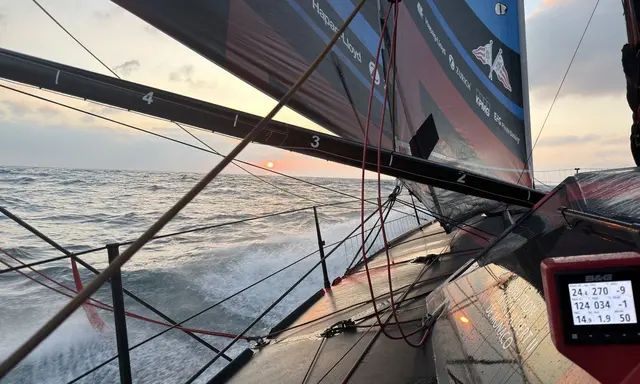
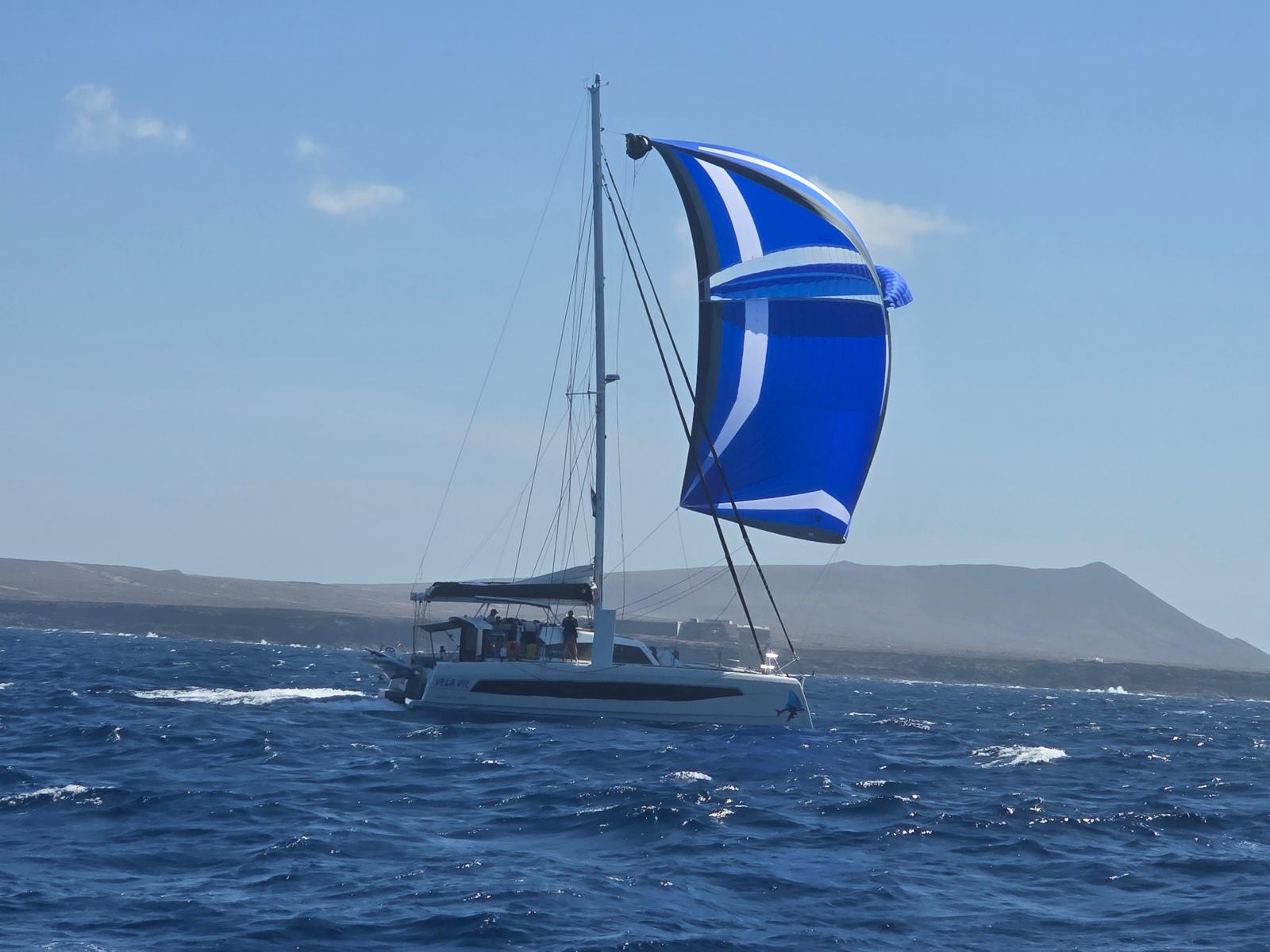
French multihull builder CATANA has reported that two Ocean Class catamarans finished sixth and seventh overall on the first stage of the ARC+ 2026 rally, reaching Mindelo in Cape Verde after sailing from Las Palmas de Gran Canaria. The company's 19 November release identifies the boats as VelaVie and Fluke, both from its Ocean Class family. The 850-nautical-mile first stage began on 12 November after weather delays, with a fleet of 78 vessels including 25 multihulls. CATANA says VelaVie completed the passage in four days, eighteen hours and thirty-nine minutes, with Fluke arriving eleven minutes later. This is a useful real-world reference for owners contemplating a long-distance luxury cruising catamaran. A rally is not a controlled performance trial, but the times and reported positions offer a more meaningful view of how yachts are used at sea than a static exhibition display.
A passage that begins with weather decisions
The starting fleet waited for suitable conditions before leaving Las Palmas. That detail is significant because long-range cruising is shaped as much by judgement as by the rated performance of the vessel. A route across open Atlantic water requires the crew to assess wind forecasts, sea state, route options and the expected duration of the passage. Even a comfortable modern catamaran cannot eliminate uncertainty or guarantee a particular arrival time. CATANA's report describes the first stage as an opportunity to test routines before the longer ocean crossing to the Caribbean. Crews must establish watches, maintain equipment and manage their energy, while the owner or skipper assesses whether decisions made in the first days are sustainable over a much longer passage. Good preparation is less glamorous than a fast finish but remains a central part of the cruising experience.
The VelaVie crew and the 2025 boat
VelaVie is described as a first-generation CATANA Ocean Class built in 2025 for Mark and Shelley Buckner. Their reported time of four days, eighteen hours and thirty-nine minutes made the boat sixth overall across the participating categories. Such a placement is noteworthy for a yacht designed to accommodate people and stores for an extended voyage. It should not, however, be presented as evidence that the model is inherently faster than every competing yacht in the event. Boat speed depends on routing, sail selection, crew experience, weather and the distribution of weight aboard. The most informative question for a prospective owner is whether the design allows the crew to maintain a sustainable pace while preserving comfort and safety. A strong rally result offers evidence of capable use, not a substitute for examining the yacht's construction, equipment and operating behaviour.
Fluke arrives only eleven minutes later
Fluke, an Ocean Class² from 2026 owned by Andrea and Sabina Salerno, followed VelaVie across the Mindelo finish eleven minutes later. The near-simultaneous arrival of two related boats makes an attractive story, but the distinction between the original Ocean Class and its newer version matters. The manufacturer's report does not establish that the two yachts had identical configurations, sails, equipment or loading. Comparison of their absolute times should therefore be made cautiously. What can be said is that both completed the first leg towards Cape Verde among the leading finishers in the entire participating group. That achievement gives the owners and the yard a tangible point of discussion as the event moves towards its Atlantic stage. It is also a reminder that good cruising performance is not the exclusive preserve of narrowly focused racing designs.
A third CATANA faces an equipment problem
A third CATANA catamaran, the CATANA 53 Wild Child, participated with owners Les and Franny. The 2024-built yacht experienced a broken outhaul that prevented normal deployment of the mainsail, according to the company release. The crew continued under twin headsails and reached Mindelo a few hours after the two Ocean Class boats. This detail arguably offers the most important seamanship lesson of the group. Offshore passage-making rarely proceeds exactly as planned, and experienced crews must be capable of adapting to equipment problems without turning a manageable issue into an emergency. The availability of alternative sails and an understanding of how to use them can be valuable. The company's report does not provide enough engineering detail to diagnose the cause of the outhaul failure, so it would be inappropriate to attribute it to construction quality or a specific maintenance issue.
Why a rally matters to a cruising yacht builder
CATANA builds catamarans aimed at owners who may wish to combine comfortable living space with serious sailing capability. An organised passage creates an environment in which customers can test navigation, sail handling, energy consumption, storage and daily life at sea. It also enables the builder to hear directly from owners who have spent days managing the vessel under real conditions. This feedback can be more valuable than general commentary from a boat-show visitor. Yet a rally is not a formal manufacturer's certification programme, and individual stories should not be confused with comprehensive performance statistics. When the yard reports a successful finish, it reflects the experience of specific boats and crews on a specific route. Prospective buyers should still seek a broader range of owner feedback before making a substantial purchase.
Multihulls and the Atlantic cruising equation
A catamaran offers a particular set of advantages for long-distance private sailing, including substantial living space for its length, separation of accommodation areas and generally limited heel compared with a monohull. Those features can make extended passages more comfortable for some families. They come with trade-offs: overall beam affects marina access, loading discipline influences performance, and the sailing characteristics of a wide multihull differ from those of a single-hulled yacht. The ARC+ results show that a well-prepared multihull can make swift progress under favourable conditions, but no event time establishes universal capability. Owners should examine the relationship among displacement, sail area, payload and the way the yacht behaves when the wind drops or increases. A boat chosen for repeated ocean crossings should be assessed over a broad range of possible conditions.
Life aboard during a four-day leg
The first stage of ARC+ is a meaningful passage on its own, even though it is shorter than the subsequent Atlantic crossing. Crews still need to maintain watches, prepare food, manage electricity and keep the boat organised in motion. On a large cruising catamaran, the layout of the saloon and galley can make those tasks easier, but deck movements and sail handling must remain safe at all times. The reported results do not describe every domestic detail aboard VelaVie or Fluke, and no public article can verify private comfort levels without direct owner testimony. A sensible buyer would use the rally as a starting point for questions: how was the boat loaded, what was the power use, how were watches organised and which tasks proved more difficult than expected? Those answers often reveal far more than a brochure's accommodation count.
The next stage towards the Caribbean
ARC+ traditionally uses Cape Verde as an intermediate destination before continuing towards the Caribbean. For the participating boats, arrival in Mindelo provides time to inspect equipment, repair any damage, provision and discuss the passage with other crews. CATANA's November report describes a sense of solidarity among the owners, an element that can be important in organised long-distance rallies. For private yacht owners, the opportunity to share experience with crews facing similar conditions can provide reassurance without removing personal responsibility for navigation and safety. The next passage presents a longer period away from shore, making early technical checks particularly valuable. Any future account of the event should distinguish the completed first leg from the eventual Atlantic arrival rather than treat one as proof of the other.
A clear result and a wider lesson
The verified points in CATANA's announcement are specific: 78 boats departed Las Palmas on 12 November, VelaVie and Fluke finished sixth and seventh overall on the first stage, and Wild Child continued after an outhaul problem. Together they show both the performance possibilities and the operational realities of owner-led ocean cruising. The strongest feature of the story is not the final ranking alone; it is the relationship between preparation, vessel capability and adaptation when something breaks. Owners considering a 15-to-16-metre luxury sailing catamaran can use this example to ask more detailed questions about rigging redundancy, load management and the support needed for ocean passages. CATANA's first-stage report gives the industry a timely, concrete view of the way modern cruising multihulls are being used beyond the boat-show pontoon.
Sources and image credits
Reporting based on CATANA builder official 19 November 2026 ARC+ Cape Verde arrival report.
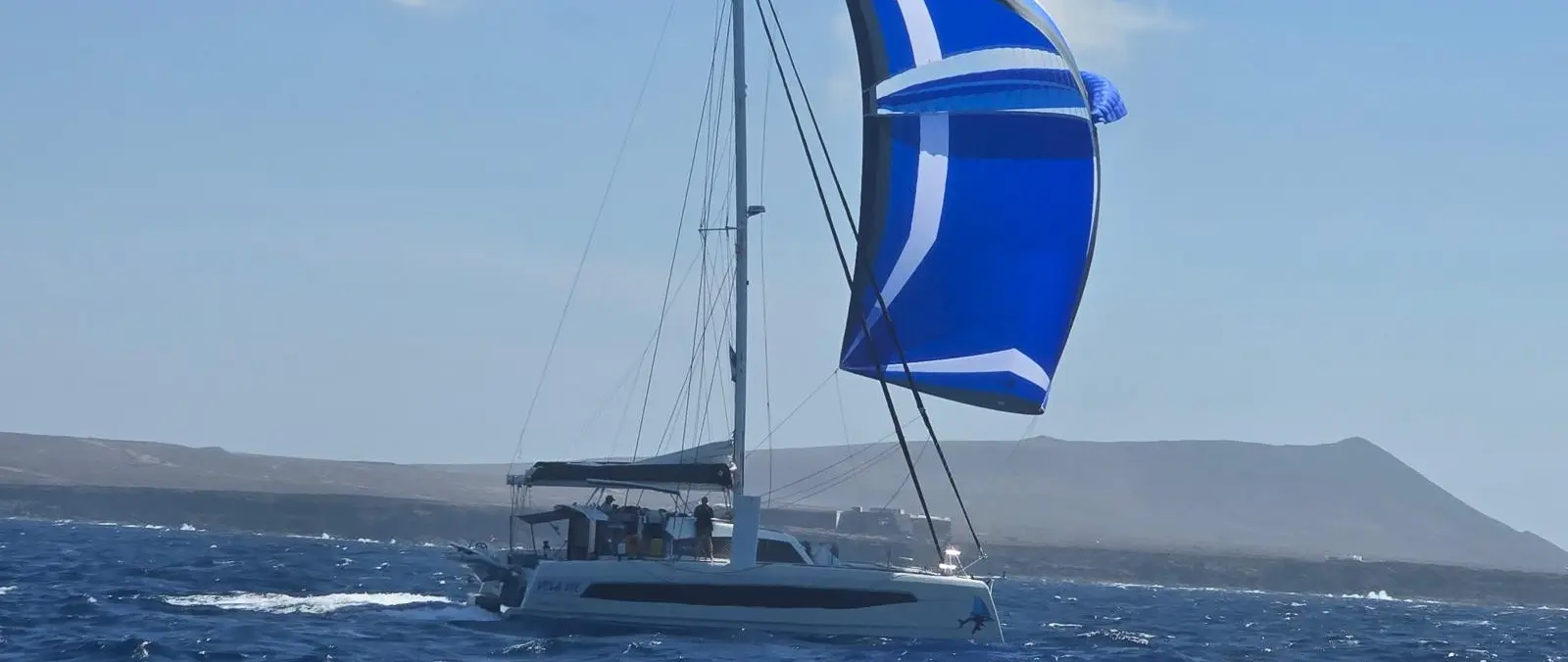
Lead photograph: CATANA Ocean Class VelaVie official ARC+ 2026 passage photograph. CATANA Catamarans, first-party VelaVie sailing photograph from November 2026 ARC+ report. Original official image source.