A Mediterranean service project for larger yachts
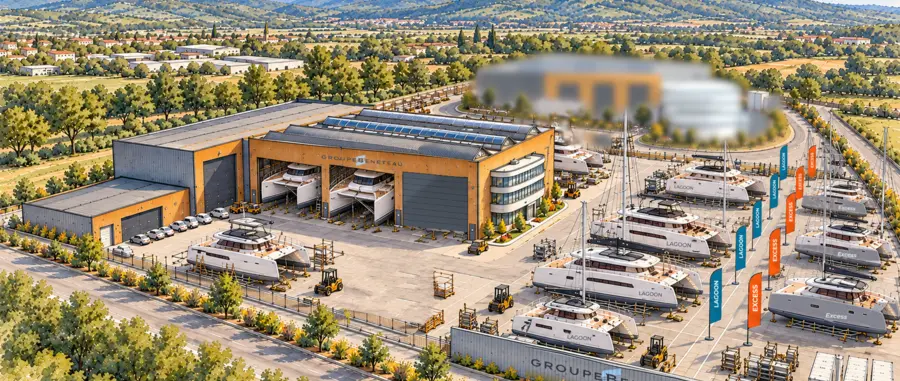
Groupe Beneteau has outlined plans for a dedicated large-yacht servicing and refit hub at Canet-en-Roussillon on France's Mediterranean coast. Announced on 23 October 2026, the project centres on a site of approximately 15,000 square metres, with operations anticipated from the middle of 2029. It is intended to expand the group's capacity to prepare, customise, maintain and refurbish sailing yachts, power catamarans and monohulls, especially vessels above 60 feet. The announcement is a development proposal with a future opening target, not a statement that the new facility is already available to customers.
For owners of 18- to 24-metre cruising yachts, this is relevant because the practical ownership experience extends far beyond delivery day. Finding a berth with suitable lifting capacity, organising manufacturer-compatible components and coordinating specialist contractors can all determine whether a refit stays on schedule. A manufacturer-backed hub may offer benefits in planning and technical continuity. Those advantages will need to be demonstrated once the site is built, equipped and staffed, and no precise pricing or guaranteed turnaround times have yet been announced.
Why Canet-en-Roussillon matters
Canet-en-Roussillon is already associated with catamaran construction and support, giving the proposed project a relevant industrial setting. Beneteau's plan calls for approximately 2,200 square metres of built space within the initial site, subject to studies and permits. The company says this built area could double during a second phase. An optional further 10,000-square-metre extension of the landholding is also contemplated, indicating that the first layout is intended to allow for later expansion if demand supports it.
These figures describe possibilities at different stages and should not be combined into one completed facility size. The land area, proposed buildings and optional extension are separate measures. For an owner assessing where to undertake a technically involved project, access to the water, covered working space and the capacity to coordinate trades matter at least as much as the headline footprint. Whether the completed hub will be the right choice for an individual yacht will depend on the nature of the work, the vessel's dimensions and the facilities available when the booking is made.
BMS expertise forms the foundation
The project builds on BMS, a Canet-based specialist in the maintenance, customisation and refit of large catamarans that Groupe Beneteau integrated in October 2025. Beneteau describes BMS as having 20 employees and €3.3 million in revenue in 2025. Those facts explain the knowledge base behind the proposal, but they do not establish the future hub's eventual staffing level or financial performance. The project will extend established specialist services into a broader group-wide offering for several kinds of large leisure yacht.
Large catamarans pose distinctive practical challenges. Their beam affects lift arrangements, storage and shore-side movement, while the layout of twin hulls creates different access requirements for systems and equipment. Experience with these boats can be valuable, yet it should not be assumed to transfer automatically to every monohull or power yacht. The new operation will have to demonstrate the necessary capability across structures, propulsion, electrical work, accommodation and the particular materials used by each brand.
The NEO pre-owned refit programme
A central purpose is to expand NEO, the manufacturer's programme for refurbishing pre-owned boats. Groupe Beneteau says the scheme has grown from two to eight models across Lagoon, Beneteau and Jeanneau. The proposition is that an original manufacturer can use established design information, parts records and knowledge of production methods to guide an extensive upgrade. This may be attractive to buyers who appreciate the character of an existing model but want its systems, finishes or equipment refreshed before taking it cruising.
The company cites completed refits of a Lagoon 42 and Lagoon 450 in the first half of 2026 as early examples. That experience is promising but does not mean every model is eligible today or that every possible conversion will be feasible. Owners will need a scope of works based on the particular vessel's condition. An older yacht may have unrecorded repairs, altered wiring or bespoke modifications that require investigation even when original drawings and parts lists are available.
What original design records can contribute
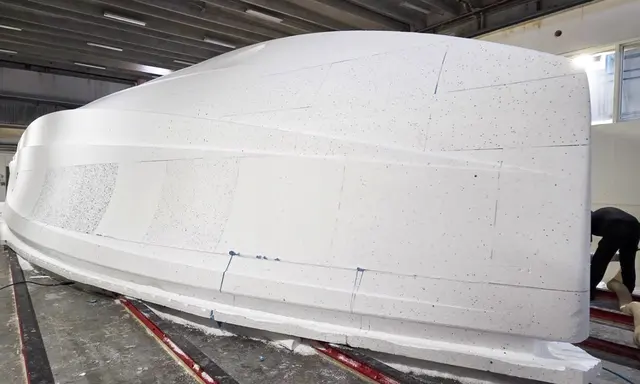
Beneteau says the NEO process draws on original plans, composite moulds and parts lists indexed by hull number. Access to this information can reduce guesswork during certain repairs and help technicians select components suited to the vessel. It is especially relevant where a fit-out was built into complex structural spaces or when a previous generation of equipment is no longer readily available. The ability to compare a current installation with original documentation can also make a survey more informative.
However, factory records are a starting point rather than a complete account of a yacht's life. The actual condition of hull structure, water ingress, machinery and electrical installations still needs physical inspection. The builder says the programme includes comprehensive assessment and adherence to brand standards. That process should help establish a defensible work plan, but owners should still request a detailed quotation, written variation controls and clarity over what happens if concealed defects are discovered.
Targets for capacity and timing
The group's ambition is to refurbish 130 boats per year through NEO by 2030, including approximately ten large yachts per year at the prospective Canet facility. These are capacity goals rather than current output or confirmed future bookings. The distinction matters because planning a major refit requires confidence in available slots, subcontractor scheduling and access to essential parts. A new facility can also undergo commissioning and operational adjustments after opening before it reaches its intended throughput.
With the hub projected for mid-2029, owners considering work during the next two cruising seasons should not treat this announcement as an immediate alternative to existing yards. Its importance is longer-term: the potential to grow a coordinated manufacturer-led refit network, possibly giving older owners more predictable support. The plan also suggests the builder sees a substantial market in caring for yachts already afloat, alongside the sale of new models.
How this fits a changing ownership market
The value of a luxury cruising yacht is shaped by usability, maintenance history, upgrades and access to service, not just its age or original specification. Manufacturer-led refurbishment can address some of these concerns by tying the work to familiar brand standards. It may also give dealers and brokers a clearer technical narrative when offering eligible pre-owned boats. Nonetheless, an official refit does not eliminate depreciation or guarantee a particular resale price. Market value will still depend on demand, condition and survey findings.
For families comparing a newly built catamaran with a well-maintained existing one, the availability of structured refit services could broaden the choices. Interior materials, energy systems, navigation electronics and comfort equipment change rapidly, while hulls can remain serviceable for many years when properly maintained. A carefully scoped refurbishment can therefore improve practical use without replacing the entire yacht. Whether that represents better value is an individual calculation dependent on the initial purchase price and total project cost.
Training and owner support on the horizon
Beneteau also envisages a future training area where owners and crews could learn boat handling, safety and onboard systems, using either their own vessels or equivalent models. The company indicates this would be part of a later phase, so no opening date or course timetable should be inferred. In principle, a training base connected to a technical yard could be useful when a vessel changes hands or receives substantial equipment upgrades. A new system offers limited benefit if its operators do not understand it.
Training can cover much more than helm work. Owners may need practical knowledge of power management, pumping arrangements, emergency procedures, docking behaviour and the limits of assistance systems. Experienced crews may need model-specific familiarisation following refit, particularly if controls or propulsion configurations change. These are editorial examples of likely training needs, not a list of courses that Groupe Beneteau has committed to offer.
Connections with other French service hubs
The Canet project sits alongside a proposed service operation at Port Olona 3 in Les Sables-d'Olonne, where the group expects to strengthen preparation, customisation and commissioning of new boats. Beneteau's strategy is to concentrate such activity at locations with direct access to the waterfront. This can simplify some aspects of final testing and sea trials, but successful operations still depend on detailed logistics, skilled labour and coordination with marina and port authorities.
From an owner perspective, a network can be helpful if it gives consistent technical documentation and support across different cruising regions. But neither regional presence nor a shared brand guarantees that a yard can undertake every job on short notice. The sensible approach will remain to obtain a vessel-specific acceptance, check insurance and liability arrangements, establish realistic delivery milestones and clarify how warranty issues will be handled following the work.
Sustainability through longer service life
The NEO programme reflects a growing interest in extending the useful life of existing boats. Replacing worn equipment, repairing finishes and updating systems can allow a hull to remain in service instead of commissioning a complete replacement. There are environmental arguments for making durable products easier to maintain, but the full impact depends on materials, transport, energy use and disposal decisions. The manufacturer has not provided a lifecycle assessment for each model within this particular announcement.
A refit can itself consume substantial resources, especially when large quantities of interior material or machinery are removed. Responsible planning therefore involves selecting durable components, assessing whether repair is sufficient and dealing appropriately with waste. A structured manufacturer programme may help standardise these decisions, but owners should request transparent information on materials and processes rather than assume any refurbished vessel automatically has a lower environmental footprint.
The next milestones to watch
Before the Canet hub can become an operational service centre, the project will need to progress through studies, permits, construction and commissioning. An owner or broker should track these steps rather than regard the 2029 date as unconditional. Further information on lift capacity, eligible vessel types, workforce, service packages and booking arrangements would make the project more useful for planning. None of those operational details can be treated as settled from the present announcement.
The confirmed news is that Groupe Beneteau intends to expand a specialist Mediterranean refit base, using its BMS operation and NEO programme as the platform. For the luxury-yacht market, this is a meaningful statement of strategic direction: a builder investing in the years after the original sale. Luxury Yacht Guide will follow the project's approvals and development and will distinguish projected capabilities from services actually available to owners.