A three-boat result across two offshore series
Dazcat Catamarans has recorded a clean sweep of the MOCRA class podium in the 2026 Royal Ocean Racing Club Season’s Points Championship and the Cowes Offshore Series. The Cornwall-based builder's boats finished first, second and third in both series, according to an announcement circulated by British Marine on 28 October. That is an unusually concentrated result for one specialist yard, particularly in offshore racing where a full season tests crews, preparation and reliability as well as straight-line pace.
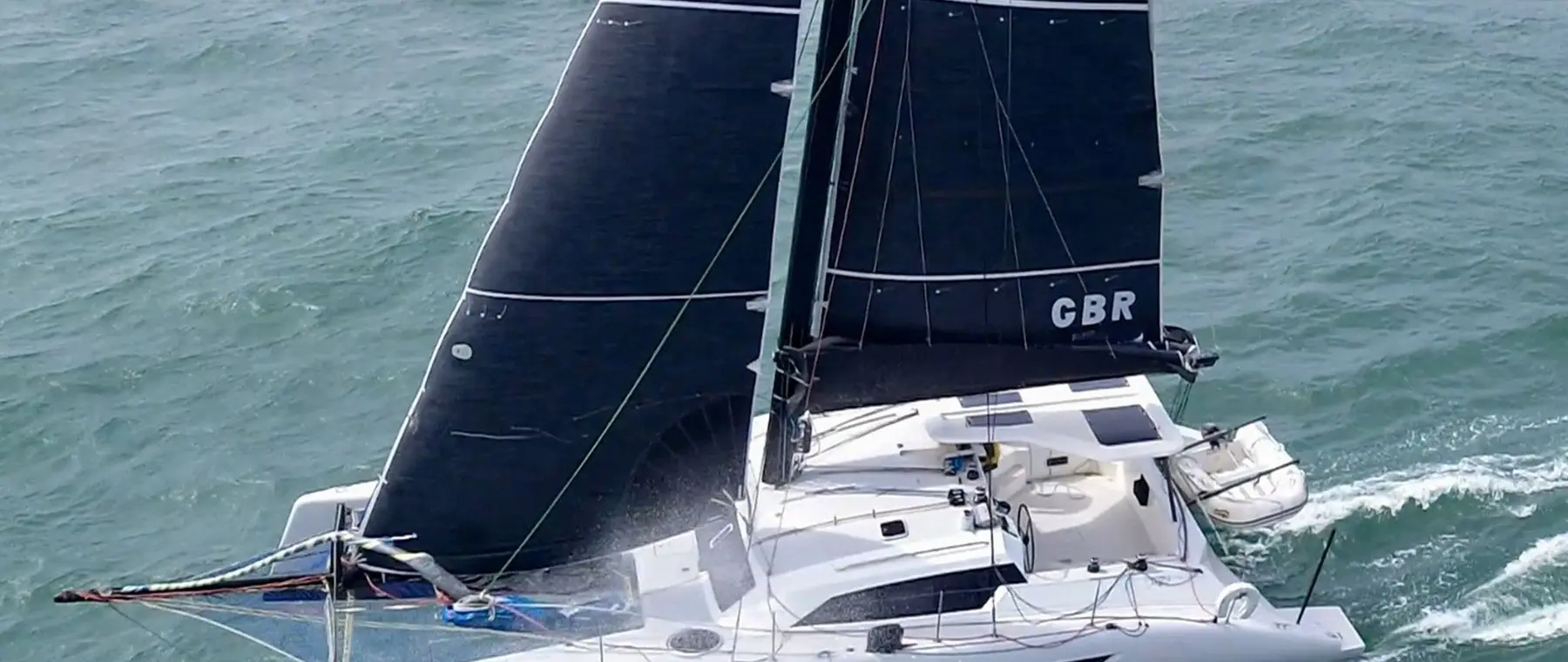
The championship order places Slinky Malinki first, Minor Swing second and DMS Vinyl third. The first two are Dazcat 1295 catamarans, while DMS Vinyl is the newer Dazcat 1495. These are cruiser-racers rather than purpose-built day-racing platforms, an important distinction for owners who want performance without abandoning the accommodation and practical systems needed for longer passages.
Slinky Malinki converts consistency into the title
Skipper Peter Coote and Slinky Malinki secured the overall championship after a season in which the catamaran stayed at or near the head of the rankings. Among the reported highlights were Multihull Line Honours and a MOCRA class win in the Cervantes Trophy Race. The combination of an outright line-honours result and a class victory is significant: it reflects both pace across the water and performance under the relevant handicap system.
An offshore points title is not necessarily won by the boat that produces the fastest isolated passage. Conditions change from race to race, and the scoring rewards repeatable performance. The reported campaign illustrates why the pairing of a boat's design, careful preparation and crew decisions matters. The announcement does not supply a breakdown of every race score, so the overall result should be read as the officially reported classification rather than a claim about victory in every start.
Minor Swing takes second after a string of class wins
Runner-up Minor Swing, owned and skippered by Didier Bouillard, produced a series of class victories in high-profile offshore fixtures. British Marine lists wins in the Myth of Malham, Cowes–Dinard–St Malo and Cherbourg races. These events do not share a single course shape or weather pattern, which makes the record noteworthy for an owner-operated cruiser-racer competing over a substantial season.
The second Dazcat 1295's presence alongside the winning boat also suggests that success was not confined to one particular hull or crew. Two individual teams achieved leading results in separate events. That said, it would be an overstatement to read the standings as a controlled comparison of models: racing outcomes involve sailing skill, routing, maintenance and handicap factors. For prospective owners, the more useful takeaway is that the platform has been demonstrated in repeated offshore competition.
DMS Vinyl's debut season ends early but still yields third
The Dazcat 1495 DMS Vinyl completed the podium during its debut season, despite a campaign cut short after collision damage in August. Before that setback, the catamaran claimed Multihull Line Honours and the MOCRA corrected-time victory in the Morgan Cup. Its ability to remain third in the final ranking without competing in the remaining races adds another dimension to the builder's season.
The result should not obscure the practical reality that offshore competition exposes boats to incidents and changing availability. The announcement does not specify the collision circumstances or repair timetable, and it would be wrong to infer more. What can be said is that a new 1495 joined the two established 1295s at the top of the class table, showing that Dazcat's larger cruiser-racing concept was competitive in at least the reported events.
Built at Cornwall's Multihull Centre
All three catamarans were designed and handcrafted at the Multihull Centre in Millbrook, Cornwall. Dazcat founder and designer Darren Newton described the podium sweep as an endorsement of the yard's team and approach to performance cruising. The builder positions its boats as genuine offshore cruising designs capable of carrying the comforts and safety features owners expect, not merely stripped-back race hulls.
That positioning is relevant in the 12-to-24-metre yacht segment, where a multihull's appeal often lies in its ability to combine useful accommodation with lively passage-making. The model numbers alone are not a substitute for measured specifications, and this report makes no unverified claims about accommodation capacity, displacement, price or maximum speed. The result is principally a test of the yard's boats in a recognised offshore race environment.
What the sweep means beyond the trophy cabinet
For British specialist boatbuilding, placing three Cornwall-built catamarans at the top of two recognised series is a useful visibility moment. It provides a competitive reference that the yard can point to when discussing design choices with offshore-minded buyers. There is no evidence in the announcement of new orders attributable to the results, so commercial implications remain possible rather than established.
Owners considering a fast cruising catamaran should still assess how a boat performs under the loads and living conditions of their intended programme, not only on race results. Maintenance access, storage, bridge-deck arrangements, docking and long-distance systems remain decisive. The 2026 MOCRA tables nevertheless give Dazcat an unusually strong real-world case study: three differently campaigned boats from one yard, all occupying the final podium. The announcement also offers a reminder that domestic specialist yards can be visible internationally through results rather than scale. Whether the next season produces the same order is impossible to predict, but the documented 2026 sweep is a concrete benchmark that prospective buyers and racing teams can revisit.