Approval changes the scale of possible projects
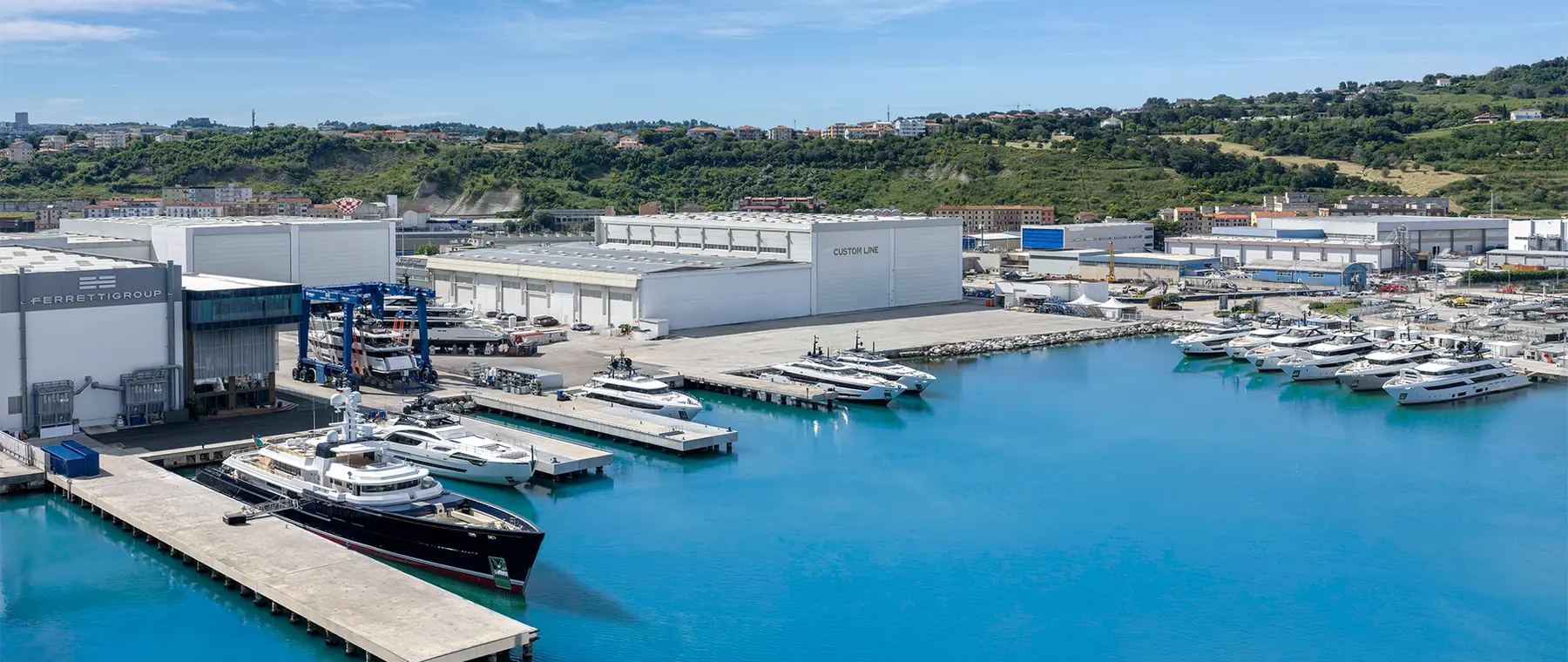
Ferretti Group has obtained approval for an industrial expansion at its Ancona Superyacht Yard that will allow vessels of up to 100 metres to be built there. The group announced the decision on 26 October 2026, describing it as the first single authorisation issued under the Special Economic Zone framework in the Port of Ancona. Its existing maximum construction capacity is 90 metres, making this an extension of physical capability rather than an announcement that a particular 100-metre yacht has already been ordered.
The company says the authorisation process took 54 days and that the construction works should require approximately six months. Those figures represent management’s stated timeline, not a guarantee of a completion date. The project affects an existing production facility within the yard, which is strategically important because expanding a functioning superyacht site can be very different from planning an entirely new industrial waterfront.
In the large-yacht business, ten additional metres may seem modest beside the scale of the vessels involved. In practice, length changes the complexity of structures, installations, onboard systems and project logistics. A yard able to handle larger hulls can compete for a different range of custom commissions, provided that its engineering resources, launch arrangements and specialist supplier network grow in parallel.
Industrial and regional significance
Ferretti describes the Ancona complex as extending across nearly 80,000 square metres. The yard is a major centre for the group’s large-yacht activities and is supported by an established network of Italian shipbuilding contractors. The newly approved works are expected to broaden the facility’s capability within that same industrial setting rather than relocate the group’s specialised production elsewhere.
The manufacturer estimates an initial economic impact of approximately €30 million for the local area and associated industrial ecosystem. That is a company estimate, and its ultimate realisation will depend on the construction programme and related work. Even so, the intended investment illustrates why regional ports view high-value yacht manufacturing as both an industrial employer and a purchaser of specialised local services.
A custom yacht requires far more than a hull mould or steel assembly hall. Outfitters, engineering designers, electricians, mechanical specialists, interior craftspeople and classification advisers all contribute to delivery. A bigger construction envelope may generate new orders for those businesses, although no precise number of future projects or jobs has been confirmed as a direct consequence of this approval.
What owners and designers can infer
For prospective owners, the main implication is that the Ferretti portfolio could in future accommodate projects at a scale beyond the yard’s previous 90-metre limit. It does not establish specifications for a new model, a delivery slot or a sale price. Those details will depend on the actual contract, the chosen brand and the engineering brief agreed between owner and yard.
For designers and naval architects, a bigger physical building limit can create room for more ambitious accommodation, service spaces and leisure facilities. Yet every increase in size brings trade-offs in draft, operational expense, crewing and access to smaller harbours. A future 100-metre project would need to be judged on its total owner proposition, not its length alone.
The decision also places increased importance on the commissioning and testing infrastructure around Ancona. Large yachts need controlled installation, systems integration, trials and regulatory compliance before delivery. These activities can become bottlenecks if yard capacity grows faster than supporting services, so the execution of the six-month works will be worth following.
A capacity announcement, not a launch
The 26 October announcement is significant precisely because it concerns the industrial foundations for future yachts. Ferretti has not claimed to have launched or delivered a 100-metre vessel as a result. Editors and buyers should distinguish construction capability from an orderbook commitment, particularly at a time when new-build time slots and specialist labour affect the global large-yacht market.
The group credits cooperation with local, regional and national authorities for the relatively quick approval. The process provides a useful example of how port development and manufacturing investment intersect in Italy, where waterfront land is limited and new construction facilities often require multiple administrative decisions.
If completed on the stated timetable, the Ancona extension will give Ferretti additional flexibility to pursue larger custom projects. The more meaningful milestones to watch are the building works themselves, the first contracted yacht that uses the expanded envelope, and the successful completion of a vessel at the new scale.
Source: the official Ferretti Group announcement. Photography: Ferretti Group — official Ancona yard photography.