A paired approach to information below the waterline
AIRMAR has introduced TriSonic 2, described in its METSTRADE product listing as a dual-sensor system intended to measure depth, speed through water, water temperature and vessel attitude. Released on 15 October 2026 according to the listing, the arrangement connects port and starboard transducers through firmware that works with the pair as a coordinated system. For a sailing yacht or catamaran in the 12–23.99 metre category, the potential value is not simply adding another screen number.
Traditional instrumentation can become less representative as a hull heels and a sensor changes its orientation or immersion. A measurement taken under one side of a monohull does not always describe what is happening directly under the other side. AIRMAR's proposed response is to consider input from both locations. Its claims should be evaluated against the actual hull and installation; the product announcement is not a substitute for a detailed mounting guide or an independent trial.
What is confirmed about TriSonic 2
The official exhibitor description says TriSonic 2 measures ultrasonic speed and depth without a moving paddlewheel, alongside water temperature, heel and trim. It uses patented firmware to combine information and provide optimised data to an NMEA 2000 network. The emphasis on through-water speed is important: that is not the same measurement as speed over ground supplied by GPS, particularly in places with substantial tidal flow.
According to AIRMAR, the system selects the best-positioned sensor according to the vessel's heel and, on wide-hulled catamarans, can use both transducers simultaneously for readings below each hull. The announcement does not identify every compatible display, installation arrangement or software version. Owners should ask their electronics specialist to confirm the precise data messages, power requirements, and supported combinations before budgeting for an upgrade.
The case for two transducers on a sailing yacht
On a heeled monohull, a sensor's angle to the seabed and its position relative to disturbed flow can change. One transducer may provide a better representation under a given point of sail than the other. The published description suggests the system makes use of that difference rather than treating one permanent location as the only source of truth. Whether that improves a particular yacht's recorded measurements depends on hull shape and fitment.
A useful practical question is what happens through a tack, when the submerged geometry changes rapidly and the yacht briefly passes through upright. Data may be filtered or selected differently during those transitions. Prospective purchasers should seek a demonstration of the handover and understand any latency or displayed indication of sensor selection. The benefits need to be assessed at the speeds and angles of heel the boat actually experiences.
Why catamarans bring an additional reason
Catamarans can place hulls a considerable distance apart, so a depth reading beneath one hull cannot always be assumed to match the other near an uneven seabed. AIRMAR says TriSonic 2 can take simultaneous depth readings beneath both hulls on wide multihulls. That is an intuitive reason to examine the system if a 15-to-20-metre cruising catamaran regularly approaches shallow anchorages or navigates between marked channels.
Even so, simultaneous readings do not map every obstruction, and the manufacturer has not claimed they eliminate the need for sound seamanship. The skipper still needs up-to-date charts, prudent speed and awareness of sounder limitations. A sensor reports within its physical detection geometry; it does not certify an entire corridor ahead as safe. Do not treat a clever dual-sensor architecture as a replacement for lookout, pilotage or conservative under-keel clearance.
How ultrasonic speed differs from a paddlewheel
Many conventional speed-through-water instruments have used a small rotating paddlewheel. That moving element can become fouled, wear or need cleaning, and it measures flow at its local position. An ultrasonic design without a paddlewheel removes one moving part from the measurement mechanism, although it does not eliminate the need to keep the sensing surfaces clean or inspect an installation below the waterline.
Owners comparing the technologies should ask about calibration, the effect of bubbles and turbulence, and whether the sensor's mounting position will be exposed to disturbed flow at the intended speed. Speed through water can support performance analysis and sailing trim, but results only become meaningful when the sensor is correctly configured and compared with other observations. The brochure's use of the word 'accurate' is a product claim whose practical value requires installation-specific confirmation.
NMEA 2000 integration needs an actual plan
AIRMAR describes TriSonic 2 as a system that sends its optimised information to an NMEA 2000 network. That is a useful starting point for yachts that already distribute instrument data through a shared backbone. It is not a guarantee that every installed multifunction display will show all the available measurements in the desired format, or that an existing network has enough power and capacity for a new device.
A reputable installer should identify terminators, available drop connections, network power, software versions, configured data sources and possible conflicts with current depth or speed transmitters. Some helms contain several devices capable of reporting overlapping data. Unless source selection is managed, an apparent upgrade can leave the skipper looking at inconsistent numbers on different displays. Agree which devices will be authoritative before taking the yacht back to sea.
The through-hull installation is the critical investment
Any proposal involving more than one underwater sensor demands careful planning. Cutting or adapting hull penetrations, selecting positions and preserving access for maintenance are structural and safety questions rather than cosmetic ones. In a monohull, a second location may be constrained by frames, tanks and engine spaces. In a catamaran, each hull may offer different access for cable runs and service.
Obtain the manufacturer's actual installation drawings and the builder's guidance for the hull laminate or structural material. Confirm haul-out arrangements, seacock or housing requirements, fairing considerations and what will happen if a sensor needs replacement. A professional should also document the location for future inspection. The cost of doing this work correctly can exceed the cost of a dashboard component, so it belongs in the initial quotation.
Better data is not the same as lower risk
Electronic instruments support decisions but cannot make them on behalf of the skipper. The value of an improved depth picture is highest when the operator understands precisely where it is measured and how it behaves under heel. On a sloping seabed or in a confined harbour, one isolated number should never override a planned route or sound judgement about under-keel margin. Redundancy in sensors may be helpful, but it is not immunity to power, wiring or software failures.
During commissioning, compare the system's readings across calm water, known depth ranges and both tacks where safe. Record settings and verify consistency with the yacht's other available sensors. If the readings disagree, investigate the reason before treating the new instrument as authoritative. This pragmatic approach makes a manufacturer's advanced measurement concept useful aboard an actual boat rather than merely impressive at an exhibition.
The owner questions that matter most
Ask whether TriSonic 2 is intended for the yacht's hull material and layout, which paired transducers are supplied, what the recommended separation and orientation should be, and how the system reports the two depth measurements on a catamaran. Confirm the software and display compatibility list. Seek guidance for calibration of speed through water and for maintaining temperature and attitude readings over the vessel's normal range of motion.
Owners of 12–23.99 metre cruisers may have crews with mixed levels of familiarity with electronics. The finished installation should therefore present meaningful information simply, with labels and alarms configured correctly. It is worth spending a commissioning day explaining to crew what the numbers mean, where they originate and which limitations remain. A system that few aboard understand will add complexity without delivering its full potential.
A product launch worth testing, not overclaiming
The METSTRADE listing confirms the October release, dual transducer arrangement, measurement categories and NMEA 2000 connection. Those facts make TriSonic 2 a relevant development for a sailing- and multihull-focused technology column. What remains to be established independently is the degree of improvement aboard varied hull forms, the suitability of a particular retrofit and how the system performs after prolonged service.
For Luxury Yacht Guide readers, the interesting possibility is better confidence in instrument information as the boat heels or as two multihull waterlines encounter different depths. The right next step is not to assume that two sensors automatically make every navigation task safe. It is to obtain the manufacturer's installation specification, a thoughtful electronics design and measured sea-trial results for the yacht that will carry the system.
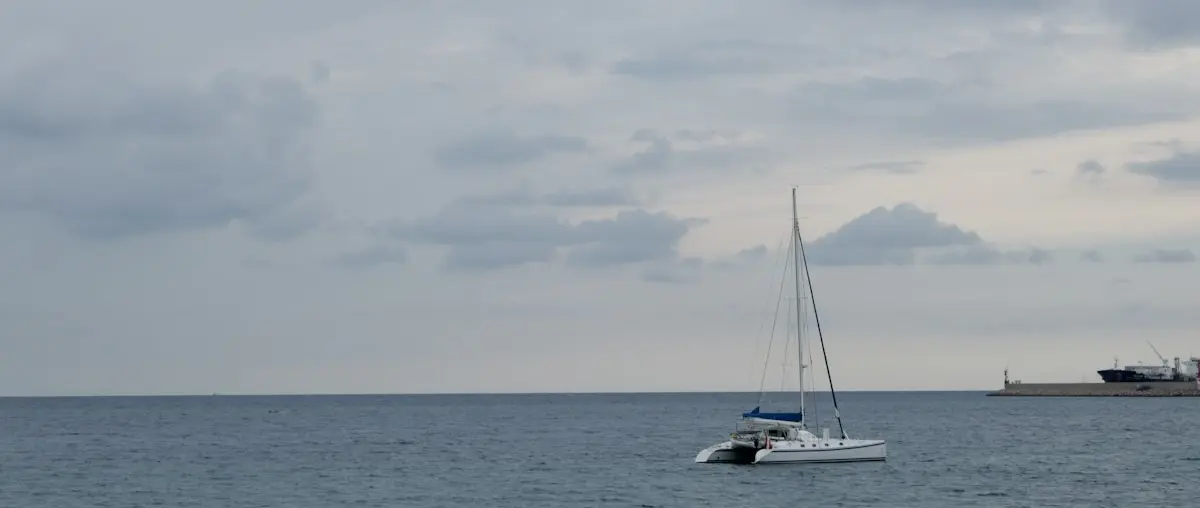
Image credit: Catamaran underway, photographed by Susana Bartolome. Original photograph, used under the Unsplash License. The lead photograph is illustrative and does not depict an unverified product or berth.