A software-and-control announcement rather than another motor
French electric-propulsion specialist BlueNav has announced BlueNav Control, a new route to its assisted-navigation functions for boats already equipped with electric propulsion supplied by other manufacturers. The announcement, published through the METSTRADE exhibitor news service on 3 September 2026, marks a change of emphasis. BlueNav has historically associated its navigation features with its own propulsion products; the new control solution is intended to work with compatible existing third-party systems.
For owners of 12–23.99 metre luxury yachts, the distinction matters. A propulsion replacement is a substantial engineering decision, whereas adding control capabilities to an installed electric arrangement may present a different retrofit conversation. That does not mean installation will always be simple or inexpensive. It does mean the product proposition is not confined to an owner purchasing BlueNav-branded motors, subject to actual electrical, software and propulsion compatibility.
The components the company describes
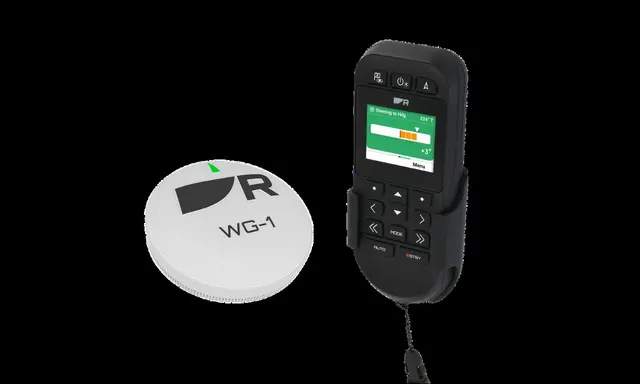
The official announcement identifies a dedicated control unit and BlueNav Precision+ GPS as foundations of the system, with a joystick available as an option. The company's Smart Navigation Pack provides a menu of assisted functions rather than a single operating mode. In this context, the control unit matters because motion assistance requires dependable communication among position sensing, the operator's commands and the propulsion equipment already fitted to the boat.
BlueNav lists heading hold, course hold, waypoint tracking and cruise control among its autopilot capabilities. It also lists 360-degree docking, virtual anchor and drift lock. These are names used in the manufacturer's product description; readers should request a detailed operating manual to establish the limits, alarms, takeover behaviour and required conditions of each function. An advertised function list is not equivalent to approval for unattended vessel operation.
Position holding without immediately dropping an anchor
BlueNav presents its Virtual Anchor feature as a way to maintain position using propulsion rather than deploying the physical anchor for a short stop. It describes applications such as pausing in a cove or remaining in a place where use of ground tackle is restricted. The attraction for an electric-powered yacht is easy to understand: the crew may prefer to hold station briefly while preparing a berth approach, waiting for a tender or assessing conditions.
The operational boundary is equally important. A virtual position-holding system consumes electrical energy, is affected by wind and current, and may be limited by available thrust and propulsive geometry. Its use should not be assumed to grant permission to remain in a no-stopping area. Local rules, traffic, environmental designations and anchoring restrictions still apply. The skipper must remain ready to take over and to move the vessel if the conditions or battery reserves require it.
Drift lock, docking and low-speed precision
The announcement differentiates position-holding tools from its 360-degree docking function. For a leisure yacht making regular marina calls, controlled low-speed manoeuvres may be where extra assistance is most visible to guests and crew. A crowded harbour demands close attention to crosswind, surge, fender placement and people on adjacent pontoons. A joystick or computer-assisted mode might reduce control workload, but it cannot change the available thrust or cancel a strong tidal stream.
Before treating docking assistance as a purchase argument, an owner should ask whether the equipment can command the precise mix of propellers, thrusters and drive units on that particular yacht. Some boats have more degrees of motion control than others. The presence of an optional joystick does not imply true sideways translation for every propulsion installation. The yard should demonstrate the actual manoeuvring modes available on the proposed hull and installation.
Autopilot functions still demand a watchkeeper
Heading hold and course hold are familiar concepts to operators of modern leisure yachts, but labels can disguise important differences. Holding a compass heading is not the same as following a charted safe route, and tracking a waypoint is not a guarantee of obstacle avoidance. Wind, tide, position-sensor quality and physical steering authority all determine the path a boat may take. An automatic control mode cannot be treated as a substitute for lookout or independent navigation judgment.
BlueNav also lists cruise control among its functions. Readers should check exactly what is controlled in that mode: speed through water, power setting or some other input, and under what circumstances. Regardless of terminology, the skipper must retain responsibility for collision avoidance and safe speed. For a 12–23.99 metre owner-operated yacht with occasional guests aboard, clear handover procedures are as important as an appealing helm demonstration.
Compatibility is the first engineering gate
The central qualifier in BlueNav's announcement is compatibility with third-party electric propulsion systems. It does not claim that any arbitrary electric motor, inverter or mixed diesel-electric arrangement will work. Different drive manufacturers use different protocols, control methods, safety interlocks and fault reporting. A responsible integrator must understand whether the existing system can receive and safely act on the instructions generated by BlueNav Control.
Owners contemplating a retrofit should assemble a simple technical dossier: motor and controller manufacturers, firmware, battery specification, existing GPS and helm controls, emergency-stop arrangement, relevant wiring diagrams and service history. This information will help BlueNav or a competent partner decide whether a documented integration exists or bespoke work would be required. It is better to establish a fundamental incompatibility early than to discover it after a wheelhouse console has been modified.
Energy use and the meaning of an electric anchor
Because position-holding features use propulsion, the boat's available stored energy and recharge strategy affect their usefulness. A motor working continuously to maintain a GPS-defined point may draw significant power when a crosswind or current persists, although consumption will vary widely by hull, installed power and circumstances. BlueNav's general announcement does not provide an all-vessel energy figure for virtual anchoring, and one should not be invented for the sake of a simple sales comparison.
An owner should ask for an energy budget under realistic conditions, including how long the system can maintain position while retaining an adequate reserve for the return passage and final marina manoeuvres. The discussion should cover low-state-of-charge alerts and what the vessel does after a loss of position signal or control communication. For an electric cruiser, this may determine whether the feature is a routine tool or one reserved for short, carefully managed stops.
Price needs context and a written scope
The September announcement lists BlueNav Control as available from €13,229 excluding VAT. That is a published starting figure from the supplier's announcement at the time, not a universal installed price. A complete owner quotation can involve compatibility assessment, installation labour, the optional joystick, cabling, mounting, commissioning and tax treatment. Costs may also vary by region and by the condition of an existing installation.
More important than the headline number is the scope of responsibility. Who confirms that the drive interface is supported? Who sets up the positioning sensor? Who supplies training, software updates and warranty support? A well-written proposal should describe those tasks and the limitations of the enabled functions. Owners should insist on acceptance testing at the dock and during a carefully controlled sea trial before considering the installation complete.
How this fits the luxury-cruising segment
Electric propulsion is not a single uniform market, and the use case differs between a dayboat, a long-range displacement cruiser and a yacht with hybrid machinery. BlueNav Control may be interesting to a vessel already designed around electric thrust at manoeuvring speeds. It is less helpful to assume that every traditionally powered yacht can acquire the advertised functions simply by adding a computer box at the helm.
At 12–23.99 metres, owners may handle their own lines and docking with only a small crew. Predictable assistance could ease a tiring return to harbour or allow more controlled station keeping during a brief pause. Nevertheless, those benefits depend on a specific configuration and competent commissioning. The relevant editorial question is not whether the system sounds sophisticated, but whether a supplier can demonstrate safe and repeatable behaviour on the individual boat.
What the announcement confirms
BlueNav's official statement supports the new product name, its intended extension beyond BlueNav-branded motors, the control-unit and Precision+ GPS architecture, the optional joystick and the named assistance modes. Those are the reportable facts today. The public statement does not publish a complete third-party compatibility matrix or prove universal fuel or battery savings. This article therefore makes no such claim and does not portray the product as an autonomous skipper.
The next useful evidence will be documented installations aboard compatible privately operated yachts, detailed integration guidance and independent reports of how the different functions perform in weather and traffic. Until those are available, BlueNav Control is a notable development in the modularisation of electric-boat assistance. Potential purchasers should start with their installed propulsion identifiers, a written statement of compatibility and a clear plan for testing every automatic mode.
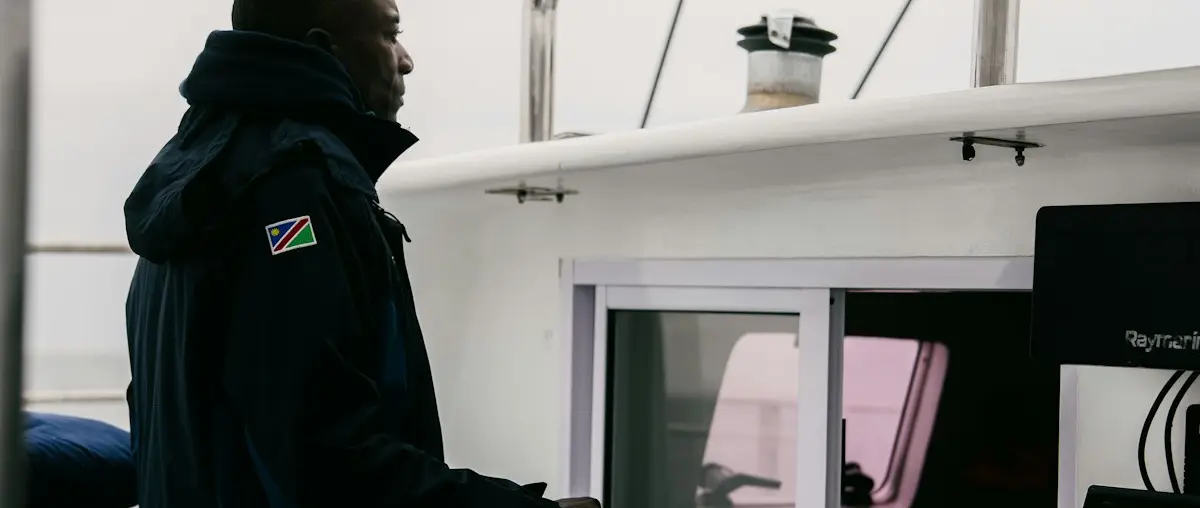
Image credit: Boat helmsman, photographed by NIR HIMI. Original photograph, used under the Unsplash License. The lead photograph is illustrative and does not depict an unverified product or berth.