A familiar wellness machine enters an unfamiliar design conversation
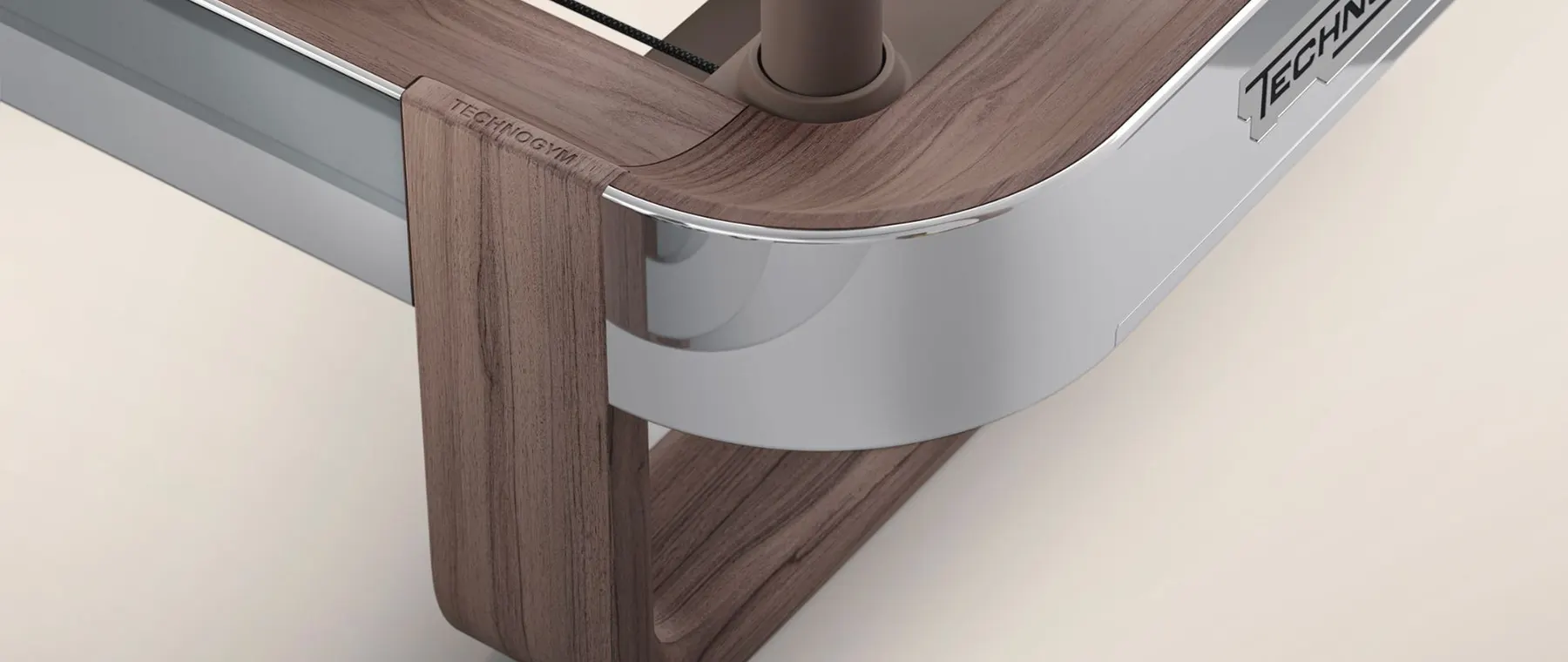
Design Miami is preparing to place an unusually practical object inside its world of collectible furniture and artistic commissions. The fair's official 2026 partner programme says Technogym has created a one-of-a-kind interpretation of Technogym Reform, its Pilates reformer, for an immersive experience curated by designer Nina Magon. It is scheduled for the Miami event from 1 to 6 December, so the presentation remains an advance announcement rather than an exhibition that has already been seen by visitors. The distinction matters because a design preview can reveal a commission's intention without establishing how the final installation will perform in the gallery. The premise is nevertheless striking: a device built around measured human movement is being invited to stand beside objects primarily discussed through material, authorship, rarity and visual expression.
Why the reformer is a serious design object
A reformer normally earns its place in a room through function. It uses a moving carriage, spring resistance and a system of supports to help an instructor organise controlled sequences of exercise. Its proportions, adjustment points and surfaces affect the rhythm of movement as much as its appearance. Presenting the object as collectible design does not erase those practical responsibilities; it makes them unusually visible. The same joinery, material choices and proportions that determine whether something looks resolved also influence how comfortably a person approaches it. That is a more demanding proposition than decorating an existing machine, because the experience of exercise is inseparable from the object's architecture. The Miami commission invites discussion of the equipment as both a working system and a designed presence.
An established product behind the commission
Technogym Reform was not invented for the Miami fair. In its official material, the Italian wellness company describes a product developed in collaboration with Pilates instructors and tested at its headquarters. It also reports that Reform received an iF Design Award in 2026 after competing within an international programme that attracted roughly 11,000 entries. The regular product has been presented in Sand Stone and Pearl Grey finishes, with attention to the controlled action of its springs, practical adjustments and furniture-like appearance. Those established characteristics provide useful context, but they must not be confused with specifications for the unique Miami piece. The organiser has described the latter as a limited-edition collectible presentation; it has not, in the information reviewed here, supplied full dimensions, prices or a detailed technical bill of materials.
Nina Magon's role and the importance of setting
The organiser identifies Nina Magon as curator of the immersive experience surrounding the special reformer. This is meaningful because the story concerns more than a single silhouette photographed against a neutral wall. In an installation, sightlines, lighting, texture and the route by which visitors encounter an object can change how its function is interpreted. A reformer might be read first as sculpture, then recognised as training equipment, and finally understood through the body that could use it. None of those possibilities should be mistaken for a confirmed description of an installation that has not opened. What can be said now is that an experienced interior-design perspective has been put at the centre of an encounter between an exercise apparatus and the language of collectible objects.
A shift from concealed equipment to visible interiors
In many luxury residences, fitness equipment is separated into a dedicated room and kept visually distinct from the main interior scheme. The Miami project raises the alternative question of whether such equipment could form part of the room's design identity. This is not simply a question of matching a colour palette. Large moving objects demand safe clearance, sensible circulation, access for maintenance and an understanding of the people using them. A carefully designed reformer can therefore challenge the idea that a wellness environment should look like a technical afterthought. The result may be a room in which equipment, storage, mirrors and surrounding furniture are developed together rather than purchased in isolation. That possibility is an editorial inference from the commission, not a feature promised by the manufacturer.
What makes a functional object collectible
Collectibility is often associated with scarcity, provenance, maker recognition and a persuasive account of why an object matters. The fair describes the Technogym commission as one of a kind, a relevant point in that conversation, yet rarity alone does not establish a secondary market or an investment case. A collector also has to ask what survives beyond the initial event: an authenticated object, documentation of its conception, evidence of materials and a plan for servicing any moving components. A reformer is not a static bronze or an untouchable cabinet. Its identity includes a working mechanism and a potential future user. That tension makes the object interesting, particularly when contemporary design increasingly crosses the former boundary between furnishings, technology and personal wellbeing.
The relevance of material honesty
Pilates depends on repetition and precise control, so surfaces are not merely decorative. Upholstery needs appropriate maintenance, moving elements require inspection, and tactile contact points must support repeated use. A luxury finish that looked beautiful but compromised these responsibilities would not represent a convincing design achievement. Technogym's broader design positioning emphasises equipment that can sit within premium interiors, but the exceptional Miami edition must be judged on information that the company eventually publishes, not on speculation about rare materials. The more convincing design approach is to let necessary structure remain legible: rails, carriage, frame, supports and the relationship between moving and stationary parts. An object gains character when its construction can be understood rather than disguised beneath a superficial styling exercise.
Implications for yachts and private sea-going wellness
There is a direct reason for Luxury Yacht Guide to follow this development. Owners of smaller luxury yachts often face hard trade-offs between gym equipment, guest accommodation, circulation and the varied uses of one interior space. On board, any moving training apparatus introduces additional questions about securing, vibration, sea conditions, electrical requirements where applicable and service access. A beautiful domestic reformer is not automatically suitable or approved for marine installation. Nevertheless, the concept of treating wellness equipment as intentional furniture could influence conversations among yacht designers, owners, equipment specialists and crew. Its value would lie in making those discussions more integrated, while leaving vessel-specific stability, structural fixing and operational safety to qualified professionals rather than design marketing alone.
The instructor remains central
Even in a visually ambitious environment, the equipment does not replace good instruction. Reformer Pilates involves choices about resistance, range of motion, progression and individual ability that should be guided by competent practitioners. An object can support an intuitive experience through accessible adjustments, clear geometry and well-considered contact points, but it does not determine a suitable programme for an individual. That distinction becomes particularly important in private hospitality settings, where a visiting guest may be unfamiliar with the apparatus. It is reasonable for an owner or manager to ask about training, supervision, maintenance procedures and manufacturer guidance before focusing on a unique finish. The most sophisticated interior preserves the conditions for safe, thoughtful use instead of presenting exercise as a decorative performance.
The wider luxury hospitality connection
Technogym already places its wellness proposition within premium hospitality, and its own 2026 reporting discusses the role of Reform in design-led hotel environments. The company's material also describes Reform entering the fitness offering of Explora III, establishing a concrete maritime connection without implying that the Miami special edition will be installed on a yacht. These are separate developments in the same broad movement: exercise spaces becoming an integral element of luxury travel rather than a peripheral amenity. The sea-going use of an ordinary product does not prove that every form of the equipment has the same installation requirements. It does show why designers of hospitality interiors are increasingly concerned with both the visitor's experience of movement and the atmosphere around the apparatus.
Questions collectors and designers should ask
Before anyone treats the commission as a product specification, several unknowns must remain explicit. The fair announcement does not provide an independently verified asking price, number of units for sale beyond the description of a unique piece, certification for marine installations, special-edition weight or maintenance schedule. Nor does an advance publicity image establish how the completed installation will feel in person. Practical due diligence would include the exact differences from production Reform, whether parts are compatible with standard service arrangements, who is responsible for aftercare and what documentation accompanies the object. These questions are especially relevant for an acquisition intended to be used rather than merely displayed. Thoughtful collecting is not reduced to admiration of an attractive photograph.
Design Miami's wider theme
The 2026 fair describes its curatorial theme as Unveiling, with an emphasis on revealing ideas, craftsmanship and the narratives embedded in designed objects. The Technogym commission fits that framework because a familiar device can be reconsidered from an unfamiliar angle. Revealing an object's design logic may be more instructive than hiding it inside an elaborate theatrical set. This distinction is also useful in assessing the relationship between the fair and commercial brands. A persuasive presentation has to offer something substantive about making, purpose or cultural imagination rather than simply placing a logo beside a rare finish. The published partner description gives the project a clear point of departure; the actual contribution must be assessed once the doors open.
An object that resists easy categorisation
A reformer occupies several categories at once: exercise equipment, engineered mechanism, interior furnishing and, in this instance, a limited collectible object. The attraction of the Miami story is not that one category has permanently replaced another. It is that the categories may be interrogated together. Collectors interested in functional design can think about how use becomes part of an object's significance, while wellness professionals can see more room for material quality and architectural integration. Designers of yachts and high-end homes may find an invitation to coordinate training requirements earlier in their projects. None of those possibilities depends on claiming a revolution before the installation has happened. The commission's relevance comes from the specific questions it places in public view.
What to watch when the fair opens
Design Miami is scheduled for 1–6 December 2026. A meaningful follow-up should examine the completed Nina Magon-curated setting, identify the exact unique features of the special Reform and distinguish artistic decisions from ordinary product attributes. It should also look for authoritative information on acquisition terms and functional suitability, rather than relying on promotional shorthand about exclusivity. The present report is based on the official Design Miami 2026 partner programme, Technogym's 2026 design-award information and its published marine wellness experience. The story is not that exercise has suddenly become art, but that designed movement deserves a place in a more demanding conversation about luxury objects.