A stone-led collectors' lounge in Miami Beach
TEYO is preparing a Collectors Lounge for Design Miami 2026 in collaboration with the international design studio Yabu Pushelberg. The fair's official partner programme describes a presentation combining a monumental marble kitchen, a two-tone travertine bar and the brand's first lighting fixture made from a rare alabaster. The exhibition forms part of the 1–6 December event and introduces the Miami-based stone specialist to a wider international collectible-design audience. Unlike a conventional product catalogue or a purely decorative sculpture display, the proposed lounge places architectural materials in the setting of everyday activities: preparing food, gathering around a bar and using light to define the atmosphere of a room. For owners who commission luxury residential or yacht interiors, this is a particularly relevant theme. Natural stone can bring strong character and lasting visual appeal, but its performance depends on weight, detailing, installation and the environment. The presentation should be described as planned, not as a completed fair installation on 26 November.
TEYO's approach to natural materials
TEYO describes itself as a design brand specialising in architectural elements and sculptural works made from natural stone. Its official website identifies kitchens, monolithic islands, baths, vanities, fireplaces, wall systems and collectible tables among the categories it develops. The company says it works with interior designers, architects, contractors, developers and private clients, offering design, engineering and installation services. That scope is significant because a stone interior is rarely a single item delivered without any connection to the building around it. A large kitchen island can affect the load on a floor, the location of services and circulation space. A wall system must be coordinated with structure and finishing details. Treating natural stone as a complete design material requires technical knowledge as well as a visual eye. The Miami programme offers an opportunity to examine how TEYO communicates that combination through an exhibition rather than a conventional domestic project.
The monumental marble kitchen
The announced marble kitchen is presented as a central component of the Collectors Lounge. The word monumental suggests a strong architectural presence, but the fair listing does not publish an exact weight, dimension or slab specification. Those must be verified before an editor describes a particular object as weighing several tonnes or requiring a named installation method. Marble can convey scale through continuous surfaces and the relationship between horizontal and vertical elements. The pattern of its veins may contribute as much to the final composition as the shape of the cabinets. A successful design needs to control these details without making the kitchen impractical. Work surfaces must have appropriate heights, clearances and access to utilities. Guests may initially admire the stone's appearance, while the actual owner will also need durable edges, workable storage and a surface suited to daily use. The challenge is to balance sculptural ambition with the routines of a functioning home.
Stone as structure and visual expression
Natural stone differs from a manufactured surface because its veining, colour and small variations are part of the material. Designers may use those irregularities as defining characteristics, arranging slabs to create a particular visual relationship. But a beautiful piece of stone must also be assessed for suitability. Thickness, internal features, support and the way it is cut can influence performance. A client should ask how fragile edges are protected, whether the material is vulnerable to particular cleaning products and how any visible joints will be handled. Some stones may require sealing or specialist care, depending on their properties and the intended use. The Miami exhibition's kitchen is intended to make a statement, but collectors should examine the construction logic beneath the dramatic surface. A successful stone interior feels resolved because its practical demands have been considered as carefully as the visual pattern. That distinction separates durable craftsmanship from temporary spectacle.
Two-tone travertine at the bar
The partner programme also identifies a two-tone travertine bar. Travertine is a stone associated with architecture and decorative surfaces, valued partly for its natural patterning and warm appearance. Combining two tones creates an opportunity to define different parts of a bar through material rather than additional ornament. A counter, base and surrounding elements may be visually related while remaining distinct. The official brief does not specify the exact colours or finishes of the fair installation, so any detailed description of those should await the completed presentation. Travertine can have pores and surface characteristics that require appropriate finishing and maintenance. An owner should understand how the specified material responds to liquids, cleaning agents and frequent contact. A bar intended for entertaining needs to withstand the practical realities of drinks, glasses and guests moving through a space. The design value lies in translating a natural material into an elegant, usable environment without denying its physical properties.
Alabaster and the first TEYO lighting piece
The introduction of an alabaster lighting fixture is another significant element. TEYO describes it as the brand's first lighting product, using a particularly rare form of the material. Alabaster can be attractive in lighting because some varieties are translucent, allowing illumination to reveal texture and colour variations. However, the precise optical performance depends on the selected stone and the fixture's construction. A designer must coordinate the light source with heat management, wiring, electrical safety and maintenance access. A beautiful stone shade is not automatically suitable for use with any lamp. The company has not published a complete independent test report or a retail specification for this particular exhibit. Buyers should therefore ask about electrical approvals, replacement parts and service requirements if the fixture becomes commercially available. For people interested in collectible lighting, the most compelling quality may be the interaction between a unique natural surface and a carefully controlled source of light.
Yabu Pushelberg's role in the collaboration
The involvement of Yabu Pushelberg brings experience in creating interior environments where materials and human behaviour interact. The studio is associated with hospitality and residential design, but the TEYO project should be evaluated as its own commission rather than a guaranteed extension of another hotel interior. A collectors' lounge asks visitors to spend time in a space, not simply look at furniture from the outside. That makes proportion, movement and the atmosphere of the room important. A bar encourages gathering, a kitchen introduces domestic associations and a light fixture changes the character of the environment. The collaboration can be successful if these elements reinforce one another rather than compete for attention. The official fair announcement identifies the studio as a collaborator but does not publish a complete breakdown of which person or firm designed every component. It would be inappropriate to invent individual authorship for details that have not been attributed.
Why a lounge is different from a showroom
A showroom may display many products intended for separate purchase. A collectors' lounge instead offers the possibility of experiencing how objects behave together in a coherent setting. The visitor can notice how stone surfaces relate to upholstered seating, lighting and circulation. Such a presentation can reveal qualities that a product photograph cannot, particularly when the materials have subtle texture. At the same time, a fair lounge is a temporary installation and may not face the same daily demands as a permanent residential kitchen. Collectors should not assume that every displayed object is available for immediate purchase or that the exhibition provides a complete technical specification. The right questions concern what is commissioned for the show, what can be adapted for a private project and which production or installation services are actually offered. A well-designed lounge can inspire a residential interior, but inspiration must be translated into a buildable plan by qualified specialists.
Custom work versus standard products
TEYO's website describes projects developed with architects, designers and private clients. This suggests an approach in which specifications can vary according to the space and materials selected. That flexibility may appeal to owners who want a distinctive kitchen, vanity or furniture element rather than a conventional catalogue item. But custom production also makes documentation more important. A client should establish the scope of design work, the approved stone selection and the procedure for changes before fabrication begins. The weight and shape of large components can determine whether they can physically enter a building. If access routes are narrow, the installation plan may need to be developed early. The final contract should clarify who is responsible for transport, lifting, site preparation and making good after installation. These practical questions are not secondary to design. They influence whether an ambitious commission can be delivered safely and maintained over time.
Natural stone and yacht interiors
For yacht owners, the strongest connection with TEYO's presentation is the use of stone as an architectural material. Contemporary yachts sometimes incorporate natural stone in bathrooms, galleys or carefully selected decorative features. However, a large monolithic kitchen designed for a building cannot simply be installed aboard a moving vessel. Weight, centre of gravity, vibration and the ability to secure each element become crucial. A yacht's naval architect and interior technical team must determine whether the structure can accommodate the material and whether lighter alternatives would be appropriate. Some thin stone veneers or engineered constructions may achieve a similar visual effect at lower weight, but their performance depends on the exact product and support system. The fair's proposed marble and travertine objects are not advertised as marine-certified equipment. Owners should therefore enjoy the material inspiration while recognising the need for separate professional assessment before any shipboard application.
Durability and the illusion of permanence
Stone is often described as permanent, yet its appearance can change with wear, staining, heat and exposure to unsuitable cleaning products. Different minerals and finishes respond differently. A polished marble surface may require care that is not necessary for some harder or less porous materials. The service expectations of a domestic kitchen also differ from those of a display object that is touched only occasionally. An informed client should ask for clear maintenance guidance, test samples where appropriate and realistic advice about which finishes are suitable for the intended use. The same attention applies to repair. A damaged edge may be possible to restore, but the result can depend on the material and the complexity of the piece. Designing for long-term enjoyment means understanding these limitations rather than expecting nature to produce a flawless, unchanging surface. The appeal of stone includes its individual character, which can remain beautiful even when its use is acknowledged.
Collectible stone furniture and provenance
A sculptural table or bar can be collected for its design authorship as well as its function. Buyers need to understand how many examples are produced, whether each uses different stone and how the work is documented. The same model made from different slabs may have distinct natural markings, but that does not necessarily mean every example is a unique edition unless the maker says so. The TEYO announcement does not provide complete edition counts or pricing for the Miami objects. Those details should be requested directly from the company if acquisition is being considered. Provenance can include the designer, project date, material source, fabrication records and any signed documentation. A collector also needs to consider the realities of storage and transport. A large stone object may require specialist movers and suitable floor loading. It can be a meaningful addition to an interior, but only when the owner understands both its cultural value and physical demands.
Miami as a laboratory for interior ideas
Design Miami brings together people who collect furniture, work in architecture and commission unusual interiors. TEYO's planned lounge enters a setting where materials and ideas are examined in relation to many other creative approaches. A visitor might compare its monumental stone surfaces with delicate glass installations or metal furniture presented elsewhere at the fair. That contrast can reveal how different materials create their own visual language. The fair is scheduled for 1–6 December 2026, so there is no verified public response or sales result yet. Anyone planning to visit should confirm the final programme and where the lounge can be accessed. A temporary installation can be particularly useful when it encourages thoughtful conversations between designers, craftspeople and potential clients. Visitors should take the opportunity to ask about technical issues rather than focus exclusively on the surface appearance of the works.
What to look for at the completed exhibition
A useful inspection of the TEYO display would begin with the relationship between its three named features: the marble kitchen, travertine bar and alabaster lighting. Do they share a material logic without becoming repetitive? Is the stone selection visually coherent? Can visitors move around the space comfortably? The answers require seeing the finished installation rather than relying solely on an advance rendering or photograph. A prospective client might also want to understand the difference between the pieces made specifically for Design Miami and TEYO's wider existing range. The company's site shows examples of kitchens, bathrooms and furniture, but those should not be mislabelled as the exact objects that will appear at the December event. This distinction matters to responsible reporting. The official partner programme establishes the intent; final dimensions, finishes and service arrangements should be verified when the makers release them. The work deserves examination on those terms.
Stone, emotion and contemporary luxury
The collaboration makes a proposition about modern luxury: important interior spaces can derive their identity from the nature of the material rather than an excess of applied decoration. A large kitchen island, a travertine bar and a glowing alabaster object can create a sense of presence through texture, colour and scale. Yet those qualities are most convincing when the objects also perform their intended functions. A homeowner may value the pleasure of a beautiful stone surface every day, while a yacht owner might translate the idea into a lighter, engineered feature. The fair offers inspiration but not a universal technical solution. The long-term success of TEYO's approach will depend on the craftsmanship, project management and support that accompany individual commissions. Collectible design should reward close attention to both the creative idea and the practical skill required to realise it. Neither aspect is sufficient on its own.
A clear preview of a new presentation
The confirmed news is TEYO's collaboration with Yabu Pushelberg for a Collectors Lounge at Design Miami 2026 and the announced components: monumental marble kitchen, two-tone travertine bar and rare-alabaster lighting fixture. The brand describes itself as a stone-focused interiors specialist working with architects and private clients. No official announcement yet establishes the complete retail pricing, precise object weights or commercial delivery dates for these specific fair pieces. As of 26 November, the fair has not opened, so the article is a preview, not a review of a finished exhibition. For Luxury Yacht Guide's readers interested in architectural materials and bespoke interiors, it is a compelling project to follow because it brings material craft and contemporary hospitality design together in a setting where both can be examined closely.
Original maker and organiser sources, with photographic credit
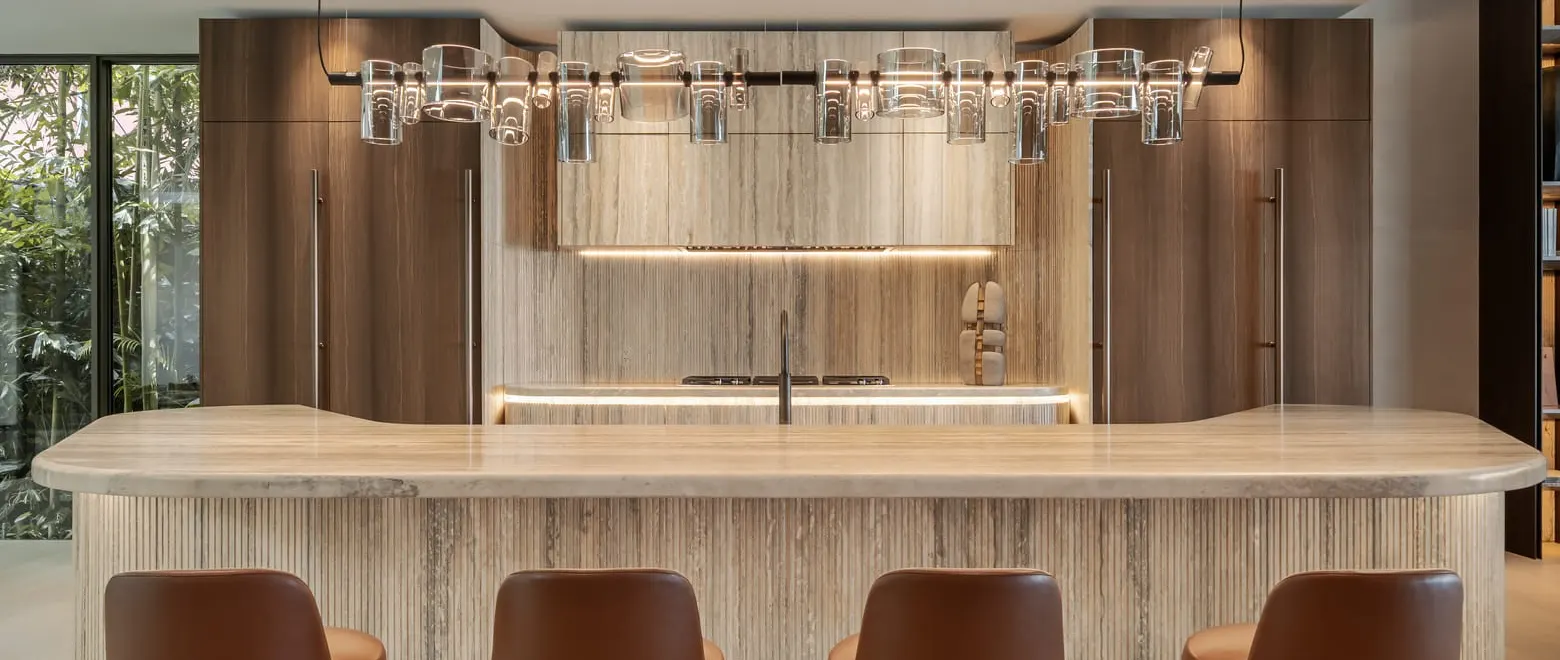
The three features of the Collectors Lounge and Yabu Pushelberg collaboration are confirmed on the Design Miami 2026 official partner programme. TEYO's official website documents its material and interior-design practice. The lead image is the maker's original 2026 TEYO natural-stone interior photograph, used as contextual illustration of its existing work and NOT represented as a documentary photograph of the unfinished December fair lounge. Credit: TEYO; all additional image, design and photographer rights remain with their holders.