A presentation built around the origin of glass
Italian glassmaker VENINI is preparing a Design Miami 2026 installation titled *A Grain of Light*, a study of the relationship between material, artistic expression and the origins of glass. The official fair programme describes two VENINI glass works presented within an installation inspired by sand, the natural material from which silica is obtained. Scheduled for the 1–6 December edition of the fair, the presentation offers a focused approach to collectible design rather than a broad survey of every product in the company's catalogue. Its central idea is simple but rich: extraordinary objects begin with relatively ordinary matter. The transformation from mineral ingredients into luminous, shaped glass depends on heat, technical knowledge and the judgement of skilled makers. VENINI has a long history on Murano, an island associated with glassmaking in the Venetian lagoon, and the installation places that tradition within an international contemporary-design setting. For collectors and yacht owners who appreciate craftsmanship in interiors, the subject is relevant even though the announced works are not presented as marine-certified equipment.
From sand to silica and glass
The fair's description begins with the relationship between sand and silica. Silica is a fundamental ingredient in many glass compositions, but the process of making decorative glass involves more than simply heating a handful of beach sand. Manufacturers select raw materials and control the composition, temperature and working conditions to achieve particular qualities. Different colours and optical effects can depend on additional components and precise handling. VENINI's choice of sand as the conceptual origin is therefore both literal and metaphorical. It draws attention to a material that is familiar in a coastal environment yet capable of undergoing an extraordinary transformation. Visitors might recognise this as a reminder that high-value design objects often depend on basic substances whose meaning changes through skilled work. The exact chemical recipe of the two objects has not been published in the short fair description and should not be invented. The confirmed subject is the dialogue between raw origin, making and finished form.
Murano as a living craft tradition
VENINI's history is rooted in Murano, where glassmaking has been practised and developed across generations. The company's identity is associated with the meeting of specialist furnace work and collaborations with designers and artists. That heritage matters because techniques are maintained through practical experience, not merely through archived drawings. A maker must understand how hot glass responds to movement, how quickly it cools and how its shape changes under different working conditions. Industrial precision can assist, but the distinctive character of some decorative works comes from the judgement of craftspeople. An exhibition that foregrounds the material's origins invites visitors to think about those less visible processes. The public sees a finished surface, while much of the value lies in decisions made during heating, gathering, shaping and cooling. The fair presentation should be appreciated as part of this broader history, without assuming that every displayed work uses the same technique or was produced by a single artisan.
Two works, not an entire retrospective
Design Miami identifies two glass works as the focus of *A Grain of Light*. This is a useful scale for a concentrated presentation: visitors may have time to consider the differences between objects and their relationship with the installation. However, the organiser's short announcement does not provide a complete catalogue of dimensions, editions, prices or techniques for each piece. It would be inaccurate to supply those details without a primary source. The exhibition should not be described as a survey of all VENINI production or a major museum retrospective. It is a specific partner installation within a wider collectible-design fair. This distinction helps visitors approach it with appropriate expectations. They can look for how two works communicate with one another and how the surrounding display reinforces the material story. The absence of a full public specification before opening means that collectors should seek documented details from the exhibitor if they are interested in acquisition.
Glass and light are inseparable
Decorative glass changes as the light around it changes. Reflection, transmission, colour and surface texture can make an object appear different under daylight, warm interior lighting or a focused gallery fixture. This is especially important when the concept itself refers to light. Visitors should observe how the installation uses illumination without assuming that the objects contain electrical lighting unless the manufacturer specifically confirms it. A sculptural glass vessel and a functional lamp have different engineering and safety requirements. VENINI's wider collections include art glass and lighting, but the announced *A Grain of Light* works must be described according to their verified specifications. A collector considering the placement of glass in a home may want to see the object under conditions similar to the intended room. Strong sunlight, a dark wall or nearby reflective materials can alter its perceived character. Good display decisions are part of appreciating glass as a material.
Why the context of sand matters
A design installation can change what visitors notice by placing a finished object alongside a reference to its origins. Sand is common and can appear almost anonymous, whereas an individually crafted glass work may be treasured. The contrast encourages questions about where value begins. Is it the material itself, the rarity of the technique, the creative authorship or the maker's skill? The answer is usually a combination rather than a single quality. A glass object can be precious because it is difficult to produce consistently, because a recognised artist designed it or because its appearance resonates with a collector. The installation's environmental imagery should not be confused with a claim of ecological certification. Using sand as a visual concept does not establish a particular carbon footprint or sourcing standard. Buyers who care about sustainability should ask the producer about energy, material recovery and production practices separately. A thoughtful exhibition can inspire those questions without supplying unsupported answers.
VENINI's broader design vocabulary
The company's official materials describe a body of work spanning artistic glass, lighting and collaborations with creative figures. This history helps explain why a small number of new works can be meaningful at an international fair. Collectors familiar with VENINI may be interested in how the latest display relates to the company's recognised use of colour, layering and sculptural form. It is important to avoid attributing a particular historic technique to an object when the artist or maker has not confirmed that connection. A visitor can still make visual comparisons while distinguishing interpretation from provenance. The appeal of a heritage manufacturer lies partly in its ability to develop new expressions without abandoning technical knowledge. Repeating an old product exactly would tell a different story from rethinking a material within a contemporary installation. *A Grain of Light* is positioned as a conversation between design and matter rather than a simple presentation of commercially available catalogue pieces.
Collecting glass with care
A fine glass object may require special handling because even a visually robust piece can be vulnerable to impact, abrasion or sudden changes in conditions. The owner should obtain information about the object's dimensions, weight, support requirements and recommended cleaning. Some finishes may be particularly sensitive to aggressive chemicals or abrasive cloths. A valuable object also needs a clear record of authorship, production and any edition number. Buyers at a design fair should ask whether the displayed work is available for sale and whether another example may be produced. An invoice that identifies the title, maker and specification is more useful than a generic description such as decorative glass. Shipping can be complicated for large or delicate works and should be planned with appropriate packing and insurance. Collectible glass may look effortless on a plinth, but preserving it at home requires careful attention to its physical characteristics.
A marine connection through materials, not certification
Glass, polished surfaces and carefully controlled lighting can feature prominently in modern yacht interiors. A vessel's changing orientation and exposure to vibration, humidity and movement create conditions very different from those in a stationary gallery. The VENINI announcement does not assert that the two fair pieces are engineered for use aboard a yacht. An owner wishing to install comparable works should therefore consult the yacht's designer and technical team, ensuring that support, weight and protective arrangements suit the vessel. A fragile object placed near a circulation route or an unsecured shelf can become a hazard during movement at sea. There may be appropriate ways to display special objects aboard, but those solutions require professional consideration. The relevant inspiration is the interplay of glass, light and skilled making. A marine interior can adopt those principles without assuming that every object shown at a land-based fair is suitable for direct installation on a boat.
The importance of provenance
Collectors of artistic glass often pay attention to maker's marks, documented editions, original design records and previous ownership. Such evidence can help distinguish a recognised work from an imitation or an item with uncertain history. The presence of VENINI's name at Design Miami identifies the company as the official presenting partner for this installation, but buyers should still request details specific to the object they are considering. A press photograph does not establish the ownership status of a work or the price at which it may be sold. The fair's role is to provide a setting for encounter and discussion. Provenance requires documentation from an authorised source. A collector may also want to know whether the work can be repaired, whether replacement elements exist and what happens if a component is damaged. These questions are especially important for an unusual piece whose appearance depends on a particular manufacturing process.
An exhibition within a larger design fair
Design Miami's 2026 partner programme includes fashion houses, material specialists, furniture designers and other creative businesses. VENINI's installation is distinctive because it focuses on the basic physical matter that makes the company's work possible. Rather than competing solely through scale or celebrity, it gives the visitor a specific material story. The fair is scheduled for early December, so its attendance, reception and any sales remain future events on 26 November. Observers should not treat an announcement as proof that the installation has already been completed or evaluated by visitors. Those attending can check the final exhibition plan and the location of the partner display when organiser information is updated. A useful visit might compare VENINI's approach with presentations using wood, metal or stone, asking how different materials shape a designer's ambitions. The benefit comes from seeing distinctions rather than simply collecting photographs of expensive objects.
Light as part of a collector's interior
A sculptural glass piece is often affected as much by its surroundings as by its shape. A nearby window can create changing reflections throughout the day, while a carefully placed lamp may reveal colour or texture after dark. This makes display design an important part of ownership. A collector should not rely exclusively on a fair photograph made under controlled lighting. If possible, view the object from several directions and ask how it responds to different backgrounds. The intended location may also influence the choice of size. A work that has room to breathe in a spacious installation could overwhelm a smaller shelf, while a subtle surface might disappear in an overly busy setting. These observations apply to private houses, hotel interiors and carefully designed yacht spaces, although each environment has its own technical requirements. The most successful display allows the object's material qualities to remain visible without forcing it to compete with surrounding decoration.
What makes the project timely?
A design fair often gives visitors access to new works before they become familiar through galleries or specialist publications. The 2026 programme's theme of revealing the ideas and materials behind objects makes VENINI's focus on sand particularly appropriate. Rather than presenting the finished work as a mysterious luxury product, the installation promises to draw attention to a material process. This can deepen appreciation for craftsmanship, especially among audiences accustomed to seeing immaculate surfaces without any sign of the effort involved. Yet the project should be understood on its published terms. The two glass works have not been independently reviewed here after installation, and no claim is made about their final market value. The announcement gives a reason to watch a historic Italian maker bring a focused creative statement to an international audience. The more enduring significance will depend on the quality of the objects and the conversations they generate.
The difference between craft and spectacle
Large design events can reward dramatic presentation. A spectacular installation may attract attention quickly but make it difficult for visitors to examine the workmanship of an individual object. The best displays balance atmosphere with access to detail. *A Grain of Light* has an opportunity to make material transformation the centre of its story, giving visitors a way to connect an extraordinary finished object with its modest origins. The result will need to be evaluated once the display opens. A visitor interested in collecting should look beyond immediate visual impact and ask what the work communicates when considered on its own. Does the shape have a convincing reason? Does the finish reveal skilled handling? Is the relationship with sand meaningful rather than merely decorative? Such questions help distinguish craftsmanship from spectacle. They are especially useful in a market where the word luxury is frequently used without explanation.
A contemporary story within a long tradition
VENINI's presentation is a current chapter in the history of Murano glass, not a declaration that the craft has been reinvented from scratch. The company continues to connect inherited making skills with modern design. The two works at Design Miami promise to demonstrate that dialogue through an installation inspired by sand and the silica used in glass. For Luxury Yacht Guide readers who follow collectible design, this offers a reason to pay attention to material culture beyond furniture and fashion. The themes are relevant to anyone commissioning an interior where texture, light and craftsmanship matter. The project is scheduled for 1–6 December 2026 and should be described as forthcoming until it opens. The lasting value of the presentation will not be measured solely by the number of people who photograph it, but by how convincingly it reveals the relationship between a basic substance and the skill required to transform it.
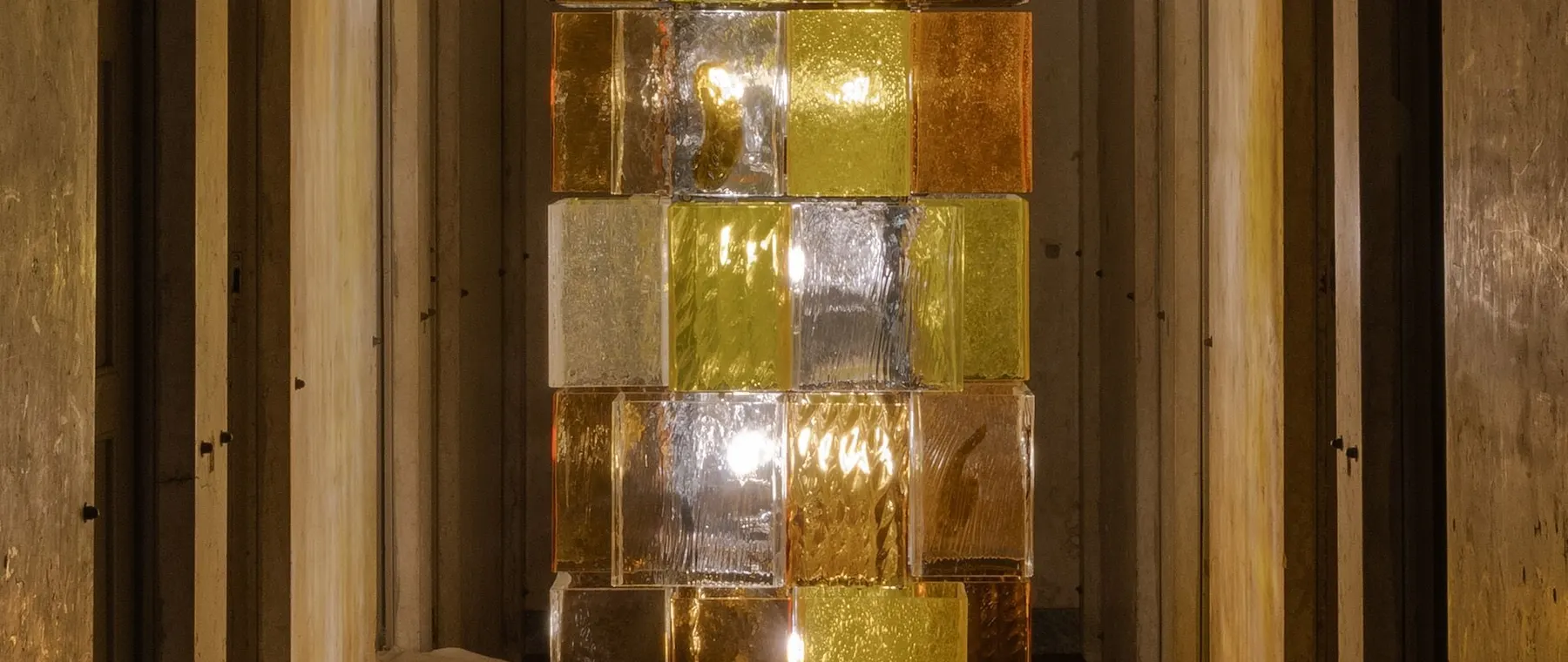
Official sources and original display image
The exhibition title, two-work format and sand-and-silica concept are verified by the official Design Miami 2026 partner programme. VENINI's official corporate and collection materials provide background on its design and glassmaking practice. The lead image is the original VENINI partner photograph displayed by Design Miami for *A Grain of Light*. It illustrates the announced works or presentation, not a separately verified installation after the December opening. Credit: VENINI / Design Miami; rights to the photograph and the depicted works remain with their respective holders. It is reproduced only for independent editorial reporting of this specific presentation.