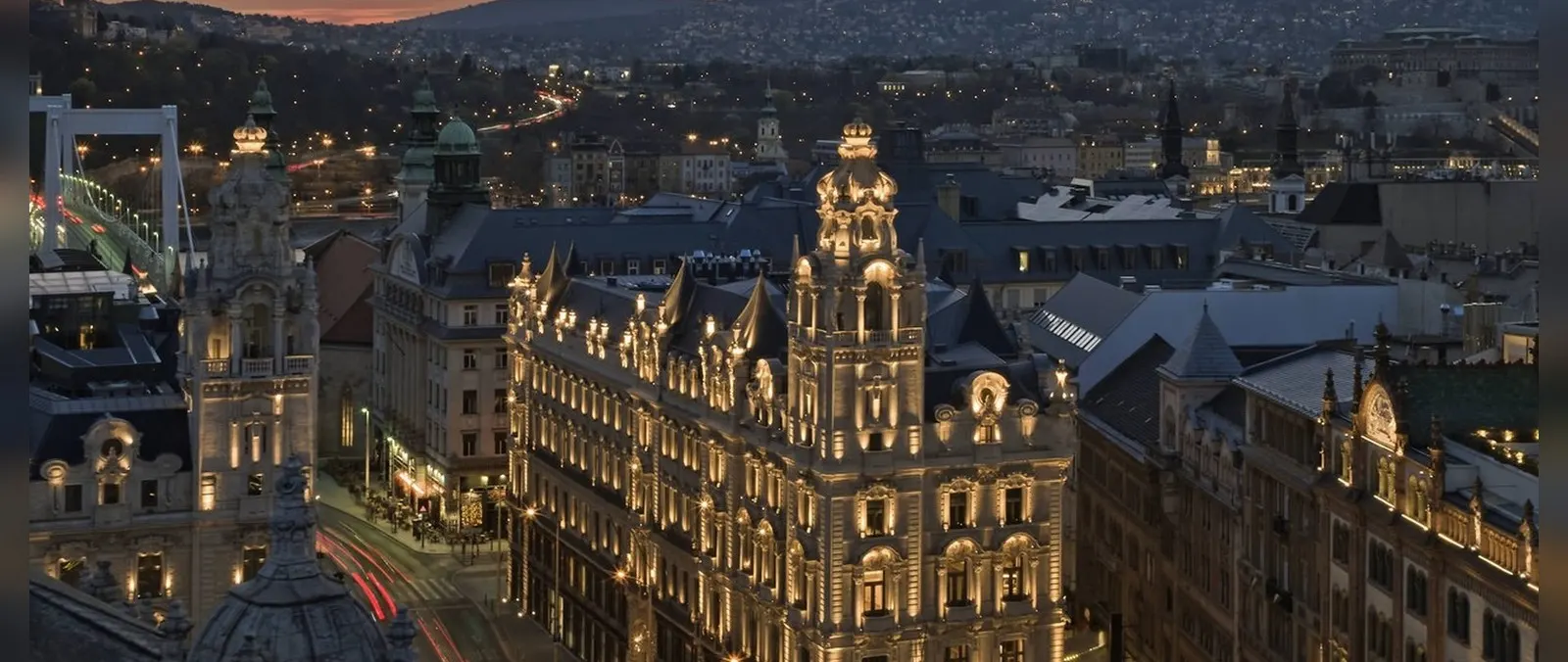
A historic palace acquires a new role
The St. Regis Budapest opened in April 2026, giving the hotel brand its first address in Hungary within the historic Klotild Palace. The property is in central Budapest, close to the Danube and major cultural landmarks. Its arrival is part of the city's continued development as a destination for private travellers interested in architecture and hospitality.
The conversion matters because Klotild Palace belongs to the architectural history of Budapest rather than being a purpose-built contemporary tower. Adaptation for hotel use requires balancing guest comfort with the identity of an older landmark. Visitors may value that layering of history more than a completely new interior.
A deliberately limited room count
Marriott describes 102 guest rooms and suites, accompanied by the brand's signature butler-service offering. The scale allows a property with substantial urban presence to maintain a more intimate accommodation inventory than many large city hotels. For guests planning a longer stay, room layout and service arrangements deserve careful comparison.
The number of suites alone cannot describe the quality of an individual visit. Views, access, natural light, sound insulation and the relationship between public and private spaces are all important in a historic building. A traveller should verify the exact room category rather than assume every unit overlooks the same landmark.
Budapest rewards exploration on foot
The hotel's central position gives guests access to the Danube embankment, bridges and the city's layered cultural districts. A stay can combine galleries, cafés, historic interiors and contemporary dining without relying on a long excursion every day. Weather and mobility needs still affect how comfortably that itinerary works.
Private travellers sometimes schedule Budapest as part of a wider Central European journey. In that context, efficient airport transfers and a practical departure plan can be more useful than filling every hour with appointments. The city is best enjoyed when there is time to move between neighbourhoods rather than experience it only through a car window.
Dining and wellness extend the property
Marriott's opening announcement refers to destination dining, a luxury spa and event spaces, positioning the hotel as more than a place to sleep. Those facilities may make it convenient for private meetings or an evening spent entirely on the property. Guests should confirm which experiences need separate reservations and whether access arrangements vary.
A restaurant may be popular with local residents as well as hotel guests, a consideration that can affect availability during weekends and public holidays. Equally, a spa appointment should be chosen around the actual treatment schedule rather than assumed to be included with accommodation. Clear planning improves the quality of a short stay.
A building with a public identity
Hotels placed in prominent historic buildings become part of how visitors encounter a city. The restoration of Klotild Palace introduces contemporary use while inviting questions about preservation and authenticity. Readers interested in design should pay attention to the boundary between original architectural features and recent interventions.
That distinction need not diminish the experience. New comfort systems and carefully updated interiors can help keep a historic landmark economically active. The strongest hospitality design makes those layers legible without turning every room into a museum display.
Practical decisions before booking
The property is operating rather than merely announced, but individual rates, room availability and special programmes change over time. Guests should confirm accessibility, parking, arrival arrangements and the services available in their selected category before travel. A central location is an advantage only when the details suit the visitor's plans.
For owners of larger yachts considering European city breaks by air, Budapest provides a land-based cultural contrast to coastal cruising. It is not a marina destination in its own right, and transport between a yacht berth elsewhere and the city requires separate planning. The appeal lies in the city and its newly revived hotel setting.