A new Singapore edit for serious watch collectors
Collecting watches increasingly means looking beyond the obvious choice between a familiar steel sports model and a grand complication from a traditional house. Sotheby's latest Singapore sale illustrates that breadth through a deliberately mixed selection of vintage, independent and jewellery-led horology. Its Singapore Collectors' Edit: Watches auction opened on 21 October 2026 and is scheduled to run online until 28 October.
The official catalogue lists 31 lots, which makes the event more closely curated than a sprawling general sale. The watches span different decades, mechanisms and design philosophies, from technically involved perpetual calendars to understated dress pieces and contemporary Japanese independents. This is an auction preview, not a report of realised prices or completed sales.
F.P. Journe opens the catalogue with a distinctive voice
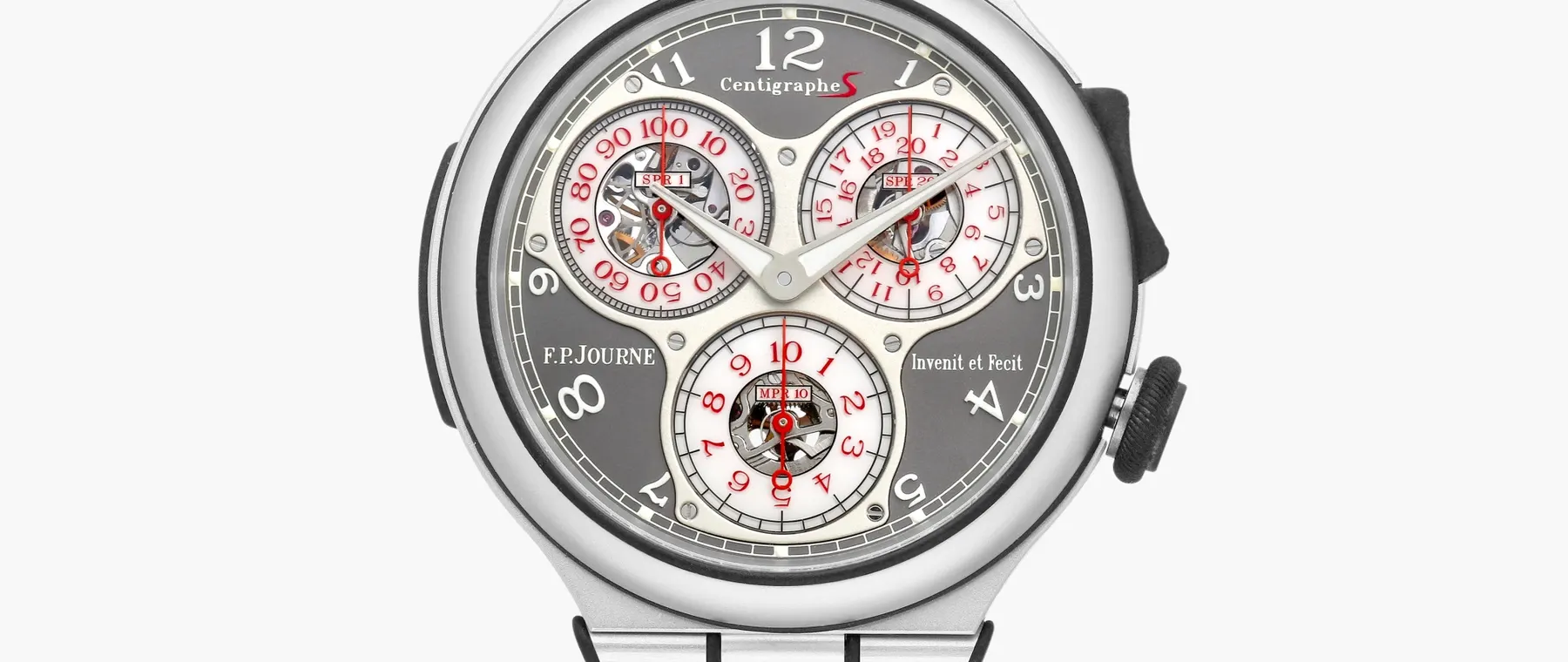
The opening lots demonstrate the varied output associated with F.P. Journe. Lot 101 is a lineSport Centigraphe Sport, catalogued as a rare lightweight aluminium chronograph bracelet watch from around 2012. Its unusual metal and athletic appearance make it a counterpoint to the heavier precious-metal complications that appear elsewhere in the event.
Next comes a pink-gold Octa Réserve de Marche 38-millimetre wristwatch, described by Sotheby's as having date and power-reserve indications and a brass movement, circa 2004. The collection also includes a stainless-steel Pendulette Réveil Souveraine desk clock dated circa 2026. Together, these pieces suggest that collecting a watchmaker's work may involve more than following a single complication or case material.
The distinctions are important for a buyer inspecting a specific watch. Model names can conceal differences in production year, movement construction and the configuration of a particular example. A serious assessment begins with the individual lot description and condition report, not with the broad popularity of the maker.
Perpetual calendars form a second strand
The catalogue includes a platinum skeletonised Audemars Piguet Quantième Perpetuel Automatique reference 25668, dated to around 1990. A skeletonised dial invites attention to the mechanisms beneath the display, while the perpetual-calendar function tracks calendar cycles in a form intended to remain useful across years. Those are two separate design ambitions: making timekeeping machinery visible and making calendar indications sophisticated.
Patek Philippe contributes several important traditional references, including a yellow-gold perpetual calendar chronograph 3970E described as a fourth-series example from approximately 2000, and a platinum reference 3940 second-series perpetual calendar from around 1993. The firm's yellow-gold reference 5070 chronograph, catalogued circa 1998, adds an alternative without the perpetual calendar.
These pieces can appeal to different temperaments even when their makers are familiar. A collector attracted to the restrained appearance of an earlier perpetual calendar may have a different purpose from someone seeking the strongly articulated subdials of a chronograph. Reference, series, provenance and service history remain more useful than assuming every example of a famous complication is interchangeable.
Unexpected jewellery watches offer another perspective
Not everything in the sale is designed to display watchmaking prowess openly. Several Audemars Piguet lots from about 1995 combine precious metals with diamonds and coloured stones, including pieces described as possibly unique. Sotheby's specifically identifies white-gold, diamond and sapphire-set designs, a yellow-gold, diamond and emerald-set example, and a white-gold watch with a concealed dial and ruby decoration.
The auction house's phrase 'possibly unique' deserves careful reading. It is not the same as an unqualified guarantee that no related example exists, and the published catalogue language should be preserved when discussing rarity. Buyers interested in singular pieces should ask what documentation accompanies the watch and what the attribution actually establishes.
Such pieces widen the definition of a collector's watch. Their appeal may depend as much on the relationship between stone-setting, metalwork and the reveal of a hidden dial as on the calibre inside. In a single sale, jewellery craftsmanship therefore sits beside chronographs and calendar watches without pretending that all should be judged by identical standards.
Japanese independent names bring the catalogue into the present
The final part of the official listing gives particular space to modern Japanese watchmaking. It includes a Kurono Chronograph II White designed by Hajime Asaoka, catalogued circa 2022, and the Kurono Tokyo x TiCTAC Bullseye reference CT004, a limited-edition steel wristwatch associated with around 2020.
Two entries from Ōtsuka Lōtec contribute a different visual language: the No. 6 Early Production with retrograde hours and minutes, dated circa 2019, and a No. 7.5 jumping-hour watch identified as a new 2026 piece. These mechanisms reward a different kind of attention from the familiar layout of conventional hour and minute hands, with the display itself becoming a central design decision.
The presence of these watches alongside Patek Philippe and F.P. Journe is editorially revealing. A focussed collection need not restrict itself to either established heritage or smaller independent production. The relationship between case construction, dial organisation and technical purpose can connect pieces from very different traditions.
Why the sale's format matters
Sotheby's is presenting the Singapore Collectors' Edit as a luxury online auction series, with a separate handbag component as well as this watch selection. The arrangement reflects how contemporary collectors can move between categories while still approaching each object with specialist knowledge. It does not make a watch and a handbag identical assets, but it places both within the same broader conversation about design, rarity and condition.
The relatively compact 31-lot watch catalogue also makes meaningful comparison easier. A visitor can consider how a 1990s jewellery watch differs from a 2000s gold complication or a newer steel independent piece without navigating thousands of listings. That range can be educational even for someone who has no intention of bidding.
An online bidding deadline is a practical detail rather than a promise that every lot will sell. Sotheby's lists the auction dates as 21–28 October 2026 in Singapore, and bidders should consult the live auction page for exact closure times, local currency, bidding increments, buyer's premium, taxes and any changes to status. A guide written in advance cannot establish final auction results.
Looking closely before choosing a watch
At this level, buying well requires patience with details that are easy to overlook in photographs. The catalogue can identify a movement, reference, approximate date and notable material, but individual condition, original components, previous restoration and accompanying paperwork can materially change the assessment of a piece. Prospective buyers should request a current condition report and read the applicable sale terms.
Condition is especially relevant when an object combines jewellery and watchmaking. Gemstone settings, precious-metal surfaces, concealed-dial mechanisms and ageing bracelets each require different questions from a buyer. A photographed dial is an introduction to the lot, not a substitute for informed inspection or independent professional advice.
The Singapore sale's lasting interest lies in its range rather than one headline number. A lightweight F.P. Journe sports chronograph, a century-spanning calendar tradition and inventive Japanese display watches are not competing to tell the same story. They illustrate how horology remains a creative field in which precision, precious materials and personal taste can lead collectors in very different directions.