Twenty-five years of Maldivian hospitality training
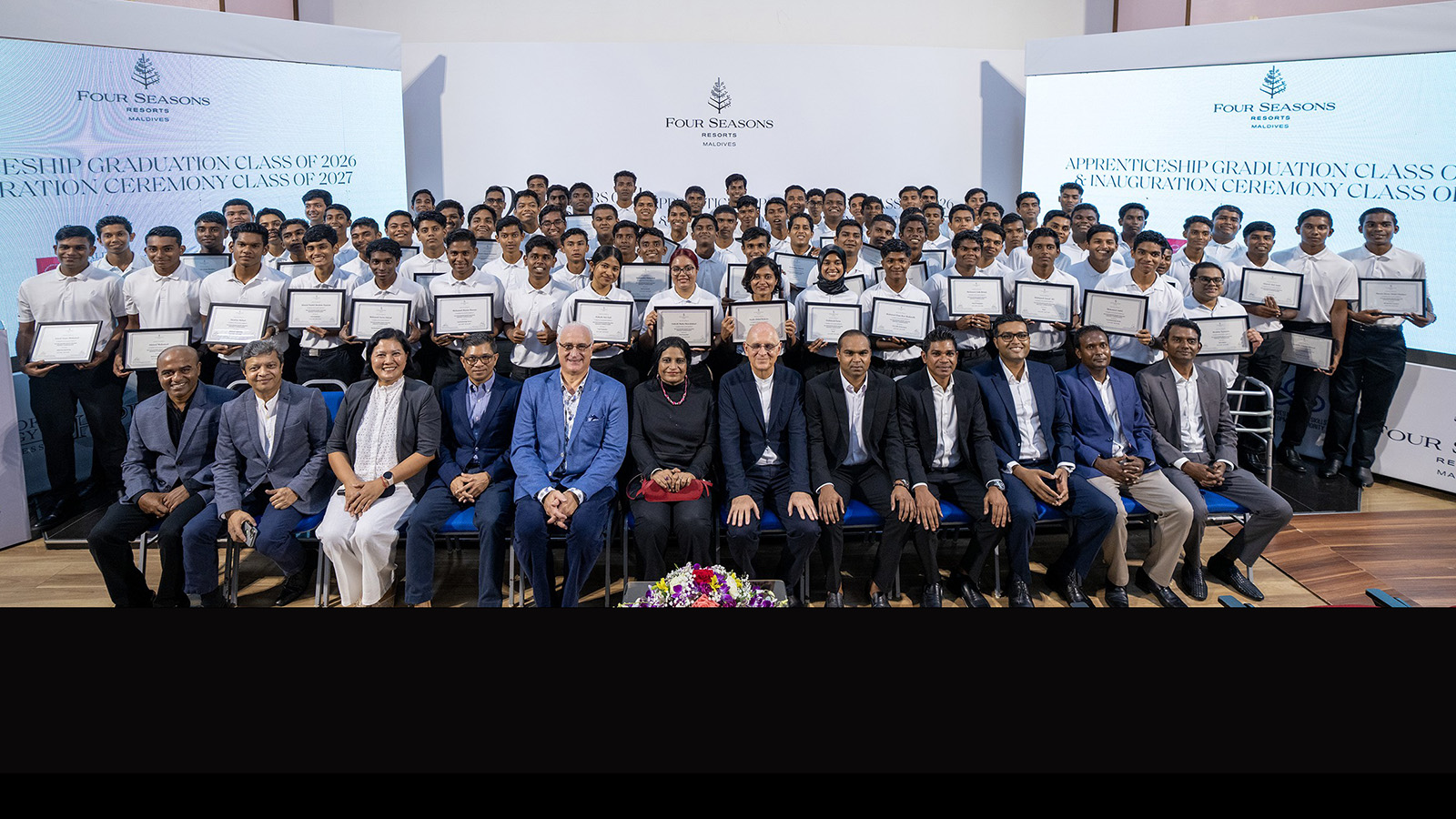
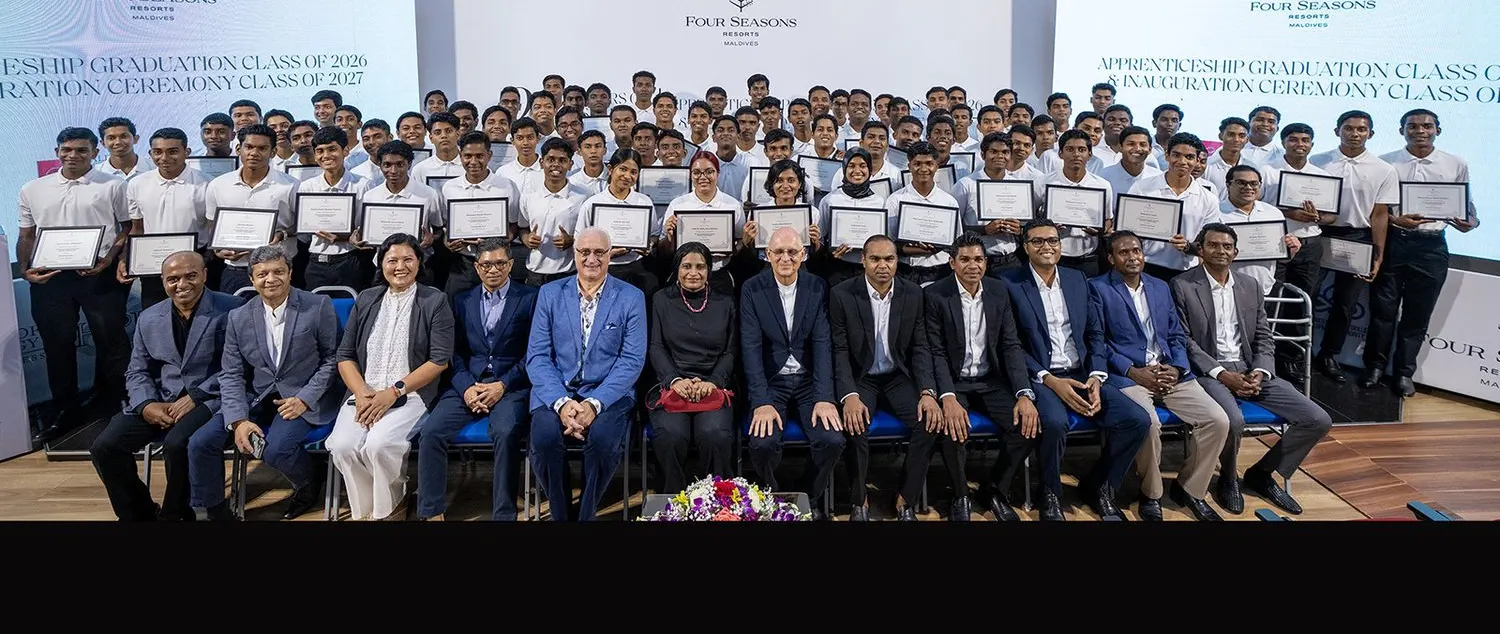
Four Seasons Maldives marked the twenty-fifth anniversary of its Hospitality Apprenticeship Programme in April 2026, reporting 1,058 graduates since the initiative began in 2001. The official anniversary event at Maldives National University in Malé recognised a further seventy-seven graduates and introduced the incoming class. The programme has developed from an initial group of five young people to multiple vocational pathways spanning hospitality and marine activities. This is a particularly relevant story for luxury-yacht owners because the quality of island tourism depends on people skilled in transport, diving, conservation and service, not solely on the buildings and landscapes associated with premium resorts.
The first group was deliberately small
The programme began after resort leaders identified a shortage of Maldivians in some guest-facing roles, according to the company's history. Five participants completed the original intake. The scale is important because an apprenticeship programme needs practical supervision and a manageable progression from observation to responsibility. Starting small can allow an employer to learn what works before increasing numbers, although the company's account does not provide an independent longitudinal assessment of every cohort. The enduring significance is the idea that young people without extensive previous industry experience can develop professional skills when employers offer structured opportunities, appropriate training and a credible route to employment.
Nationally recognised qualifications changed the model
Four Seasons reports that the initiative received Technical and Vocational Education and Training certification in 2010, aligning it with nationally recognised standards. Such recognition can strengthen the value of training beyond one hotel because graduates may need to demonstrate skills to other employers or educational institutions. The exact qualification and its acceptance should be verified for any particular career move, but a structured assessment framework is more meaningful than simply receiving an attendance certificate. Apprenticeships are strongest when they combine supervised practical work with transferable learning and clear progression. That combination can support wider professional development across a country's tourism and maritime sectors.
Fourteen career pathways reflect a diverse industry
The programme now describes fourteen pathways, including culinary work, front office, housekeeping, engineering, marine transport, diving, recreation, photography and marine conservation. This range makes clear that luxury hospitality is not one uniform profession. A resort requires technicians, boat operators, guides, administrators and specialists who maintain guest safety and environmental standards. Young people may be better suited to one type of work than another, so choice and informed guidance matter. The company announcement offers an overview of disciplines rather than a guarantee that every pathway has the same number of places or career outcomes. Applicants should obtain current training information directly from the programme.
The 2027 intake shows continuing demand
The anniversary release states that eighty-four apprentices were selected for the incoming 2027 class from more than three hundred applicants representing twenty-eight islands and fifteen atolls. Those figures, which are company-reported, suggest strong interest in the opportunity. They do not show the complete characteristics of unsuccessful applicants or establish that the selection process is free from every possible barrier. A good vocational programme should consider how people from remote communities learn about openings, travel to training sites and manage the transition to life away from home. The geographical spread is significant because the Maldives is an archipelago where access to employment and education can vary between islands.
Living and working away from a home atoll
The programme involves apprentices living and training on resort islands, sometimes for the first time away from their families. That can provide immersive experience of professional operations, but it also creates a need for adequate pastoral support. Young trainees must learn work schedules, safety practices and the expectations of guest service while adapting to unfamiliar surroundings. A well-managed apprenticeship should provide clear supervision, suitable accommodation and accessible ways to raise concerns. The company's release refers to emotional intelligence and leadership modules alongside technical training. These skills matter in a workplace where collaboration and communication are as important as the ability to perform an individual task.
Marine transport is central to island operations
Resorts across the Maldives rely on boats for guests, staff, provisions and equipment. Marine transport involves navigation, passenger safety, maintenance and understanding of local waters. A vocational pathway in this area can create opportunities directly relevant to private-yacht services and the broader maritime economy. However, completion of a resort apprenticeship should not be assumed to confer every captain's licence or specialist qualification needed to operate different classes of vessel. Licensing and competence requirements must be verified separately. The value of formal training lies in giving young people a foundation from which they can pursue recognised professional responsibilities safely and progressively.
Diving and watersports require disciplined safety culture
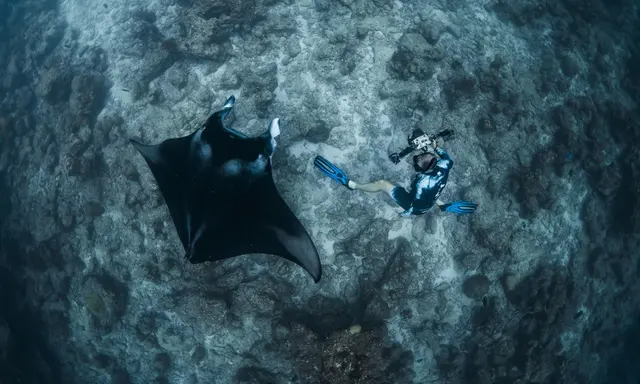
The hotel's pathway list includes diving and watersports, sectors where recreational enjoyment depends on technical knowledge and reliable procedures. Instruction, equipment inspection, emergency response and environmental awareness all play roles. Training in a resort environment can expose apprentices to professional systems, but any actual certification must meet the relevant diving or maritime organisation's rules. Owners booking activities for their yacht guests should ask about the qualifications of providers rather than treating an employer's reputation as sufficient proof. This reinforces the importance of vocational education: well-trained people behind the scenes make apparently effortless holiday experiences safer and more enjoyable.
A new Marine and Environmental Science pathway
One of the most significant elements of the anniversary announcement is a planned four-year Marine and Environmental Science apprenticeship developed with Maldives National University. The company describes it as fully funded and designed to create opportunities for future marine scientists, conservation professionals and sustainability leaders. It is presented for the incoming 2027 cohort, not as a course whose first four-year graduates have already completed their studies. This chronology matters. The collaboration illustrates an attempt to build more advanced expertise within the local population, connecting the tourism economy with the long-term condition of the coral reefs and coastal habitats on which it depends.
Why marine science is relevant to tourism
Coral reefs, fish populations and coastal ecosystems contribute to the natural attractiveness of the Maldives and support livelihoods beyond hotels. Monitoring their condition requires scientists, technicians and people with practical field skills. Rising sea temperatures and other pressures create difficult challenges that cannot be solved through resort marketing alone. A university-linked training pathway could support local expertise in assessment, conservation and communication, although its effectiveness will need to be demonstrated through actual education and career outcomes. The hotel's release identifies the goal; it does not prove that the programme can prevent bleaching events or reverse broader environmental change.
Education and opportunity have long-term economic effects
An apprenticeship may create direct access to employment for an individual, but its wider significance can include skill transfer, leadership and the ability of local businesses to recruit qualified people. Graduates who move into other employers or professional fields should not automatically be viewed as a loss to the original programme. Transferable skills can benefit the wider economy, including independent tourism operators and marine services. The company reports that alumni work in leadership roles across hospitality and related sectors. Independent data on wages, retention and progression would be useful to evaluate the programme more fully, but the reported number of graduates is an important measure of sustained activity.
A career is built beyond the first certificate
The announcement notes that some graduates return for further training, including front-office, engineering and more advanced study. That reflects a practical reality: a one-year apprenticeship can establish foundations without completing a professional's education. People in marine technical roles may need further licensing, supervised experience and recurrent safety training. The same is true of chefs or managers who aim for leadership. A strong programme should explain the next available steps and support realistic career development. Learners benefit when employers distinguish between an entry-level qualification and the level of competence expected in a more demanding position.
An international exchange can widen perspectives
The apprenticeship scheme also describes a student exchange involving Palau, introduced in 2023. Exchange experiences can expose young professionals to different island economies and approaches to conservation or hospitality, helping them understand which practices are specific to one place and which are transferable. Yet participation should be designed around learning objectives rather than travel as a reward alone. Students need adequate preparation and support to derive real benefit. The official anniversary account confirms the programme's existence but does not provide a complete evaluation of exchange outcomes. Its potential value lies in building relationships between countries facing some comparable maritime and tourism challenges.
The workforce behind a luxury holiday
Guests often remember accommodation, food and ocean views, while the training systems that make a resort function remain less visible. A boat crew, diving guide or maintenance technician may be crucial to the quality and safety of a stay. Developing local expertise can reduce dependence on imported labour in some roles and create professional opportunities for people who know the environment. But this process must include fair treatment and credible qualifications. The Four Seasons programme offers one documented example of sustained investment. Travellers can value the effort while remaining interested in how employees progress and how training benefits island communities in the long term.
Evidence and the anniversary's meaning
The official Four Seasons account establishes the April 2026 anniversary, company-reported graduation totals, incoming student figures, established pathways and the planned four-year marine-science route. It is a first-party history and should not be treated as an independent study of every economic or educational outcome. The accompanying press image illustrates programme participants or the resort context and should be credited accordingly. Its importance for luxury-yacht owners is that a destination's appeal depends on a capable local maritime and hospitality workforce. Twenty-five years of training represent a substantial commitment, while the new scientific pathway points towards skills needed for the region's environmental future.
People make a destination sustainable over time
A resort may invest in advanced technology and beautiful accommodation, but it cannot build a resilient destination without people who understand its operation and surroundings. The Maldives apprenticeship story brings that reality into focus through the scale and diversity of its programmes. Career pathways in transport, diving, conservation and engineering have relevance well beyond one hotel brand. The best long-term measure will be the opportunities graduates gain and the expertise they contribute to the country. For travellers who value the Maldives as a marine destination, recognising this less-visible part of hospitality can be as meaningful as celebrating another award for an exceptional villa or beach.
Sources and image credits
Reporting based on 25 Years of Shaping Futures: Four Seasons Maldives Apprenticeship Programme Celebrates More Than 1,000 Graduates.
Lead photograph: Maldives Apprenticeship Programme Links Luxury and Local Careers — official Four Seasons first-party press photograph. © Four Seasons Hotels and Resorts, original property press photograph Original official image source.