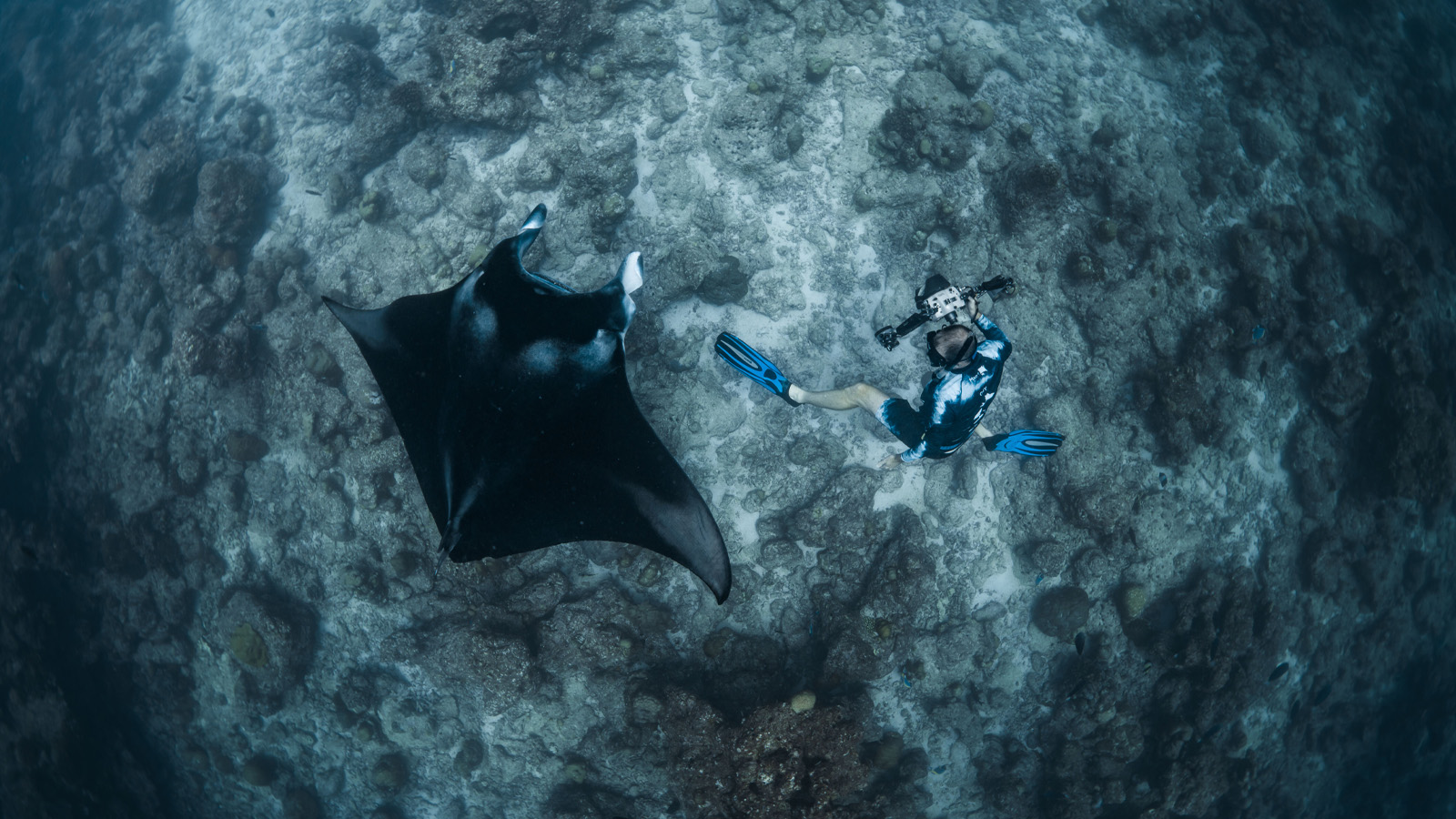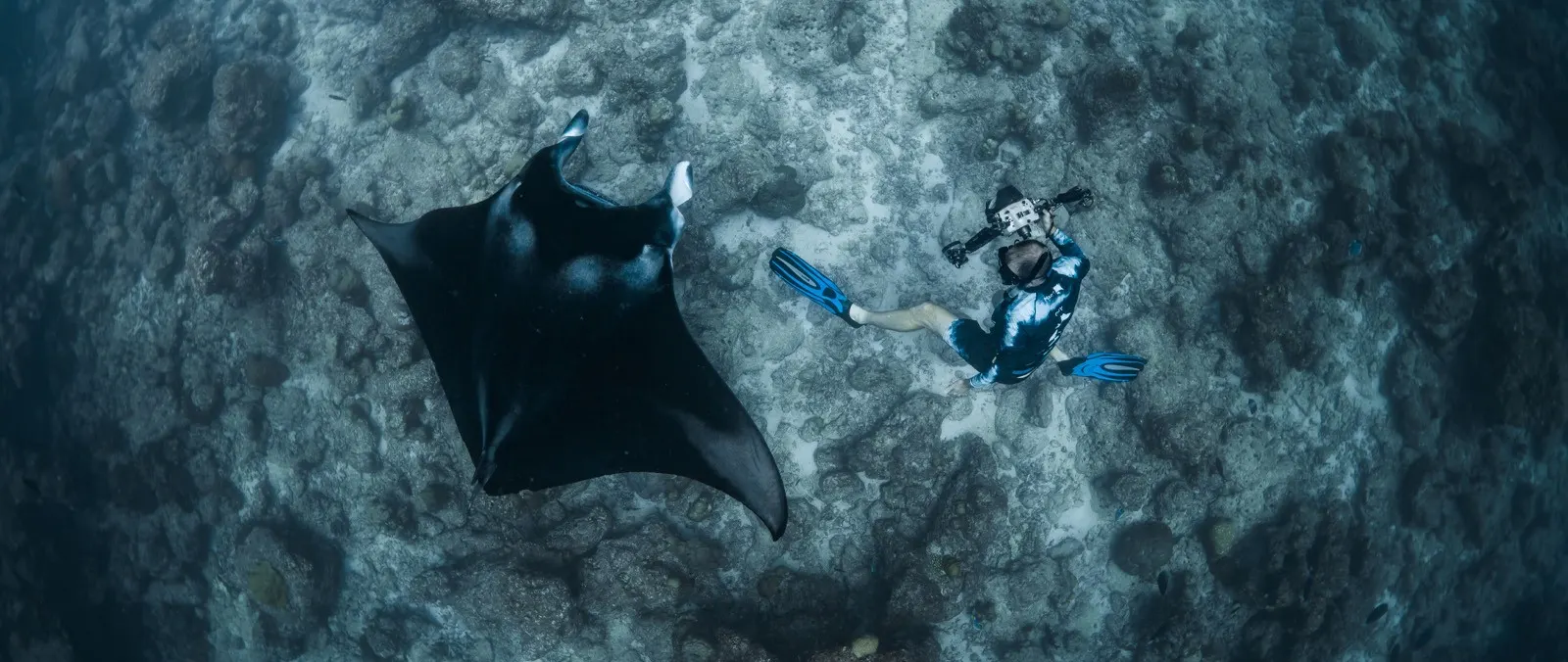
Four Seasons Resort Maldives at Landaa Giraavaru is marking two decades of support for manta-ray research and conservation, an anniversary that has particular relevance to travellers who explore the Indian Ocean by yacht. The resort's announcement, dated 13 November 2026, looks back at a partnership that began in 2006 and has helped provide a base for the Maldives Manta Conservation Programme and the Manta Trust. Researchers, local communities, volunteers and resort guests joined a week of activities in September, culminating on World Manta Day. The most significant achievement is not a single remarkable wildlife encounter. It is the development of long-term scientific records and conservation practices intended to protect animals whose survival depends on effective management well beyond any one resort.
Twenty years of continuity in the Baa Atoll
Luxury resorts often announce short-term environmental initiatives, but sustained scientific work depends on something less photogenic: reliable facilities, data collection and people who return to the same questions year after year. Landaa Giraavaru has served as a practical base for marine research in the Maldives since its opening in 2006. According to Four Seasons, its support has included space for fieldwork, resources and opportunities for education. The conservation achievements described in the release belong to a wider coalition led by the research organisations and their partners, not solely to the hotel. That distinction matters. A commercial property can contribute meaningfully when it supports scientific expertise without presenting itself as the sole author of environmental progress.
The roots of the Maldivian manta research project
Dr Guy Stevens established the Maldivian Manta Ray Project in 2005, a year before the resort opened. He later worked as the property's resident marine biologist, and the research developed into the Maldives Manta Conservation Programme, now a registered Maldivian charity. In 2011, he co-founded the Manta Trust, which supports more than thirty affiliate projects internationally. The organisations have built expertise through fieldwork, collaboration with local authorities and ongoing education. This history is useful for visitors who encounter conservation messages during a luxury holiday: the science does not begin when a guest arrives, and it continues after the guest leaves. Responsible tourism should support the existing work rather than displace it with short-lived demonstrations.
A manta's spots form an identifying pattern
One of the most accessible aspects of manta research is photographic identification. Each ray has a distinctive pattern of spots on its underside, allowing scientists to recognise individuals in photographs taken during different encounters. By comparing images across time, researchers can study movements, revisit locations and build a more complete picture of local populations. Four Seasons reports that the Maldives Manta Conservation Programme has identified more than 6,000 individual reef manta rays from over 80,000 sightings, as well as more than 1,000 oceanic mantas. These are research-record figures as stated in the November 2026 release, not a census of every animal currently present in the country's waters. They nevertheless demonstrate the scale and continuity of the work.
The distinction between a sighting and a population
A count of sightings is not the same as a count of separate animals. A single manta may be seen repeatedly across months or years, which is why individual identification is so important. Long-term researchers can use the information to investigate patterns, but the findings depend on conditions, the number of observers and the consistency of reporting. Travellers who contribute photographs can be part of citizen-science efforts when material is collected appropriately and shared through recognised channels. They should not assume that every image is suitable for identification or that an attractive photograph is a substitute for scientific observation. The most useful contributions are often well-documented images accompanied by accurate dates and locations.
Celebrations in September reflected collaboration
The anniversary week took place from 11 to 17 September 2026 at Landaa Giraavaru. Four Seasons says the programme included field experiences, scientific talks and conservation activities that brought together researchers, community representatives and visitors. The final day coincided with World Manta Day, whose 2026 theme was Collaboration. These dates refer to events that have already occurred, rather than a future festival guests can now book. Their importance lies in demonstrating the breadth of people involved. Marine protection requires coordinated actions by scientists, authorities, tourism operators, fishing communities and educators. A resort can help bring these participants into contact, but lasting outcomes depend on the policies and practices that continue after the anniversary has finished.
Manta rays face substantial threats
Manta and devil rays are vulnerable to pressures including targeted fishing, accidental bycatch, entanglement and habitat degradation. Poorly managed wildlife tourism can also place unnecessary stress on animals. The official release states that all ten recognised manta and devil-ray species are threatened with extinction and highlights international moves toward stronger trade controls. Such statements should be understood within the scientific and regulatory frameworks that assess conservation status; they do not imply that every local population has the same number of individuals or experiences identical pressures. For a visitor, the practical lesson is that a sighting is a privilege rather than a guaranteed attraction. Protecting the conditions that support healthy populations must take precedence over the desire for a close-up photograph.
The Maldives has taken legislative steps
The release recounts several milestones in the country's conservation history. Hanifaru Bay and Anga Faru were designated Marine Protected Areas in 2009, and Baa Atoll received UNESCO Biosphere Reserve recognition in 2011. National protection for ray species followed in 2014. The research organisations contributed evidence to discussions and conservation processes, while the relevant authorities made the legal decisions. These distinctions prevent a commercial hotel or charity from being inaccurately credited with the power to establish a protected area. They also remind travellers that conservation rules are not optional suggestions. Visiting a marine reserve may involve restrictions on access, swimming, vessels and wildlife interaction that apply regardless of the price of a holiday.
Tourism needs standards as well as enthusiasm
Manta encounters can be among the most memorable experiences in tropical waters. The sight of an animal moving gracefully through the ocean is difficult to forget, particularly for someone accustomed to spending time on boats. Yet a desire to get closer can lead to poor behaviour when visitors or operators ignore separation distances, pursue animals or crowd feeding areas. Four Seasons says its partners have helped develop research-informed guidance and a global code of conduct for manta tourism. The principle is clear even without prescribing a specific distance in this article: visitors should follow trained local guides, avoid touching or chasing wildlife and respect site-specific rules. A photograph is never worth disturbing an animal.
Guests can learn with the Marine Discovery Centre
The resort's Marine Discovery Centre includes a team of fourteen full-time marine biologists, according to the release. They share research and conservation information through experiences that include a full-day Trainee Manta Biologist programme. During manta season, typically described as May to December, guests registered for Manta-On-Call may be contacted when animals are located and weather conditions permit an organised speedboat and snorkelling excursion. This is a conditional wildlife encounter, not a promise that mantas will appear or that a trip will run on a particular day. Guests should seek current guidance from the marine team and understand that an unsuccessful search can still be a responsible outcome if conditions are poor.
A responsible encounter begins before entering the water
Visitors considering a manta excursion should assess their swimming ability, comfort in open water and readiness to follow instructions. Weather, currents and visibility can change, and the operator must determine whether conditions are appropriate. Participants need to understand safety procedures before entering the water, including how to avoid interfering with other people or animals. Travellers who are staying aboard a yacht elsewhere in the Maldives should confirm that their intended marine excursion is managed by a properly authorised operator rather than assume they can visit any well-known manta site independently. A luxury vessel does not exempt its passengers from marine-protection rules. Responsible wildlife tourism involves restraint and a willingness to change plans when necessary.
Learning without getting wet
The resort also offers educational experiences ashore, including a hologram room and an interactive application called Manta Story. The app draws on the real Maldivian manta-ray population and provides information about feeding, cleaning, courtship and reproduction. These tools can be useful for families whose members have different comfort levels in the ocean, and for children who may want to learn before going on an excursion. They should not be portrayed as replacements for scientific research or as guarantees of a particular wildlife sighting. Their value is in making unfamiliar marine biology more approachable and encouraging curiosity. A well-designed experience can change how a guest understands the sea even without a photograph beside a manta.
The importance of Maldivian leadership
The original release acknowledges participation by Maldivian authorities and island communities, alongside international researchers and volunteers. It also references educational initiatives including Ocean School, Ocean Women and the RahVeshi Programme. The detail matters because conservation projects cannot succeed indefinitely if local people are treated only as background participants. Scientists need community knowledge, support and opportunities to develop expertise. Resorts that benefit commercially from healthy marine environments have a responsibility to support this capacity rather than relying solely on temporary visitors. For the luxury-travel audience, the most credible environmental programme is one that demonstrates continuity and local participation even when no guest is watching.
What twenty years of data can achieve
Long-term research has supported scientific publications and conservation planning across the Maldives and beyond. The release says the organisations have led or co-authored more than ten peer-reviewed papers relevant to manta protection and submitted proposals for Important Shark and Ray Areas in the Western Indian Ocean. The value of such work is cumulative. A single observation can be interesting, but years of consistent information can help identify important habitats and shape management decisions. Research does not eliminate uncertainty, and conservation recommendations may change as evidence improves. That is part of the strength of scientific methods. For travellers who wish to help, supporting credible local research is more valuable than treating every new statistic as a definitive solution.
Why yacht owners should pay attention
Owners and charter guests spend time in coastal environments that are vulnerable to both environmental change and unmanaged visitor pressure. They may have opportunities to observe marine life that land-based visitors rarely see, but those opportunities come with responsibility. A yacht can move between atolls and countries, carrying its own itinerary and operational choices. Following local protected-area rules, managing waste properly, selecting responsible excursion providers and avoiding disruptive wildlife encounters are practical ways to respect those environments. A luxury voyage can include meaningful learning, but it should never be advertised as a guaranteed route to rare species. The freedom that makes yachting appealing depends on oceans that remain ecologically healthy.
A conservation anniversary with work still ahead
The twenty-year milestone at Landaa Giraavaru is notable not because the resort hosted an anniversary celebration, but because it has maintained support for research organisations whose work informs marine protection. Photo-identification records, scientific collaboration and locally led education offer a clearer measure of value than a one-off wildlife event. The September programme has already taken place, while the research, guest education and fieldwork continue. Travellers considering a stay or marine excursion should request the latest operational guidance and treat manta encounters as conditional on nature and safety. For the yachting community, the strongest lesson is that thoughtful marine travel can coexist with serious conservation when operators and guests accept scientific expertise and respect the boundaries established to protect the animals.
Sources and image credits
Reporting based on Four Seasons Hotels and Resorts primary official media release: https://press.fourseasons.com/maldiveslg/hotel-news/2026/manta-conservation/.
Lead photograph: Manta conservation anniversary activities at Four Seasons Landaa Giraavaru, original official 2026 press photograph. Original manta official Four Seasons press photograph released on the responsible resort or hotel media page for editorial reporting; copyright remains with Four Seasons and credited photographer. Original official image source.