A luxury brand's relationship with the coast
On 16 November 2026, Genesis Motor America announced the continuation of its partnership with the nonprofit Oceanic Global. The latest contribution through the Genesis Gives programme amounts to $50,000, with total support reported at $150,000 since 2023. The announcement concerns environmental education and local stewardship rather than an automotive launch. For owners of luxury yachts, however, the connection with the ocean is particularly pertinent. The value of a coastal destination extends beyond its beaches and marinas to the functioning ecosystems that make it attractive, and the daily practices of visitors contribute to the condition in which those places are maintained. The involvement of a premium automotive brand in this area offers an opportunity to consider what meaningful marine stewardship looks like in practice. No claim is made here that the donation compensates for the overall environmental impact of a manufacturer or its products. The subject is the specific programme reported by the partners and the practical ideas it can inspire.
Learning to recognise waste before it reaches the water
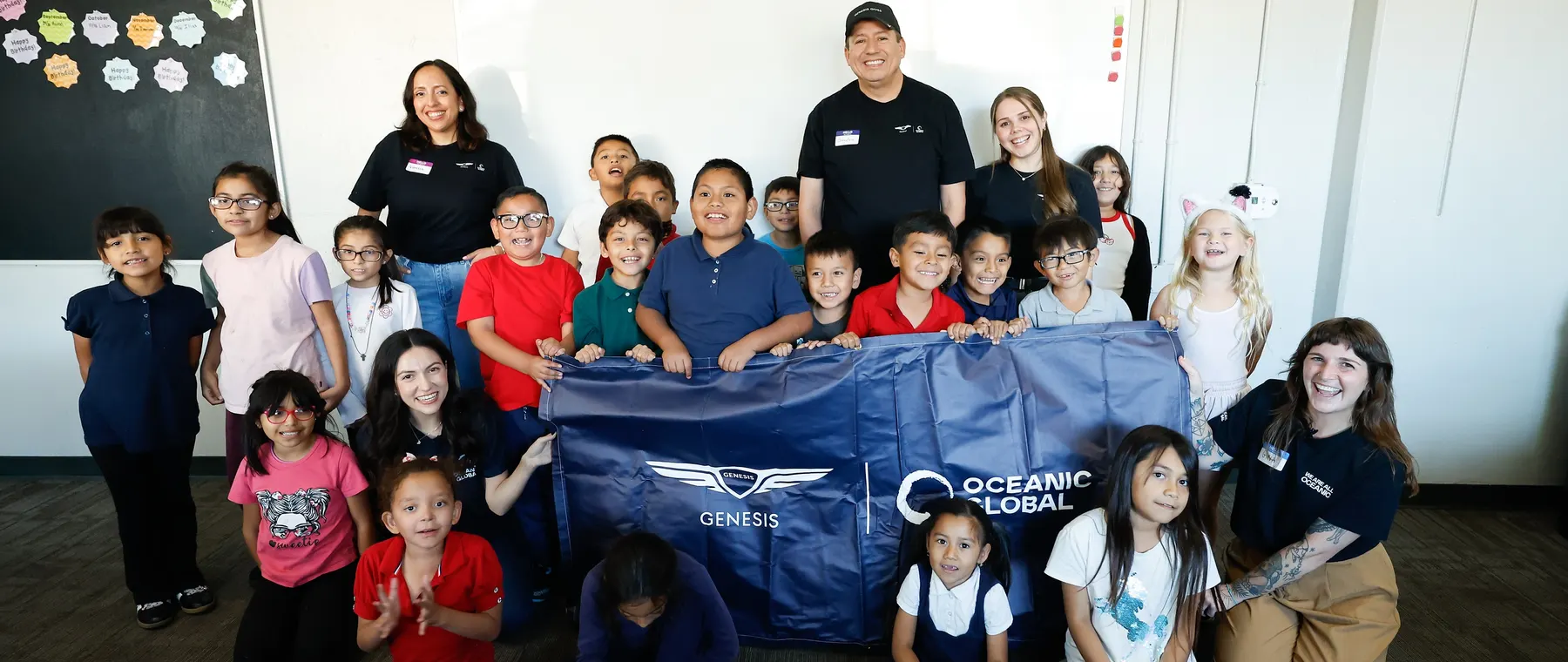
One part of the partnership involved elementary-school students from the Boys & Girls Club of Santa Ana in California. The programme combined a presentation with practical waste-sorting activities and projects encouraging participants to consider the connections between everyday choices and the environment. The purpose of a sorting activity is not simply to place an object in a differently coloured container. It encourages participants to recognise how materials move through a community and how some waste can escape the collection system. For yacht owners and managers, there is an equivalent challenge in understanding the flow of materials through a boat. Deliveries arrive in packaging, food is prepared and consumed, and equipment is replaced or repaired. Each of these processes generates materials that must eventually be handled somewhere. A sensible waste-management plan should follow that entire sequence rather than focusing exclusively on the point when rubbish is removed from the vessel. The educational programme is a useful reminder that such systems work best when everyone understands their purpose.
What a beach cleanup can establish
Genesis employees also joined Oceanic Global in a cleanup at Huntington State Beach. The partners reported removing more than 17 pounds of waste, including over 1,000 pieces of microplastic. The figures are results provided by the organising parties; they do not establish the total amount of pollution at the location or the long-term effect of the work. The distinction between a count of small fragments and the mass of collected waste is particularly important. A large number of individual pieces may correspond to a modest total mass, while a single heavier discarded object can make a substantial difference to the weight recorded. Reporting both measures offers a clearer picture of what the participants encountered. The value of such a project can include the removal of material as well as the awareness gained by volunteers. It should be understood as part of a wider effort to reduce the input of pollution, not as evidence that a shoreline has become permanently clean.
Prevention at the point of provisioning
A yacht crew can apply the underlying principle of waste prevention long before any cleanup is considered. A provisioning order can be examined for unnecessary secondary packaging, options for reusable transport containers and quantities that match the actual number of guests. The choices should be compatible with food hygiene, storage requirements and the needs of the supplier. A large number of loose items is not necessarily preferable if it creates practical problems for safe transport or leads to spoiled food. Guests who appreciate a particular product can work with the crew to find an appropriate size of container or a supplier able to use returnable packaging. On a boat with a limited service area, careful decisions before delivery can also make the galley and stores easier to manage. The purpose of the exercise is to reduce avoidable waste while retaining a realistic standard of hospitality. Good provisioning can improve both the daily running of the yacht and the way in which materials are handled at the end of a trip.
Making sorting workable aboard a smaller yacht
A midsize luxury yacht has considerably less space for storage and waste handling than a large ship or a shore establishment. A system that looks effective in a marina office may prove difficult to use aboard if containers obstruct circulation, if their contents become unstable while underway or if the next port cannot receive the sorted waste. The skipper and crew can identify appropriate secure storage locations and establish which categories can be separated safely. Labels should be understandable to everyone who uses them, including guests unfamiliar with local recycling arrangements. At the next port, the system should connect with the actual services provided rather than assuming that all marinas accept the same materials in the same way. Hazardous maintenance waste, batteries, oil and other specialist materials must be handled according to the applicable rules and through suitable facilities. The basic objective is to prevent accidental release and make responsible disposal a practical part of life aboard, without introducing other risks to the vessel or its occupants.
Participation without disrupting local stewardship
Owners and guests who wish to support coastal volunteering should consider the experience of local organisations already working in a destination. Established groups can identify where assistance is useful, what equipment is appropriate and whether a site contains sensitive habitats that should not be disturbed. A guest should not simply undertake an improvised cleanup in an unfamiliar protected area. Some objects may be hazardous, and apparently discarded material may require specialist handling. Participating in an organised project offers a means of learning from people who understand the location as well as contributing time. Where a party has limited time ashore, practical support may be more valuable than arranging its own highly visible event. Any contribution should reflect the priorities of the local group rather than the publicity requirements of the visitor. The Santa Ana and Huntington Beach activities reported by Genesis illustrate two different formats: education involving a community organisation and volunteering coordinated with an environmental partner. Both are capable of being evaluated more meaningfully when the purpose and outcome are clearly identified.
Philanthropy and the importance of accountable reporting
Oceanic Global was established in 2016 and works on environmental education, community involvement and practical sustainability initiatives. Its partnership with Genesis has continued over several years, according to the release, providing a more useful context in which to assess the latest donation than treating it as an isolated announcement. The amount committed is a specific piece of information the partners have disclosed. Assessing the effectiveness of a philanthropic programme, however, requires more than its financial input. Owners who wish to support coastal projects may consider how the recipient identifies its priorities, reports activities and measures results over time. Smaller local organisations may have less elaborate reporting systems than international charities, without necessarily being less effective. The appropriate questions will differ according to the nature of the work and the scale of the support. A clearly described project, transparent use of funds and a willingness to discuss both achievements and limitations can help establish a constructive long-term relationship. The objective is to support useful work rather than to acquire a general environmental endorsement.
A culture of responsibility rather than a luxury accessory
The Genesis announcement illustrates a form of engagement that is directly relevant to people whose leisure depends on the quality of coastal environments. It does not demonstrate that the automotive company, a yacht or any individual is environmentally neutral. The more realistic lesson is that education, prevention and coordinated local action can form part of a broader culture of stewardship. Owners can encourage that culture through the ordinary decisions made aboard: how the vessel is provisioned, what materials are retained, how maintenance waste is handled and how guests participate in established local activities. It is important to recognise the limits of a single boat's immediate contribution and the larger role of effective waste infrastructure, enforcement and industry practices. At the same time, the fact that some problems require coordinated action is not a reason to neglect manageable decisions in daily life. The most valuable contribution may be a system that continues to work when an organised event has finished and the yacht has moved on to its next destination.
Sources and lead image
Source documentation: https://www.prnewswire.com/news-releases/genesis-and-oceanic-global-expand-collaboration-to-inspire-the-next-generation-of-environmental-stewards-302940895.html. Lead image: Participants in the Genesis and Oceanic Global environmental education programme — Genesis Motor America / PR Newswire. Official issuer-supplied press photograph, reproduced for editorial coverage of the specific announcement and resized for web display.